 Popular
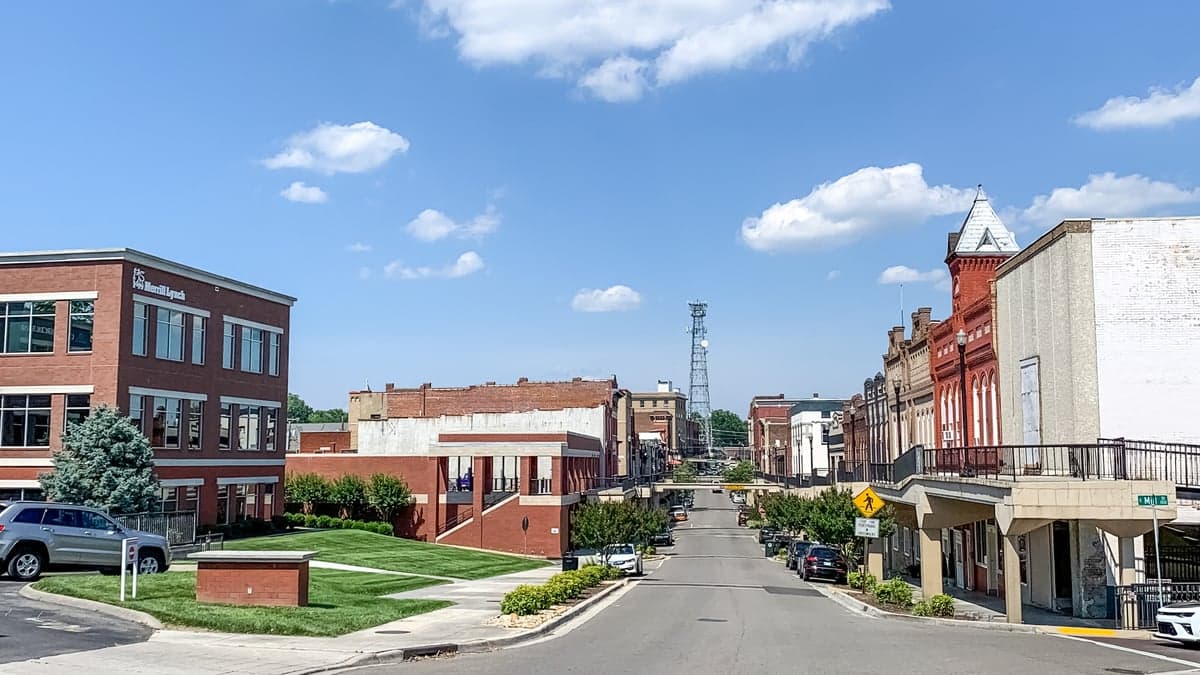
Photo: Wikipedia
Personal Sovereignty in Morristown, TN
Viable for self-reliance. Generally workable, though some barriers may limit total independence.
What does Personal Sovereignty tell us?
Personal Sovereignty measures your capacity for self-reliance and independence with minimal government friction. Higher scores mean fewer barriers between you and the way you want to live... but it assumes you have the space you need and good neighbors.
What does this tell us?
Personal Sovereignty measures your capacity for self-reliance and independence with minimal government friction. Higher scores mean fewer barriers between you and the way you want to live... but it assumes you have the space you need and good neighbors.
State Policy
Energy independence: Importer (25% of energy produced in-state)
Personal Liberty
Homesteading

Personal Liberty Analysis
Morristown, Tennessee, offers a notably high degree of personal sovereignty compared to much of the country, particularly for those who prioritize minimal government interference in daily life, self-defense, and family autonomy. Nestled in the foothills of the Great Smoky Mountains, this East Tennessee hub sits in a state that has consistently pushed back against federal overreach, with a legal and cultural environment that rewards self-reliance. For a single individual or a parent looking to secure a life less entangled with state mandates, Morristown presents a compelling mix of low taxes, strong gun rights, and a regulatory climate that still allows for a measure of off-grid living, though it is not a libertarian utopia—zoning and local ordinances still apply.
Tax burden and regulatory posture in Morristown
Tennessee’s tax structure is a major draw for those seeking to keep more of their earnings and reduce government dependency. The state has no personal income tax on wages, no tax on interest or dividends, and a relatively low state sales tax rate of 7%, though local options in Hamblen County push the combined rate to around 9.75%. For a prepper or survivalist mindset, this means every dollar earned stays in your pocket, not funneled into state programs you may not support. Property taxes are also a bright spot: Hamblen County’s effective property tax rate is roughly 0.62% of assessed value, well below the national average of 1.07%. A $200,000 home would cost about $1,240 annually in property taxes. Regulatory posture is generally business-friendly, with Tennessee ranking among the top states for low regulatory burden. However, Morristown is not entirely free of red tape—building permits are required for new construction, and the city enforces basic zoning codes. For those looking to operate a home-based business or run a small farm, the county is more permissive than many urban areas, but you will still need to navigate local health department rules for things like selling eggs or raw milk. The state’s right-to-work laws and lack of a state income tax create an environment where economic autonomy is genuinely achievable, but don’t expect a complete absence of government oversight—especially if you plan to engage in activities that trigger state licensing.
Self-defense and gun law specifics in Morristown
For those concerned with personal security and the right to defend themselves, Morristown sits in a state with some of the strongest gun laws in the nation. Tennessee is a constitutional carry state—since 2021, any law-abiding adult 21 or older can carry a handgun openly or concealed without a permit. This is a significant advantage for individuals who view firearm ownership as a fundamental right, not a privilege subject to government approval. There is no state-level waiting period for firearm purchases, no universal background checks beyond federal requirements, and no ban on commonly owned semi-automatic rifles or standard-capacity magazines. The state also has a robust Stand Your Ground law, meaning there is no duty to retreat before using deadly force if you are lawfully present and reasonably believe it is necessary to prevent death or great bodily harm. For parents, this extends to protecting your home and family—Tennessee law explicitly allows the use of deadly force against an intruder in your residence. Local law enforcement in Hamblen County is generally supportive of gun rights, and there are no additional local ordinances that restrict carry in parks or public spaces beyond state preemption. The only notable limitation is that carrying in schools, government buildings, and certain private businesses with posted signage is prohibited. For a survivalist, this legal framework provides a solid foundation for personal security, though you should still be aware that federal laws—such as the Gun Control Act—still apply, and purchasing from a licensed dealer requires a background check.
Self-reliance and homesteading viability in Morristown
Morristown offers genuine opportunities for self-reliance, particularly for those willing to look beyond the city limits. Within the city, standard residential lots are typically 0.25 to 0.5 acres, which can support a substantial garden, a few chickens, and small livestock like rabbits or goats, though city zoning may restrict larger animals. The real potential lies in the unincorporated areas of Hamblen County and neighboring Jefferson or Grainger counties, where 2- to 10-acre parcels are still affordable—often under $10,000 per acre. Zoning in these rural areas is minimal, with no county-wide building codes in many parts, meaning you can construct a cabin, workshop, or storage shed without a permit, as long as you meet basic septic and well requirements. Off-grid feasibility is moderate: the region gets about 45 inches of rain annually, making rainwater collection viable, and solar insolation is adequate for a modest solar array, though net metering policies with the local utility (Morristown Utility Systems) are not as generous as in some western states. Wood heating is common, with abundant firewood available from surrounding forests. However, be aware that the Tennessee Department of Environment and Conservation regulates septic systems and wells, so you cannot simply dig a hole and call it a day. For a prepper, the area’s agricultural heritage means you can find local feed stores, seed suppliers, and even small-scale livestock auctions. The growing season is roughly 200 days, allowing for two planting cycles of warm-season crops. The main constraint is that the area is not entirely off-grid friendly for electricity—most rural homes are still grid-tied, and going fully independent requires significant upfront investment in batteries and backup generation.
Personal liberties in Morristown: parental rights, medical autonomy, speech, and property
Tennessee has become a battleground for personal liberties, and Morristown reflects that state-level pushback against federal and corporate overreach. On parental rights, Tennessee law explicitly affirms that parents have the fundamental right to direct the upbringing, education, and healthcare of their children. The state passed a law in 2023 requiring school districts to notify parents of any material changes in a student’s mental, emotional, or physical health, and to obtain parental consent before providing any medical services beyond basic first aid. This is a significant win for parents who want to maintain control over their children’s education and medical decisions. On medical autonomy, Tennessee has some of the strongest protections against vaccine mandates in the country—state law prohibits employers from requiring COVID-19 vaccination as a condition of employment, and the state has banned mask mandates in schools. However, the state also has strict abortion laws, with a near-total ban that includes no exceptions for rape or incest, which may be a concern for some but aligns with conservative values. Free speech is robustly protected under the Tennessee Constitution, and the state has passed laws prohibiting social media platforms from censoring users based on political viewpoints, though these laws are currently facing legal challenges. Property rights are generally strong, with Tennessee being a “fee simple” state where you own the land and the air above it, subject to local zoning. The state also has a right-to-farm law that protects agricultural operations from nuisance lawsuits, which is valuable for anyone planning to raise animals or grow crops. The main area of concern for libertarian-minded individuals is the state’s drug laws—Tennessee still has strict penalties for marijuana possession, and there is no medical marijuana program, so those seeking full bodily autonomy may find this limiting.
Overall, Morristown offers a level of personal sovereignty that is increasingly rare in the United States, particularly for those who value low taxes, strong gun rights, and parental control over children’s upbringing. It is not a fully autonomous zone—you still have to deal with property taxes, building permits, and state-level regulations on things like septic systems and drug use. But compared to states like California, New York, or Illinois, where income taxes, restrictive gun laws, and aggressive public health mandates are the norm, Morristown provides a refuge for those who want to live by their own rules. For a single individual or a parent with a survivalist mindset, the combination of constitutional carry, no income tax, affordable land, and strong parental rights makes this area a solid choice for building a self-reliant life. The key is to understand that sovereignty here is not absolute—it is a negotiated balance between state protections and local freedoms, and you will need to stay engaged with local politics to keep it that way.

* Values derived from national, state, county, city and local statistics and may differ in a specific area. Last updated: 2026-05-01T02:46:40.000Z
Narrative content on this page is AI-generated and may contain mistakes. Verify any details that matter before acting on them.
ReloMaps may earn a commission from affiliate links at no extra cost to you.

