 Popular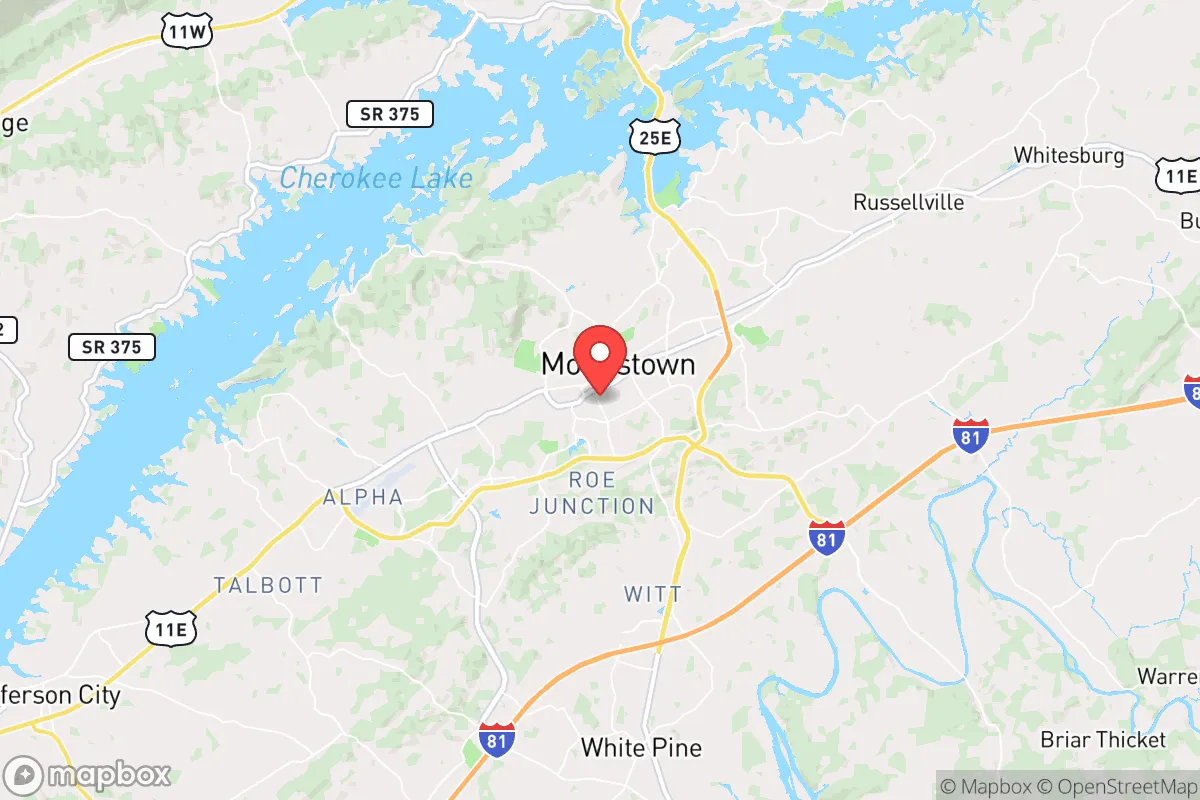
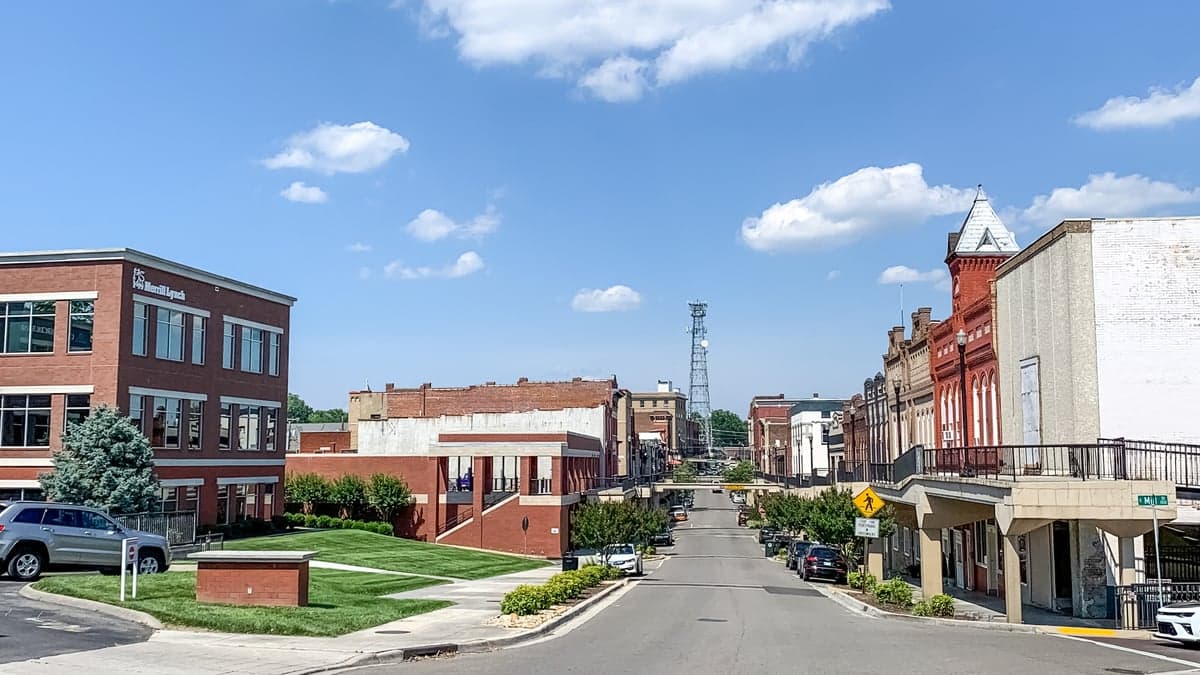
Photo: Wikipedia
Political ClimatePolitical Climate in Morristown, TN
District shown is the primary district for this city’s centroid. Cities may span multiple districts.
Local Political AnalysisPolitical Analysis of Morristown, TN
Morristown, Tennessee, sits deep in conservative territory, with a Cook PVI of R+29 that puts it among the most reliably Republican small cities in the state. That number isn't just a statistic—it reflects a community where traditional values and limited government have been the bedrock for generations. The political lean here hasn't budged much in decades, and while you'll hear rumblings about national trends creeping in, the local trajectory remains firmly red. The 2024 presidential results in Hamblen County mirrored that, with the GOP candidate pulling in over 75% of the vote, a pattern that's held steady since the early 2000s.
How it compares
Drive 30 minutes west to Knoxville, and you'll feel a shift—Knox County votes Republican but with a softer edge, and the city itself has pockets of progressive activism, especially around the university. Head east to Greeneville, and you're in similar territory to Morristown, though Greene County leans a bit more moderate on social issues. The real contrast is south toward Chattanooga, where Hamilton County has trended purple in recent cycles, with Democratic gains in the city proper. Morristown, by contrast, has stayed insulated from that drift. The surrounding towns like Jefferson City and White Pine mirror the local sentiment, but Morristown's size and industrial base make it a bellwether for the region's conservative identity. If you're looking for a place where the political temperature hasn't warmed to progressive ideas, this is it.
What this means for residents
For folks living here, the political climate translates into a government that mostly stays out of your business. Property taxes are low, zoning is minimal, and there's little appetite for the kind of overreach you see in blue states—no mask mandates that drag on, no heavy-handed business closures, no school curriculum battles that feel like they're coming from D.C. The local school board and county commission are stacked with conservatives who prioritize local control. That said, there's a growing concern among long-time residents about outside influence. As Morristown grows—new warehouses, more transplants from California and New York—there's a quiet worry that the political culture could shift. The 2022 school board elections saw a few candidates with more moderate views gain traction, which raised eyebrows. Most folks here see that as a warning sign, not a trend, but it's worth watching.
Culturally, Morristown holds onto distinctions that set it apart from the coastal chaos. The annual Morristown Cruise-In and the Cherokee Lake recreation areas are community touchstones that reinforce a slower, family-oriented pace. Politically, the city has resisted adopting the kind of diversity, equity, and inclusion programs that have become standard in larger Tennessee cities like Nashville or Memphis. The local paper, the Citizen Tribune, still runs editorials that champion Second Amendment rights and fiscal conservatism without apology. If you're someone who values personal freedom over government mandates, Morristown feels like a refuge. But the key is staying engaged—because the moment you assume the politics will stay the same without effort, that's when the door cracks open for the kind of progressive overreach that's hollowed out other communities.

State Political ClimatePolitical Climate in Tennessee
State Political AnalysisPolitical Environment in the State
Tennessee has become one of the most reliably conservative states in the country, with a Republican trifecta controlling the governorship and both legislative chambers since 2011. The state’s partisan lean has shifted sharply rightward over the past two decades, driven by a combination of rural realignment, suburban flight from Democratic dominance, and an influx of conservative migrants from California, Illinois, and the Northeast. In 2024, Donald Trump carried Tennessee by over 30 points, and Republicans hold supermajorities in both the state House and Senate, making it a safe bet for anyone seeking a policy environment that prioritizes limited government, traditional values, and personal freedom.
Urban vs. rural divide
The political map of Tennessee is a textbook case of the urban-rural split. The major metros—Nashville (Davidson County) and Memphis (Shelby County)—vote reliably Democratic, with Nashville trending further left as it has grown into a national hub for music, tech, and entertainment. Memphis remains a Democratic stronghold, though its population has declined, reducing its statewide influence. Knoxville and Chattanooga are more purple, with Knox County voting Republican by about 20 points and Hamilton County (Chattanooga) leaning red but with a growing blue urban core. The real engine of Tennessee’s conservatism is the vast rural and exurban expanse: counties like Williamson (south of Nashville), Rutherford (Murfreesboro), and Wilson (Lebanon) have become Republican strongholds as families and businesses flee Nashville’s rising taxes and progressive policies. Franklin and Brentwood in Williamson County are among the wealthiest and most conservative suburbs in the South, while Clarksville (Montgomery County), home to Fort Campbell, leans red due to its military and veteran population. The rural counties of East Tennessee—like Greene, Carter, and Unicoi—are deeply red, often voting 80%+ Republican.
Policy environment
Tennessee’s policy environment is a model for conservative governance. There is no state income tax on wages or salaries, a major draw for high-earners and retirees. The state sales tax is high (7% base, plus local add-ons), but the overall tax burden is low. The regulatory climate is business-friendly, with right-to-work laws and minimal red tape. On education, Tennessee has embraced school choice: the state’s Education Savings Account (ESA) program, expanded in 2023, allows families in participating counties to use public funds for private school tuition, homeschooling, or tutoring. The state also passed a “Parents’ Bill of Rights” in 2022, requiring schools to notify parents of curriculum changes and medical services. Healthcare policy is limited-government: Tennessee did not expand Medicaid under the Affordable Care Act, and the state has some of the lowest per-capita healthcare spending in the nation. Election laws are secure: voter ID is required, and the state purges inactive voters regularly. There is no early voting by mail without an excuse, and absentee ballots are tightly controlled. The state also passed a law in 2021 banning private funding of election administration, a direct response to the “Zuckerbucks” controversy.
Trajectory & freedom
Tennessee is moving decisively toward greater personal freedom in most areas, though some trends warrant caution. On gun rights, the state enacted constitutional carry in 2021, allowing permitless carry of handguns for law-abiding adults. In 2023, the legislature passed a law prohibiting local governments from enforcing federal gun laws that conflict with state law—a direct nullification measure. On parental rights, the 2022 “Parents’ Bill of Rights” and the 2023 law banning gender transition procedures for minors (the “Youth Health Protection Act”) have made Tennessee a leader in protecting children from medical experimentation. On speech and religious liberty, the state passed a law in 2023 requiring public schools to display the Ten Commandments, though it is currently tied up in litigation. However, there are concerning signs: the state’s business courts and economic development incentives have grown more interventionist, and the influx of out-of-state migrants—especially in Nashville and Williamson County—is slowly diluting the state’s cultural conservatism. The Tennessee Valley Authority (TVA) remains a federal entity, limiting local control over energy policy, and the state’s reliance on federal highway and Medicaid dollars creates a dependency that could be leveraged by Washington in the future.
Civil unrest & political movements
Tennessee has seen its share of political flashpoints. The 2020 Nashville bombing on Christmas morning was a lone-wolf attack that raised questions about domestic extremism, but the city’s response was measured. More visible are the organized activist movements: Moms for Liberty has a strong presence in Williamson and Rutherford counties, pushing back against school board policies on critical race theory and LGBTQ content. On the left, Indivisible and Showing Up for Racial Justice (SURJ) have chapters in Nashville and Memphis, but their influence is limited to those cities. Immigration politics are relatively quiet—Tennessee is not a border state, and the foreign-born population is low (around 5%). There are no sanctuary cities; in fact, the state passed a law in 2023 requiring local law enforcement to cooperate with ICE. Election integrity controversies have been minimal, though the 2020 election saw some localized disputes over absentee ballot processing in Shelby County. The Tennessee Three controversy in 2023—where two Democratic state representatives were expelled for protesting gun control on the House floor—was a national story but largely a partisan spectacle that energized the GOP base. A new resident would notice a general sense of order: protests are rare outside of college campuses (University of Tennessee in Knoxville, Vanderbilt in Nashville), and political violence is virtually nonexistent.
Projection
Over the next 5-10 years, Tennessee will likely remain solidly red, but the margins may narrow slightly due to demographic shifts. The state is growing fast—adding over 500,000 residents between 2010 and 2020—and many newcomers are from blue states. While most of these migrants are conservative-leaning (fleeing high taxes and crime), a significant minority are younger, more secular, and more moderate, especially those moving to Nashville for tech and creative jobs. The Nashville metro is the key battleground: as Davidson County becomes more liberal, the surrounding suburbs (Williamson, Rutherford, Wilson) are absorbing the overflow, and those counties are likely to become more competitive over time. However, the state legislature is likely to continue gerrymandering to protect Republican supermajorities, and the rural counties will remain deeply red. The biggest wildcard is the Tennessee Valley Authority and federal energy policy: if the federal government pushes a Green New Deal-style agenda, it could create friction with the state’s coal and natural gas interests. On social issues, expect more battles over school curriculum, transgender rights, and religious liberty—the legislature is likely to keep pushing the envelope. For a new resident, the bottom line is that Tennessee will remain a conservative haven for at least the next decade, but the cultural and political temperature will slowly warm as the state diversifies.
Bottom line for a new resident: If you’re moving to Tennessee for freedom—low taxes, gun rights, school choice, and limited government—you’ll find it in spades, especially if you settle in the suburbs or rural areas. Avoid Nashville and Memphis if you want to avoid progressive city politics. The state is stable, safe, and growing, but keep an eye on the legislature for any signs of creeping federal influence or cultural drift. Tennessee is still the best bet in the South for a conservative lifestyle, but it’s not immune to the national trends—so choose your county wisely.
* Values derived from national, state, county, city and local statistics and may differ in a specific area. Last updated: 2026-05-01T02:46:40.000Z
Narrative content on this page is AI-generated and may contain mistakes. Verify any details that matter before acting on them.
ReloMaps may earn a commission from affiliate links at no extra cost to you.

