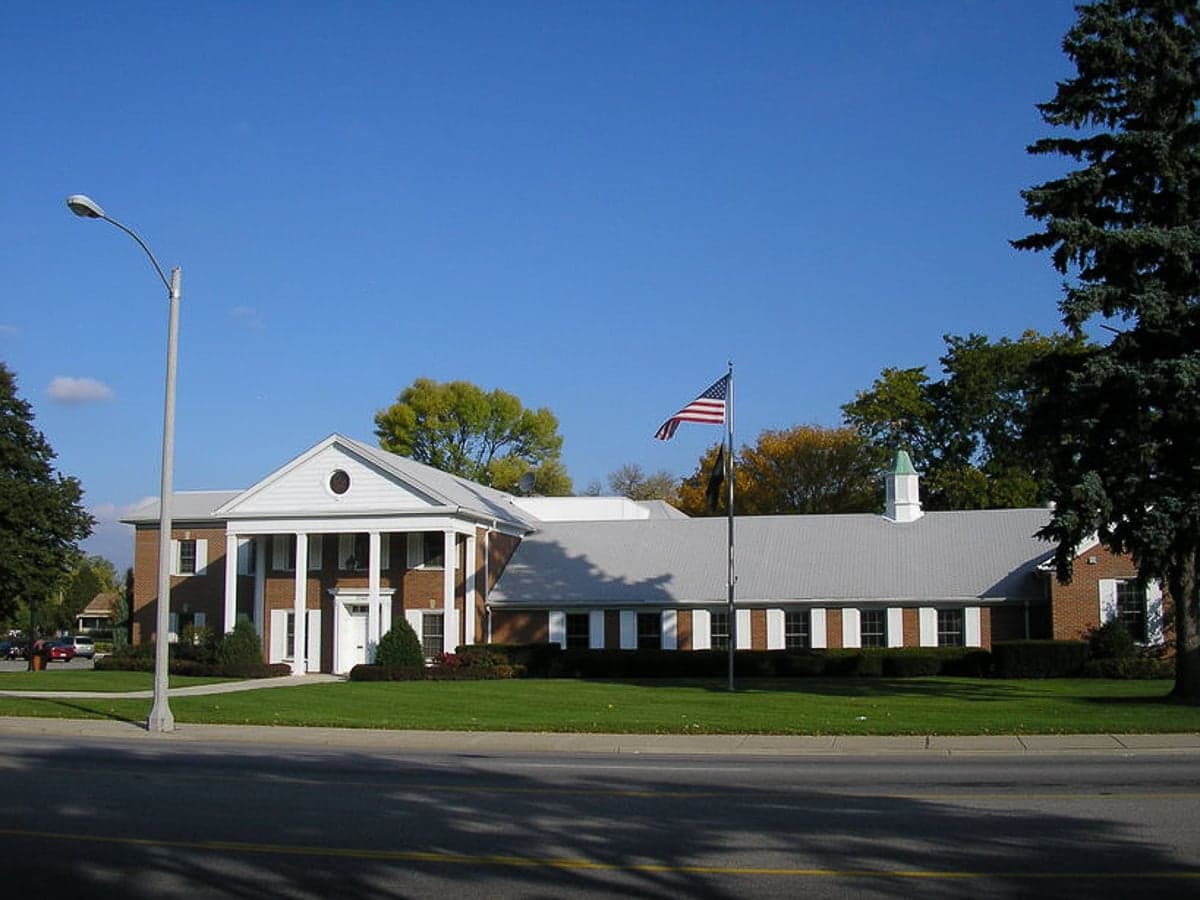
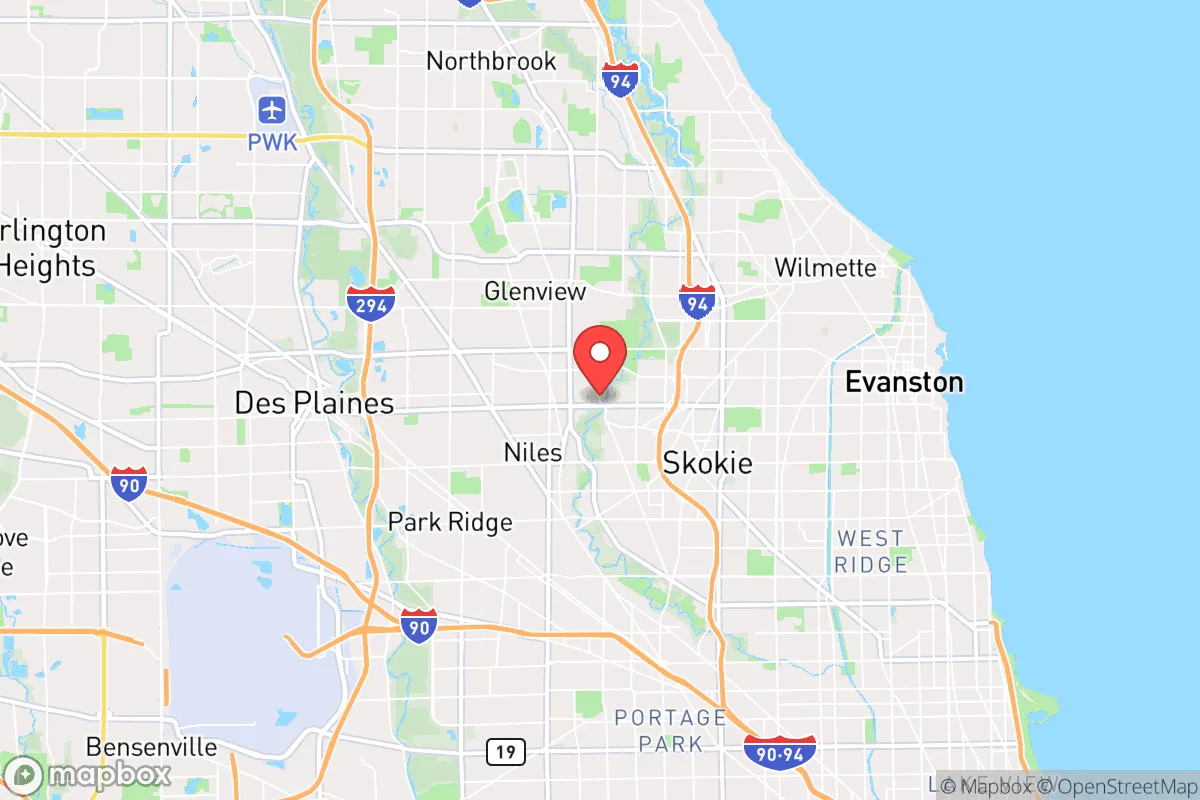
Photo: Wikipedia
Demographics of Morton Grove, IL
Affluence Level in Morton Grove, IL
A middle-class area roughly in line with national averages across income, home values, education, and employment.
People of Morton Grove, IL
Morton Grove, Illinois, is a village of 24,687 residents defined by its layered immigrant history and its current status as one of Chicago’s most ethnically diverse inner-ring suburbs. Today, the population is roughly 53% White, 17% Indian (subcontinent), 15% East/Southeast Asian, and 8% Hispanic, with a foreign-born share of 9.5% and a college-educated rate of 52.1%. The village’s identity is a practical, middle-class blend of old Chicago-area families and successive waves of newcomers who have each left a distinct mark on its neighborhoods.
How the city was settled and grew
Morton Grove’s growth was a product of the railroad, not colonial-era settlement. Incorporated in 1895, the village remained a sparsely populated farming community until the Chicago & North Western Railway laid tracks through the area, connecting it directly to downtown Chicago. The first significant population wave arrived in the 1910s and 1920s: German and Polish immigrants and their descendants, along with a smaller number of Swedish families, who built modest single-family homes on large lots. These original settlers concentrated in the Old Town district along Lincoln Avenue and the Golf Mill area’s western edge, where the village’s oldest surviving houses and churches still stand. The post-World War II era brought a second, larger wave of second- and third-generation European ethnics—Italians, Irish, and more Poles—who left Chicago’s crowded Northwest Side for new bungalows and Cape Cods. This boom filled out the Harrer Park and Beckwith Manor neighborhoods, which remain the village’s most established, tree-lined residential districts.
Modern era (post-1965)
The passage of the 1965 Hart-Celler Act, which ended national-origin quotas, fundamentally reshaped Morton Grove’s population. The first major post-1965 arrivals were East and Southeast Asian families—primarily Chinese, Korean, and Filipino—who began settling in the village in the 1970s and 1980s. They were drawn by the same factors as the earlier European waves: good schools, safe streets, and a commute to Chicago. These families concentrated in the Nottingdale and Cherokee Heights subdivisions, which today have some of the village’s highest Asian population shares. The most dramatic shift, however, came in the 1990s and 2000s with the arrival of Indian families from the subcontinent. Many were highly educated professionals in medicine, engineering, and information technology, drawn to the area’s proximity to NorthShore University HealthSystem hospitals and Chicago’s tech corridor. Indian families concentrated heavily in the Fernald Avenue corridor and the newer Village Green townhome developments, where they now make up a substantial plurality of residents. This wave has been so significant that Indian residents (16.9%) now outnumber East/Southeast Asian residents (14.6%), making Morton Grove one of the few Chicago suburbs where the Indian population is the largest non-White group. The Hispanic population (7.9%) grew steadily but more modestly, settling primarily in the older, more affordable housing stock near the village’s southern border with Niles.
The future
Morton Grove’s population is becoming more diverse, not less, and the trend shows no sign of reversing. The White share has declined steadily from over 80% in 1980 to 53.2% today, while the combined Indian and East/Southeast Asian share has risen to roughly 32%. The Indian population, in particular, is the fastest-growing segment, driven by both continued immigration and high birth rates among established families. New construction is limited—the village is almost fully built out—so future growth will come from redevelopment and the resale of existing homes. This means new Indian and Asian families are dispersing beyond their original enclaves into the Old Town and Harrer Park areas, gradually integrating neighborhoods that were once exclusively White. The village’s cultural identity is evolving from a classic European-ethnic suburb into a genuinely pan-Asian and South Asian hub, with Indian grocery stores, restaurants, and cultural organizations now anchoring the Lincoln Avenue commercial strip. The school district, Golf School District 67, has seen its non-White enrollment exceed 50%, a leading indicator of the demographic trajectory.
For someone moving to Morton Grove today, the bottom line is this: you are buying into a stable, well-maintained, and increasingly multicultural community that has successfully absorbed wave after wave of newcomers without losing its middle-class character. The village is no longer a predominantly White, European-ethnic enclave—it is a majority-minority suburb where Indian and East/Southeast Asian families are now the demographic engine. If you value diversity, strong public schools, and a safe, commuter-friendly location, Morton Grove offers a rare combination of stability and demographic dynamism. If you are looking for a homogeneous, traditionalist community, however, the village’s trajectory is clearly toward greater pluralism, and that is unlikely to change.

* Values derived from national, state, county, city and local statistics and may differ in a specific area. Last updated: 2026-10-21T01:16:13.000Z
Narrative content on this page is AI-generated and may contain mistakes. Verify any details that matter before acting on them.
ReloMaps may earn a commission from affiliate links at no extra cost to you.

