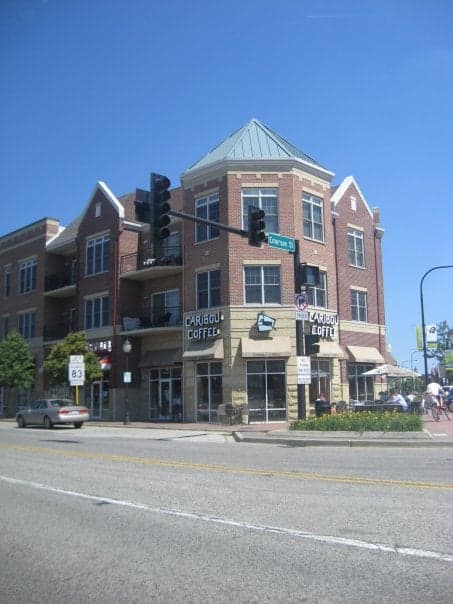
Photo: Wikipedia
Find The Best Places To Live
in Mount Prospect
PRO TIP! You can paste a Zillow or Redfin link to get info on that property.
What It's Like Living in Mount Prospect, IL
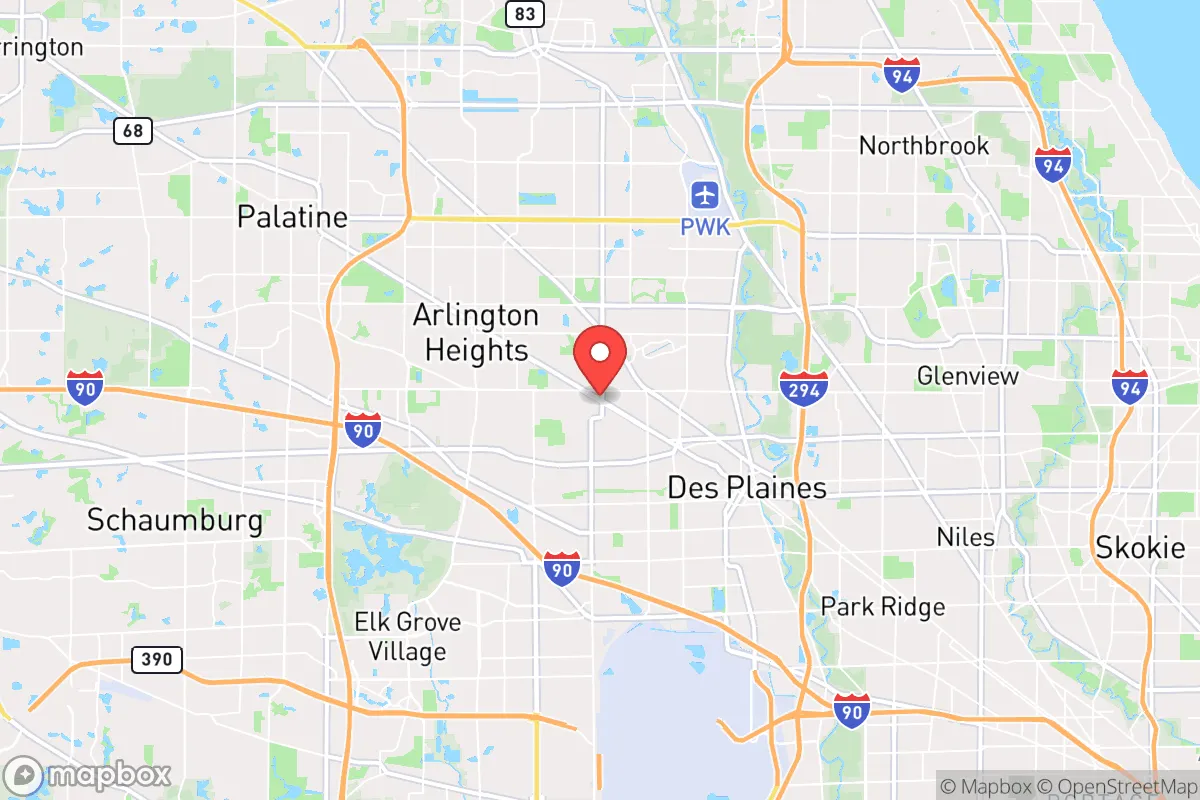
Mount Prospect, Illinois, feels like a place that got the balance right—close enough to Chicago that you can be at Wrigley Field in 45 minutes on the Metra, but far enough out that your backyard doesn’t belong to someone else. It’s a village of about 55,600 people where the median age hovers around 41.7, and the median household income sits at a comfortable $103,911. That number tells you something: this is a community built around stability, not flash. People here tend to stay put, raise kids, and take the same train into the city for decades, and the town rewards that loyalty with good schools, low violent crime (50.8 per 100,000 residents—well below national averages), and a pace that doesn’t try to impress anyone.
The Daily Rhythm: Trains, Yards, and Familiar Faces
Most mornings in Mount Prospect start with the rumble of the Metra Union Pacific Northwest line. The average commute clocks in at about 27 minutes, which is manageable for a Chicago suburb—short enough that you’re not losing your life to the drive, long enough to finish a podcast or a chapter. The train station at Northwest Highway and Busse Avenue is the town’s real heartbeat; on weekdays, you’ll see a steady stream of commuters in button-downs and sneakers, grabbing coffee from the local Dunkin’ or the counter at Mika’s Cafe before heading downtown. By 6 p.m., the platform fills back up, and the village exhales.
Weekends are slower and more local. People shop at the Mount Prospect Farmers Market on Saturdays from June through October, which sets up in the village hall parking lot and draws a crowd that actually knows each other’s names. The Randhurst Village shopping center—once a dead mall, now a mixed-use development with a Target, a movie theater, and a handful of chain restaurants—handles the errands. But the real character lives in the older strips: Busse Avenue between Central and Euclid has a few independent spots like Mago Grill & Cantina (solid Mexican, busy on Friday nights) and Tap House Grill, where the beer list is long and the TVs are tuned to whatever Chicago team is playing. For a town of 55,000, there’s no shortage of places to grab a burger and a pint without feeling like you’re in a tourist trap.
Sports, Schools, and the Fabric of Community
High school sports are a genuine deal here. Prospect High School (the Knights) and Mount Prospect’s own St. Viator (the Lions) draw real crowds for Friday night football in the fall. If you didn’t grow up in the area, it might surprise you how many adults show up to those games without kids on the field—it’s just what you do. The town sits about 20 miles northwest of Chicago, so pro allegiances are split predictably: Cubs vs. White Sox debates are common, but the Bears, Bulls, and Blackhawks are unifying. You’ll see more Cubs gear than anything else, partly because Wrigley Field is a straight shot down the Kennedy, and partly because the 2016 championship still echoes in every bar that has a “W” flag hanging.
The schools themselves are a major reason families land here. Mount Prospect School District 57 and Prospect Heights School District 23 feed into Township High School District 214, which is consistently ranked among the best in the state. Nearly half the adults in town (48.6%) hold a college degree, and that shows in the PTO meetings, the youth sports leagues, and the general expectation that kids will go somewhere after high school. It’s not a pressure-cooker environment—more of a steady, middle-class ambition that feels earned rather than anxious.
What’s There to Do: Festivals, Parks, and the Occasional Quirk
Mount Prospect has a few annual events that define the calendar. Mount Prospect’s Fourth of July parade is the kind of small-town spectacle that makes you nostalgic for something you might not have even experienced—fire trucks, Shriners in go-karts, kids on bikes with streamers. The Mount Prospect Lions Club Oktoberfest in September is another big one, with beer tents, live polka bands, and bratwurst that draws people from surrounding suburbs. For music, Busse Woods (technically Ned Brown Preserve) hosts the Mount Prospect Music & Arts Festival each summer, a free weekend of local bands and craft vendors that fills the forest preserve with lawn chairs and coolers.
Outdoor life revolves around Busse Woods itself—a massive 3,700-acre Cook County forest preserve with a lake for fishing and kayaking, miles of paved bike trails, and a herd of elk you can see from the road. It’s the kind of place where you can run a 10K on Saturday morning and never cross a street. For something quirkier, the Mount Prospect Historical Society’s Dietz House (an 1880s farmhouse) offers a glimpse of what the area looked like before the subdivisions, and the Mount Prospect Public Library is unusually good for a suburb its size—busy, well-funded, and full of kids after school.
Pros and Cons: The Honest Trade-Offs
- Pro: Safety and schools. The violent crime rate of 50.8 per 100,000 is roughly a third of the national average. Parents let their kids bike to the park without a second thought. The schools are strong without being cutthroat.
- Pro: Commute convenience. The Metra station puts you in Chicago’s Ogilvie Transportation Center in about 40 minutes. For a suburb this affordable (median home value $377,000, cost of living index 129), that’s a solid trade-off.
- Con: Property taxes. Illinois is Illinois. Mount Prospect’s property tax rates are high—expect to pay around 2.5% of assessed value annually. That $377,000 home comes with a tax bill that stings, especially for newcomers not used to the state’s system.
- Con: Not a nightlife destination. If you want clubs, late-night music venues, or a vibrant bar scene past midnight, you’re driving to Chicago or maybe Arlington Heights. Mount Prospect’s social life is built around dinner out, house parties, and high school sports—fine for families, less so for singles in their 20s.
- Con: Winters. Lake-effect snow and wind off the plains make January and February feel longer than they are. The village does a good job plowing, but you’ll own a snowblower or pay someone who does.
The kind of person who fits in Mount Prospect is someone who values predictability over novelty. It’s a place for people who want good schools, a safe yard, and a train ride to the city when they need it—not for those chasing trendiness or a 24-hour social calendar. The median age of 41.7 reflects that: this is a town of established careers, second mortgages, and weekends spent at soccer games or the forest preserve. If that sounds like your speed, you’ll find a community that’s quietly proud of what it’s built, and not particularly interested in changing it.

Similar small cities to Mount Prospect
* Values derived from national, state, county, city and local statistics and may differ in a specific area. Last updated: 2026-04-23T10:21:19.000Z
Narrative content on this page is AI-generated and may contain mistakes. Verify any details that matter before acting on them.
ReloMaps may earn a commission from affiliate links at no extra cost to you.

