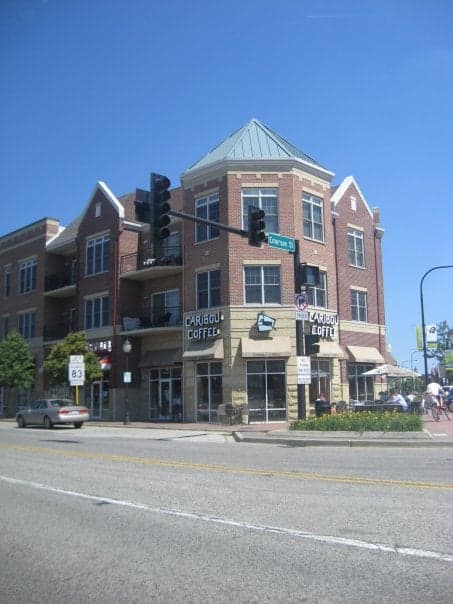
Photo: Wikipedia
Political ClimatePolitical Climate in Mount Prospect, IL
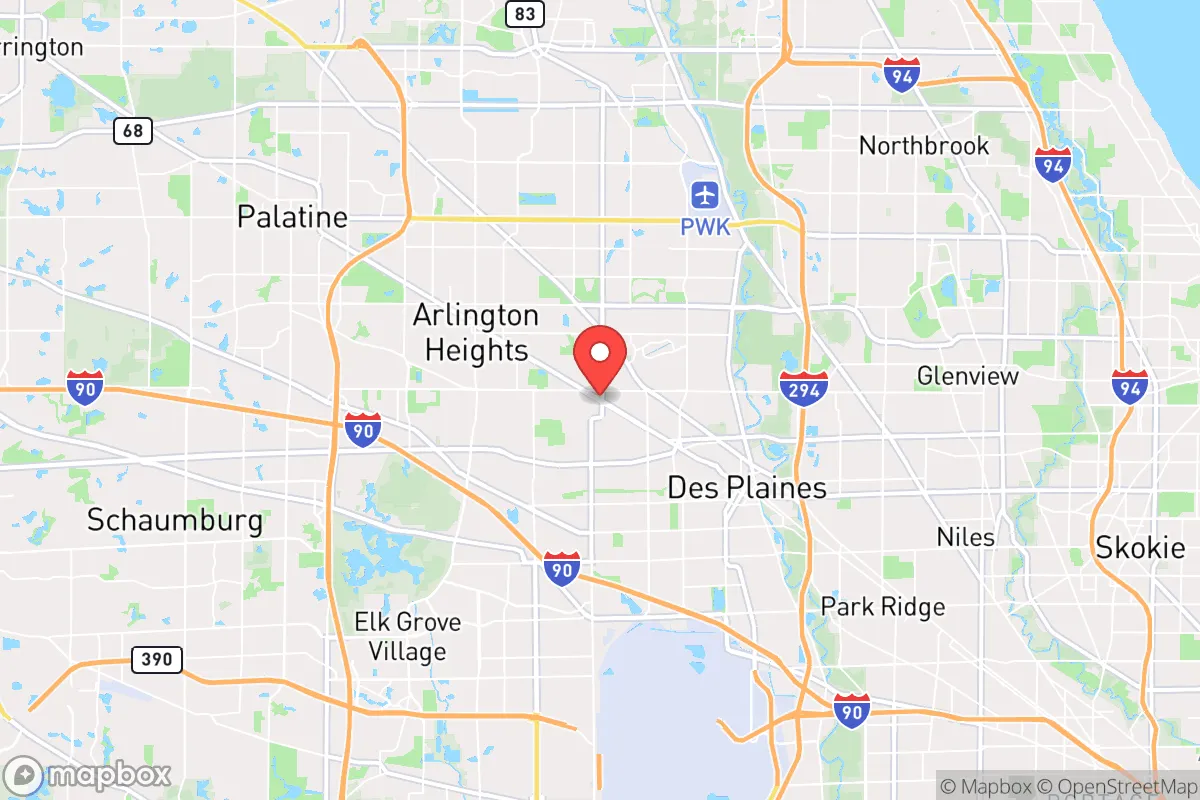
District shown is the primary district for this city’s centroid. Cities may span multiple districts.
Local Political AnalysisPolitical Analysis of Mount Prospect, IL
Mount Prospect has long been a classic example of a moderate, middle-class Chicago suburb where folks historically valued fiscal responsibility and local control over their own lives. For decades, the village leaned reliably Republican in national elections, but like many similar communities in Cook County, it has shifted noticeably to the left over the past 15 years. The 2020 presidential election saw Joe Biden carry the village by roughly 15 points, a stark contrast to the tight races of the 1990s and early 2000s, and local school board and village trustee elections have increasingly been won by candidates backed by progressive organizations. The trajectory is clear: the old-school, live-and-let-live conservatism that defined the place is being steadily replaced by a more activist, government-centric approach.
How it compares
To understand Mount Prospect’s political drift, you have to look at its neighbors. Head west a few miles into Arlington Heights or Palatine, and you’ll find a similar pattern—moderate suburbs that have gone blue in presidential years but still elect some Republicans locally. But drive just a bit further northwest to Barrington or Inverness, and you’re in reliably red territory where property taxes are still a top concern and the idea of a county-mandated paid leave ordinance is met with serious skepticism. The real contrast is with Evanston or Oak Park to the east, which have fully embraced progressive policies like reparations programs and strict rent control. Mount Prospect is caught in the middle—not as conservative as the far northwest suburbs, but not as far-left as the lakefront communities. Still, the pressure is mounting, and the village board’s recent votes on things like inclusionary zoning mandates and expansion of local government health insurance coverage for gender transition procedures show which way the wind is blowing.
What this means for residents
For a longtime resident who values personal freedom and limited government, the biggest red flag is the creeping expansion of local bureaucracy into daily life. The village has adopted sick leave mandates that go beyond state law, forcing small business owners to navigate a new layer of paperwork and compliance. There’s also been a push for “equity” audits in the school district, which many see as a backdoor to curriculum changes and hiring quotas that prioritize ideology over merit. Property taxes, already among the highest in the nation, keep climbing to fund these new programs, and there’s little appetite on the current board to push back against county-level mandates from Cook County. If you run a small business, own a rental property, or just want to be left alone to raise your family without government interference, you’re going to feel increasingly squeezed.
The cultural and policy distinctions here are subtle but real. Mount Prospect still has a strong sense of community—the Mount Prospect Historical Society and the annual Fourth of July parade draw big crowds—but the political energy has shifted. The local Democratic organization is now more active and better funded than the Republican one, and the village’s sustainability commission is pushing for net-zero building codes that will drive up construction costs. The old guard of small-business owners and retired cops who ran the village for decades is fading, replaced by a new class of professionals who see government as a tool for social engineering. If you’re looking for a place that still respects individual liberty and local control, you might want to keep an eye on Hoffman Estates or Streamwood to the west, where the political culture is still a bit more skeptical of government overreach. Mount Prospect isn’t there yet, but it’s heading in that direction faster than most people realize.

State Political ClimatePolitical Climate in Illinois
State Political AnalysisPolitical Environment in the State
Illinois is a solidly blue state in federal elections, having voted Democratic in every presidential contest since 1992, but its political reality is far more complicated than that label suggests. The state is dominated by the Chicago metropolitan area, which accounts for roughly 65% of the population and drives the statewide Democratic majority, while the rest of Illinois—particularly downstate and the collar counties—has been trending sharply red over the past two decades. For a conservative considering relocation, the state offers a stark choice: live in a high-tax, heavily regulated blue enclave or find refuge in increasingly red rural and exurban areas where the culture and governance feel more like neighboring Indiana or Missouri.
Urban vs. rural divide
The political map of Illinois is a tale of two worlds. Cook County, home to Chicago, delivers massive Democratic margins—often 75-80% of the vote—while the rest of the state votes Republican by similar margins. The collar counties (DuPage, Lake, Kane, McHenry, Will) were once reliably red but have shifted purple or blue in recent cycles, driven by suburban professional-class migration and demographic change. For example, DuPage County, which voted for George W. Bush by 15 points in 2004, voted for Joe Biden by 8 points in 2020. Meanwhile, downstate regions like the Metro East area near St. Louis, the Quad Cities, and the southern tip around Cairo remain deeply red, with counties like Effingham and Jasper routinely voting 70-80% Republican. The city of Rockford in Winnebago County is a notable swing area—it voted for Obama twice but flipped to Trump in 2016 and 2020, reflecting the broader working-class realignment. The divide is so pronounced that some downstate counties have passed symbolic resolutions to secede from Illinois and join Indiana or Missouri, though none have legal force.
Policy environment
Illinois’s policy environment is defined by aggressive taxation and regulation, which is the primary reason conservatives look elsewhere. The state has the second-highest property tax burden in the nation, with an average effective rate of 2.07%—meaning a $300,000 home carries roughly $6,200 in annual property taxes. The state income tax is a flat 4.95%, but a 2020 advisory referendum to move to a progressive income tax (which would have raised rates on high earners) was rejected by voters, though the legislature may revisit it. Sales tax rates can exceed 10% in Chicago and Cook County. On education, Illinois mandates a comprehensive sex education curriculum and has some of the strongest teacher union protections in the country, with Chicago Teachers Union strikes becoming a near-annual event. Healthcare policy is heavily regulated, with the state expanding Medicaid under the ACA and mandating coverage for abortion and gender transition procedures. Election laws are among the most liberal: no-excuse mail-in voting, same-day registration, and automatic voter registration are all in place, which conservatives view as ripe for fraud. The state also has a sanctuary law (the Illinois Trust Act) that limits local law enforcement cooperation with federal immigration authorities.
Trajectory & freedom
Illinois has been on a clear trajectory of decreasing personal and economic freedom over the past decade. The most significant contraction came with the 2013 passage of the Illinois Firearm Owners Identification (FOID) Card Act and the 2023 Protect Illinois Communities Act, which banned the sale of many semi-automatic rifles and high-capacity magazines—a direct response to the Highland Park parade shooting. This law is currently being challenged in federal court, but it represents a major erosion of Second Amendment rights. On parental rights, the state passed the Keeping Youth Safe and Healthy Act in 2021, which mandates that schools provide LGBTQ-inclusive curriculum and allows students to access mental health services without parental consent. The Reproductive Health Act of 2019 codified abortion as a "fundamental right" and removed nearly all restrictions, including parental notification for minors. Property rights have been weakened by the state’s aggressive use of eminent domain for private development, particularly in Chicago. On the positive side for conservatives, Illinois has no right-to-work law, but it also has no state-level rent control preemption, meaning local governments can impose rent caps. The overall trend is unmistakable: Illinois ranks 49th in the Cato Institute's Freedom in the 50 States index, ahead of only New York and California.
Civil unrest & political movements
Illinois has seen significant civil unrest, particularly in Chicago, where the 2020 George Floyd protests escalated into widespread looting and property destruction, causing an estimated $66 million in damages. The city’s response—or lack thereof—led to a surge in conservative activism in the suburbs and downstate. The Illinois Family Institute and Awake Illinois have become prominent grassroots groups opposing mask mandates, critical race theory in schools, and the sanctuary state policy. Immigration politics are a flashpoint: the state’s sanctuary law has led to tensions with the Trump administration, and in 2022, Governor Pritzker sent Illinois National Guard troops to the Texas border—a move that angered both pro-immigration and anti-immigration activists. Election integrity remains a hot-button issue, with conservatives pointing to the 2020 election’s universal mail-in ballots as a source of fraud, though no major cases have been proven. The City of Chicago has seen a rise in organized crime and carjackings, which has fueled a "law and order" movement in the suburbs, with towns like Orland Park and Tinley Park electing more conservative mayors in recent cycles.
Projection
Over the next 5-10 years, Illinois is likely to become even more polarized. The Chicago metro area will continue to drive Democratic majorities, but the exurbs and downstate will become more intensely Republican as conservative-leaning families flee Cook County and the collar counties for places like McHenry County (which voted 58% for Trump) or Effingham County (75% Trump). The state’s population is already shrinking—Illinois lost nearly 200,000 residents between 2020 and 2024—and the exodus is disproportionately from the blue parts of the state, which could eventually shift the balance if trends continue. However, the state’s political structure is deeply entrenched: Democratic supermajorities in the legislature, a Democratic governor, and a heavily gerrymandered map make it nearly impossible for Republicans to win statewide office. A new resident moving to Illinois today should expect that the state will remain a Democratic stronghold for the foreseeable future, with the policy environment becoming more progressive, not less. The only realistic hope for conservatives is to live in one of the red enclaves—like Edwardsville or Quincy—where local governance is more aligned with their values, but they will still pay high property taxes and be subject to state-level mandates.
For a conservative considering Illinois, the bottom line is this: you can find like-minded communities in the rural and exurban areas, but you will be fighting an uphill battle against a state government that is actively expanding its reach into your personal life, your wallet, and your family’s education. If you value low taxes, gun rights, and local control, Illinois is likely not your best bet—neighboring Indiana, Missouri, or even Wisconsin offer a much friendlier environment. But if you have family or job ties that keep you here, the red pockets of the state provide a livable, if imperfect, alternative. Just know that every election cycle, you’ll be voting to hold back a tide that shows no sign of receding.
* Values derived from national, state, county, city and local statistics and may differ in a specific area. Last updated: 2026-04-23T10:21:19.000Z
Narrative content on this page is AI-generated and may contain mistakes. Verify any details that matter before acting on them.
ReloMaps may earn a commission from affiliate links at no extra cost to you.

