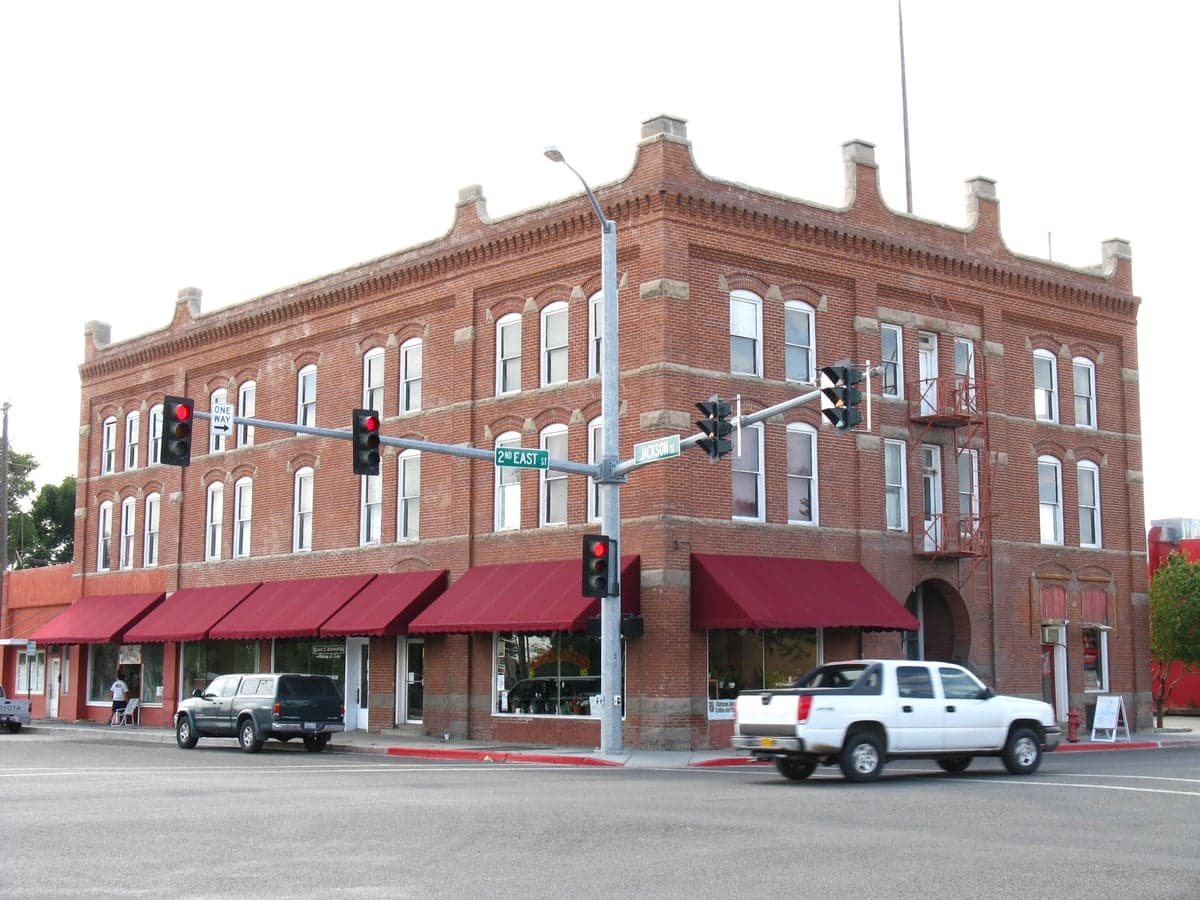
Photo: Wikipedia
Personal Sovereignty in Mountain Home, ID
Moderate friction. Expect trade-offs in some aspect of personal liberty and independence.
What does Personal Sovereignty tell us?
Personal Sovereignty measures your capacity for self-reliance and independence with minimal government friction. Higher scores mean fewer barriers between you and the way you want to live... but it assumes you have the space you need and good neighbors.
What does this tell us?
Personal Sovereignty measures your capacity for self-reliance and independence with minimal government friction. Higher scores mean fewer barriers between you and the way you want to live... but it assumes you have the space you need and good neighbors.
State Policy
Energy independence: Importer (25% of energy produced in-state)
Personal Liberty
Homesteading

Personal Liberty Analysis
Mountain Home, Idaho, offers a notably high degree of personal sovereignty, particularly when measured against the encroaching regulatory frameworks common in coastal and urban states. For the individual or family operating from a survivalist or prepper mindset, this area represents a strategic choice where state-level protections for gun rights, property use, and parental authority create a buffer against federal overreach. The local culture, rooted in self-reliance and a distrust of centralized control, reinforces a legal environment that prioritizes individual decision-making over government mandates, making it a serious consideration for those seeking to minimize external interference in their daily lives and long-term preparations.
Tax burden and regulatory posture: How the state protects your income and property
Idaho’s fiscal and regulatory climate is designed to leave more resources in your hands, a critical factor for anyone building a self-sufficient homestead or stockpiling supplies. The state imposes a flat income tax rate of 5.8%, a structure that avoids the progressive brackets that penalize higher earners and small business owners. Property taxes in Elmore County, where Mountain Home sits, are moderate, with an effective rate typically around 0.7% to 0.9% of assessed value, significantly lower than the national average of 1.1%. There is no state-level estate or inheritance tax, meaning your assets—whether land, equipment, or precious metals—pass to your heirs without the state taking a cut. On the regulatory front, Idaho operates with a presumption against new business and land-use restrictions. The state’s “right to farm” laws are robust, protecting agricultural operations from nuisance lawsuits, which is vital if you plan to raise livestock or run a food-production operation. Permitting for structures like barns, workshops, or even a detached bunker is generally less onerous than in more densely regulated states, though you will still need to navigate county-level building codes, particularly for septic systems and wells. The overall posture is one of restraint: the state government is not actively seeking new ways to tax or regulate your personal projects, which directly supports a prepper’s goal of accumulating and managing resources without bureaucratic friction.
Self-defense and gun law specifics: No compromise on the Second Amendment
For those who view the Second Amendment as a non-negotiable pillar of personal sovereignty, Mountain Home delivers a legal framework that is among the most permissive in the nation. Idaho is a constitutional carry state, meaning no permit is required to carry a concealed firearm for any law-abiding adult 18 or older. This applies to both residents and non-residents, a detail that matters if you are relocating from a restrictive state and need immediate legal protection. There is no state-level registry for firearms, no waiting periods for purchases, and no restrictions on magazine capacity or specific weapon features like pistol grips or flash suppressors. The state preempts all local gun ordinances, so you will not encounter city-level bans on carrying in parks or other public spaces. Stand-your-ground laws are in full effect, with no duty to retreat before using deadly force if you are lawfully present and believe force is necessary to prevent death or great bodily harm. Castle doctrine protections extend to your vehicle and workplace, not just your home. For the prepper, this means your defensive capabilities are limited only by your own training and resources, not by government permission slips. The local sheriff’s office in Elmore County is known for a pro-Second Amendment stance, and the culture in Mountain Home—home to Mountain Home Air Force Base—is one where firearms ownership is normalized and respected.
Self-reliance and homesteading viability: Lot sizes, zoning, and off-grid feasibility
Mountain Home’s geography and zoning codes make it a viable location for a serious self-reliance operation, though the specifics depend on whether you buy inside city limits or in the surrounding unincorporated county. Within the city, standard residential lots range from 0.15 to 0.5 acres, which is enough for a substantial garden and a few small livestock like chickens or rabbits, but not for larger animals or significant crop production. The real opportunity lies in the county, where parcels of 1 to 20 acres are common and affordable, often priced at $3,000 to $8,000 per acre. Zoning in unincorporated Elmore County is generally permissive for agricultural use, including livestock, beekeeping, and aquaculture. Off-grid feasibility is high: the area receives over 200 sunny days per year, making solar power a practical primary energy source. Well drilling is standard, with water typically found at depths of 100 to 300 feet, and the cost to drill and equip a well runs $5,000 to $15,000. Septic systems are required and must meet county health standards, but the permitting process is straightforward compared to states with environmental overlay zones. Burning of brush and debris for land clearing is allowed with a permit, and there are no county-level bans on rainwater collection. For the prepper, the key takeaway is that you can legally build a largely self-sufficient compound—solar panels, well water, septic, food production, and defensive structures—without facing the zoning battles or environmental review processes that would kill such a project in California, Oregon, or Washington.
Personal liberties: Parental rights, medical autonomy, speech, and property
Idaho has positioned itself as a stronghold for personal liberties that directly affect family and individual autonomy. Parental rights are explicitly protected by state law, with a statute that affirms parents have the fundamental right to direct the upbringing, education, and healthcare of their children. This includes the ability to opt out of public school curricula or specific lessons without facing legal retaliation, and the state has passed legislation prohibiting school districts from withholding information about a child’s mental or physical health from parents. Medical autonomy is respected through a broad conscientious objection statute that allows healthcare providers and individuals to refuse participation in procedures they find morally objectionable, and there is no state-level vaccine mandate for adults or children attending public school. On the property front, eminent domain abuse is limited by state law that requires a public purpose and just compensation, and there are strong protections against regulatory takings—meaning the government cannot devalue your land through zoning changes without compensation. Free speech is robustly protected, with no state-level hate speech laws that could be used to silence political or religious expression. For the survivalist, this legal environment means you can homeschool, refuse medical interventions you disagree with, speak openly about preparedness and political dissent, and develop your property without fear of sudden regulatory confiscation of its value.
In the broader landscape of American personal sovereignty, Mountain Home, Idaho, ranks among the top-tier locations for those prioritizing freedom from government overreach. Compared to states like Texas, which has seen erosion of property rights through tax appraisal caps and local zoning creep, or Montana, which faces increasing federal pressure on land use, Idaho’s state-level protections are more comprehensive and less contested. The combination of constitutional carry, low taxes, permissive homesteading laws, and strong parental rights creates a legal ecosystem where an individual can live largely on their own terms. For the prepper or survivalist evaluating relocation, Mountain Home offers a rare alignment of legal, cultural, and geographic factors that support a life of genuine self-reliance, with the state acting as a shield rather than a source of mandates.

* Values derived from national, state, county, city and local statistics and may differ in a specific area. Last updated: 2026-04-19T06:36:43.000Z
Narrative content on this page is AI-generated and may contain mistakes. Verify any details that matter before acting on them.
ReloMaps may earn a commission from affiliate links at no extra cost to you.

