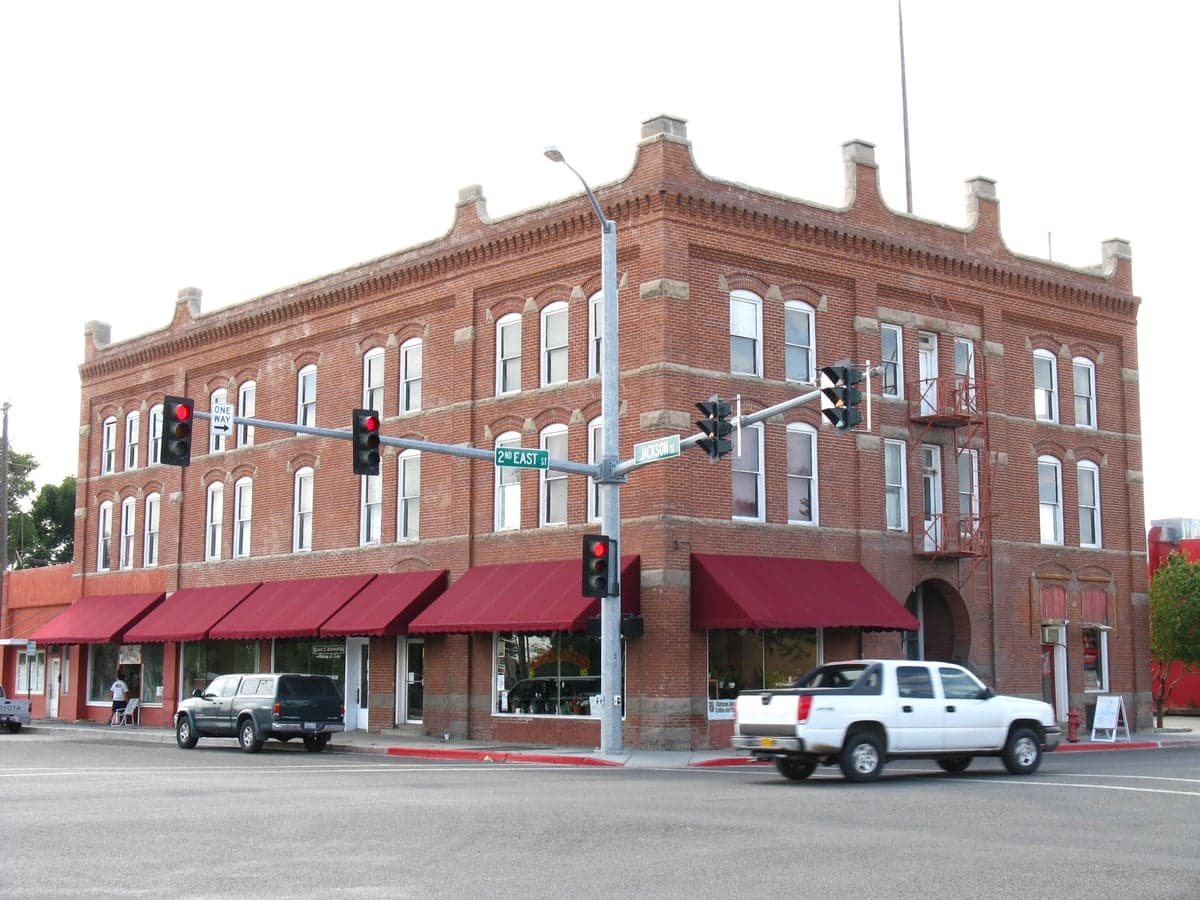
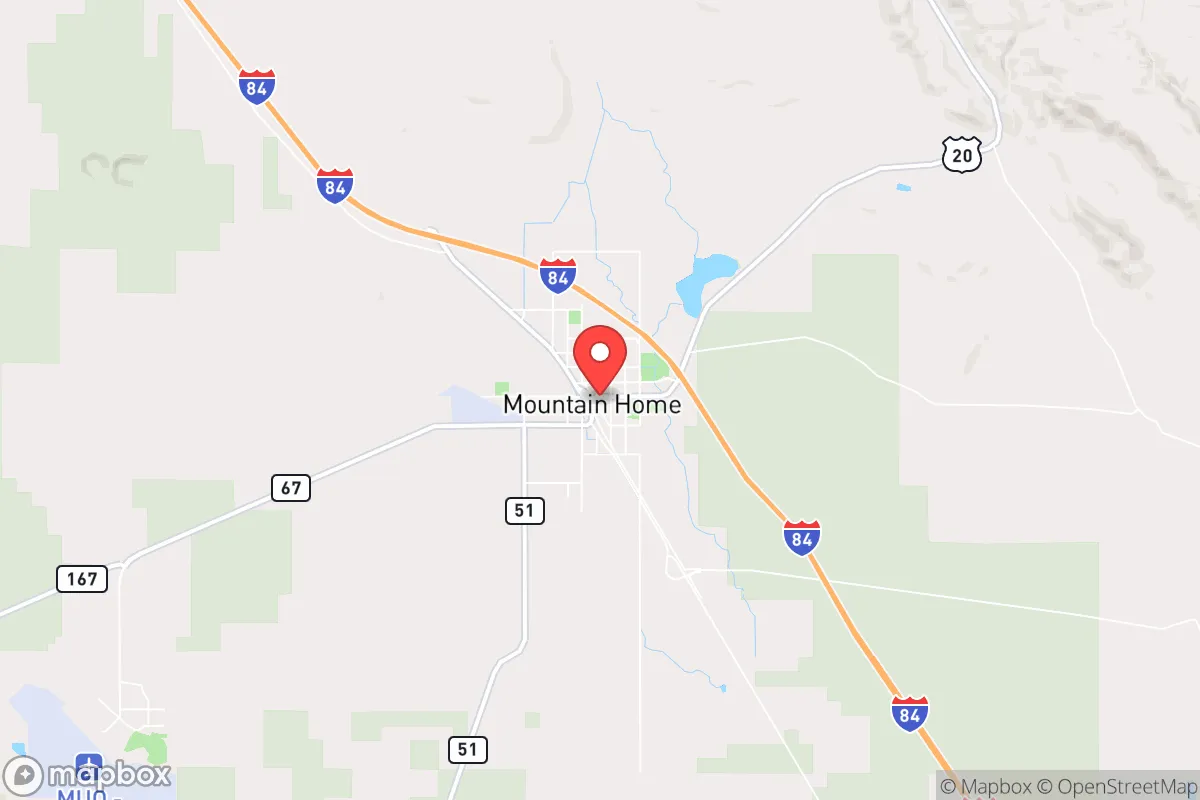
Photo: Wikipedia
Quality of Life in Mountain Home, ID
A high quality of life with strong walkability, manageable living costs, healthy neighborhood signals, and solid amenity access.
What does Quality of Life tell us?
Quality of Life blends cost of living, nearby amenities, socioeconomic signals, and neighborhood character. City-level scores represent the whole municipality; individual neighborhoods can differ.
What does this tell us?
Quality of Life blends cost of living, nearby amenities, socioeconomic signals, and neighborhood character. City-level scores represent the whole municipality; individual neighborhoods can differ.
Cost of Living
7% below national average
The Real Cost of Living in Mountain Home, ID for 2026
| Tier | Individual | Family (4) |
|---|---|---|
| Survival | $17k | $32k |
| Comfortable | $53k | $77k |
| Luxury | $87k+ | $135k+ |
| Elite (Top 5%) | $102k+ | $159k+ |
76%
The Area Signal
A metric tracking the socioeconomic signals of the area.


Hobbies
Explore the areaGroceries
5 within 10 miles
Gas
0 within 10 miles
Hospital
2 within 20 miles
Airport
SLC — Salt Lake City International
Post Office
USPS — Mountain Home, ID
Critical Amenities
Quality-of-Life Analysis
Mountain Home, Idaho, presents a notably affordable quality of life within a region that has seen rapid growth, attracting a mix of military families from the nearby Mountain Home Air Force Base, outdoor enthusiasts, and remote workers seeking lower costs. With a cost of living index of 93 (where 100 is the U.S. average), the area offers a tangible financial advantage over Boise, which sits about 45 minutes west. The population skews younger and more transient than the state average, driven by the base’s rotation, yet a stable core of long-term residents anchors the community around ranching and local services.
Cost of living and housing affordability compared to Boise and Twin Falls
Housing in Mountain Home remains a clear draw, with a median home value of $270,700—roughly half the median in Boise, where prices exceed $500,000. The median rent of $1,061 is similarly accessible, undercutting the Ada County average by over $400 per month. This affordability gap has accelerated in-migration from the Treasure Valley, though it has also pushed local prices up by nearly 30% since 2020. The average commute of 22.3 minutes is manageable, though many residents drive farther for work in Boise or at the base. Property taxes in Elmore County are moderate, and Idaho’s lack of a state sales tax on groceries further stretches household budgets. For those comparing Mountain Home to Twin Falls, the cost of living is nearly identical, but Mountain Home offers closer proximity to Boise’s job market and airport.
Daily life, schools, and local amenities in Mountain Home
Daily life in Mountain Home revolves around a compact downtown with a historic main street, a Walmart Supercenter, and a handful of local restaurants and breweries. The Mountain Home School District operates five elementary schools, one middle school, and one high school, with graduation rates hovering near the state average of 80%. For recreation, residents rely on the nearby Bruneau Dunes State Park and the Snake River for fishing, hiking, and camping, while the Sawtooth National Forest is a 90-minute drive north. The city lacks a major hospital—the closest full-service facility is St. Luke’s Elmore in the city itself, but specialized care requires a trip to Boise. The rhythm is slower than the suburbs of Boise, with fewer chain restaurants and entertainment options, but the trade-off is quieter streets and easier access to public lands. The presence of the air force base brings a steady stream of new faces and supports a small but active arts scene, including the annual Mountain Home Air Force Base Air Show.
Mountain Home is best suited for those who prioritize affordability and outdoor access over urban amenities. Military personnel and their families will find a supportive community with base housing and services, while remote workers and retirees can leverage the low housing costs to stretch savings. Families should weigh the school district’s performance against options in Boise, and anyone needing frequent medical care should plan for longer drives. For buyers seeking a foothold in Idaho without the Boise price tag, Mountain Home offers a pragmatic, if less polished, alternative.

Crime in Mountain Home, ID
Lower crime rates than 86% of comparable U.S. locations.
Violent CrimeViolent Crime Analysis
Property CrimeProperty Crime Analysis
Crime Analysis
Mountain Home, Idaho, presents a mixed safety profile that is significantly safer than the national average for violent crime but slightly elevated in property crime relative to state benchmarks. With a violent crime rate of 186.8 per 100,000 residents and a property crime rate of 519.6 per 100,000, the city offers a generally secure environment for residents, though awareness of theft and burglary risks is warranted. This analysis compares Mountain Home’s crime data to broader trends and examines what daily life is like for those living in this Elmore County community.
Crime in context
Mountain Home’s violent crime rate of 186.8 per 100,000 is roughly half the national average of 380 per 100,000, placing it among the safer small cities in the region. However, it is notably higher than the Idaho state average of approximately 240 per 100,000, indicating that while violent incidents like assault and robbery are less common than nationwide, they occur more frequently than in many other Idaho communities. Property crime in Mountain Home stands at 519.6 per 100,000, which is below the national rate of 1,950 per 100,000 but above the Idaho state average of around 1,200 per 100,000. This suggests that residents face a moderate risk of larceny, vehicle theft, or burglary compared to the rest of the state, though still far lower than in major metropolitan areas. For context, nearby Boise’s property crime rate hovers near 2,500 per 100,000, making Mountain Home a comparatively lower-risk option for those concerned about theft.
What residents experience
Residents of Mountain Home generally report feeling safe in their neighborhoods, with the low violent crime rate contributing to a sense of security uncommon in larger cities. The presence of Mountain Home Air Force Base adds a layer of stability and community policing, as military personnel and their families make up a significant portion of the population. Property crime, however, is the more tangible concern—residents often take precautions like locking vehicles and securing sheds, as opportunistic thefts from cars and garages are the most common incidents. The city’s justice system, reflecting Idaho’s generally conservative legal environment, tends to prioritize public safety and victim rights, which helps maintain accountability and deterrence. This stands in contrast to jurisdictions with progressive district attorneys who may emphasize rehabilitation over incarceration, a philosophy that critics argue can lead to higher recidivism and more criminals on the street. In Mountain Home, the focus on traditional law enforcement and sentencing practices provides residents with confidence that offenders face consistent consequences, reducing the likelihood of repeat offenses that plague some urban areas.
Neighborhood-level variation in Mountain Home is modest but noticeable. Areas closer to the downtown core and along major corridors like American Legion Boulevard see slightly higher property crime rates, while residential subdivisions near the base and on the city’s outskirts report fewer incidents. The city’s compact size and active police force mean that response times are generally quick, and community watch programs are common in newer developments. For those considering relocation, focusing on neighborhoods east of Highway 67 or near the base offers the lowest crime exposure, while renters near the downtown area should prioritize secure parking and well-lit properties. Overall, Mountain Home provides a safe living environment with manageable risks, especially for those accustomed to the higher crime rates of larger metropolitan areas.
* Values derived from national, state, county, city and local statistics and may differ in a specific area. Last updated: 2026-04-19T06:36:43.000Z
Narrative content on this page is AI-generated and may contain mistakes. Verify any details that matter before acting on them.
ReloMaps may earn a commission from affiliate links at no extra cost to you.

