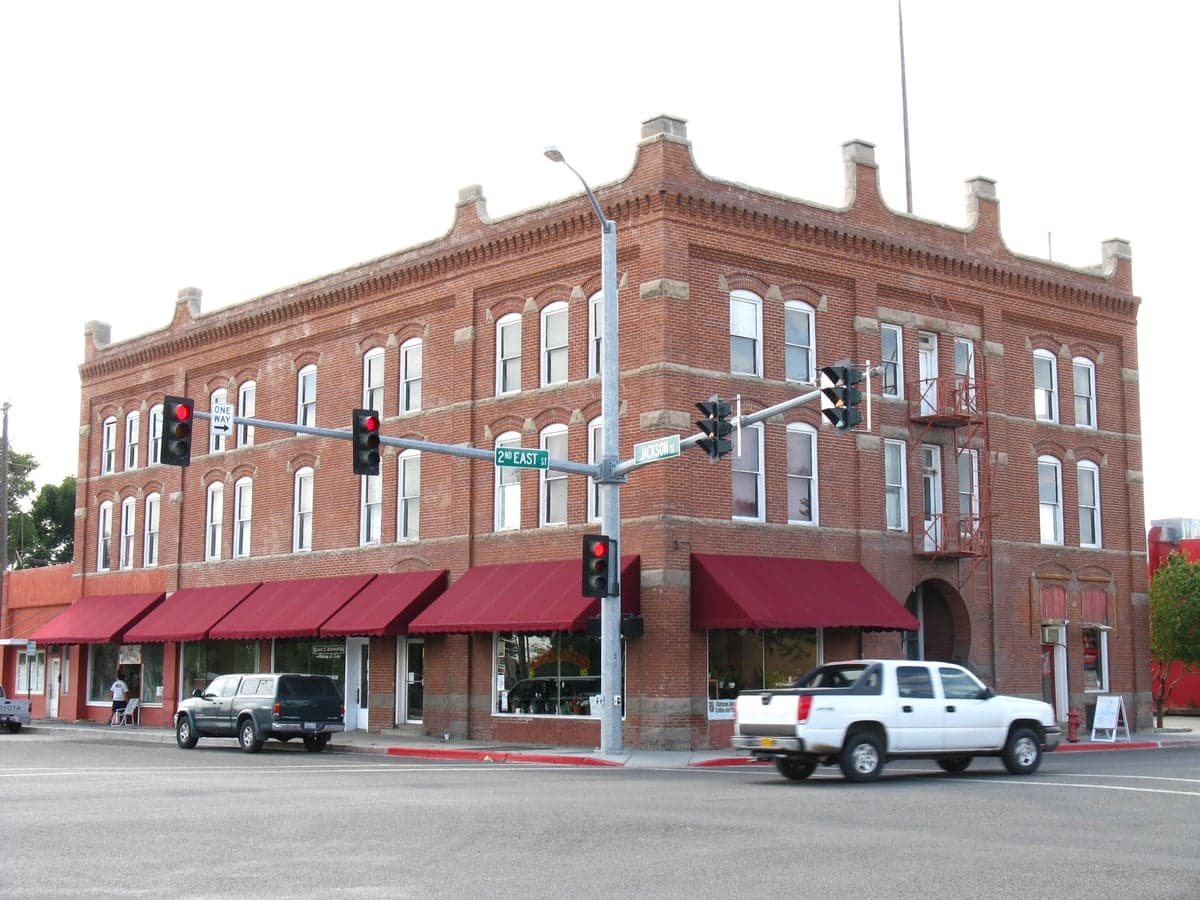
Photo: Wikipedia
Political ClimatePolitical Climate in Mountain Home, ID
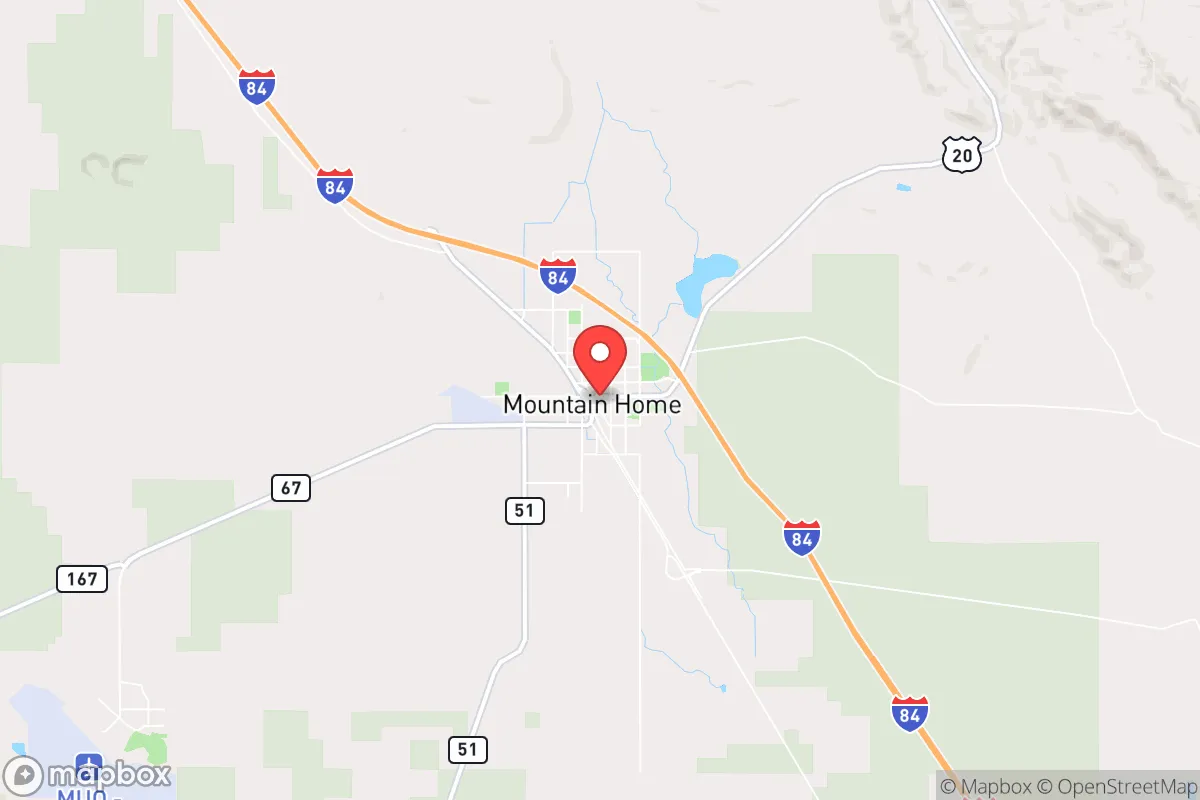
District shown is the primary district for this city’s centroid. Cities may span multiple districts.
Local Political AnalysisPolitical Analysis of Mountain Home, ID
Mountain Home, Idaho, sits solidly in the red, with a Cook PVI of R+13 that reflects a deeply conservative community where traditional values and limited government are the norm. This isn’t a purple area or a swing district; it’s a place where most folks vote for smaller government, lower taxes, and a hands-off approach to personal freedoms. Over the last decade, the political trajectory has held steady, though you can feel a subtle tension as Boise’s progressive influence creeps south along I-84, making local elections more about holding the line than changing course.
How it compares
Compared to nearby cities, Mountain Home stands out as a conservative anchor. Drive 45 minutes northwest to Boise, and you’ll hit a blue island in a red state—Ada County has trended purple, with Boise proper voting reliably Democratic in recent cycles. Head east to Twin Falls, and you’ll find a similar conservative vibe, but Mountain Home feels more rural and less influenced by out-of-state transplants. The contrast is sharpest with Ketchum or Sun Valley, where wealthy second-home owners push a progressive agenda that would never fly here. In Elmore County, where Mountain Home is the seat, the local GOP is dominant, and you won’t see the kind of government overreach—like mask mandates or zoning overhauls—that’s become common in Boise.
What this means for residents
For residents, the political climate means a lighter touch from local government. Property taxes are low, and there’s little appetite for new regulations on businesses or homeowners. You won’t find the kind of progressive social experiments—like defunding police or sanctuary city policies—that make headlines in blue states. The county sheriff’s office is well-funded, and Second Amendment rights are taken seriously; open carry is common, and there’s no push for red flag laws. That said, the long-term trend is concerning. As Boise’s housing crisis pushes people south, Mountain Home is seeing an influx of newcomers who may not share the local values. If that growth continues, you could see pressure for more government programs and zoning changes that erode the freedom residents enjoy today. For now, though, the community remains a place where your personal choices—whether it’s homeschooling, starting a business, or owning firearms—are respected, not regulated.
Culturally, Mountain Home is distinct for its strong military presence—the Mountain Home Air Force Base brings in families from across the country, but they tend to align with the conservative ethos. Policy-wise, the city council has resisted bike lanes and density-boosting developments that some see as creeping urbanism. The real red flag for the future is if state-level politics shift; Idaho’s legislature is solidly conservative, but if Boise’s influence grows, you could see more state mandates that override local control. For now, Mountain Home remains a place where you can live your life without the government breathing down your neck, but keeping an eye on the ballot box is essential to preserve that.

State Political ClimatePolitical Climate in Idaho
State Political AnalysisPolitical Environment in the State
Idaho has long been one of the most reliably conservative states in the nation, with a Republican trifecta controlling the governorship, supermajorities in both legislative chambers, and a solidly red congressional delegation. Over the past 10-20 years, the state has shifted even further right, driven by an influx of conservative transplants from California, Washington, and Oregon seeking lower taxes, less regulation, and a culture aligned with traditional values. The 2024 election saw Donald Trump carry Idaho by over 30 points, and the state’s partisan lean is now among the strongest in the country, with no serious Democratic challenger at the state level in sight.
Urban vs. rural divide
The political map of Idaho is starkly divided between its few urban centers and the vast rural expanse. The Treasure Valley, anchored by Boise, Meridian, and Nampa, is the state’s population hub and the only region where Democrats can occasionally compete. Ada County (Boise) has trended purple in recent cycles, with Biden winning it in 2020 by a slim margin, but the surrounding counties—Canyon, Gem, and Payette—remain deeply red. The state’s second-largest metro, Idaho Falls in the east, is a conservative stronghold, as is Coeur d’Alene in the north, though the latter has seen a wave of out-of-state arrivals that has introduced a small but vocal progressive minority. Rural counties like Lemhi, Clark, and Oneida routinely vote 80-90% Republican, creating a political landscape where the GOP’s dominance is virtually unchallenged outside of Boise’s city limits.
Policy environment
Idaho’s policy environment is a model of limited government, with a flat income tax rate of 5.8% (reduced from 6% in 2023), no corporate income tax on pass-through entities, and a property tax system that caps annual increases. The state legislature has aggressively pursued school choice, passing the Idaho Parental Choice Tax Credit in 2024, which provides up to $5,000 per child for private school tuition or homeschooling expenses. Education policy is heavily tilted toward local control, with no statewide mask or vaccine mandates ever imposed. Healthcare remains largely private, with no Medicaid expansion beyond the 2018 voter-approved measure, and the state has resisted federal pressure to adopt Obamacare-style regulations. Election laws are among the most secure in the nation: voter ID is required, same-day registration is not allowed, and the state uses paper ballots with hand-count audits in many counties. The legislature also passed a law in 2023 banning ranked-choice voting, a move that preempted progressive efforts to change the system.
Trajectory & freedom
Idaho is becoming more free, not less, as measured by both legislative action and cultural momentum. The 2024 session saw the passage of the Second Amendment Preservation Act, which prohibits state enforcement of any future federal gun bans, magazine limits, or registration schemes. Parental rights were strengthened with the Parents’ Bill of Rights, requiring schools to notify parents of any curriculum involving sexuality or gender identity and to obtain consent before counseling minors on such matters. Medical freedom was codified with a law banning COVID-19 vaccine mandates by private employers and a separate measure protecting doctors who prescribe ivermectin or hydroxychloroquine off-label. Property rights were bolstered by a 2023 law limiting eminent domain for private economic development. On the taxation front, the legislature passed a flat tax reduction that will phase down to 5.5% by 2026, and a property tax relief bill that increased the homeowner’s exemption from $100,000 to $125,000. The only area where freedom has arguably contracted is in the realm of abortion: a near-total ban was enacted in 2023, with exceptions only for rape, incest, and the life of the mother, reflecting the state’s strong pro-life consensus.
Civil unrest & political movements
Idaho has seen remarkably little civil unrest compared to coastal states, but there have been flashpoints. In 2020, Boise experienced several nights of Black Lives Matter protests, which were met with a heavy police presence and counter-protests from armed conservative groups. The state has a well-organized Idaho Freedom Foundation that pushes for school choice, tax cuts, and gun rights, and it wields significant influence in the legislature. On the left, the Idaho Democratic Party is weak but has a small activist base in Boise and Moscow (home to the University of Idaho). Immigration politics are a hot-button issue: the legislature passed a law in 2024 requiring local law enforcement to cooperate with ICE and banning sanctuary city policies, with Boise being the only city that had previously resisted. Election integrity remains a top concern for conservatives, with the state’s Secretary of State (a Republican) leading a multi-state lawsuit against the federal government over non-citizen voting in federal elections. There is no serious secession or nullification movement, though some rural counties have floated the idea of joining a “Greater Idaho” movement that would merge with eastern Oregon—a symbolic gesture that reflects frustration with progressive policies in neighboring states.
Projection
Over the next 5-10 years, Idaho will likely become even more conservative, driven by continued in-migration from blue states. The population is projected to grow by 15-20% by 2035, with most newcomers settling in the Treasure Valley and around Coeur d’Alene. This influx will put pressure on housing and infrastructure, but the political culture is resilient: new arrivals tend to be conservative-leaning, and those who aren’t often self-select into Boise’s urban core. The legislature will likely continue to push for lower taxes, expanded school choice, and stronger Second Amendment protections. The main risk is that rapid growth could dilute the state’s rural character and create a more polarized urban-rural divide, but the GOP’s supermajority is secure for the foreseeable future. A new resident moving in now should expect to find a state that is more aligned with traditional values in a decade, not less, as long as the current policy trajectory holds.
For a conservative individual or family considering relocation, Idaho offers a rare combination of low taxes, strong gun rights, parental control in education, and a culture that respects personal liberty. The state is not without its challenges—housing costs in Boise have skyrocketed, and the healthcare system is thin in rural areas—but the political climate is overwhelmingly favorable. If you value a government that stays out of your life, your wallet, and your family, Idaho is one of the safest bets in the country. Just be prepared for cold winters and a housing market that rewards early movers.
* Values derived from national, state, county, city and local statistics and may differ in a specific area. Last updated: 2026-04-19T06:36:43.000Z
Narrative content on this page is AI-generated and may contain mistakes. Verify any details that matter before acting on them.
ReloMaps may earn a commission from affiliate links at no extra cost to you.

