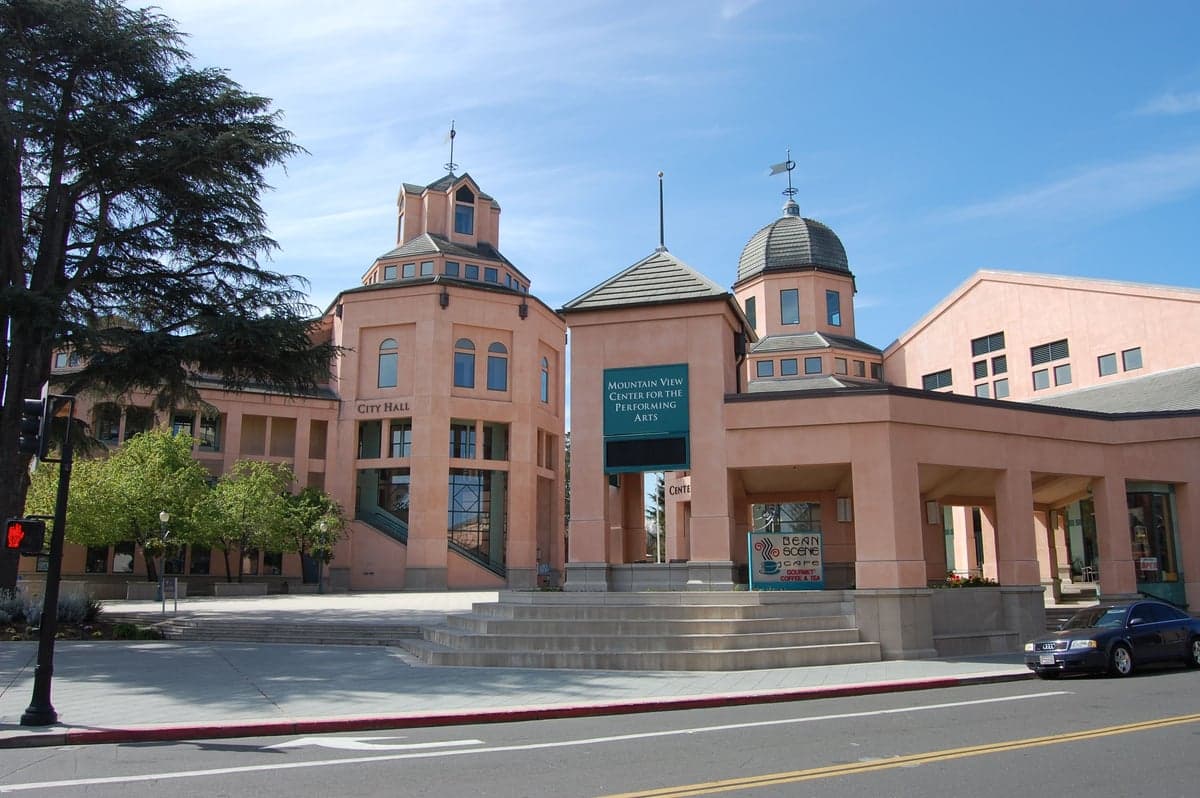
Photo: Wikipedia
Personal Sovereignty in Mountain View, CA
Viable for self-reliance. Generally workable, though some barriers may limit total independence.
What does Personal Sovereignty tell us?
Personal Sovereignty measures your capacity for self-reliance and independence with minimal government friction. Higher scores mean fewer barriers between you and the way you want to live... but it assumes you have the space you need and good neighbors.
What does this tell us?
Personal Sovereignty measures your capacity for self-reliance and independence with minimal government friction. Higher scores mean fewer barriers between you and the way you want to live... but it assumes you have the space you need and good neighbors.
State Policy
Energy independence: Importer (33% of energy produced in-state)
Personal Liberty
Homesteading

Personal Liberty Analysis
Mountain View, California, presents a paradox for the individualist or prepper: it sits in the heart of a state that aggressively asserts government authority over personal decisions, yet the city’s own local governance is often more pragmatic than its reputation suggests. For a conservative-leaning single person or parent evaluating personal sovereignty here, the core tension is between Silicon Valley’s libertarian-leaning tech culture and Sacramento’s top-down regulatory machine. The autonomy environment is one of high economic opportunity but low legal latitude—you can build wealth and network with like-minded innovators, but you will do so under a state government that actively limits your choices on self-defense, medical decisions, and property use. The question is not whether you can live freely here, but how much of your daily life you are willing to cede to state control in exchange for career and community advantages.
Tax burden and regulatory posture: what you pay and what you can’t do
California’s tax burden is among the heaviest in the nation, and Mountain View residents feel it directly. The state’s top marginal income tax rate of 13.3% applies to single filers earning over $677,000 and married couples over $812,000—a threshold many tech professionals cross. Sales tax in Santa Clara County is 9.25%, and property taxes, while capped by Proposition 13 at 1% of assessed value, are supplemented by Mello-Roos community facility districts and parcel taxes that can add hundreds annually. For a prepper or survivalist, the regulatory posture is even more concerning. California’s California Environmental Quality Act (CEQA) can delay or kill any construction project, including a backyard bunker or a rainwater catchment system, if it triggers environmental review. The state’s building codes are among the strictest in the country, and local zoning in Mountain View largely prohibits accessory dwelling units (ADUs) on lots under 6,000 square feet without a lengthy permit process. The net effect is that you pay more for less autonomy—your ability to modify your property or start a home-based business is heavily constrained by layers of bureaucratic approval.
Self-defense and gun law specifics: what you can and cannot own
For anyone prioritizing the right to keep and bear arms, Mountain View is a hostile environment by design. California’s Unsafe Handgun Act effectively bans the sale of new handgun models that lack microstamping technology, a requirement no manufacturer has fully met, meaning the legal market for new handguns is shrinking. The state’s roster of approved handguns is limited to older models, and private-party transfers must go through a licensed dealer with a 10-day waiting period. Magazine capacity is capped at 10 rounds, and “assault weapons” are broadly defined to include many common semi-automatic rifles with features like pistol grips or flash suppressors—possession of which requires registration and is effectively banned for new purchases after 2023. Concealed carry permits in Santa Clara County are issued on a “may issue” basis, and the sheriff’s office has historically denied most applicants unless they can demonstrate a specific, documented threat. Open carry is illegal in incorporated areas. For a prepper, this means your defensive options are limited to bolt-action rifles, pump shotguns, and a narrow selection of handguns—and even then, you must navigate a labyrinth of storage and transportation laws. The practical reality is that self-defense in Mountain View relies more on security systems, neighborhood watch, and legal compliance than on firearms.
Self-reliance and homesteading viability: lot sizes, zoning, and off-grid feasibility
Mountain View’s residential lots are small—typically 5,000 to 7,000 square feet in older neighborhoods, with newer developments often squeezing single-family homes onto 3,000-square-foot parcels. Zoning is strictly single-family residential (R-1) in most areas, with no allowance for keeping livestock, chickens, or bees without a conditional use permit that requires neighbor notification and public hearings. Off-grid living is effectively illegal: the city requires connection to municipal water and sewer, and solar panels must be grid-tied with net metering approval from Pacific Gas & Electric. Rainwater harvesting is permitted only for non-potable uses like irrigation, and systems must be designed by a licensed engineer and inspected. Composting toilets are not allowed as a primary sanitation method. For a homesteader or survivalist, the only viable path is to purchase a property with an existing ADU or a large lot in the city’s few “Hillside” zoning districts, where lot sizes can exceed an acre—but those properties command prices above $3 million. The alternative is to look to unincorporated Santa Clara County areas like the Santa Cruz Mountains, where zoning is looser and off-grid systems are more feasible, but that adds a 30-minute commute to Mountain View’s tech hubs.
Personal liberties: parental rights, medical autonomy, speech, and property
California’s state-level policies significantly constrain parental rights and medical autonomy. The state mandates that public schools teach comprehensive sex education starting in seventh grade, and parents cannot opt their children out of lessons on gender identity or sexual orientation—only out of the “sexual health” portion. Vaccine mandates for school attendance are strict, with no personal belief exemptions for required immunizations. Medical autonomy is limited by the state’s single-payer health care framework (CalCare, though not fully implemented, has strong legislative support) and by laws that require COVID-19 vaccines for healthcare workers and school staff. On speech, Mountain View is a First Amendment stronghold in practice—tech workers openly debate politics and religion—but California’s “disinformation” laws and hate speech statutes create a chilling effect for those who hold views outside the mainstream. Property rights are the weakest link: the state’s rent control laws (AB 1482) cap annual rent increases at 5% plus inflation, and Mountain View’s own rent stabilization ordinance applies to multifamily units built before 1995, limiting a landlord’s ability to set market rates. For a parent or property owner, the message is clear: the state will override your decisions on education, health, and property use whenever it deems a “compelling interest” exists.
Overall, personal sovereignty in Mountain View is a trade-off. You gain access to one of the world’s most dynamic economies, a highly educated population, and a climate that supports year-round outdoor activities—all of which can be leveraged for self-reliance. But you lose control over your children’s education, your medical choices, your defensive tools, and your property’s use. Compared to a state like Texas or Arizona, where homesteading is easier, gun laws are permissive, and parental rights are stronger, Mountain View ranks low on the sovereignty scale. For a prepper or conservative individualist, the city is best viewed as a temporary base for building capital and connections, not as a permanent home for raising a family or riding out a crisis. If you must live here, your strategy should focus on legal compliance, community networking, and financial resilience—and keep a close eye on the exit door.

* Values derived from national, state, county, city and local statistics and may differ in a specific area. Last updated: 2026-05-02T04:57:22.000Z
Narrative content on this page is AI-generated and may contain mistakes. Verify any details that matter before acting on them.
ReloMaps may earn a commission from affiliate links at no extra cost to you.

