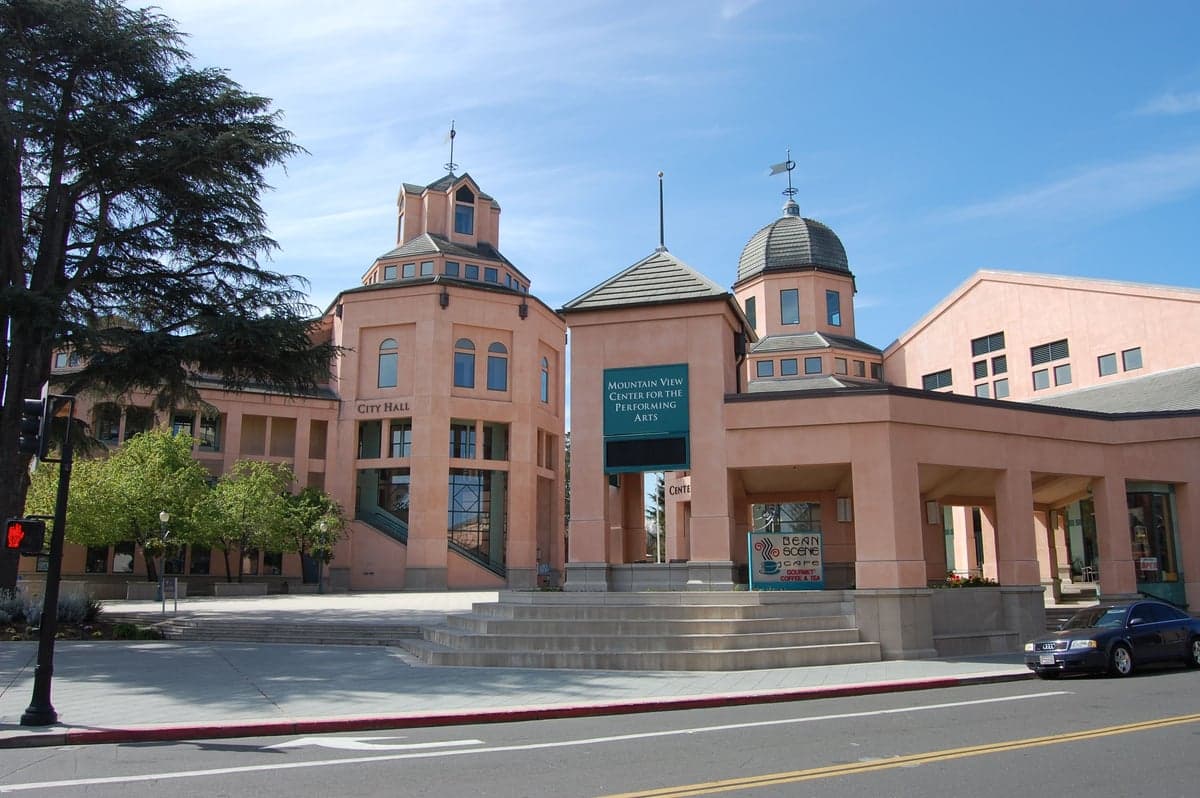
Photo: Wikipedia
Political ClimatePolitical Climate in Mountain View, CA
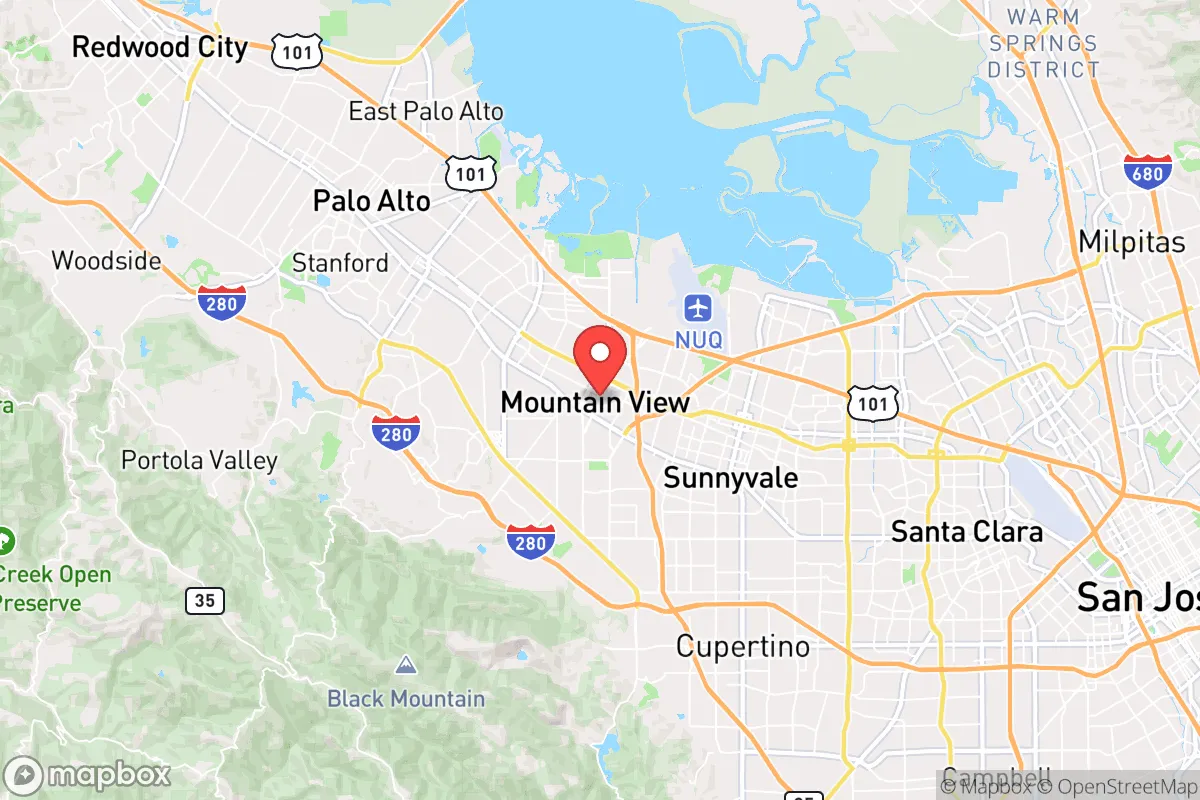
District shown is the primary district for this city’s centroid. Cities may span multiple districts.
Local Political AnalysisPolitical Analysis of Mountain View, CA
Mountain View is about as deep blue as it gets in California, with a Cook PVI of D+26, meaning Democrats hold a massive 26-point advantage over Republicans in federal elections. That wasn't always the case—back in the 1980s and 1990s, this was a more balanced, live-and-let-live tech town where you could have a beer with your neighbor regardless of party. But over the last two decades, the political pendulum has swung hard left, and it keeps accelerating. If you're looking for a place where your personal freedoms—like how you run your business, what you teach your kids, or whether you want to carry a firearm—are respected, Mountain View is becoming a tough place to call home.
How it compares
Mountain View sits in the heart of Silicon Valley, so it's no surprise it leans left, but the contrast with nearby towns is stark. Head just a few miles south to Los Altos Hills or Cupertino, and you'll find similar progressive politics, though with a slightly more fiscally conservative bent. But drive 20 minutes east to Sunnyvale or Santa Clara, and you'll hit a more moderate vibe—still blue, but with a stronger independent streak. The real shocker is heading north to Palo Alto, which is even more progressive than Mountain View, with a D+30+ lean. For a conservative, the only nearby refuge is maybe Morgan Hill or Gilroy, about 30 minutes south, where the politics are more purple and the county government is less aggressive on mandates. In Mountain View, you're surrounded by a bubble of like-minded progressive voters, which can feel suffocating if you value individual liberty over collective conformity.
What this means for residents
For a conservative or libertarian-leaning resident, the daily reality in Mountain View is a series of small erosions of personal freedom. The city council and school board are dominated by progressive activists who push policies like mandatory housing density increases, strict rent control, and a heavy-handed approach to homelessness that prioritizes government intervention over private charity. You'll see it in the local elections: ballot measures that raise taxes for "affordable housing" or "climate action" pass easily, even when they hurt small landlords or homeowners. The school district has embraced critical race theory and gender ideology curricula, leaving parents with little recourse if they want a traditional education for their kids. And if you're a gun owner, forget it—Mountain View enforces some of the strictest local ordinances in the state, including bans on carrying in most public spaces. The city government feels less like a partner and more like a nanny, constantly telling you what you can and can't do with your property, your money, and your family.
Cultural and policy distinctions
One thing that sets Mountain View apart from even its progressive neighbors is its aggressive embrace of "sanctuary city" policies and its willingness to defy state law on housing. The city has its own rent control board that can override landlord rights, and it's one of the few places in Santa Clara County that actively resists any new police funding. The cultural vibe is overwhelmingly tech-liberal: you'll see Tesla-driving, Patagonia-wearing activists who think they're saving the world by banning plastic straws while ignoring the cost of living crisis. Longtime residents like me remember when Mountain View was a quiet, family-oriented town with a downtown that felt like a real community. Now, it's a transient hub for Google and LinkedIn employees who vote for policies that make it harder for the rest of us to stay. If you value personal responsibility, limited government, and the right to live your life without a city council micromanaging your choices, I'd think twice before moving here—or at least get ready to fight for your freedoms at every local election.

State Political ClimatePolitical Climate in California
State Political AnalysisPolitical Environment in the State
California is a deep blue state where Democrats hold every statewide office and supermajorities in both legislative chambers, but that monolithic label hides a fractured reality: the state’s progressive dominance is powered almost entirely by the coastal metros of Los Angeles, San Francisco, and San Diego, while vast inland regions vote Republican by margins that rival Texas. Over the last 20 years, the state has lurched sharply left on social and economic policy, but a growing exodus of residents and a slow-burn political realignment in places like Orange County and the Central Valley suggest the current coalition may be less stable than it appears.
Urban vs. rural divide
The political map of California is a study in extremes. The San Francisco Bay Area and Los Angeles County are the engine rooms of Democratic power, delivering margins of 70-80% in presidential elections. In 2024, San Francisco’s vote was 85% Democratic, while rural counties like Modoc and Lassen in the far north voted 75% Republican. The Central Valley is the key battleground: Kern County (Bakersfield) is reliably red, but San Joaquin County (Stockton) and Stanislaus County (Modesto) have trended blue as Latino voters shifted left. The biggest story is Orange County, once a Republican stronghold, which flipped to Biden in 2020 and has stayed competitive—though its inland suburbs like Yorba Linda and Mission Viejo remain GOP-friendly. The Inland Empire (Riverside and San Bernardino counties) is a purple zone where fast growth and housing affordability are pulling working-class voters toward Republicans, but Democratic registration still holds a slim edge.
Policy environment
California’s policy environment is the most progressive in the nation, and it shows in the tax code and regulatory climate. The state has the highest top marginal income tax rate (13.3%) in the country, a 7.25% sales tax that local add-ons push past 10% in many cities, and some of the strictest environmental regulations on housing and energy production. On education, the state has banned parental notification for student gender identity changes (AB 1955, 2024) and eliminated most charter school expansion. Healthcare is heavily regulated, with a state-run insurance exchange and mandates that drive up premiums. Election laws are among the most liberal: universal mail-in ballots, same-day registration, and no voter ID requirement. For a conservative-leaning resident, the cumulative effect is a state that taxes heavily, regulates pervasively, and prioritizes government authority over family and local control.
Trajectory & freedom
Over the last five years, California has moved decisively away from personal freedom in several key areas. On gun rights, the state passed a 2023 law (SB 2) that effectively bans carrying firearms in most public places, including parks and hospitals, and a 2024 measure (AB 28) imposes an 11% excise tax on guns and ammunition. On parental rights, AB 1955 (2024) prohibits schools from notifying parents if a child changes their gender identity. On speech, the state has targeted “hate speech” in public forums and expanded liability for online platforms. Medical autonomy took a hit with vaccine mandates for schoolchildren that remain in place post-pandemic, and property rights are constrained by rent control expansions (AB 1482) and a 2024 law (SB 9) that allows lot splits in single-family zones without local approval. The only area where freedom expanded was recreational marijuana, which is fully legal and taxed. The trajectory is clear: more state control, less individual discretion.
Civil unrest & political movements
California has been a flashpoint for civil unrest and organized activism on both sides. The 2020 George Floyd protests in Los Angeles, San Francisco, and Oakland were among the largest and most destructive in the nation, with billions in property damage and a lasting impact on public safety sentiment. Since then, homeless encampment sweeps have become a political flashpoint, with cities like San Francisco and Los Angeles struggling to balance progressive “housing first” policies with public outcry over open-air drug use and crime. On the right, the California Republican Party has seen a grassroots resurgence in the Central Valley and Inland Empire, fueled by parental rights groups and anti-tax activists. The “Calexit” secession movement has faded but still has a small online following. Immigration politics are a daily reality: California is a sanctuary state (SB 54, 2017), and cities like San Diego and El Centro see constant border-related activism. Election integrity remains a concern for conservatives, given the state’s mail-in ballot system and lack of voter ID—though no major fraud scandals have been proven.
Projection
Over the next 5-10 years, California’s political trajectory points toward continued progressive consolidation at the state level, but with growing internal friction. Demographic trends are mixed: the state is losing net domestic migrants (over 300,000 per year since 2020), mostly to Texas, Arizona, and Nevada, and those leaving tend to be middle-income families and conservatives. The remaining population is younger, more diverse, and more urban, which favors Democrats. However, the housing affordability crisis is pushing working-class voters—especially Latinos and Asians—toward Republicans in places like the Inland Empire and Central Valley. If the GOP can hold Orange County and flip a few Assembly seats in the Valley, they could break the Democratic supermajority by 2030. But the state’s electoral college-like legislative map heavily favors coastal districts, so a full political shift is unlikely. A new resident moving in now should expect higher taxes, more regulation, and a continued erosion of local control, but also a vibrant economy and natural beauty that many find worth the trade-off.
Bottom line for a conservative-leaning newcomer: California offers unmatched economic opportunity and climate, but you will pay heavily for it in taxes, regulation, and a political culture that often views your values as suspect. If you can afford the cost of living and are willing to navigate a system that prioritizes government over family and local control, the Central Valley or Inland Empire offer more political breathing room than the coast. But if personal freedom, low taxes, and parental rights are non-negotiable, you will find a more aligned environment in Texas, Florida, or Tennessee.
* Values derived from national, state, county, city and local statistics and may differ in a specific area. Last updated: 2026-05-02T04:57:22.000Z
Narrative content on this page is AI-generated and may contain mistakes. Verify any details that matter before acting on them.
ReloMaps may earn a commission from affiliate links at no extra cost to you.

