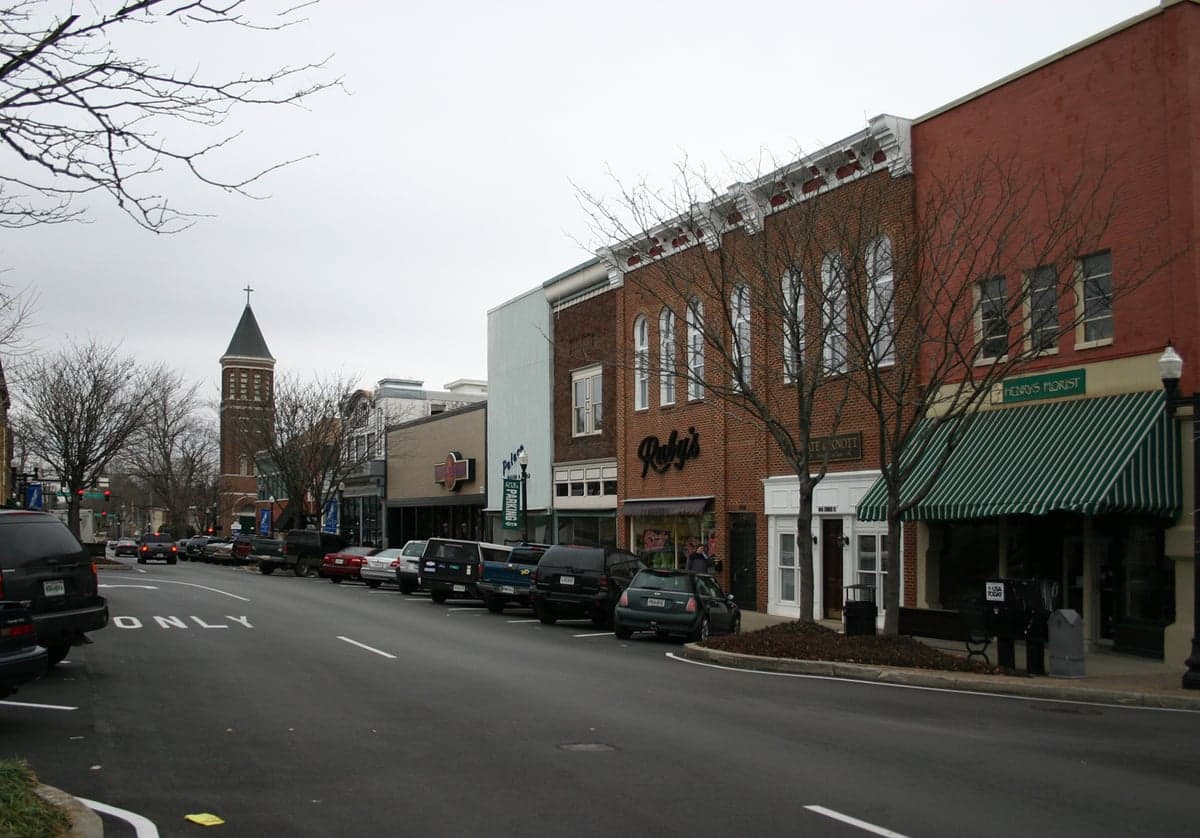
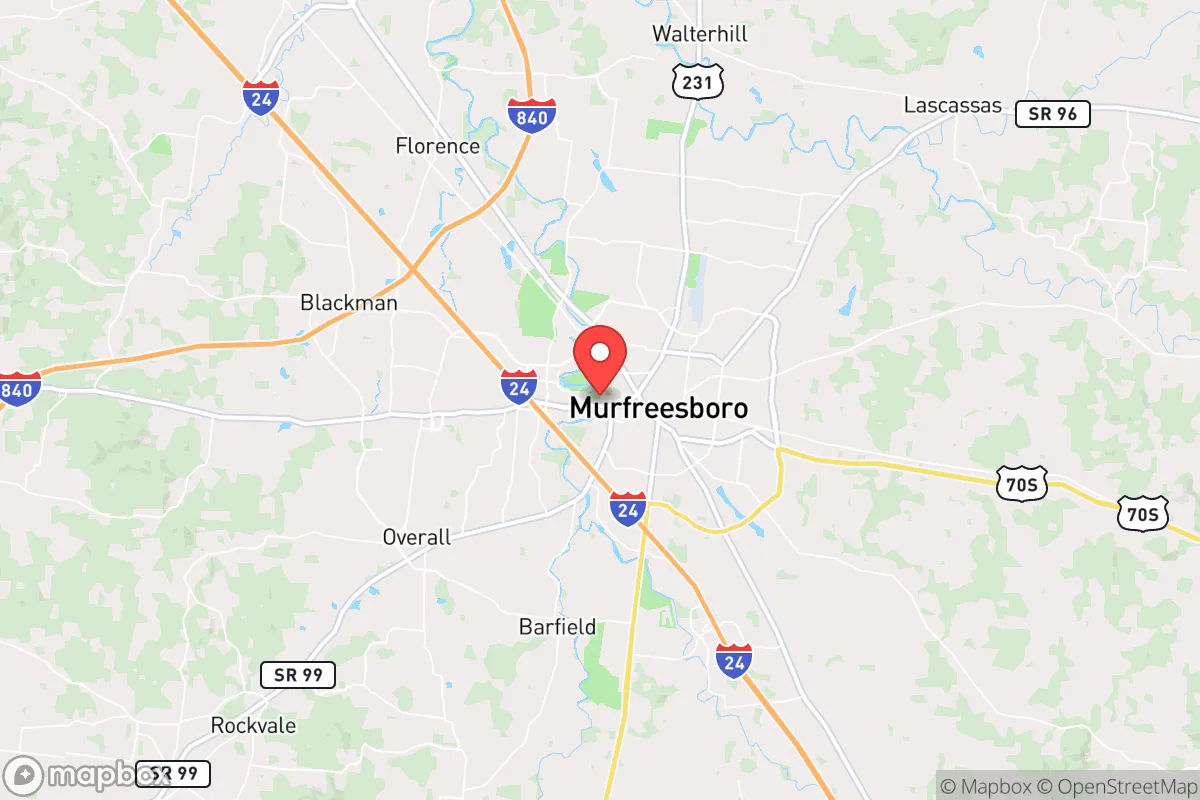
Photo: Wikipedia
Demographics of Murfreesboro, TN
Affluence Level in Murfreesboro, TN
A middle-class area roughly in line with national averages across income, home values, education, and employment.
People of Murfreesboro, TN
The people of Murfreesboro, Tennessee today number 157,547, forming a rapidly growing, majority-white city with a substantial Black minority and a rising Hispanic presence. The city’s character is defined by its role as a regional employment hub anchored by Middle Tennessee State University (MTSU) and a major Nissan assembly plant, drawing a mix of college-educated professionals, manufacturing workers, and families seeking suburban affordability relative to Nashville. With 41.1% of adults holding a bachelor’s degree or higher, the population is notably more educated than the state average, yet the foreign-born share remains low at 4.6%, reflecting a predominantly native-born, domestic in-migration pattern. The city’s identity is a blend of historic Southern roots, Sun Belt growth, and a conservative-leaning civic culture that values economic opportunity and community stability.
How the city was settled and grew
Murfreesboro was founded in 1811 as the seat of Rutherford County and served as Tennessee’s state capital from 1818 to 1826. The original population arrived via land grants and the expansion of cotton agriculture, with early settlers drawn to the fertile limestone basin. The city’s historic core, the Downtown Square area, was built by Scotch-Irish and English settlers who established the courthouse, mercantile businesses, and churches that still anchor the district. Enslaved African Americans constituted a significant portion of the antebellum population, working on cotton plantations and in town trades; after the Civil War, freedmen established communities in the Blackman area (south of downtown) and along East Main Street, where historic Black churches and schools like the former Holloway High School became neighborhood anchors. The late 19th and early 20th centuries brought a modest wave of German and Irish immigrants who settled in the North Murfreesboro area near the railroad lines, working in the city’s growing flour milling and timber industries. By 1950, the population was roughly 13,000, overwhelmingly white and Black, with a small number of families of Italian and Lebanese descent concentrated in the Barksdale neighborhood near the old downtown commercial corridor.
Modern era (post-1965)
The post-1965 period transformed Murfreesboro from a quiet county seat into a fast-growing Sun Belt suburb. The 1965 Immigration and Nationality Act had a limited direct effect here—the foreign-born share remains low at 4.6%—but the city’s growth has been overwhelmingly driven by domestic in-migration from other parts of Tennessee and the Midwest. The opening of the Nissan plant in nearby Smyrna in 1983 and the expansion of MTSU drew thousands of new residents, with many settling in the West Murfreesboro corridor along Medical Center Parkway, a zone of new subdivisions, medical offices, and retail centers. The Black population grew from about 12% in 1970 to 16.9% today, with many Black families moving into established neighborhoods like Barksdale and newer subdivisions in the South Murfreesboro area around Veterans Parkway. The Hispanic population, now 9.5%, began rising in the 1990s as construction and service-sector jobs attracted immigrants from Mexico and Central America; they concentrated in the Northwest Murfreesboro area near the industrial parks and along New Salem Highway, where Spanish-language businesses and churches have opened. East/Southeast Asian communities (3.0%) arrived primarily as professionals and students connected to MTSU and the medical sector, settling in the West Murfreesboro neighborhoods near the university. The Indian-subcontinent population (0.7%) is small but growing, with families drawn to tech and engineering roles at Nissan and local hospitals, living in newer subdivisions in the Blackman area. The city’s racial geography is moderately segregated by income and housing stock: older, more affordable neighborhoods near downtown remain predominantly Black and white working-class, while the western and southern edges are majority-white and more affluent.
The future
Murfreesboro’s population is projected to exceed 200,000 by 2040, driven by continued domestic in-migration from higher-cost areas in California, Illinois, and the Northeast. The city is not homogenizing but rather developing distinct enclaves: the Hispanic population is likely to grow to 12-14% as family reunification and labor demand continue, with the Northwest Murfreesboro corridor becoming a more established ethnic hub. The Black population share is expected to remain stable or decline slightly as white in-migration outpaces Black growth, though the South Murfreesboro area will likely see new Black middle-class subdivisions. East/Southeast Asian and Indian communities will grow slowly, concentrated near MTSU and the medical district, but will remain small relative to the white majority. The city’s political character—solidly Republican in local and national elections—is unlikely to shift dramatically, as new arrivals tend to be conservative-leaning families and retirees. The main demographic tension will be between long-term residents in historic neighborhoods like Barksdale and newcomers in sprawling subdivisions on the western edge, with infrastructure and school crowding as recurring issues.
For someone moving in now, Murfreesboro is a predominantly native-born, conservative-leaning Sun Belt city where domestic in-migration drives growth, immigrant communities are small but growing in specific corridors, and the overall population is becoming more educated and suburban. The city offers a stable, family-oriented environment with a strong job base, but newcomers should expect continued rapid expansion and the demographic sorting that comes with it.

* Values derived from national, state, county, city and local statistics and may differ in a specific area. Last updated: 2026-05-02T03:54:30.000Z
Narrative content on this page is AI-generated and may contain mistakes. Verify any details that matter before acting on them.
ReloMaps may earn a commission from affiliate links at no extra cost to you.

