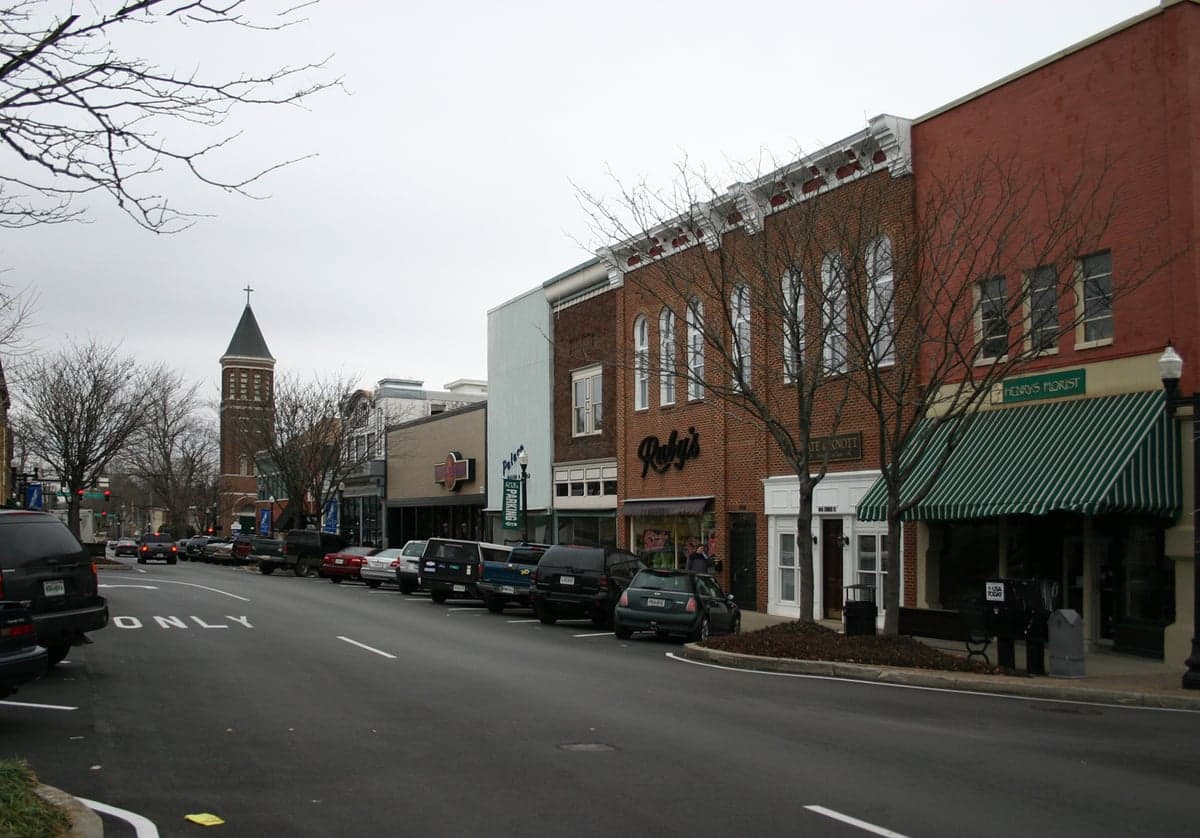
Photo: Wikipedia
Strategic Assessment of Murfreesboro, TN
Meaningful friction. Expect exposure to either population pressure, blast zones, or natural disaster risk. Consider buying a retreat property.
What does the Strategic Assessment tell us?
Our Strategic Assessment grades tactical survivability of an area. Major population centers, military targets, fallout zones, natural disasters, and border exposure all drive risk — lower exposure means a more defensible position in a crisis.
This is heavily inspired by Joel Skousen's Strategic Relocation book. Highly recommended you checkout the book ($)What does this tell us?
Our Strategic Assessment grades tactical survivability of an area. Major population centers, military targets, fallout zones, natural disasters, and border exposure all drive risk — lower exposure means a more defensible position in a crisis.
This is heavily inspired by Joel Skousen's Strategic Relocation book. Highly recommended you checkout the book ($)Strategic Pillars

Key Distances
Regional Safe Places
Below is our recommended "safe zones" in Tennessee and the surrounding area based on our strategic heuristics. For most people, it's unrealistic to live in a “safe zone” full-time due to work, family or other personal reasons. They tend to be more rural. However, many of these areas are perfect for second homes and retreat properties that double as a vacation home or even a short-term rental.
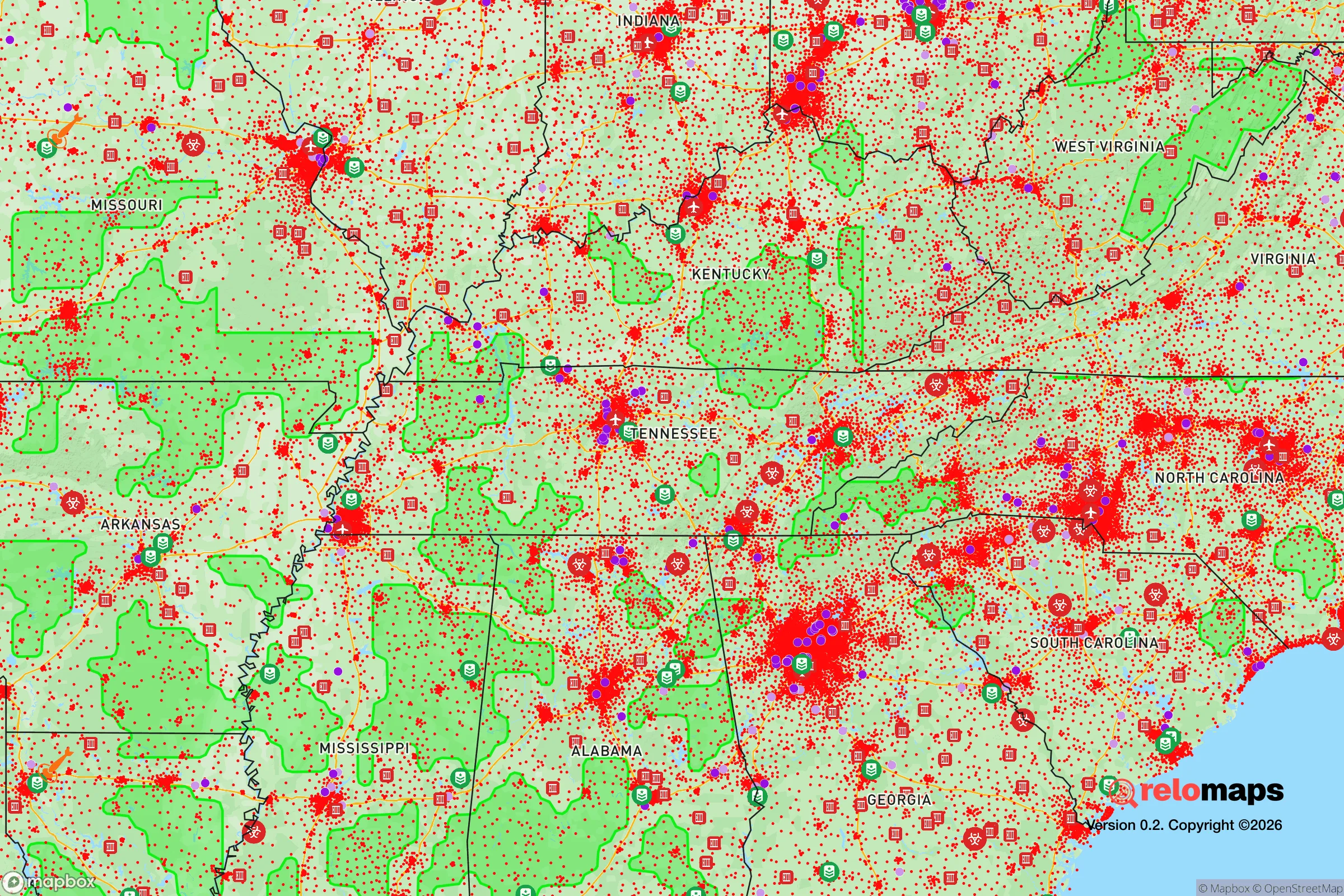
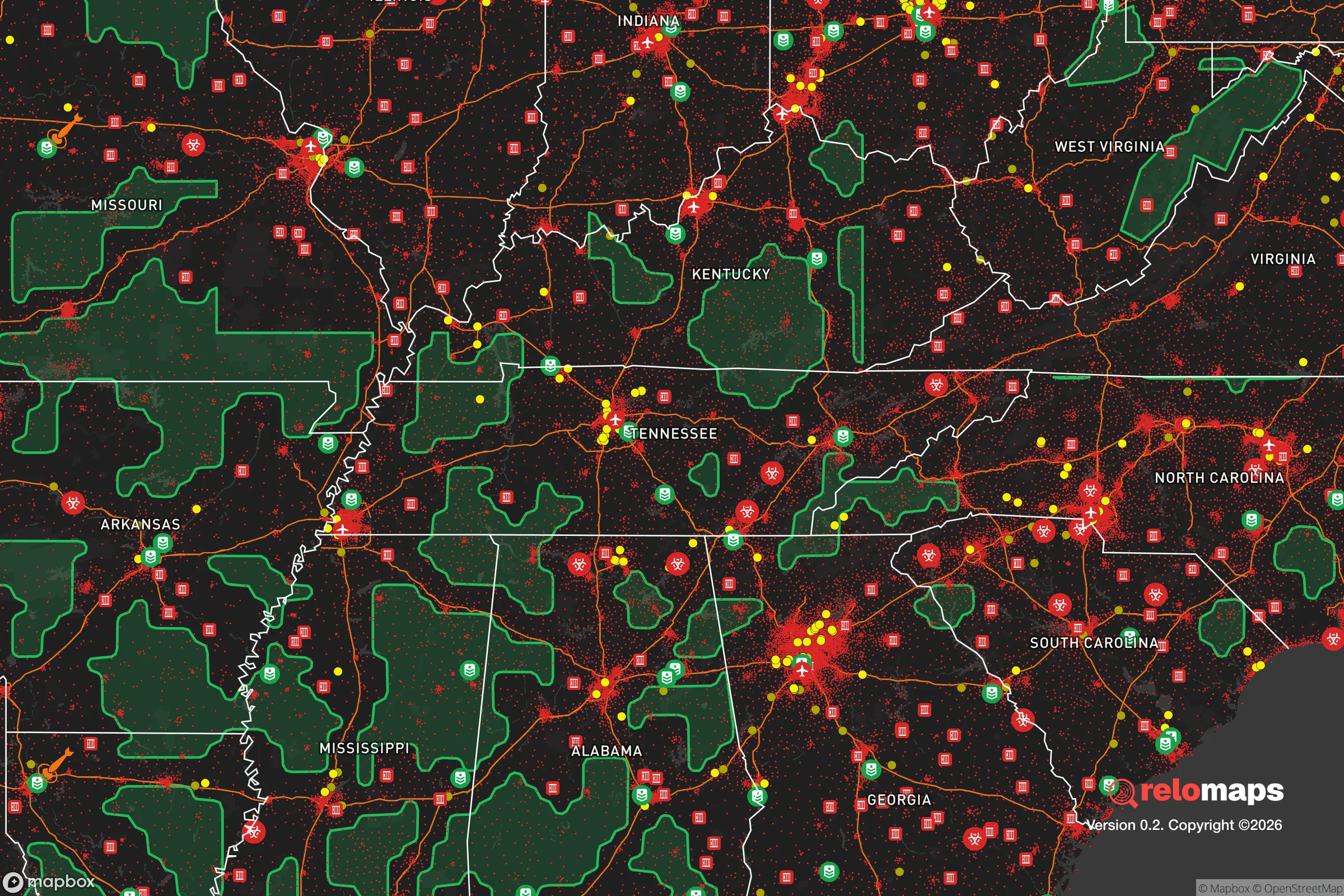


Important Note: For informational purposes only. This does not mean nothing bad ever happens in the green zones. Please use common sense. This is based on public data and modeled with AI. We tried to take a conservative approach but mistakes happen. We update this regularly as new information becomes available.
Solar Generator Recommendations
Backup power matters more here than in safer locations. We've picked three solar generators across budgets and capacity tiers — start with the budget unit if you only need a few essentials, or step up if you want to run a fridge and HVAC for days at a time.

Jackery Portable Power Station Explorer 300
Budget OptionPower on the Go: Weighing only 11 lbs, it's convenient to set up and store with book-sized foldable solar panels

BLUETTI Portable Power Station AC180
Designed for both indoor and outdoor scenarios, AC180 is highly capable as it has a robost capacity and continuous output power.

EF ECOFLOW DELTA Pro Ultra Power Station
Upgraded PickEcoFlow DELTA Pro Ultra is a whole-home energy system designed to grow with your family. Integrated with the Smart Home Panel 2, it scales to meet your evolving energy needs — keeping your home powered, intelligent, and secure through every stage of life.
We earn a commission, at no additional cost to you.
Strategic Assessment Analysis
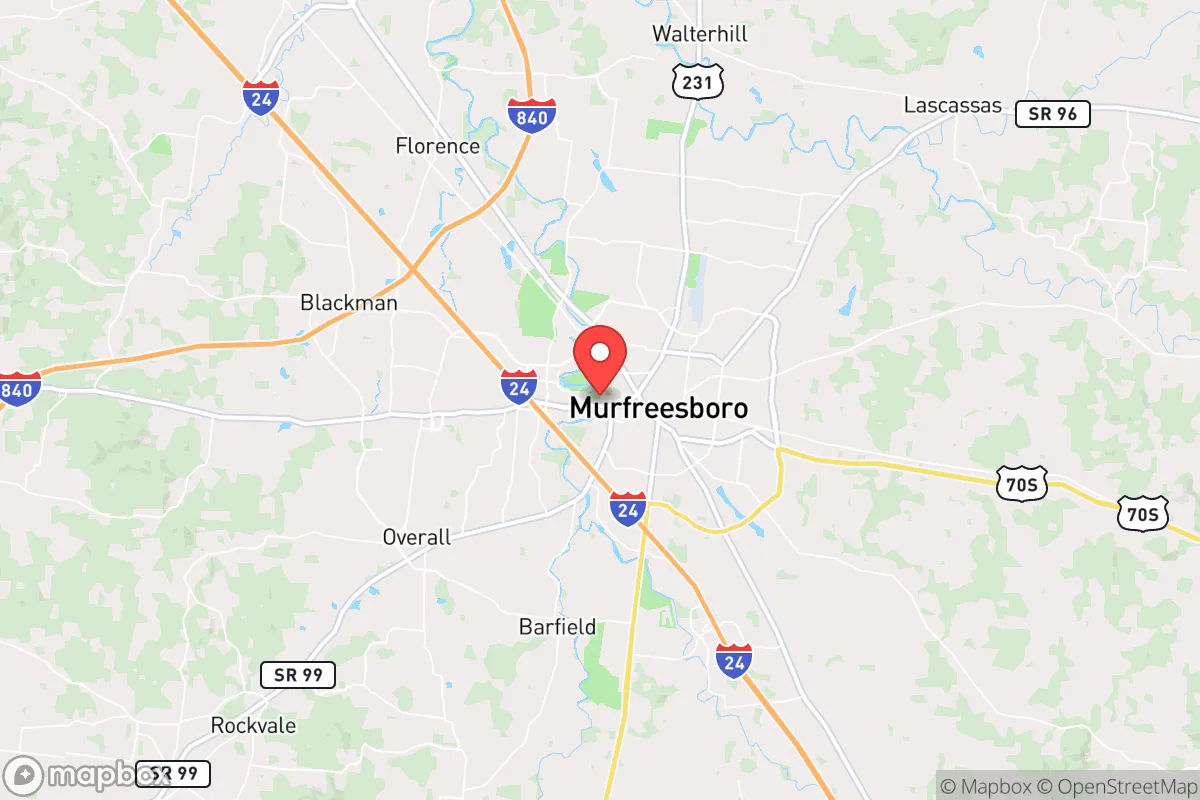
Murfreesboro, Tennessee, sits in a strategic sweet spot that resilience-minded relocators should take seriously. It’s far enough from Nashville’s urban core—roughly 35 miles southeast—to avoid the worst of a metropolitan collapse, yet close enough to tap into regional infrastructure when things are stable. The city’s population has surged past 160,000, and Rutherford County is one of the fastest-growing in the state, which brings both opportunity and risk. For a conservative prepper or survivalist, the key question isn’t whether Murfreesboro is a good place to live—it’s whether it can hold up when the grid flickers, the supply chains snap, or civil unrest spills out of the cities.
Geographic position and natural advantages for long-term survival
Murfreesboro’s location in the Nashville Basin gives it a few quiet advantages that matter when you’re thinking about self-sufficiency. The terrain is mostly rolling hills and fertile limestone valleys, with decent soil for small-scale agriculture—something you won’t find in the rocky Appalachian foothills to the east. The Stones River runs through town, and the area sits atop the massive Ordovician aquifer, which means groundwater is generally accessible and of good quality. Annual rainfall averages around 52 inches, so water catchment is viable year-round. The climate is humid subtropical, with hot summers and mild winters; you’ll get occasional ice storms and tornado threats, but no hurricane storm surge, no wildfire risk to speak of, and no seismic activity worth worrying about. For a relocator looking to bug in or set up a semi-rural homestead within commuting distance of a mid-sized city, the natural baseline here is solid—not spectacular, but reliable.
Risks, exposures, and proximity to fallout-relevant landmarks
Here’s where the analysis gets serious. Murfreesboro’s biggest vulnerability is its proximity to Nashville—a major population center, transportation hub, and potential target for both civil unrest and strategic disruption. If Nashville experiences a mass casualty event, a cascading grid failure, or widespread rioting, the outflow of people will hit Murfreesboro hard. I-24 and I-840 are the primary evacuation routes, and both can become parking lots in a crisis. The city itself has a growing industrial base, including a massive Bridgestone tire plant and several logistics centers, which means it’s not a backwater—it’s a secondary target for any disruption that aims at supply chains. There’s also the Tennessee Valley Authority’s electrical infrastructure; while no nuclear plants are within 50 miles, the grid is interconnected, and a cyber or physical attack on TVA substations could black out the region for weeks. On the plus side, Murfreesboro is far from any major military bases, chemical plants, or ports that would be primary targets in a conflict. The nearest significant fallout risk is the Sequoyah Nuclear Plant near Chattanooga, about 120 miles away—outside the lethal blast radius, but within the zone for potential long-term contamination if a worst-case release occurred. For a prepper, the calculus is: you’re close enough to a major city to be affected by its collapse, but far enough to have a fighting chance if you’re prepared to hunker down or move quickly.
Practical resilience for a relocator: food, water, energy, and defensibility
When you drill down into the day-to-day resilience factors, Murfreesboro offers a mixed bag. Water is the strongest suit—the aquifer is deep and the Stones River provides a surface source, but you’ll need filtration and storage because municipal water treatment plants are a single-point failure. Food security is moderate: the surrounding county has active farmland, and there are local farmers’ markets and a growing number of small-scale producers, but the area is not a breadbasket. Most grocery stores rely on just-in-time delivery from distribution centers in Nashville and Memphis, so a supply chain disruption would empty shelves within 72 hours. Energy resilience is a weak point—the grid is aging, and while solar adoption is increasing, most homes are still fully dependent on TVA power. Natural gas is available in the city, but rural properties often rely on propane or electric heat. Defensibility is situational: Murfreesboro’s suburban sprawl makes it hard to secure a perimeter, but the city’s layout—with a historic downtown core, several choke points on major roads, and a ring of rural subdivisions—means you can choose a property that offers natural barriers. Look for homes on dead-end roads, near greenbelts, or with acreage that provides standoff. The local law enforcement presence is solid, but in a prolonged crisis, you cannot rely on them. Community and culture matter: Rutherford County leans conservative, with a strong church presence, a gun-friendly legal environment, and a general self-reliance ethos. That’s a double-edged sword—it means neighbors are more likely to help each other, but also that you’ll be competing with them for resources if things go south. The best strategy is to arrive early, build relationships, and establish a reputation as someone who contributes rather than consumes.
The overall strategic picture for Murfreesboro is one of calculated trade-offs. It’s not a remote bunker location—you’re still within the blast radius of Nashville’s social and economic collapse. But it’s also not a high-risk target like a coastal city or a major industrial hub. For a conservative relocator who wants to stay connected to a regional economy while maintaining a credible prepping posture, Murfreesboro offers a workable middle ground. The key is to treat it as a base of operations, not a fortress. Stockpile supplies for 90 days minimum, invest in off-grid water and power, and have a secondary retreat plan for the rural areas east of the city—toward Woodbury or McMinnville, where population density drops and defensibility rises. If you’re willing to put in the work, Murfreesboro can be a launchpad for long-term resilience. If you’re looking for a place that will take care of you without effort, this isn’t it. But then again, nowhere is.

* Values derived from national, state, county, city and local statistics and may differ in a specific area. Last updated: 2026-05-02T03:54:30.000Z
Narrative content on this page is AI-generated and may contain mistakes. Verify any details that matter before acting on them.
ReloMaps may earn a commission from affiliate links at no extra cost to you.

