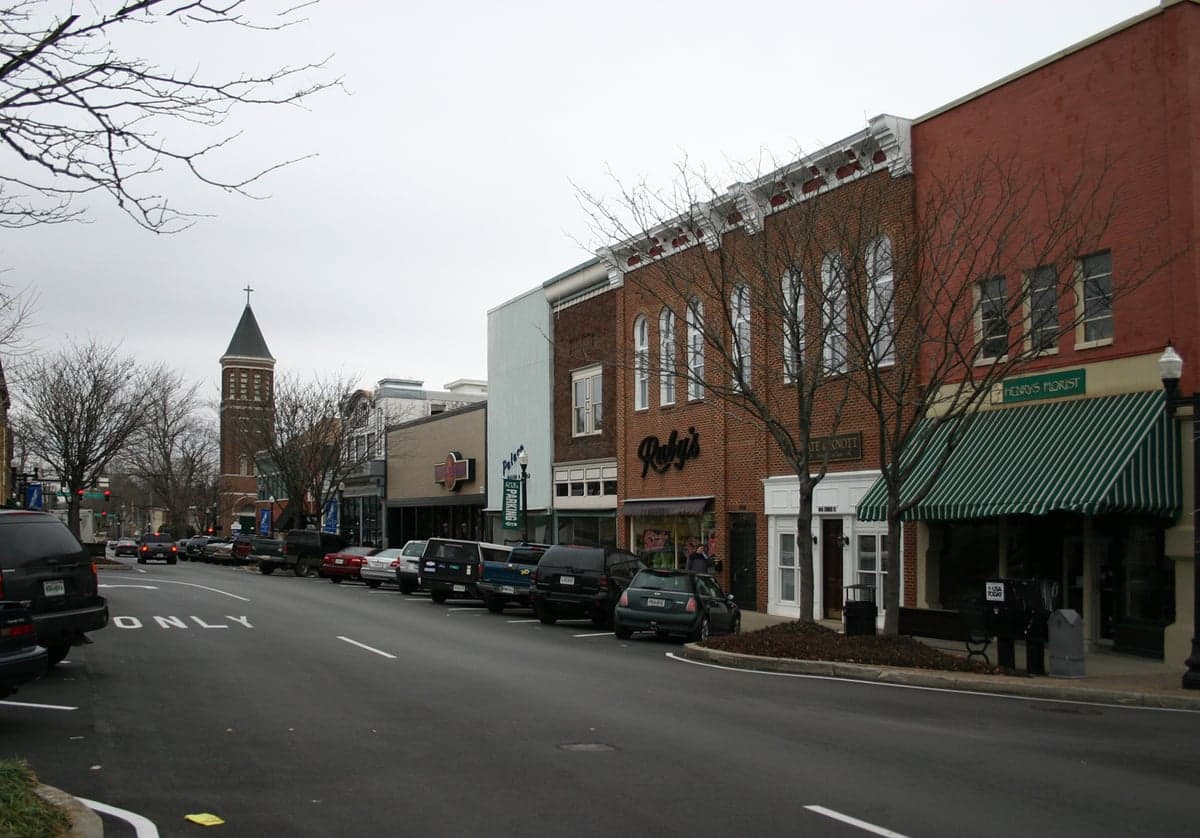
Photo: Wikipedia
Quality of Life in Murfreesboro, TN
Above-average quality of iife. The area offers a reasonable cost of living, decent mobility, and a mix of neighborhood amenities.
What does Quality of Life tell us?
Quality of Life blends cost of living, nearby amenities, socioeconomic signals, and neighborhood character. City-level scores represent the whole municipality; individual neighborhoods can differ.
What does this tell us?
Quality of Life blends cost of living, nearby amenities, socioeconomic signals, and neighborhood character. City-level scores represent the whole municipality; individual neighborhoods can differ.
Cost of Living
23% above national average
The Real Cost of Living in Murfreesboro, TN for 2026
| Tier | Individual | Family (4) |
|---|---|---|
| Survival | $22k | $41k |
| Comfortable | $71k | $104k |
| Luxury | $128k+ | $198k+ |
| Elite (Top 5%) | $151k+ | $233k+ |
73%
The Area Signal
A metric tracking the socioeconomic signals of the area.
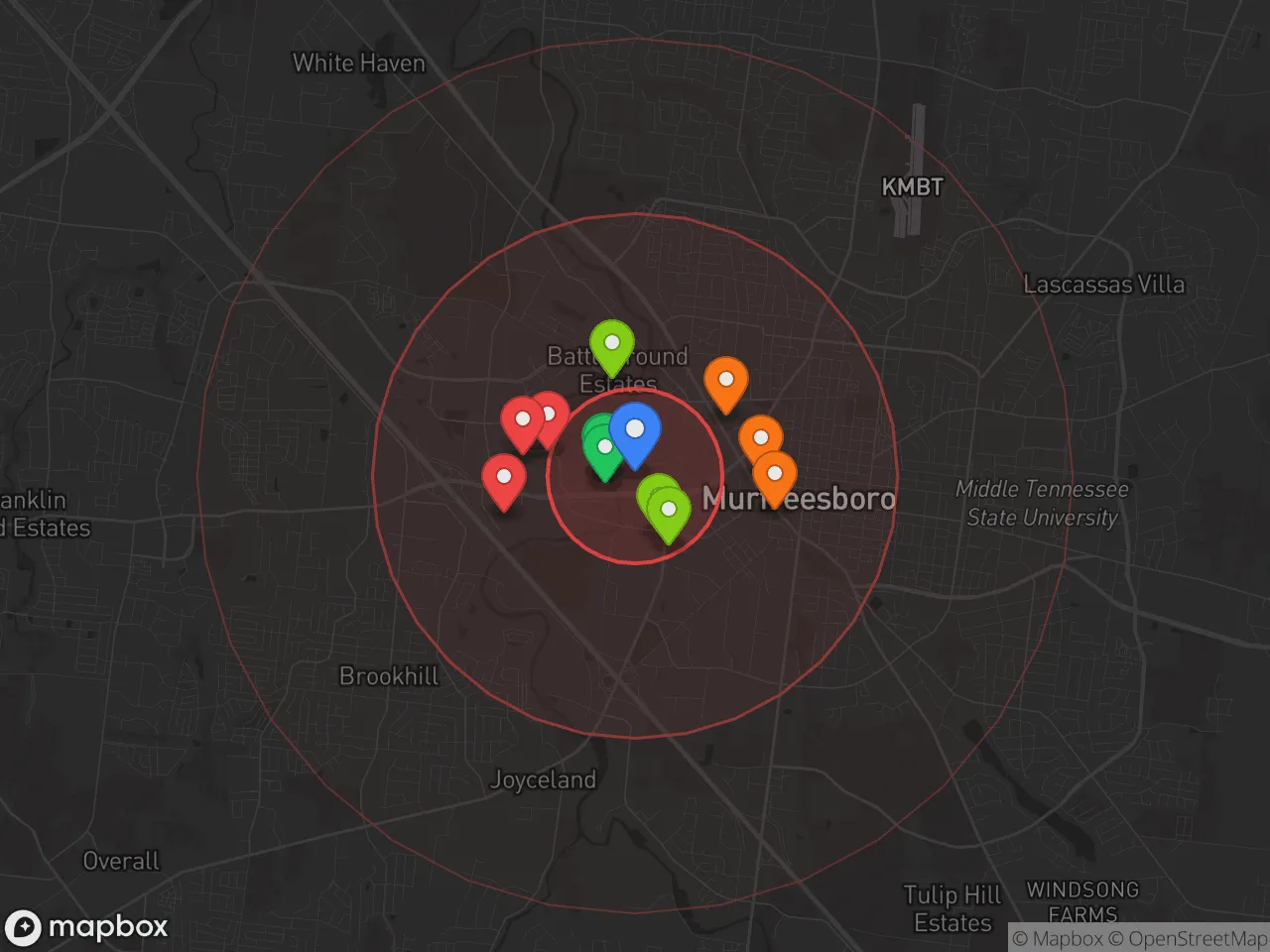
Hobbies
Explore the areaGroceries
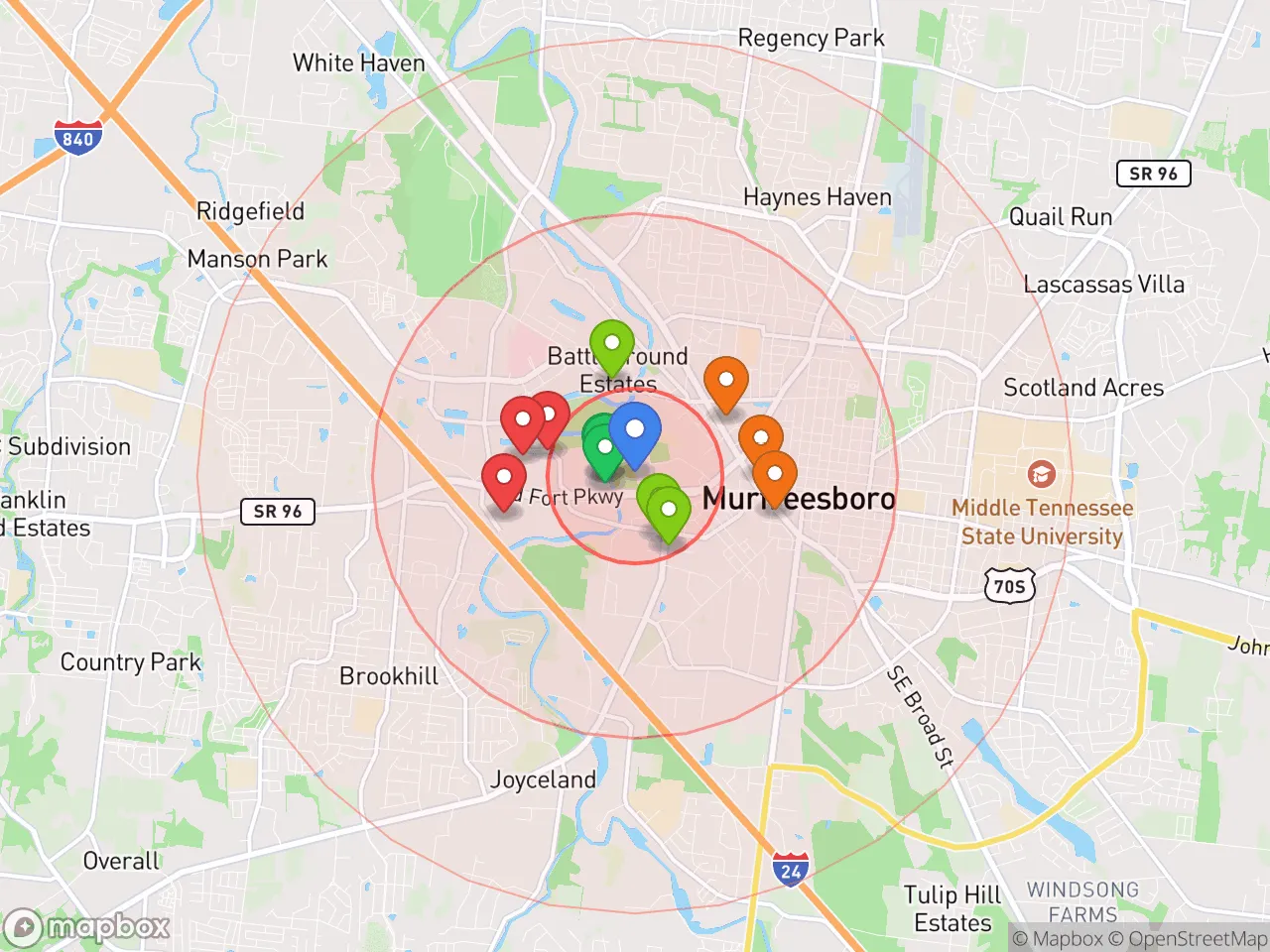
7 within 10 miles
Gas
20 within 10 miles
Hospital
8 within 20 miles
Airport
BNA — Nashville International
Post Office
USPS — Murfreesboro, TN
Critical Amenities
Quality-of-Life Analysis
Murfreesboro, Tennessee, presents a quality of life defined by rapid suburban growth and a demographic shift toward young families and professionals drawn by its balance of affordability and proximity to Nashville. With a cost of living index of 123 (23% above the national average), the city is notably more expensive than the Tennessee state average but remains a relative bargain compared to Davidson County, where Nashville’s index hovers near 130. The median household income in Murfreesboro, approximately $68,000, supports a largely middle-to-upper-middle-class population, with a significant share of residents working in education, healthcare, and logistics—sectors anchored by Middle Tennessee State University (MTSU), Ascension Saint Thomas Rutherford Hospital, and the sprawling Nissan North America headquarters in nearby Franklin.
Cost of living, housing affordability, and how Murfreesboro compares to Nashville
Housing is the primary driver of Murfreesboro’s elevated cost of living. The median home value of $365,100 is roughly 15% lower than Nashville’s median of $430,000, making it a more attainable entry point for first-time buyers. However, this figure has climbed over 40% since 2020, reflecting intense demand from commuters and remote workers. Median rent sits at $1,376, which is about $200 less than comparable rentals in Williamson County but still 10% above the national average. For context, a two-bedroom apartment in Murfreesboro typically rents for $1,200–$1,500, whereas in Brentwood or Franklin, similar units often exceed $1,800. The average commute of 26.9 minutes is slightly longer than the national average of 26 minutes, largely due to traffic on Interstate 24 and State Route 96, which funnel workers toward Nashville. While Murfreesboro is cheaper than its western neighbors, it is notably more expensive than rural Rutherford County towns like Eagleville or Christiana, where median home values dip below $300,000.
What daily life is like for families: schools, amenities, and community rhythm
Daily life in Murfreesboro revolves around a robust public school system—Rutherford County Schools consistently rank among Tennessee’s top districts, with schools like Siegel High School and Central Magnet School earning state and national recognition for academic performance. The city’s amenity base is anchored by the Stones River Greenway, a 10-mile paved trail system popular for running and cycling, and the Murfreesboro Municipal Airport, which supports general aviation. Retail and dining cluster around The Avenue Murfreesboro and the historic downtown square, where local restaurants like Demos’ Steak & Spaghetti House and Buster’s Place draw steady crowds. The rhythm of life is distinctly suburban: weekends feature youth sports leagues at Richard Siegel Soccer Complex, MTSU football games at Johnny “Red” Floyd Stadium, and seasonal events like the Uncle Dave Macon Days festival. Commuters face predictable congestion on I-24 during peak hours, but the city’s own employment base—especially in healthcare and education—means many residents work locally. Crime rates are moderate, with property crime slightly above the national average but violent crime below the Tennessee state average, according to 2024 FBI data.
Murfreesboro is best suited for families and professionals who want a slower pace than Nashville but still need access to urban job markets and cultural amenities. The city’s affordability relative to Davidson County, combined with strong schools and a growing retail and recreation scene, makes it a logical choice for those priced out of Williamson County or seeking more space. Singles and young professionals without children may find the social scene limited compared to Nashville’s nightlife, but the presence of MTSU ensures a steady influx of younger residents and campus-adjacent events. For anyone prioritizing a balanced cost of living, good schools, and a manageable commute to Nashville, Murfreesboro offers a compelling middle ground.

Crime in Murfreesboro, TN
Generally safer than 60% of comparable U.S. locations.
Violent CrimeViolent Crime Analysis
Property CrimeProperty Crime Analysis
Crime Analysis
Murfreesboro, Tennessee, reports a violent crime rate of 398.8 incidents per 100,000 residents and a property crime rate of 1,546.6 per 100,000, placing it above national averages for both categories. As a rapidly growing city within the Nashville metropolitan area, its safety profile is shaped by a mix of suburban expansion, economic pressures, and local criminal justice policies. Prospective residents should weigh these statistics carefully, particularly given the broader regional trend toward progressive prosecutorial approaches that can reduce accountability for offenders.
Crime in context
Murfreesboro’s violent crime rate of 398.8 per 100,000 is roughly 14% higher than the national average of about 350 per 100,000, while its property crime rate of 1,546.6 per 100,000 exceeds the U.S. average by approximately 10%. Compared to Tennessee’s statewide violent crime rate of 630 per 100,000, Murfreesboro appears safer, but this comparison masks the city’s elevated risk relative to similarly sized suburbs. The city’s proximity to Nashville—a metro area where progressive district attorneys have increasingly emphasized diversion programs and reduced sentencing—raises concerns about recidivism. In Rutherford County, the judicial approach has historically been more conservative, but recent shifts toward reform-oriented policies in surrounding jurisdictions can create a revolving door for offenders who cross county lines. This dynamic undermines deterrence and directly impacts public safety in Murfreesboro.
What residents experience
Property crime dominates daily life concerns, with theft, burglary, and vehicle break-ins being the most common incidents reported. The city’s growth has strained police resources, leading to longer response times in outlying neighborhoods. Violent crime, while less frequent, includes aggravated assault and robbery, often concentrated near commercial corridors and apartment complexes. Murfreesboro’s status as a college town (home to Middle Tennessee State University) introduces additional risks, including alcohol-fueled altercations and thefts targeting student housing. Residents frequently cite car break-ins and package theft as persistent nuisances, with police data showing these crimes cluster near retail zones like The Avenue shopping center and the Old Fort Parkway corridor. The presence of progressive criminal justice policies in the broader Nashville region—such as cash bail reform and pretrial release programs—means that repeat property offenders are often back on the streets quickly, eroding the deterrent effect of arrests.
Neighborhood-level safety varies significantly. Areas west of I-24, including the Barfield and Blackman communities, tend to report lower crime rates, while older neighborhoods near downtown and the MTSU campus see higher incident counts. Gated subdivisions and newer developments in the southern part of the city generally offer better security, but no area is immune to property crime. The city’s rapid annexation of rural fringe areas has also created pockets where police coverage is thinner, increasing vulnerability to burglaries. For families and professionals, the safest choices are typically the established suburban enclaves with active neighborhood watch programs, though even these require vigilance against the region’s broader crime trends.
* Values derived from national, state, county, city and local statistics and may differ in a specific area. Last updated: 2026-05-02T03:54:30.000Z
Narrative content on this page is AI-generated and may contain mistakes. Verify any details that matter before acting on them.
ReloMaps may earn a commission from affiliate links at no extra cost to you.

