Photo: Wikipedia
Political ClimatePolitical Climate in Murfreesboro, TN
District shown is the primary district for this city’s centroid. Cities may span multiple districts.
Local Political AnalysisPolitical Analysis of Murfreesboro, TN
Murfreesboro sits squarely in deep-red territory, with a Cook PVI of R+21 that puts it among the most reliably conservative midsized cities in Tennessee. But if you’ve lived here as long as I have, you’ve watched the political ground shift under your feet — not in the countywide vote totals, which still lean hard right, but in the creeping influence of Nashville’s progressive energy bleeding down I-24. The city council and school board races are where you really see the tension: a growing bloc of transplants pushing for denser zoning, more public spending, and what they call “equity initiatives” that sound an awful lot like government overreach into how we raise our kids and run our businesses.
How it compares
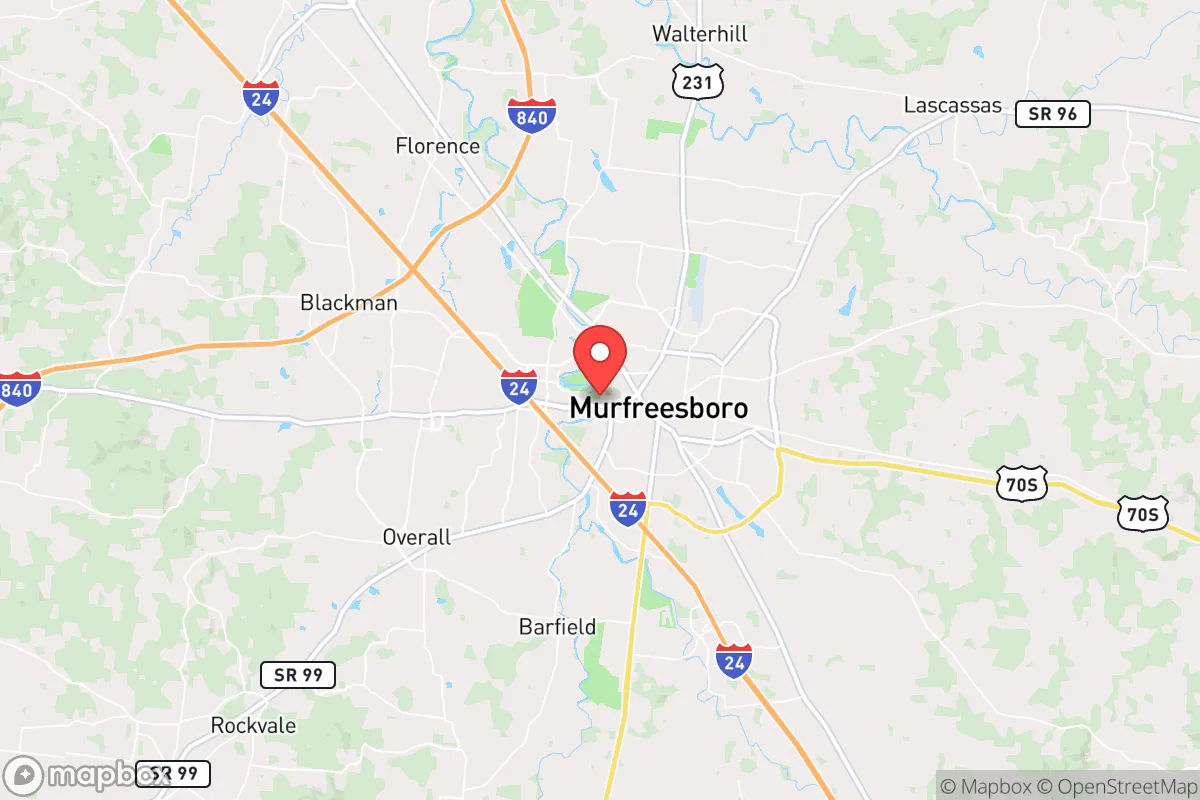
Drive 35 miles northwest and you hit Nashville, a blue island in a red state where the mayor and council have embraced sanctuary-city rhetoric and defund-the-police talking points. That’s the contrast that keeps Murfreesboro’s old guard on edge. Head southeast to Chattanooga, and you find a similar R+ vibe but with a more libertarian streak — less appetite for the kind of zoning fights that dominate our local news. Meanwhile, our immediate neighbor Smyrna leans R+18 and shares our wariness of Davidson County’s influence, but they’ve been quicker to approve tax incentives for corporate relocations, which some here see as picking winners and losers. The real contrast, though, is with Franklin, just west of Nashville: once a conservative stronghold, it’s now trending purple as tech money and California transplants reshape its politics. Murfreesboro’s advantage is that we’re still far enough from the urban core that the old values — limited government, local control, Second Amendment rights — still carry most elections.
What this means for residents
For the average family here, the political climate means your property taxes stay relatively low compared to Nashville, and your kids’ school curriculum isn’t being rewritten by activists who think parental rights are optional. The Rutherford County Commission has held the line on mask mandates, vaccine passports, and other pandemic-era overreach that turned neighboring counties into battlegrounds. But the warning signs are there: a 2023 push to add “diversity, equity, and inclusion” staff to the school district was defeated, but only by a 5-4 vote. That’s the kind of margin that keeps you up at night if you believe government’s job is to stay out of your family’s business. On the plus side, the local GOP has kept its focus on infrastructure and public safety — the police department is well-funded, and the sheriff’s office hasn’t bowed to calls to “reimagine” law enforcement. For now, Murfreesboro remains a place where you can still raise kids without feeling like the government is an adversary, but the next few election cycles will tell whether that holds.
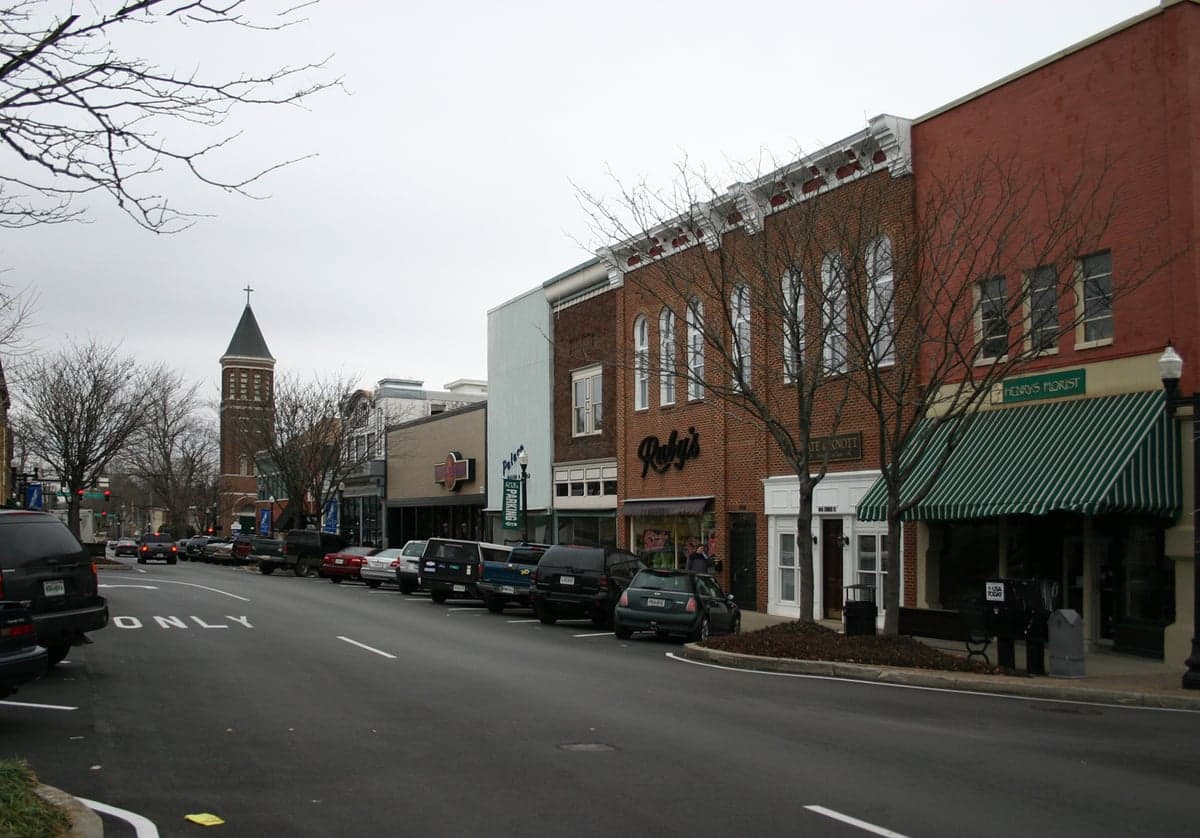
Culturally, Murfreesboro still feels like a small town that happens to have 160,000 people. The courthouse square on a Saturday morning is full of families, church groups, and veterans — not protesters or street vendors pushing a political agenda. The biggest policy distinction you’ll notice is the city’s approach to growth: it’s managed, not planned to death. There’s no inclusionary zoning mandate forcing developers to set aside units for “affordable housing” at taxpayer expense, and no citywide ban on short-term rentals. The long-term worry, though, is that the same forces that turned Williamson County blue around the edges are already buying up land here. If the next decade brings another wave of Nashville spillover, the R+21 number could start to slip — and with it, the sense that Murfreesboro is still a place where government knows its place.

State Political ClimatePolitical Climate in Tennessee
State Political AnalysisPolitical Environment in the State
Tennessee has been a reliably red state for decades, but the nature of that conservatism has shifted significantly. While the state hasn't voted for a Democratic presidential candidate since 2004 (and even then it was a narrow loss), the real story is the deepening of the Republican supermajority in the legislature and the hardening of the state's cultural and policy identity. Over the last 10-20 years, Tennessee has moved from a more moderate, business-friendly Southern conservatism to a much more assertive, culturally conservative posture, driven by a coalition of rural and suburban voters who feel increasingly at odds with national trends.
Urban vs. rural divide
The political map of Tennessee is a textbook case of the urban-rural split. The major population centers — Nashville (Davidson County), Memphis (Shelby County), and Knoxville (Knox County) — are the blue dots in a sea of red. Nashville has become a booming, increasingly progressive city, with a growing tech and creative class that has made it a Democratic stronghold. Memphis remains heavily Democratic, driven by its large African American population and union history. Knoxville, while historically more conservative, has seen its urban core trend leftward in recent cycles. The real action, however, is in the suburbs and exurbs. Williamson County (south of Nashville) is one of the wealthiest and most reliably Republican counties in the nation. Rutherford County (Murfreesboro) and Wilson County (Lebanon) have flipped hard red as Nashville's growth pushed conservative families outward. Meanwhile, the vast rural stretches — from the Mississippi Delta counties in the west to the Appalachian counties in the east — vote overwhelmingly Republican, often by margins of 70-80%. The divide isn't just about party; it's about worldview. A voter in Chattanooga might be more libertarian-leaning, while a voter in Jackson is more traditionalist. The state legislature is drawn to maximize rural and suburban power, meaning Nashville and Memphis have very little say in state policy.
Policy environment
Tennessee's policy environment is aggressively conservative, and it's been getting more so. The state has no personal income tax — a huge draw for relocators. Sales tax is high (around 7% state, plus local add-ons), but the lack of income tax is a deliberate trade-off. The regulatory posture is business-friendly, with right-to-work laws and a tort reform system that limits lawsuits. On education, the state has embraced school choice, with a robust charter school sector and a new Education Savings Account (ESA) program that lets parents use state funds for private school or homeschooling. This is a major win for parental rights advocates. Healthcare is a mixed bag: Tennessee did not expand Medicaid under the Affordable Care Act, leaving a coverage gap, but the state has also been a leader in telehealth deregulation. Election laws have tightened: voter ID requirements are strict, and the state has purged voter rolls aggressively. The legislature has also passed laws restricting ballot drop boxes and limiting early voting hours in some counties. The overall posture is one of limited government, but with a strong cultural intervention — the state is not shy about using its power to enforce conservative social values.
Trajectory & freedom
On the freedom scale, Tennessee is a mixed bag. On gun rights, it's a clear win: in 2021, the state passed permitless carry (constitutional carry), allowing any law-abiding adult to carry a handgun without a permit. This was a major expansion of personal liberty. On parental rights, the state passed the "Parental Bill of Rights" in 2022, giving parents more say over their children's education and medical decisions. This is a strong positive for families. On medical autonomy, the state has been a battleground. In 2023, the legislature passed a near-total ban on gender-affirming care for minors, overriding a veto from Governor Bill Lee. This is seen by conservatives as protecting children, but by others as government overreach into medical decisions. On property rights, Tennessee is generally strong, with no statewide rent control and limited eminent domain abuse. However, the state has been aggressive in using its power to preempt local ordinances — for example, banning local governments from regulating short-term rentals (Airbnb) or from enacting their own anti-discrimination laws. This is a double-edged sword: it protects property owners from local overreach, but it also limits local control. On taxation, the trajectory is positive: the state has been cutting the sales tax on groceries and reducing the franchise tax on businesses. Overall, Tennessee is becoming more free in some areas (guns, school choice, taxes) but more restrictive in others (medical decisions, local control).
Civil unrest & political movements
Tennessee has seen its share of political flashpoints. The Nashville school board protests in 2021-2022 were a major story, with parents clashing over mask mandates and critical race theory. The state legislature responded by passing a law allowing parents to sue school districts over curriculum. In 2023, the Tennessee Three — two Democratic state representatives who protested gun violence on the House floor after the Covenant School shooting — were expelled (and later reinstated). This was a national story and highlighted the intense partisan divide. Immigration politics are less visible here than in border states, but the legislature has passed laws requiring local law enforcement to cooperate with ICE and banning sanctuary cities. There is no serious secessionist movement, but there is a strong strain of nullification rhetoric around federal gun laws and vaccine mandates. Election integrity has been a hot topic: the state created a new election crime unit in 2022, and there have been controversies over voter roll maintenance. A new resident would notice the strong presence of conservative activist groups like Moms for Liberty and the Tennessee Firearms Association, as well as the occasional counter-protest in Nashville. The overall vibe is one of a state that is culturally at war with the national Democratic Party, but internally stable.
Projection
Over the next 5-10 years, Tennessee is likely to become more conservative, not less. The in-migration pattern is key: people moving to Tennessee are disproportionately conservative-leaning families from California, Illinois, and New York, drawn by low taxes and cultural alignment. The suburbs of Nashville, Knoxville, and Chattanooga are growing fast, and these new residents tend to vote Republican. The rural areas are depopulating slowly, but their political weight is protected by the state's gerrymandered districts. The Democratic strongholds of Nashville and Memphis will continue to grow in population, but their influence will be diluted by the legislature's refusal to create more urban districts. The biggest wild card is the education freedom movement: if the ESA program expands, it could fundamentally reshape the state's political landscape by empowering parents and weakening the teachers' unions, which are a key Democratic constituency. On social issues, expect more preemption of local ordinances on housing, zoning, and LGBTQ+ rights. The state is also likely to pass a school voucher program that covers all students. A new resident moving in now should expect to find a state that is increasingly confident in its conservative identity, with a government that is willing to use its power to protect that identity.
Bottom line for a new resident: If you're a conservative looking for a state that aligns with your values on taxes, guns, and parental rights, Tennessee is a strong bet. You'll find a government that is actively working to protect those values, even if it means picking fights with the federal government or local cities. The trade-off is that you'll have less local control — the state government in Nashville calls the shots, and if you live in a blue city, you'll be overruled on many issues. But for most conservative families, that's a feature, not a bug. Just know that the political climate is intense, and the culture war is real. You'll be moving to a state that is proud of its red identity and isn't shy about it.
* Values derived from national, state, county, city and local statistics and may differ in a specific area. Last updated: 2026-05-02T03:54:30.000Z
Narrative content on this page is AI-generated and may contain mistakes. Verify any details that matter before acting on them.
ReloMaps may earn a commission from affiliate links at no extra cost to you.

