 Popular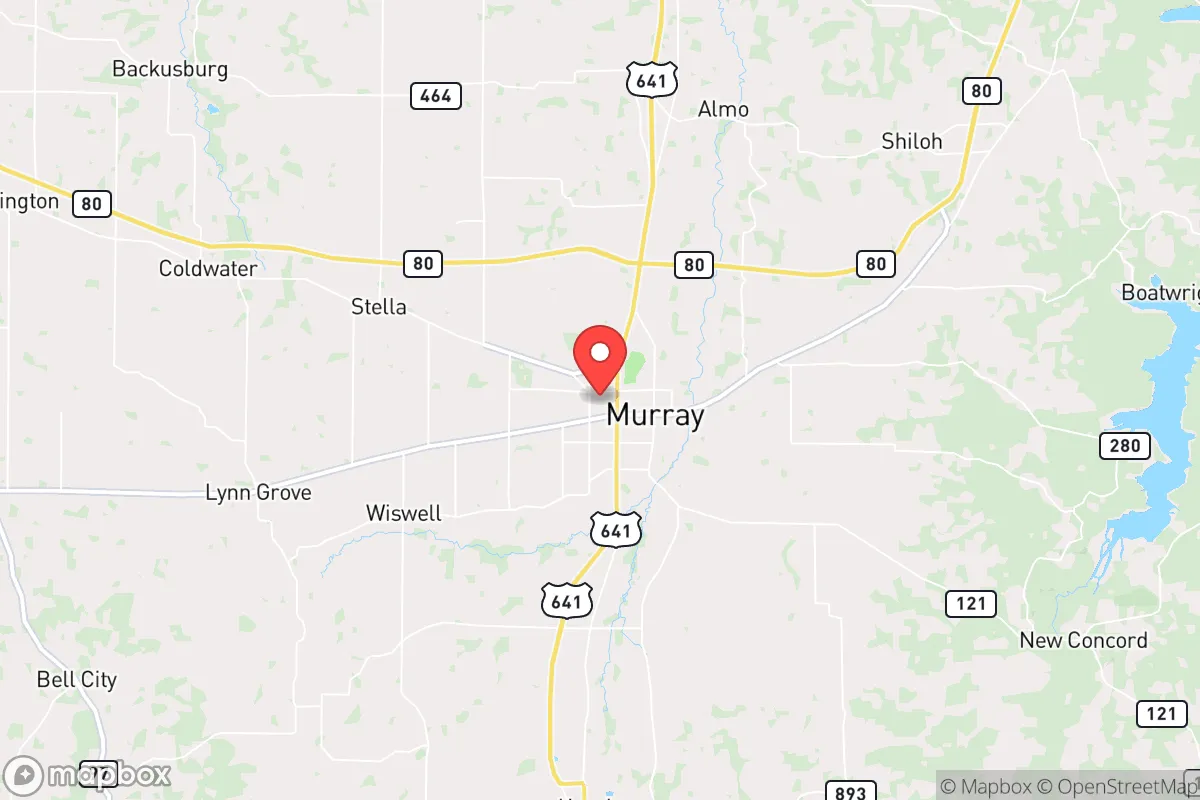
Photo: Wikipedia
Political ClimatePolitical Climate in Murray, KY
District shown is the primary district for this city’s centroid. Cities may span multiple districts.
Local Political AnalysisPolitical Analysis of Murray, KY
Murray, Kentucky, sits in a deeply conservative corner of the state, with a Cook PVI of R+23 that reflects a solid Republican lean that has only hardened over the past decade. The city itself, home to Murray State University, has historically been a bit more moderate than the surrounding farmland, but the overall trajectory is unmistakably red. You can feel it in the local chatter—folks here are wary of the federal government sticking its nose into local schools, healthcare decisions, and property rights. The shift toward progressive ideology that’s crept into some college towns hasn’t taken root here in any meaningful way, and most residents intend to keep it that way.
How it compares
Drive thirty minutes east to Hopkinsville, and you’ll find a similar conservative bent, though it’s a bit more mixed due to Fort Campbell’s transient military population. Head north to Paducah, and you’ll see a slightly more moderate tilt, especially in the city council, where a few Democrats still hold seats. But Murray stands out for its consistency—there’s no real progressive foothold, and the local GOP is well-organized. The contrast is stark when you look at Bowling Green, about 90 minutes northeast, which has seen a noticeable influx of younger, more liberal voters tied to Western Kentucky University. Murray’s political climate feels more insulated, more grounded in the traditional values that have defined this part of the state for generations.
What this means for residents
For the average family or small business owner, this political climate means less government overreach in daily life. You won’t see the kind of zoning overhauls or mask mandates that popped up in bigger cities during the pandemic—local leaders here tend to err on the side of personal freedom. Property taxes stay low, and there’s a general distrust of any new regulation that might tell you what to do with your land or your kids’ education. That said, the university does bring in a handful of faculty who lean left, and there’s been some quiet tension over things like DEI initiatives on campus. But so far, the community has pushed back hard, keeping those efforts from spilling into city policy. If you’re worried about progressive ideology creeping into your backyard, Murray is still a safe bet—for now.
Culturally, Murray is a place where church potlucks and high school football still anchor the social calendar, and that’s reflected in local ordinances. You won’t find any push for sanctuary city status or radical environmental mandates here. The biggest policy debates tend to revolve around how to manage growth without losing the small-town feel—things like whether to allow more apartment complexes or how to handle the occasional conflict between student housing and permanent residents. There’s a quiet pride in being a place that hasn’t bent the knee to every national trend, and most folks hope it stays that way. If the winds shift further left in the coming years, you can bet Murray will be one of the last holdouts in western Kentucky.

State Political ClimatePolitical Climate in Kentucky
State Political AnalysisPolitical Environment in the State
Kentucky has long been a reliably red state in federal elections, voting for the Republican presidential candidate in every election since 2000, often by double-digit margins. However, the state’s political landscape is more nuanced than a simple red-blue map suggests, with a deep urban-rural divide and a recent, dramatic shift toward the GOP at the state and local levels. Over the past 10-20 years, Kentucky has moved from a competitive, Democrat-heavy state in local offices to a solidly Republican stronghold, driven by the realignment of rural, working-class voters and the collapse of the old Blue Dog Democrat coalition.
Urban vs. rural divide
The political map of Kentucky is a textbook example of the urban-rural split. The state’s two major population centers, Louisville (Jefferson County) and Lexington (Fayette County), are the only reliably blue areas, consistently voting Democratic in statewide and presidential races. Louisville, the state’s largest city, is a Democratic stronghold with a strong union history and a growing progressive activist base. Lexington, home to the University of Kentucky, leans left but is less intensely blue than Louisville. The rest of the state is overwhelmingly red. The rural, coal-producing regions of eastern Kentucky (like Pike, Floyd, and Harlan counties) were once solidly Democratic but have flipped hard to the GOP, driven by cultural issues and opposition to environmental regulations. The Louisville suburbs in Oldham and Shelby counties are reliably Republican, while the Northern Kentucky suburbs of Cincinnati (Boone, Kenton, Campbell counties) are also conservative, though with a more moderate, business-oriented flavor. The Bowling Green area in south-central Kentucky is a growing conservative hub, while Paducah and Owensboro in the west remain reliably red. The only other notable blue pocket is Frankfort, the state capital, which leans Democratic due to state government employees.
Policy environment
Kentucky’s policy environment has shifted sharply rightward since 2016, when Republicans gained a supermajority in the state legislature. The state has a flat income tax that is being phased down from 5% to 4% by 2026, with a goal of eventual elimination. There is no state-level property tax, and sales tax is capped at 6%. The regulatory posture is business-friendly, with right-to-work laws and a tort reform system that caps non-economic damages. On education, Kentucky has a robust school choice movement, with charter schools legalized in 2017 (though none have opened yet) and a growing number of publicly funded private school scholarships through the Education Opportunity Account Act. The state has also passed universal school choice legislation, allowing education funding to follow the child. Healthcare policy is a mixed bag: Kentucky expanded Medicaid under the Affordable Care Act, but the state has also imposed work requirements and premiums for able-bodied adults. Election laws have been tightened, with voter ID requirements and restrictions on absentee voting. The state has also passed a constitutional carry law, allowing permitless concealed carry of firearms.
Trajectory & freedom
Kentucky is clearly trending toward more personal freedom in several key areas, particularly gun rights, parental rights, and tax policy. The 2019 passage of constitutional carry (SB 150) was a landmark win for gun owners, removing the requirement for a permit to carry a concealed firearm. In 2021, the state passed the Parental Rights in Education Act, which requires schools to notify parents of any changes to a student’s services or mental health, and prohibits instruction on sexual orientation or gender identity in K-5. The state has also passed a Save Women’s Sports Act, banning biological males from competing in girls’ sports. On medical freedom, Kentucky passed a COVID-19 vaccine and mask mandate ban for public schools and state agencies. However, there are concerns: the state’s medical marijuana program is limited and heavily regulated, and recreational cannabis remains illegal. Property rights are generally strong, with no statewide zoning mandates, though local governments in Louisville and Lexington have imposed stricter land-use rules. The state’s tax burden is still relatively high compared to other red states, but the phased income tax cuts are a positive sign.
Civil unrest & political movements
Kentucky has seen its share of political flashpoints, particularly around racial justice and policing. The 2020 Breonna Taylor protests in Louisville were among the largest and most sustained in the country, leading to significant property damage, clashes with police, and a national spotlight on the city’s criminal justice system. This has fueled a strong defund the police movement in Louisville, which has been met with fierce opposition from suburban and rural voters. The state has also seen a growing Second Amendment sanctuary movement, with over 60 counties passing resolutions declaring themselves “sanctuary counties” against any future federal gun restrictions. Immigration politics are less heated than in border states, but there is a strong anti-sanctuary city sentiment, with Louisville being the only city with a formal “welcoming city” policy. Election integrity has been a hot topic, with the 2020 election leading to a Republican-led audit of the state’s voting machines, which found no evidence of widespread fraud but fueled ongoing distrust. The Kentucky Freedom Coalition and other grassroots groups are active in pushing for school board transparency and parental rights.
Projection
Over the next 5-10 years, Kentucky is likely to become even more conservative at the state level, driven by continued out-migration from Louisville and Lexington to the suburbs and exurbs, and by in-migration of conservatives from blue states seeking lower taxes and more freedom. The Bowling Green and Richmond areas are expected to grow rapidly, further solidifying the GOP’s hold on the legislature. The income tax is likely to be eliminated entirely, and school choice will expand. However, the Louisville metro area will remain a progressive island, and its influence on state politics will wane as the rest of the state grows faster. The biggest wildcard is the coal industry and the transition to renewable energy, which could create economic hardship in eastern Kentucky and potentially shift some voters back to Democrats if the GOP fails to deliver economic diversification. Overall, a new resident can expect a state that is increasingly friendly to traditional values, gun rights, and low taxes, but with a persistent urban-rural cultural war that will continue to play out in local school boards and city councils.
For a conservative individual or family considering a move, Kentucky offers a strongly favorable policy environment with a clear trajectory toward more freedom. The state’s low cost of living, growing economy, and solid Republican governance make it an attractive option. However, be aware of the urban-rural divide: if you choose to live in Louisville or Lexington, you will be in a blue bubble with higher taxes and more progressive policies. For the best alignment with conservative values, look to the suburbs of Louisville (Oldham County), the Northern Kentucky suburbs, or the Bowling Green area. The state’s political trajectory is positive, but the cultural battles are not over, and staying engaged in local politics is essential to preserving the gains made.
* Values derived from national, state, county, city and local statistics and may differ in a specific area. Last updated: 2026-04-21T09:18:55.000Z
Narrative content on this page is AI-generated and may contain mistakes. Verify any details that matter before acting on them.
ReloMaps may earn a commission from affiliate links at no extra cost to you.

