Photo: Wikipedia
Demographics of Murray, UT
Affluence Level in Murray, UT
An upper-middle-class area. Household wealth, education levels, and homeownership run ahead of national benchmarks.
People of Murray, UT
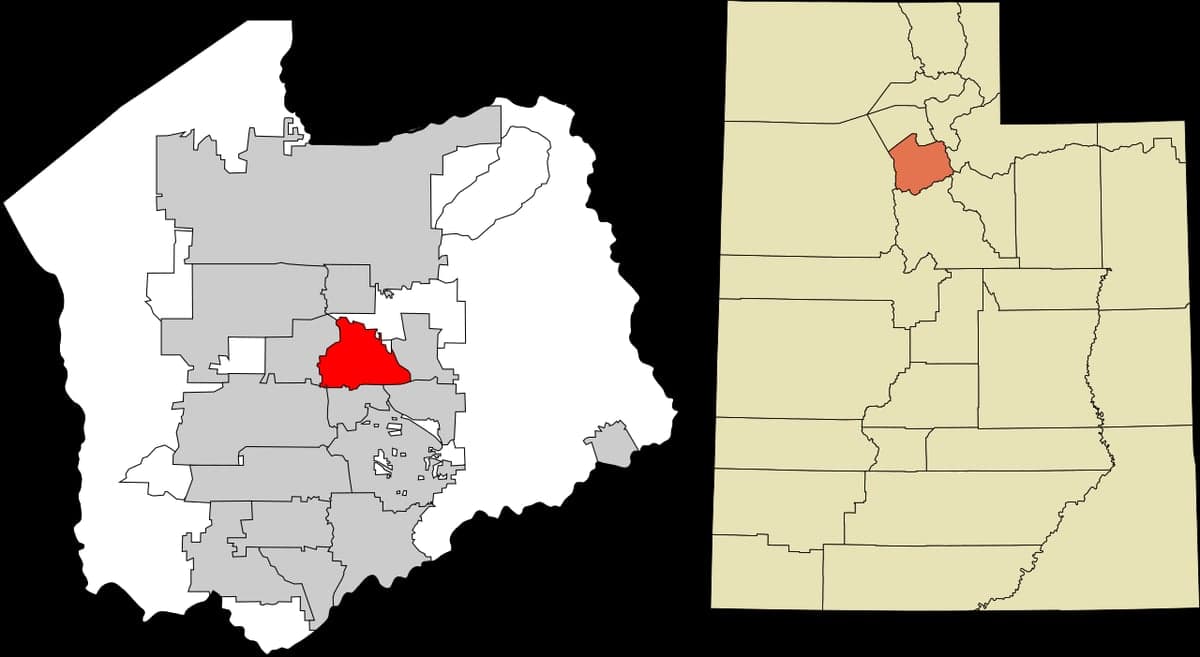
The people of Murray, Utah today form a dense, family-oriented suburban core of 49,904 residents, characterized by a predominantly white (73.8%) population with a significant and growing Hispanic minority (14.6%) and smaller but established East/Southeast Asian (2.9%) and Indian-subcontinent (1.8%) communities. The city’s identity is shaped by its history as a working-class industrial hub that has transformed into a stable, middle-class suburb with a strong sense of local identity distinct from neighboring Salt Lake City. With 40.7% of adults holding a college degree, Murray’s population is educated but remains more blue-collar in character than nearby Holladay or Cottonwood Heights. The city is notably less transient than many Utah suburbs, with a high rate of long-term residents who trace their roots back several generations.
How the city was settled and grew
Murray’s settlement began in the 1850s as a farming community called “South Cottonwood,” but its character was permanently shaped by the arrival of the railroad in the 1870s. The completion of the Utah Southern Railroad and the discovery of rich copper, silver, and lead deposits in the nearby Bingham Canyon and Tintic mining districts turned Murray into a smelting and industrial boomtown. The American Smelting and Refining Company (ASARCO) built a massive smelter in 1902, drawing waves of immigrant laborers—first Irish and Cornish miners, then Southern and Eastern Europeans including Greeks, Italians, and Slavs—who settled in the Smelter District (the area around what is now Vine Street and 5300 South). These workers built small, tightly packed homes near the smelter, creating a dense, ethnic working-class neighborhood that contrasted sharply with the agricultural Latter-day Saint settlements elsewhere in the valley. A second wave of immigrants, primarily Japanese and Mexican laborers, arrived in the 1910s and 1920s to work the smelter and the railroad yards, establishing small enclaves in the Central Murray area around State Street. By 1930, Murray had become one of Utah’s most ethnically diverse cities, with roughly a third of its population foreign-born—a stark contrast to the overwhelmingly native-born Mormon settlements surrounding it.
Modern era (post-1965)
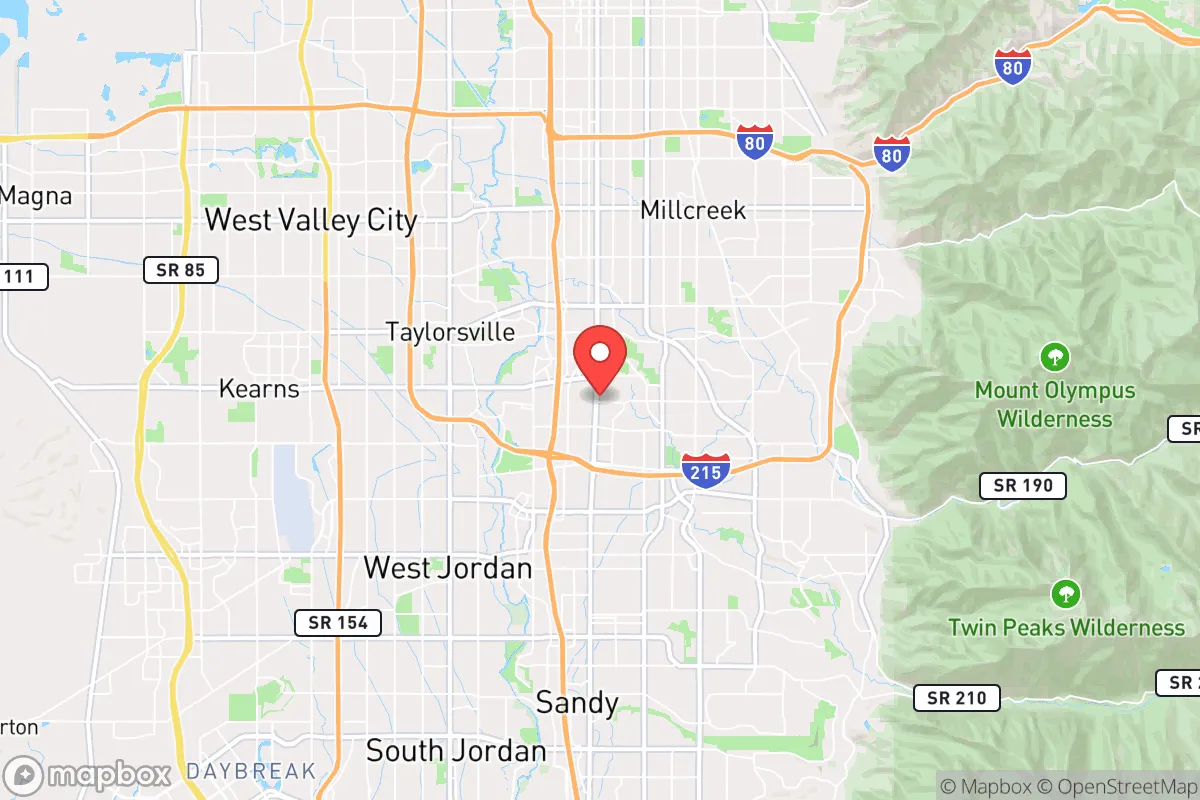
The post-1965 era brought profound demographic change. The ASARCO smelter closed in 1971, eliminating the city’s industrial base and triggering a period of economic uncertainty. Many of the older European-immigrant families moved outward to newer suburbs like West Jordan and Sandy, while the city’s housing stock—aging bungalows and postwar ranches—became affordable entry points for new populations. The Interstate 15 corridor, completed through Murray in the 1960s, reshaped the city’s geography, splitting the historic Smelter District from the rest of Murray and accelerating commercial development along State Street. Hispanic migration, which had been steady since the 1940s, accelerated sharply after 1980, with families settling in the West Murray neighborhoods near 4500 South and 900 West, an area that today has the highest concentration of Hispanic residents in the city. East/Southeast Asian communities, primarily Vietnamese and Korean families, arrived in smaller numbers during the 1970s and 1980s, clustering in the East Murray area near 5300 South and Highland Drive, drawn by affordable housing and proximity to the Intermountain Medical Center. The Indian-subcontinent population is a more recent phenomenon, growing from near zero in 1990 to 1.8% today, with families concentrated in the newer subdivisions of South Murray (south of 6100 South) near the I-15/I-215 interchange, attracted by the area’s good schools and tech-sector employment in nearby Sandy and Lehi.
The future
Murray’s population is trending toward greater diversity, but the pace is moderate compared to the explosive growth of Hispanic and Asian populations in Salt Lake City proper or West Valley City. The Hispanic share has risen from roughly 8% in 2000 to 14.6% today, and this growth is likely to continue as families from the broader Salt Lake Valley’s Hispanic community seek stable, middle-class neighborhoods with good schools. The East/Southeast Asian and Indian-subcontinent populations are growing more slowly, primarily through professional migration tied to the healthcare and technology sectors, and are likely to remain small but stable enclaves. The white population, while still the majority, is aging and declining slightly as younger white families move to newer suburbs in Utah County or Tooele Valley. Murray is not tribalizing into distinct, isolated enclaves—the city is too small and its housing stock too integrated for that—but it is becoming a patchwork of micro-neighborhoods with different ethnic and economic profiles. The redevelopment of the Murray City Center (around 4800 South and State Street) and the construction of new mixed-use apartments are attracting younger, more educated residents, which may gradually raise the college-attainment rate above 40% and shift the city’s character toward a more professional, less industrial identity.
For someone moving to Murray now, the city offers a stable, family-oriented environment with genuine diversity—not a melting pot, but a place where distinct communities coexist without friction. The working-class roots are still visible in the Smelter District’s modest homes and the Hispanic-owned businesses along 4500 South, while the newer South Murray subdivisions reflect the city’s gradual shift toward a more professional, educated population. Murray is becoming more diverse and more educated, but it remains a place where long-term residents and newcomers alike value stability, good schools, and a strong sense of local identity over the rapid change seen in other parts of the Salt Lake Valley.

* Values derived from national, state, county, city and local statistics and may differ in a specific area. Last updated: 2026-05-01T11:07:59.000Z
Narrative content on this page is AI-generated and may contain mistakes. Verify any details that matter before acting on them.
ReloMaps may earn a commission from affiliate links at no extra cost to you.

