Photo: Wikipedia
Political ClimatePolitical Climate in Murray, UT
District shown is the primary district for this city’s centroid. Cities may span multiple districts.
Local Political AnalysisPolitical Analysis of Murray, UT
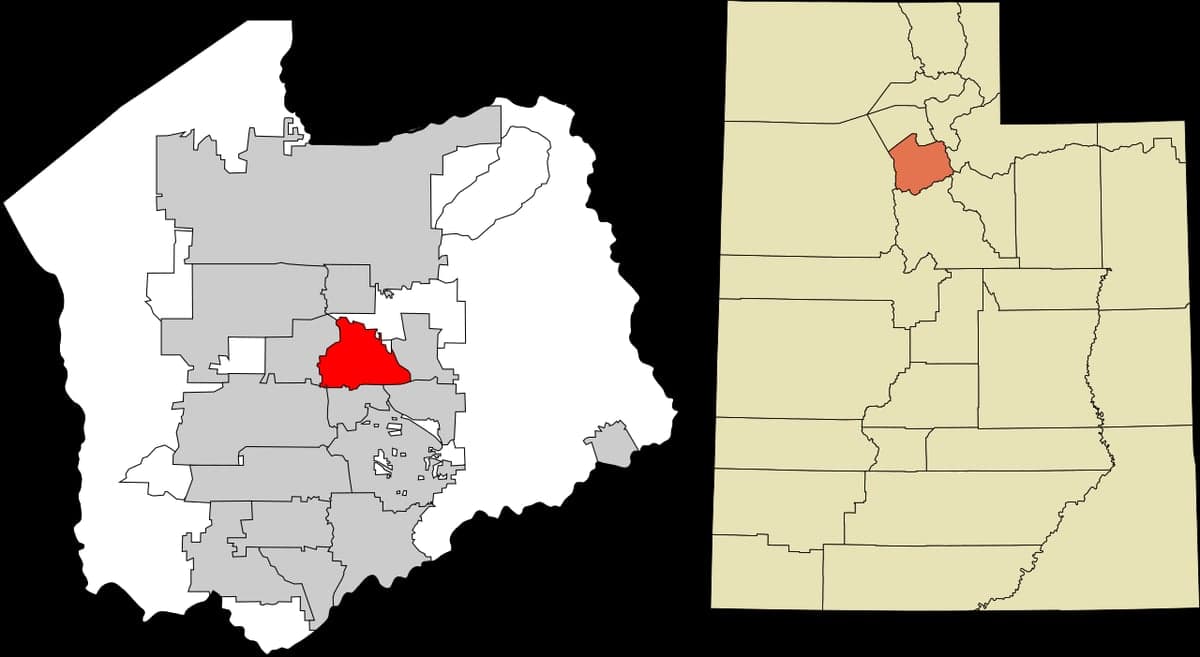
Murray, Utah, sits in a solidly conservative pocket of the Salt Lake Valley, with a Cook PVI of R+14 that reflects decades of reliable Republican voting. The city itself leans right, but it’s not as deep red as the surrounding rural counties—think of it as a more moderate conservative stronghold where the old-school values of self-reliance and limited government still hold strong, though you can feel the pressure from the growing progressive tide in nearby Salt Lake City. If you’ve been here a while, you’ve watched the political ground shift under your feet, and it’s worth understanding how that plays out in your daily life.
How it compares
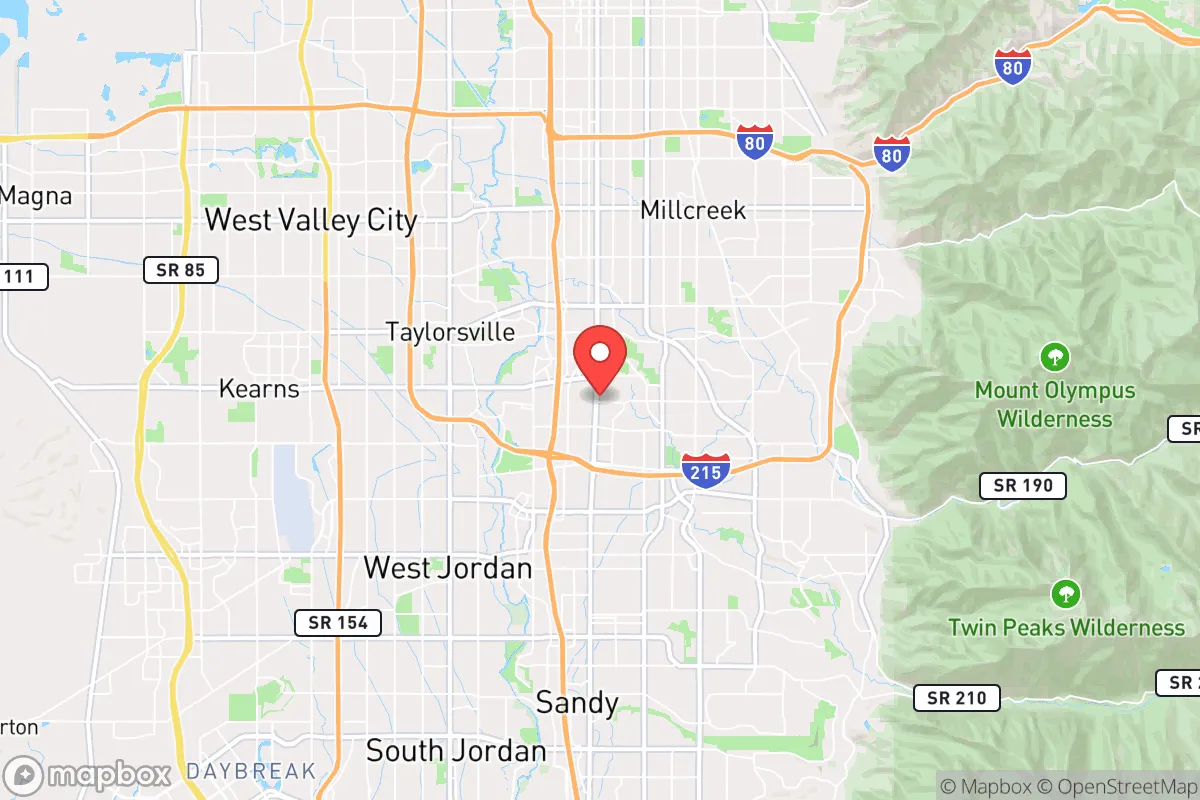
Drive ten minutes north into Salt Lake City proper, and you’re in a different world—a deep blue urban core where progressive policies on taxes, zoning, and social issues are the norm. Head south to Sandy or Draper, and you’ll find a similar R+14 vibe, but Murray sits right on the edge of that cultural divide. The contrast is stark: while Salt Lake City’s government has pushed for higher density mandates and expanded public spending, Murray has historically kept its local government leaner, with lower property tax rates and a more hands-off approach to business regulation. That said, the county-level influence from Salt Lake County’s Democratic-leaning council has started to creep in, especially on land-use and transportation policies that feel like top-down overreach. For a long-time resident, it’s frustrating to see Murray’s independent character slowly eroded by regional planning that prioritizes Salt Lake City’s agenda over local control.
What this means for residents
For families and small business owners, the political climate here means you’ve got a decent buffer against the kind of government overreach you see in more progressive cities—at least for now. Murray’s city council has generally resisted the urge to impose heavy-handed regulations on housing or commercial development, which keeps the cost of living more manageable than in the blue enclaves. But the warning signs are there: as the state legislature pushes for more uniformity in things like tax policy and school funding, local autonomy is shrinking. You’ll notice it in the way property taxes have inched up to fund state-mandated programs, or in the growing pressure to adopt “complete streets” designs that prioritize bike lanes over car traffic. If you value the freedom to run your life without a bureaucrat’s permission slip, Murray still offers that, but you’ve got to stay engaged—the progressive shift is real, and it’s coming from both the city to the north and the statehouse in a way that feels like a slow squeeze on personal liberties.
Culturally, Murray has held onto a distinct identity that sets it apart from the surrounding areas. It’s not as church-heavy as Utah County to the south, nor as secular and activist-driven as Salt Lake City. You’ll find a mix of longtime Mormon families and newer transplants who came for the jobs at Intermountain Medical Center or the local tech firms, and there’s a general agreement that government should stay out of your backyard. The local schools still emphasize traditional values, and the city’s parks and rec programs are well-funded without the kind of social-engineering projects you see elsewhere. But the long-term trend is concerning: as the Wasatch Front grows, the political center of gravity is shifting left, and Murray’s R+14 rating could soften if the influx of out-of-state movers continues. For now, it’s a good place to raise a family if you want a conservative community that’s not too isolated, but keep an eye on the next few election cycles—the fight for local control is just getting started.

State Political ClimatePolitical Climate in Utah
State Political AnalysisPolitical Environment in the State
Utah is a deeply red state, with Republicans holding every statewide office and supermajorities in both legislative chambers, but the political landscape is more layered than a simple partisan label suggests. The state voted +21 points for Donald Trump in 2024, a slight tightening from 2020’s +20 margin, driven by explosive growth in Salt Lake County and the Wasatch Front. Over the past 20 years, Utah has shifted from a reliably conservative, LDS-dominated electorate to a more complex mix of traditional conservatives, libertarian-leaning independents, and a growing progressive urban core, creating a dynamic that feels less like a monolith and more like a three-way tug-of-war.
Urban vs. rural divide
The political map of Utah is defined by the Wasatch Front, where roughly 80% of the state’s population lives. Salt Lake County, home to over 1.2 million people, has become the state’s primary battleground: it voted for Joe Biden in 2020 and narrowly for Trump in 2024, with progressive pockets in Sugar House and downtown Salt Lake City pushing left while suburbs like Sandy and Draper remain reliably red. Utah County, anchored by Provo and Orem, is the conservative heartland—home to Brigham Young University and a heavily LDS population that votes 70-80% Republican. Rural counties like Duchesne, Uintah, and San Juan are deep red, often voting 85%+ Republican, driven by ranching, mining, and energy interests. The divide isn’t just urban vs. rural—it’s also cultural: the Wasatch Front’s tech boom and outdoor recreation economy attract a younger, more secular demographic that leans libertarian on social issues but remains fiscally conservative, while rural Utah holds to traditional values and distrusts federal land management.
Policy environment
Utah’s policy environment is aggressively pro-business and low-tax, but with a strong streak of government intervention in social matters that can frustrate libertarian-leaning residents. The state has a flat income tax of 4.65% (down from 5% in 2022) and no state-level property tax on vehicles, though local property taxes vary. HB 54 (2024) further cut income taxes, aiming for a 4.5% rate by 2026. Education policy is a mixed bag: Utah spends the least per pupil in the nation (around $8,000 annually), but has a robust school choice system with HB 215 (2023) creating universal education savings accounts worth $8,000 per child for private or homeschool expenses. Healthcare is dominated by Intermountain Health, a nonprofit system that keeps costs moderate, but the state has not expanded Medicaid under the ACA, leaving a coverage gap for low-income adults. Election laws are secure but not restrictive: voter ID is required, same-day registration is available, and mail-in voting is universal—a system that has drawn praise from both parties for high turnout and low fraud. The state’s alcohol laws remain quirky (beer under 5% ABV in grocery stores, state-run liquor stores for stronger stuff), a holdover from LDS influence that feels like a minor annoyance to newcomers.
Trajectory & freedom
Utah is becoming more free in economic and property rights terms, but less free in personal autonomy as the legislature tightens social controls. On the plus side, SB 236 (2024) expanded gun rights by allowing permitless carry for anyone 21 and older, and HB 227 (2023) strengthened property rights against eminent domain abuse. HB 257 (2024) banned transgender athletes from female sports and restricted gender-affirming care for minors, a move that conservative parents applaud but that critics see as government overreach into medical decisions. SB 152 (2023) gave parents broad rights to review school curricula and opt their children out of any instruction they find objectionable, a major win for parental rights advocates. On the concerning side, HB 81 (2024) criminalized “critical race theory” in public schools and government training, a law that some libertarians view as chilling free speech. The state’s Inland Port Authority and Point of the Mountain development projects show a pro-growth, pro-development bent that prioritizes economic freedom over environmental regulation. Overall, Utah’s trajectory is toward a conservative-libertarian hybrid: low taxes, strong gun rights, and parental control, but with a heavy hand on social issues that may push some moderates toward the exits.
Civil unrest & political movements
Utah is not a hotbed of civil unrest, but it has seen organized activism on both sides. The “Utah Pride” protests in 2023 and 2024 drew thousands in Salt Lake City after the legislature passed anti-trans bills, with counter-protests from conservative groups like “Utah Parents United.” Immigration politics are relatively calm: Utah has a “compact” with the federal government that allows local law enforcement to cooperate with ICE, but Salt Lake City and Park City have declared themselves “welcoming cities,” refusing to use local resources for federal immigration enforcement. The “Utah State Legislature” has debated nullification of federal gun laws (e.g., HB 114, the “Second Amendment Protection Act”), but it hasn’t passed. Election integrity controversies are minimal—Utah’s mail-in voting system is widely trusted, and the state’s Lieutenant Governor’s Office runs clean elections. The most visible flashpoint for newcomers is the “Save Our Schools” movement, a coalition of parents and teachers who oppose the ESA voucher program, arguing it defunds public schools. You’ll see lawn signs and Facebook groups, but no street clashes—Utahns are polite even when they disagree.
Projection
Over the next 5-10 years, Utah will likely remain red but with a growing libertarian and independent streak. In-migration from California, Colorado, and the Pacific Northwest is accelerating—St. George and Washington County grew 25% from 2020 to 2024, bringing a mix of conservative refugees and progressive tech workers. The Silicon Slopes corridor (Lehi, American Fork, Draper) is attracting young, educated professionals who are fiscally conservative but socially moderate, which could push the state toward a more “live and let live” posture on issues like marijuana legalization (medical is already legal) and alcohol reform. The LDS Church’s influence is slowly waning as the state becomes more diverse—by 2030, non-LDS residents may outnumber LDS in Salt Lake County. Expect continued tax cuts, school choice expansion, and gun rights protections, but also more fights over transgender policy, abortion (currently banned at 18 weeks with exceptions), and land use. The biggest wildcard is water: the Great Salt Lake’s decline could force massive policy shifts that test the state’s libertarian ethos. For a conservative moving in, Utah in 2035 will feel familiar—low taxes, strong families, safe streets—but with a more pragmatic, less dogmatic edge.
For a new resident, the bottom line is this: Utah offers a high degree of economic and personal freedom, especially if you value low taxes, gun rights, and parental control over education. You’ll find a state that respects your privacy and your property, but don’t expect a hands-off approach to social issues—the legislature is not shy about legislating morality. If you’re a traditional conservative, you’ll feel at home in Utah County or rural areas. If you’re a libertarian or moderate, stick to the Wasatch Front suburbs like Draper or Park City, where the vibe is more “leave me alone” than “thou shalt not.” The state is growing fast, and with growth comes change—but for now, Utah remains one of the most stable, safe, and freedom-oriented places in the country for those who align with its values.
* Values derived from national, state, county, city and local statistics and may differ in a specific area. Last updated: 2026-05-01T11:07:59.000Z
Narrative content on this page is AI-generated and may contain mistakes. Verify any details that matter before acting on them.
ReloMaps may earn a commission from affiliate links at no extra cost to you.

