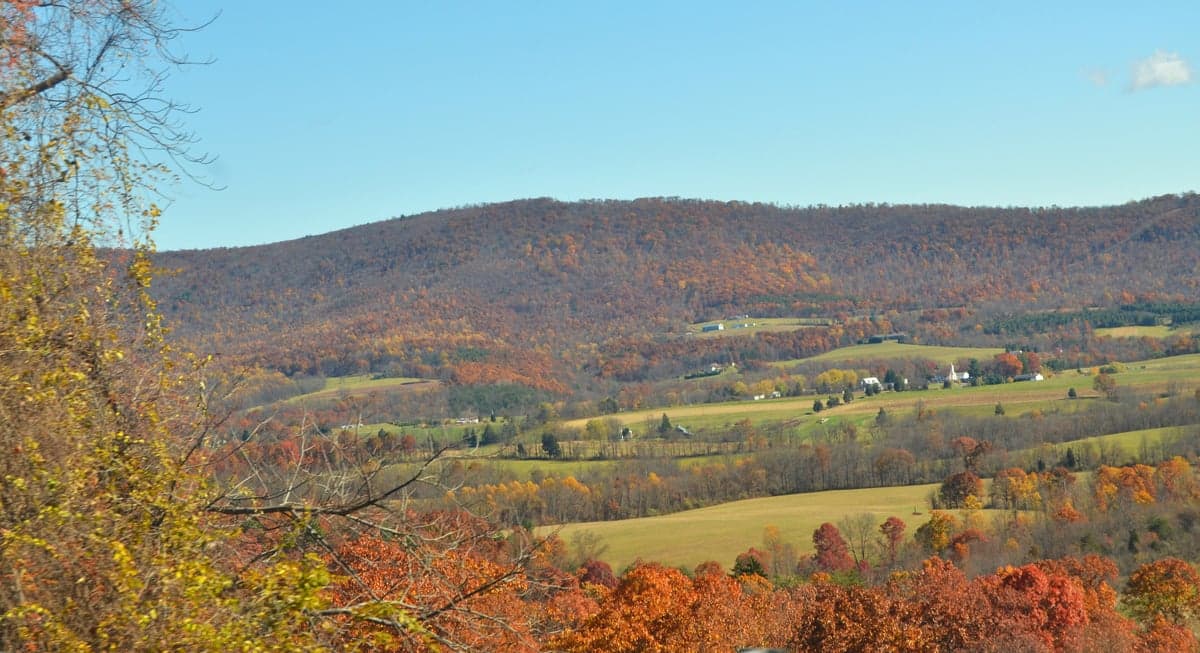
Photo: Wikipedia
Personal Sovereignty in Murrysville, PA
Strong independent fundamentals that actively favor personal liberty and low regulation.
What does Personal Sovereignty tell us?
Personal Sovereignty measures your capacity for self-reliance and independence with minimal government friction. Higher scores mean fewer barriers between you and the way you want to live... but it assumes you have the space you need and good neighbors.
What does this tell us?
Personal Sovereignty measures your capacity for self-reliance and independence with minimal government friction. Higher scores mean fewer barriers between you and the way you want to live... but it assumes you have the space you need and good neighbors.
State Policy
Energy independence: Net exporter (150% of energy produced in-state)
Personal Liberty
Homesteading

Personal Liberty Analysis
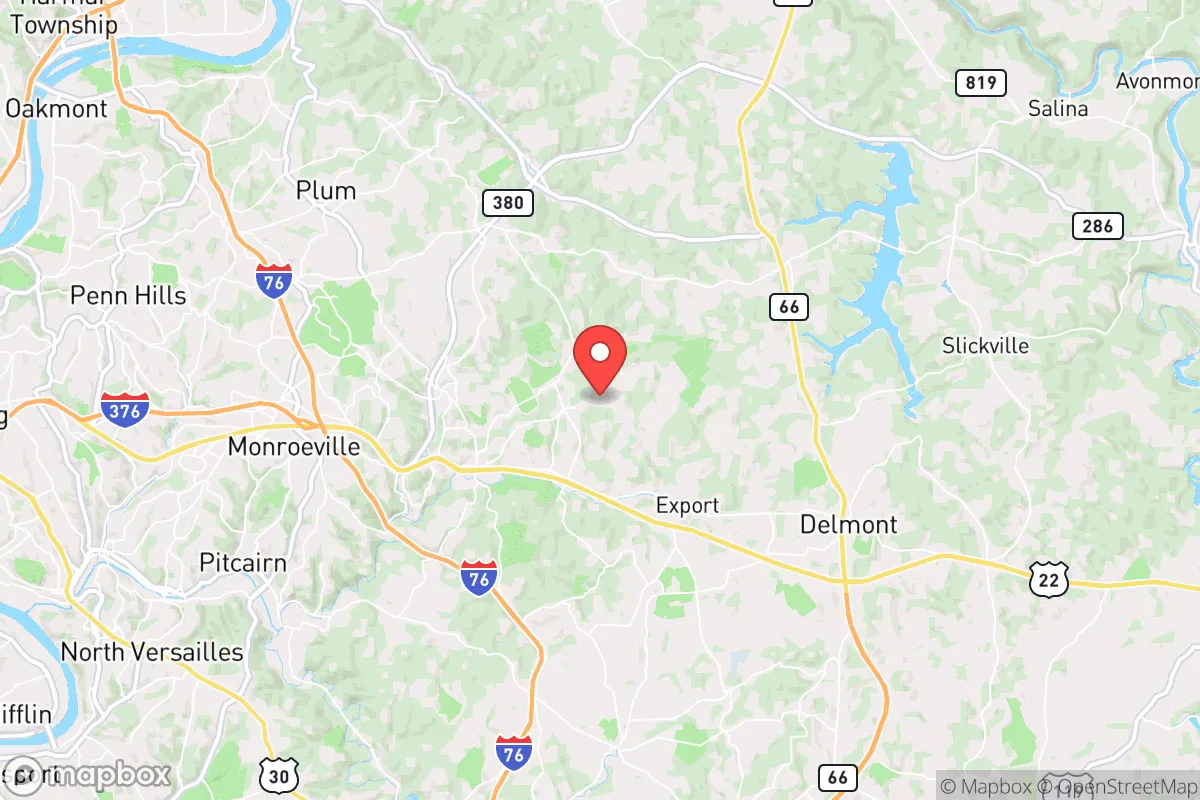
Murrysville, Pennsylvania, offers a notably high degree of personal sovereignty compared to many suburban enclaves, largely due to Pennsylvania’s strong preemption laws and a local culture that leans heavily toward self-reliance. While no location is a libertarian utopia, this Westmoreland County community provides a practical balance of rural autonomy and suburban stability, making it a serious consideration for those prioritizing freedom from government overreach. The key factors—tax burden, gun rights, homesteading feasibility, and personal liberties—paint a picture of a place where an individual or family can largely live life on their own terms, provided they respect the existing legal framework.
Tax burden and regulatory posture: How much does the state take and control?
Pennsylvania’s tax structure is a mixed bag, but Murrysville’s specific position offers some advantages. The state has a flat income tax rate of 3.07%, which is low relative to many northeastern states, and there is no tax on retirement income like Social Security or 401(k) distributions—a major plus for those planning long-term independence. Property taxes in Murrysville are moderate for the region, with the effective rate hovering around 1.5% of assessed value, though this can vary by school district. The real regulatory win is Pennsylvania’s status as a Dillon’s Rule state, meaning local municipalities only have powers explicitly granted by the state. This limits Murrysville’s ability to impose burdensome local ordinances, such as restrictive business licensing or excessive zoning fees, that you might see in more progressive areas. However, the state does have a strong hand in environmental regulations, particularly regarding water rights and land use near streams, which can complicate certain off-grid projects. Overall, the tax and regulatory environment is favorable for those who want to keep more of their earnings and avoid micromanagement from local bureaucrats.
Self-defense and gun law specifics: What are the real-world rights?
Pennsylvania is a shall-issue state for concealed carry, meaning that as long as you pass a background check and meet basic requirements, the county sheriff must issue a permit. Murrysville is in Westmoreland County, which is known for being gun-friendly—sheriff’s deputies here are not known to create unnecessary hurdles. Open carry is legal without a permit, and the state has strong preemption laws that prevent municipalities like Murrysville from enacting their own gun control ordinances. This is critical: you won’t face the patchwork of local bans that plague places like Philadelphia or Pittsburgh. Stand-your-ground laws are in effect, and there is no duty to retreat in your home or vehicle. Castle doctrine protections are solid. For preppers, this means you can legally maintain a well-stocked armory for defense and training, and you can carry discreetly without fear of arbitrary local restrictions. The only notable limitation is that Pennsylvania does not recognize all out-of-state permits, so if you’re moving from a state with reciprocity issues, you’ll need to apply for a Pennsylvania license within 60 days of establishing residency.
Self-reliance and homesteading viability: Lot sizes, zoning, and off-grid feasibility
Murrysville’s zoning and lot sizes are a major draw for those seeking self-sufficiency. The municipality is largely rural-suburban, with many residential lots ranging from one to five acres, and some larger parcels available in the more outlying areas. This allows for substantial gardening, small-scale livestock (chickens, rabbits, and even goats with proper permits), and rainwater collection systems. Zoning codes are generally permissive for accessory structures like sheds, greenhouses, and workshops, though you’ll need to pull permits for anything over 200 square feet. Off-grid feasibility is moderate: Pennsylvania has no statewide ban on solar panels, and net metering is available, but the local utility, West Penn Power, can be bureaucratic about grid interconnection. Well water is common in the area, and septic systems are standard, meaning you can largely disconnect from municipal water and sewer if you own the right property. However, the county does enforce building codes for new construction, so a fully off-grid cabin with composting toilets and no permits would be a legal risk. For a serious prepper, the best strategy is to buy an existing home on a large lot with a well and septic, then gradually add solar and food production capacity without triggering inspections.
Personal liberties: Parental rights, medical autonomy, speech, and property
Pennsylvania has a mixed record on personal liberties, but Murrysville’s local culture leans conservative. Parental rights are strong: the state does not have a universal vaccine mandate for schoolchildren, and parents can opt out of sex education or specific health curricula with minimal pushback. Medical autonomy is more complicated—Pennsylvania has a statewide mask mandate authority that can be reactivated during health emergencies, and the state’s Department of Health has broad powers. However, local enforcement in Murrysville is likely to be lax, as the township board and school board are generally aligned with conservative values. Free speech is protected under the First Amendment, and there are no local hate speech ordinances that could chill political expression. Property rights are robust: eminent domain is rarely used for private development, and the township does not have a reputation for aggressive code enforcement against things like political signs or non-commercial activities. The biggest liberty concern is the state’s vehicle emissions inspection program, which applies to all gasoline-powered cars in the region—a minor annoyance for those who value complete automotive freedom. Overall, Murrysville offers a high degree of personal autonomy, especially when compared to nearby Allegheny County or the Philadelphia suburbs.
In the broader context of personal sovereignty, Murrysville stands out as a strong option for those who want suburban convenience without sacrificing the ability to live independently. It’s not a remote survivalist retreat—you’re still within 30 minutes of Pittsburgh’s urban core—but the combination of low taxes, strong gun rights, permissive zoning, and a conservative local culture creates a environment where government overreach is minimal. For a single individual or a family looking to build a resilient, self-reliant life while staying connected to modern infrastructure, Murrysville offers one of the better balances in the northeastern United States. The key is to buy the right property—one with acreage, a well, and septic—and to understand that while the state has some overreaching powers, they are rarely exercised in this community. If you’re serious about personal sovereignty, this is a place worth a hard look.

* Values derived from national, state, county, city and local statistics and may differ in a specific area. Last updated: 2026-05-01T08:37:54.000Z
Narrative content on this page is AI-generated and may contain mistakes. Verify any details that matter before acting on them.
ReloMaps may earn a commission from affiliate links at no extra cost to you.

