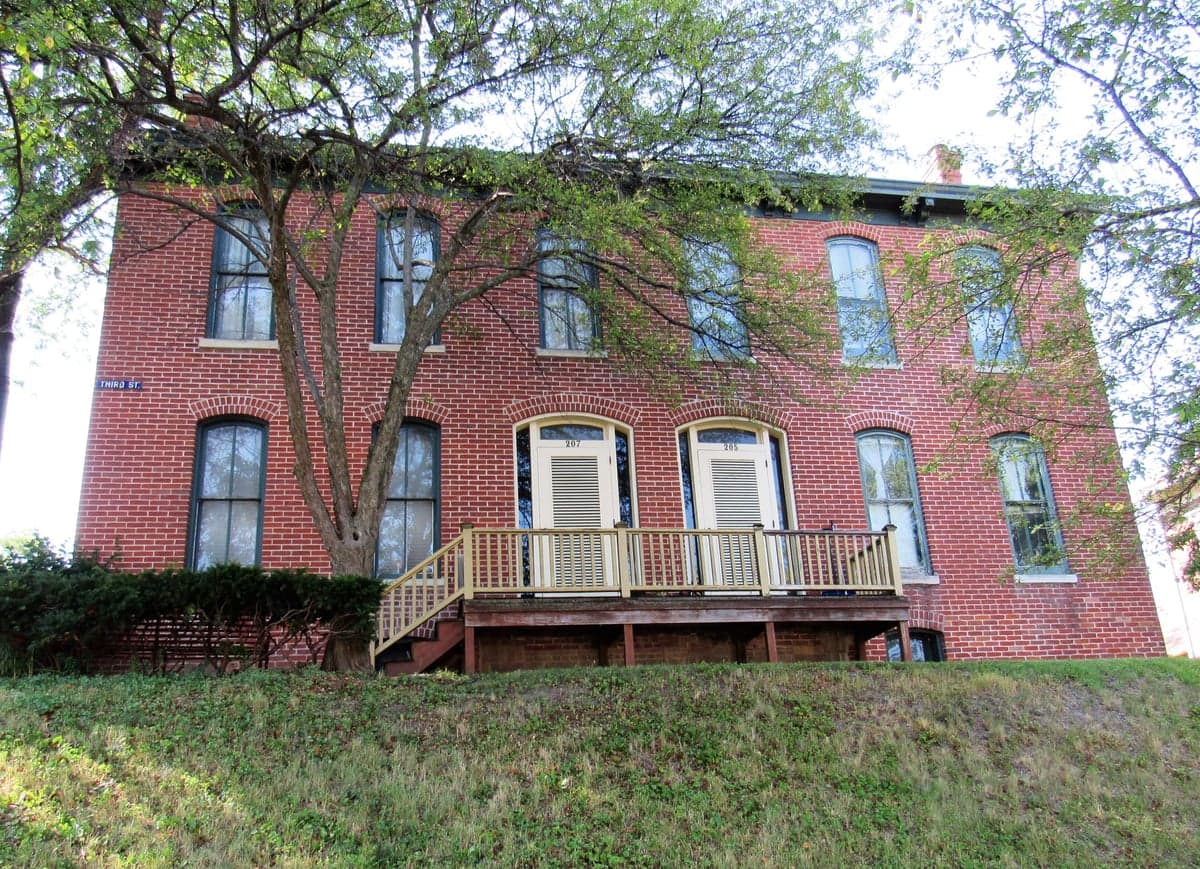
Photo: Wikipedia
Strategic Assessment of Muscatine, IA
Workable tactical position. Some exposure to population density or targets, but generally defensible in a crisis.
What does the Strategic Assessment tell us?
Our Strategic Assessment grades tactical survivability of an area. Major population centers, military targets, fallout zones, natural disasters, and border exposure all drive risk — lower exposure means a more defensible position in a crisis.
This is heavily inspired by Joel Skousen's Strategic Relocation book. Highly recommended you checkout the book ($)What does this tell us?
Our Strategic Assessment grades tactical survivability of an area. Major population centers, military targets, fallout zones, natural disasters, and border exposure all drive risk — lower exposure means a more defensible position in a crisis.
This is heavily inspired by Joel Skousen's Strategic Relocation book. Highly recommended you checkout the book ($)Strategic Pillars

Key Distances
Regional Safe Places
Below is our recommended "safe zones" in Iowa and the surrounding area based on our strategic heuristics. For most people, it's unrealistic to live in a “safe zone” full-time due to work, family or other personal reasons. They tend to be more rural. However, many of these areas are perfect for second homes and retreat properties that double as a vacation home or even a short-term rental.
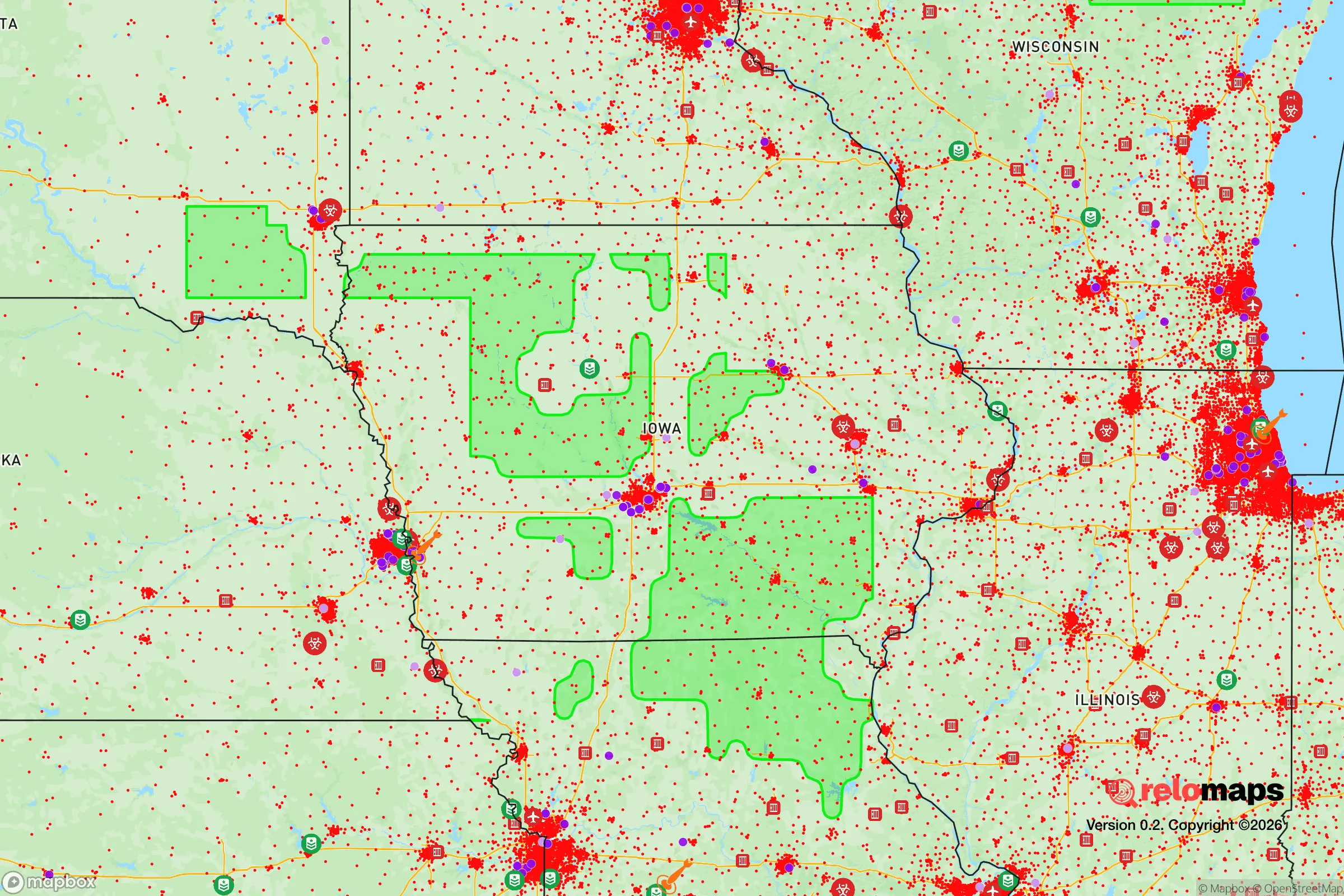
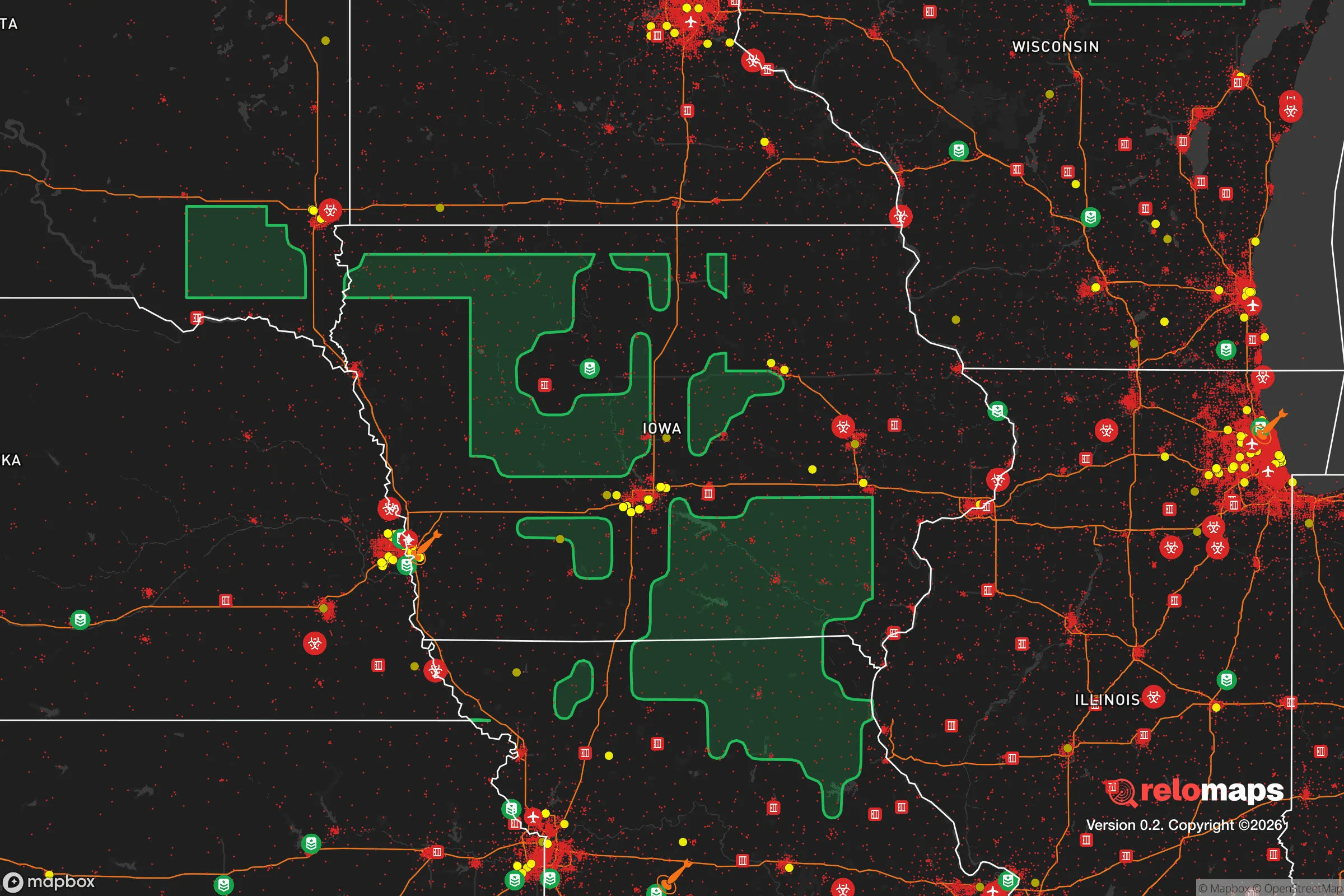


Important Note: For informational purposes only. This does not mean nothing bad ever happens in the green zones. Please use common sense. This is based on public data and modeled with AI. We tried to take a conservative approach but mistakes happen. We update this regularly as new information becomes available.
Solar Generator Recommendations
Backup power matters more here than in safer locations. We've picked three solar generators across budgets and capacity tiers — start with the budget unit if you only need a few essentials, or step up if you want to run a fridge and HVAC for days at a time.

Jackery Portable Power Station Explorer 300
Budget OptionPower on the Go: Weighing only 11 lbs, it's convenient to set up and store with book-sized foldable solar panels

BLUETTI Portable Power Station AC180
Designed for both indoor and outdoor scenarios, AC180 is highly capable as it has a robost capacity and continuous output power.

EF ECOFLOW DELTA Pro Ultra Power Station
Upgraded PickEcoFlow DELTA Pro Ultra is a whole-home energy system designed to grow with your family. Integrated with the Smart Home Panel 2, it scales to meet your evolving energy needs — keeping your home powered, intelligent, and secure through every stage of life.
We earn a commission, at no additional cost to you.
Strategic Assessment Analysis
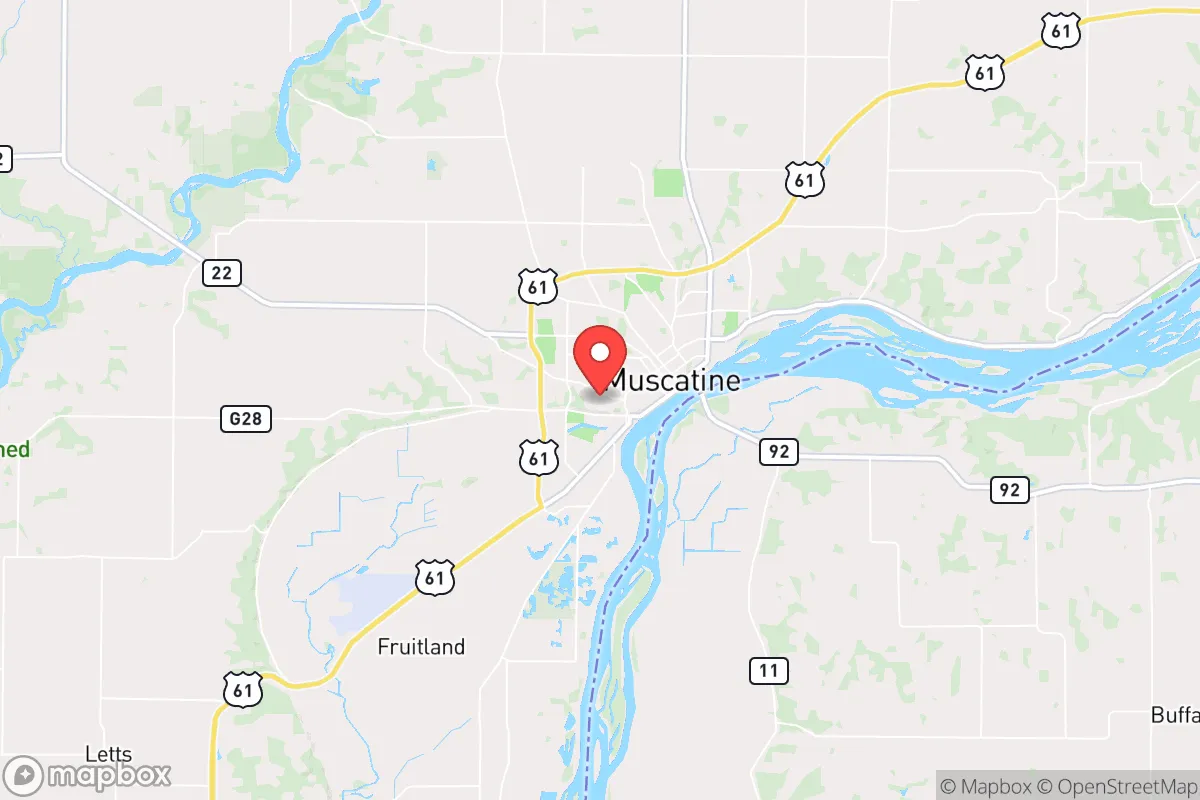
Muscatine, Iowa, sits on the Mississippi River roughly 30 miles southwest of the Quad Cities and 50 miles northwest of the state capital, Des Moines. For a relocator with a prepper mindset, this position offers a blend of industrial-era infrastructure and agricultural self-sufficiency that is increasingly rare in the modern Midwest. The city’s population hovers around 23,000, large enough to support a hospital, a regional airport, and a Walmart Supercenter, but small enough that you can still buy a house on a half-acre lot for under $200,000. The real strategic value here is not in the town itself but in its access to the Mississippi River, the surrounding farmland, and the fact that it sits outside the immediate blast radius of any major metropolitan target while still being close enough to tap into regional supply chains when things are stable.
Geographic position and natural advantages for long-term survival
The Mississippi River is the dominant geographic feature of Muscatine, and for a survival-minded relocator, that means two things: water and transportation. The river provides a virtually unlimited surface water source, which, with proper filtration (Berkey, Sawyer, or a DIY sand filter), can sustain a household indefinitely. The city sits on a bluff overlooking the river, which gives it a slight elevation advantage over flood-prone areas directly on the banks, though the downtown and industrial districts are in the floodplain. The surrounding landscape is flat, fertile farmland—corn and soybeans as far as the eye can see. This is not a defensible terrain in the tactical sense; there are no mountains, no thick forests, no natural chokepoints. But what it lacks in defensibility it makes up for in agricultural productivity. If you own land within a 20-mile radius of Muscatine, you can grow enough food to feed a family with a modest garden and a few chickens. The soil is some of the richest in the world, and the growing season, while short (roughly 150 frost-free days), is reliable. The city is also situated along U.S. Highway 61 and Interstate 280, which connect to I-80, the main east-west artery across the northern United States. In a crisis, this gives you options for movement, but it also means the area could see significant through-traffic from people fleeing Chicago or the Quad Cities.
Risks, exposures, and proximity to fallout-relevant landmarks
The biggest risk for Muscatine in a national emergency is its proximity to the Quad Cities, which include the cities of Davenport, Bettendorf, Rock Island, and Moline. The Quad Cities metropolitan area has a population of roughly 380,000 and is home to the Rock Island Arsenal, a major U.S. Army manufacturing and logistics center. In a conflict scenario—whether foreign or domestic—the Arsenal is a high-value target. A conventional strike or a sabotage event at the Arsenal could produce significant fallout, both literal and figurative. Muscatine is 30 miles downriver and downwind from the Arsenal, which puts it in a secondary risk zone. Additionally, the city itself has a Monsanto (now Bayer) agricultural chemical plant and a Grain Processing Corporation (GPC) facility that produces ethanol and other industrial chemicals. A major accident at either plant—or a deliberate attack—could release toxic clouds or contaminate the local water supply. The Mississippi River itself is a double-edged sword: it provides water, but it also concentrates industrial traffic, barge accidents, and chemical spills. Flooding is a recurring hazard; the 2019 floods caused significant damage to the downtown area and forced evacuations. For a prepper, the takeaway is that Muscatine is not a remote bunker location. It is a working-class river town with industrial exposure. You need to be aware of what is upwind and upstream, and you need a plan to bug out if the wind shifts the wrong way.
Practical resilience for a relocator: food, water, energy, and defensibility
On the practical side, Muscatine offers a decent baseline for self-sufficiency. The city has its own municipal water supply drawn from the Mississippi, but the treatment plant is a single point of failure. A well on your property is a significant advantage here, and the water table in the area is generally high, making shallow wells feasible. The local climate supports solar panels, though the long, cloudy winters mean you will need battery storage or a backup generator. Natural gas is widely available in the city, but rural properties rely on propane or heating oil. Wood heat is an option if you have access to timber, but the surrounding farmland means you may have to travel 10-15 miles to find a reliable source of firewood. Food production is where Muscatine truly shines. The area is part of the Corn Belt, and local farmers markets are abundant in season. You can buy a quarter beef or a whole hog directly from a farmer for a fraction of supermarket prices. The city also has a strong hunting culture; deer, turkey, and waterfowl are plentiful in the surrounding public lands, including the Port Louisa National Wildlife Refuge and the Big Sand Mound Nature Preserve. For defensibility, the terrain is flat and open, which means you can see threats coming from a long way off, but it also means you have limited cover. A rural property with a good line of sight and a perimeter fence is your best bet. The local law enforcement presence is modest—Muscatine County has about 30 deputies—so in a prolonged crisis, you will largely be on your own. The community itself is tight-knit and conservative-leaning, which can be an asset for forming a neighborhood watch or a mutual aid group, but it also means outsiders are viewed with some suspicion until they prove themselves.
The overall strategic picture for Muscatine is one of cautious optimism for the prepared relocator. It is not a fortress, and it is not a remote homestead in the mountains. It is a working-class river town with real industrial risks and real agricultural advantages. If you are looking for a place to ride out a short-term disruption—a supply chain collapse, a grid failure, or a civil unrest event that lasts a few weeks—Muscatine offers enough local resources and community cohesion to get you through. For a long-term collapse scenario, you would want to be farther from the Mississippi River and farther from the Quad Cities, ideally on a self-sufficient farm 20-30 miles inland. But as a base of operations, a place to build skills, store supplies, and establish relationships before things go sideways, Muscatine is a solid choice. The key is to go in with your eyes open: know your neighbors, know the wind patterns, and have a bug-out route that takes you west, away from the river and the industrial targets. If you do that, this little river town can be a reliable anchor in an unstable world.

* Values derived from national, state, county, city and local statistics and may differ in a specific area. Last updated: 2026-05-03T11:41:11.000Z
Narrative content on this page is AI-generated and may contain mistakes. Verify any details that matter before acting on them.
ReloMaps may earn a commission from affiliate links at no extra cost to you.

