
Find The Best Places To Live
in Muskego
PRO TIP! You can paste a Zillow or Redfin link to get info on that property.
What It's Like Living in Muskego, WI
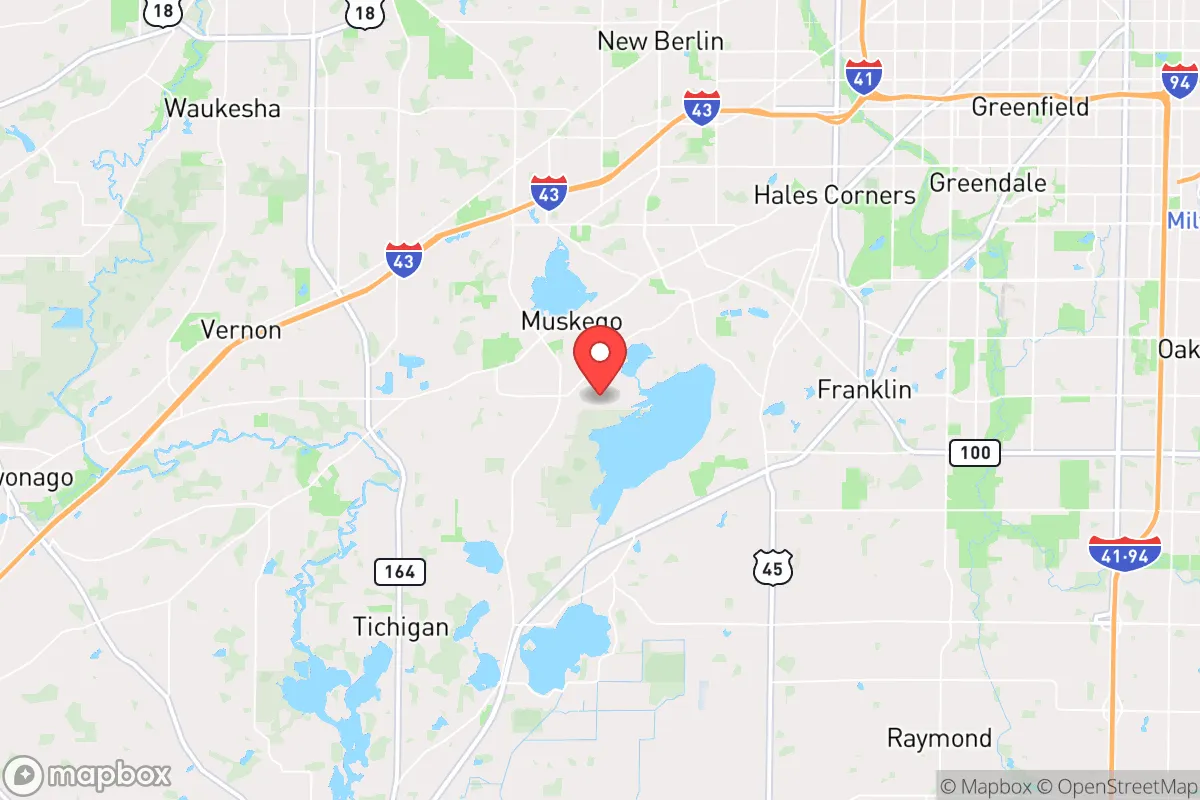
Muskego feels like a place where people choose to settle down, not just pass through. It’s a solidly upper-middle-class suburb on the southwestern edge of Milwaukee County, where the landscape shifts from city blocks to working farms and wooded lake lots. The identity here is quietly conservative, family-driven, and rooted in the idea that a good weekend means time on the water, a cookout in the backyard, or a Friday fish fry at a neighborhood supper club.
Daily Rhythm: Lakes, Commutes, and the Friday Fish Fry Circuit
For most residents, daily life revolves around a predictable, comfortable routine. The average commute clocks in at about 23 minutes, which is manageable enough to work in Milwaukee or Waukesha while still feeling like you’ve left the city behind. Kids go to Muskego-Norway Schools, which are a genuine focal point of the community—Friday night football games at Muskego High School draw real crowds, and the school system’s reputation is a major reason families move here. After work, you’ll find people at Sendik’s Food Market on Racine Avenue for groceries, or grabbing a bite at The Brickyard or Lake Den Supper Club, both local institutions where the fish fry is a weekly ritual. The median household income sits at $116,361, which supports a lifestyle heavy on home improvement projects, boat payments, and youth sports fees.
Sports, Community, and What People Actually Do for Fun
High school sports are a bigger deal here than in many suburbs of similar size. Muskego High School’s football and hockey programs have strong followings, and the community shows up for homecoming and playoff runs. There’s no major pro team in town, but plenty of residents are Packers shareholders or Brewers season-ticket holders—Milwaukee’s stadiums are a 25-minute drive. Outdoor life is the real draw: Muskego has over 2,000 acres of lakes, including Little Muskego Lake, Big Muskego Lake, and Lake Denoon, all popular for fishing, pontoon boating, and paddleboarding in the summer. Idle Isle Park and Muskego Park offer walking trails, picnic shelters, and beach access. The Muskego Heritage Festival in August is the annual highlight—a small-town fair with a parade, carnival rides, and a beer tent that feels like a reunion for anyone who grew up here. For a quieter night, locals hit Tipsy Cow for craft beer or Muskego Tap for a burger and a game on TV.
Who Fits In, and Who Might Feel Out of Place
Muskego leans heavily toward families and empty-nesters—the median age is 45.8, and 45% of adults hold a college degree. It’s a place where people wave to neighbors and actually know the names of the kids on their block. The cost of living index is 122, well above the national average, and the median home value of $390,900 reflects demand for lakefront property and newer subdivisions. That price point tends to filter for upper-middle-class professionals—nurses, engineers, small-business owners, and corporate managers. Single people in their twenties might find it quiet, especially if they’re looking for nightlife or a dating scene. The social fabric is built around church, school, and family gatherings, not bar-hopping or cultural events. If you’re a parent who wants good schools, safe streets, and neighbors who look out for each other, this is an easy fit. If you’re young and renting, you might feel like you’re living in a retirement village.
Pros and Cons of Living in Muskego
- Pro: Safety is a genuine selling point. The violent crime rate is 38.6 per 100,000—roughly a quarter of the national average. Residents routinely leave doors unlocked and let kids bike to the park without worry.
- Pro: Lake life without the full-time price tag. You can own a home on the water for under $500,000, which is rare in southeastern Wisconsin. Non-lakefront homes in the $350,000–$450,000 range are common and well-maintained.
- Con: Traffic can bottleneck. Janesville Road (Highway 36) and Racine Avenue get congested during rush hour, and there’s no direct highway access—you have to take surface roads to I-43 or I-94. The 23-minute average commute hides the fact that a 10-mile trip can take 35 minutes at 5:00 PM.
- Con: Limited entertainment options. There’s no movie theater, no bowling alley, and no music venue larger than a bar with a cover band. For a night out beyond dinner and a drink, you’re driving to Waukesha or Milwaukee.
- Con: Winter is long and real. Lake-effect snow can dump 50+ inches a year. The seasonal rhythm is heavy on snowblowing, ice fishing, and cabin fever by March.
Cultural Quirks and Local Identity
Muskego has a subtle but real identity as a place that resisted annexation by Milwaukee and has kept its own character. The city’s motto, “A Great Place to Call Home,” is not ironic—people here are genuinely proud of the small-town feel. One quirk: the Muskego Public Library is a community hub in a way that surprises newcomers, with packed story times and adult book clubs. Another is the Muskego Historical Society museum, housed in an old one-room schoolhouse, which draws more visitors than you’d expect. The local politics lean conservative—the city council and school board are reliably Republican, and yard signs for local candidates are common during election season. That said, it’s not a place where people argue politics at the grocery store; the culture is more “live and let live” as long as you keep your lawn mowed. The biggest frustration among longtime residents is the steady loss of farmland to subdivisions—the town that was once rural is now firmly suburban, and some miss the days when you could see more cows than rooftops.

Similar towns to Muskego
* Values derived from national, state, county, city and local statistics and may differ in a specific area. Last updated: 2026-04-21T10:06:43.000Z
Narrative content on this page is AI-generated and may contain mistakes. Verify any details that matter before acting on them.
ReloMaps may earn a commission from affiliate links at no extra cost to you.

