Demographics of Muskego, WI
Affluence Level in Muskego, WI
An upper-middle-class area. Household wealth, education levels, and homeownership run ahead of national benchmarks.
People of Muskego, WI
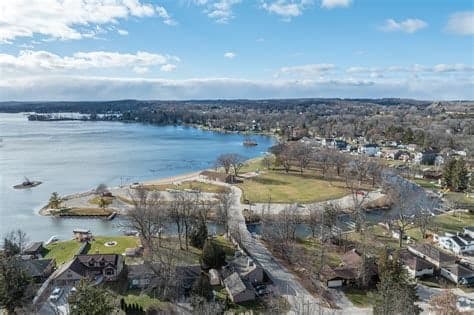
Muskego, Wisconsin, is a predominantly white, family-oriented city of 25,156 residents, characterized by its strong conservative lean and a notably low foreign-born population of just 0.9%. The city’s identity is rooted in its historic farming and lake-resort culture, now blended with suburban commuter life for Milwaukee, located about 20 miles northeast. With 45% of adults holding a college degree, Muskego is an educated, middle-to-upper-middle-class community where ethnic homogeneity and a slow-growth, stable population define the social landscape.
How the city was settled and grew
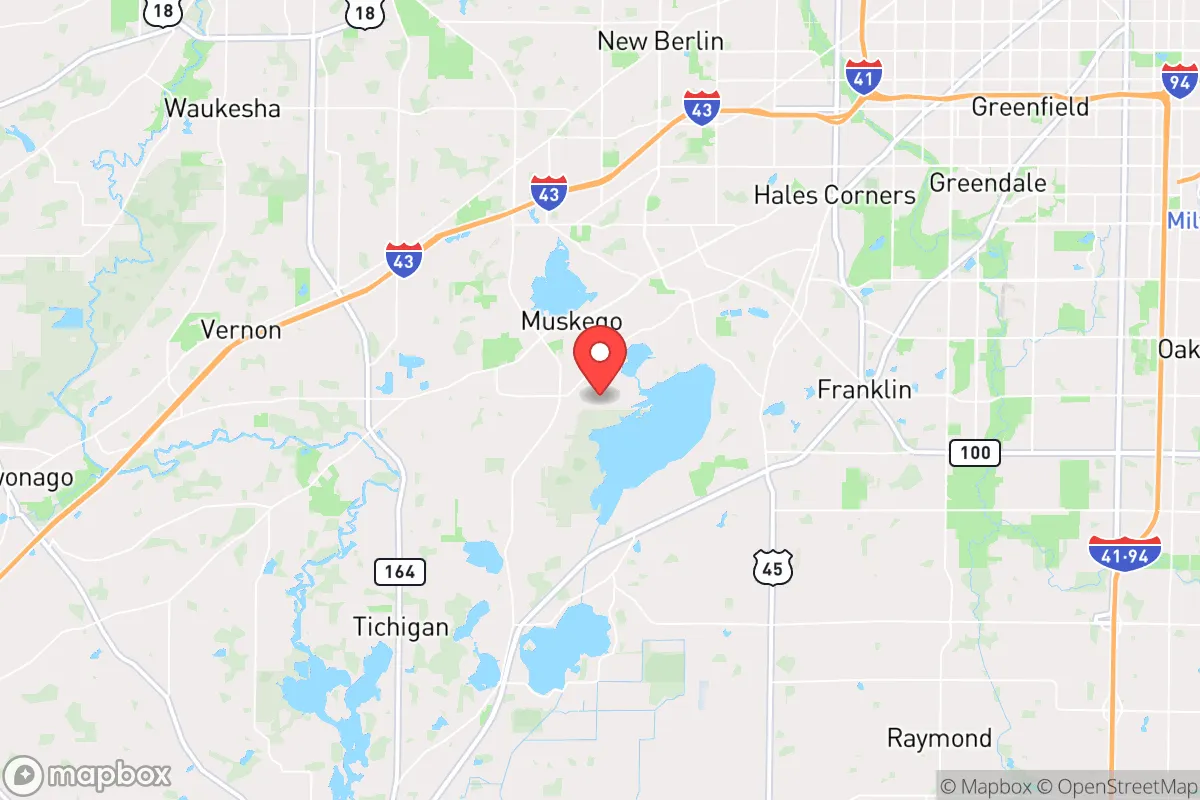
Muskego’s original inhabitants were the Potawatomi people, who ceded the land in the 1830s. The first European settlers, primarily Yankee farmers from New England and New York, arrived in the 1840s, drawn by the area’s fertile soil and abundant lakes. They established the hamlets of Muskego Center (the historic core around what is now Janesville Road and Racine Avenue) and Muskego Corners (near the intersection of Janesville and Durham Roads). A second wave of German immigrants followed in the 1850s–1880s, settling heavily in the Lake Denoon and Little Muskego Lake areas, where they built dairy farms and small cheese factories. These German families, many from Pomerania and Saxony, formed the backbone of Muskego’s rural, Lutheran, and politically conservative culture that persists today. By 1900, the population was almost entirely white, native-born or German-American, with a scattering of Polish and Irish families in the Wind Lake vicinity. The city remained a quiet farming and resort community through the mid-20th century, with seasonal tourism from Milwaukee families renting lake cottages.
Modern era (post-1965)
Muskego’s modern growth began in the 1970s and 1980s as Milwaukee’s suburban sprawl pushed southwest. The city incorporated in 1964 and saw rapid residential development in subdivisions like Muskego Hills (off Racine Avenue) and Park View Estates (near the Muskego Park). These new neighborhoods attracted white, middle-class families leaving Milwaukee’s city limits—many of them second- or third-generation German and Polish Catholics seeking larger lots, lower taxes, and better schools. The post-1965 immigration reforms had virtually no impact on Muskego: the foreign-born share remained below 1% through 2020. The city’s Hispanic population grew modestly from 1.2% in 2000 to 5.2% today, concentrated in the Muskego Industrial Park area and along Janesville Road, where a few Mexican and Central American families work in landscaping, construction, and light manufacturing. The East/Southeast Asian population (1.1%) is small and scattered, with no distinct ethnic enclave; most are professionals in engineering or healthcare who moved to subdivisions like Ridgewood Estates in the 2010s. The Indian-subcontinent population (0.1%) is negligible, and the Black population (0.7%) remains tiny, with no historic Black neighborhood. Muskego’s racial homogeneity is not the result of exclusionary policies but of its remote location, lack of rental housing, and the self-selection of families who prioritize low crime and rural-suburban character.
The future
Muskego’s population is projected to grow slowly, reaching roughly 27,000 by 2040, driven by infill development on remaining farmland and lakefront lots. The city is homogenizing rather than tribalizing: the white share (90.5%) is declining gradually as the Hispanic and Asian shares inch upward, but these groups are assimilating into the broader community rather than forming distinct enclaves. The Hispanic population may reach 8–10% by 2040, concentrated in the Muskego Industrial Park corridor, while the East/Southeast Asian population will likely plateau around 2% as Milwaukee-area tech jobs grow modestly. The foreign-born share will remain below 2%, as Muskego lacks the rental stock, public transit, and entry-level jobs that attract immigrants to larger suburbs. The city’s aging population (median age 44) and low birth rate among long-term residents mean that future growth depends on attracting young families—a challenge given rising home prices (median $380,000) and limited new construction.
For a conservative-leaning mover, Muskego offers a stable, safe, and culturally cohesive environment where change is slow and incremental. The city is becoming slightly more diverse but remains overwhelmingly white and native-born, with a strong sense of local identity rooted in its German-American farming and lake-resort heritage. New residents—especially those from the Milwaukee area—will find a community that values privacy, property rights, and traditional family structures, with little pressure to adapt to rapid demographic or cultural shifts.

* Values derived from national, state, county, city and local statistics and may differ in a specific area. Last updated: 2026-04-21T10:06:43.000Z
Narrative content on this page is AI-generated and may contain mistakes. Verify any details that matter before acting on them.
ReloMaps may earn a commission from affiliate links at no extra cost to you.

