Photo: Wikipedia
Demographics of Muskegon, MI
Affluence Level in Muskegon, MI
A below-average socioeconomic profile. Incomes, home values, and educational attainment trail the U.S., with higher poverty and unemployment.
People of Muskegon, MI
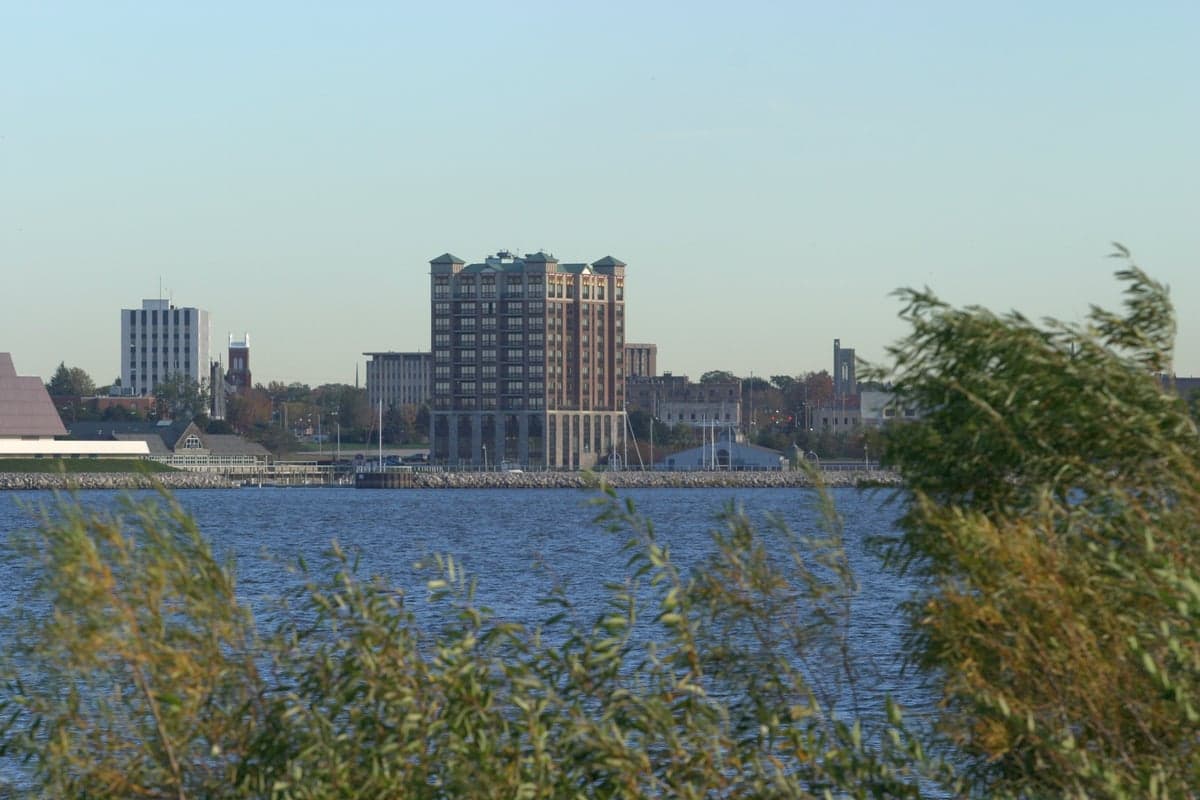
The people of Muskegon, MI today number 37,203, making it a mid-sized Great Lakes city with a distinctly diverse and working-class character. The population is 51.6% White, 29.9% Black, 11.0% Hispanic, and 0.3% each East/Southeast Asian and Indian, with only 2.8% foreign-born—a figure well below the national average, reflecting a city shaped more by domestic migration than international immigration. This is a community with a strong blue-collar identity, where 15.8% of adults hold a college degree, and where the legacy of heavy industry still anchors the local economy and social fabric.
How the city was settled and grew
Muskegon’s population history begins with the Ottawa and Ojibwe peoples, who used the Muskegon River and Lake Michigan shoreline for fishing and trade long before European contact. Permanent Euro-American settlement began in the 1830s, driven by the lumber boom. The city’s first major wave of settlers were Yankees from New England and upstate New York, who arrived to harvest the vast white pine forests. They built the early core of the city in what is now the Muskegon Heights and Downtown districts, establishing sawmills, docks, and a rail network that made Muskegon the "Lumber Queen of the World" by the 1880s. As the timber played out, the city pivoted to manufacturing—foundries, auto parts, and chemical plants—which drew a second wave: Southern and Eastern European immigrants (Poles, Italians, and Slavs) who settled in the Nelson and Glenside neighborhoods, building dense, walkable blocks of worker cottages and parish churches. By the 1920s, Muskegon’s population peaked at over 50,000, with a heavily white, ethnic-European character.
Modern era (post-1965)
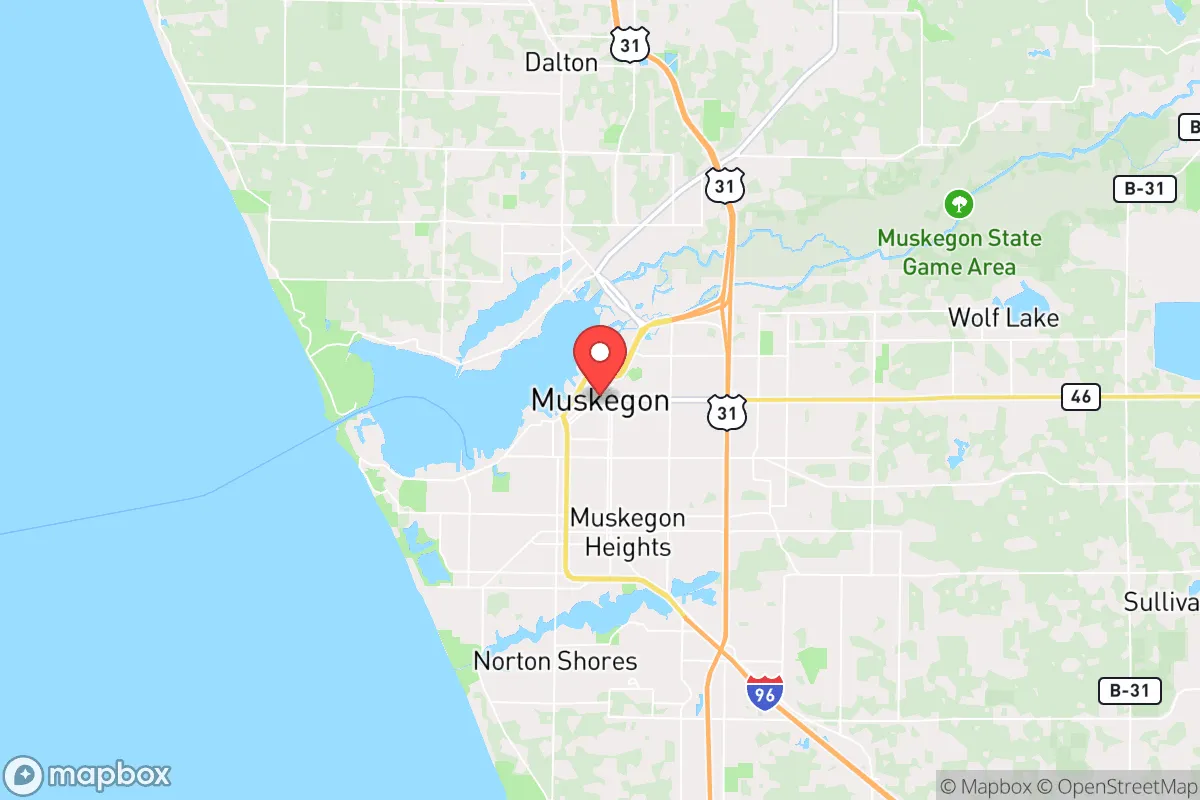
The post-1965 period reshaped Muskegon’s population dramatically. The Great Migration brought a large Black population from the rural South, drawn by wartime factory jobs at firms like Continental Motors and Campbell, Wyant & Cannon. These families concentrated in the Muskegon Heights neighborhood—which became a predominantly Black, middle-class enclave by the 1970s—and in the Jackson Hill area. White flight accelerated after the 1960s, as many European-ethnic families moved to suburban townships like Norton Shores and Fruitport, leaving Muskegon’s core with a rising Black share. The Hispanic population, primarily of Mexican origin, began arriving in the 1980s and 1990s, drawn by agricultural and light industrial work; they settled mainly in the Downtown and Lakeside neighborhoods, where they now form a visible and growing community. The East/Southeast Asian and Indian populations remain tiny (0.3% each), concentrated among a few professional families in the Lakeside district near the hospital and college. The foreign-born share has stayed low (2.8%) because Muskegon lacks the refugee resettlement programs or tech-sector job magnets that drive immigration in larger Michigan cities like Grand Rapids or Detroit.
The future
Muskegon’s population is slowly declining—down from 40,000 in 2000—and aging, with a median age of 36. The city is not homogenizing; rather, it is tribalizing into distinct racial and economic enclaves. The Black population remains concentrated in Muskegon Heights and Jackson Hill, while the White population is increasingly suburban or clustered in the Lakeside and Glenside areas. The Hispanic share is the fastest-growing segment, projected to reach 15-18% by 2040, driven by higher birth rates and continued migration from southwest Michigan’s agricultural corridor. The East/Southeast Asian and Indian communities are likely to remain small, as Muskegon does not attract the skilled immigrants who favor larger metro areas. The next 10-20 years will likely see a continued slow population decline, with the city becoming more Hispanic and more economically polarized—a pattern common to post-industrial Midwestern cities that have not diversified their economies beyond manufacturing and healthcare.
For someone moving in now, Muskegon is a city in transition: still affordable, still rooted in its industrial past, but increasingly defined by racial and economic separation between neighborhoods. The low cost of living and access to Lake Michigan are draws, but the shrinking tax base and limited job growth mean that newcomers should expect a community that is stable, not booming—and one where the demographic future is being written by Hispanic growth and Black persistence, not by a return of the white ethnic majority that built the city.

* Values derived from national, state, county, city and local statistics and may differ in a specific area. Last updated: 2026-04-19T20:55:08.000Z
Narrative content on this page is AI-generated and may contain mistakes. Verify any details that matter before acting on them.
ReloMaps may earn a commission from affiliate links at no extra cost to you.

