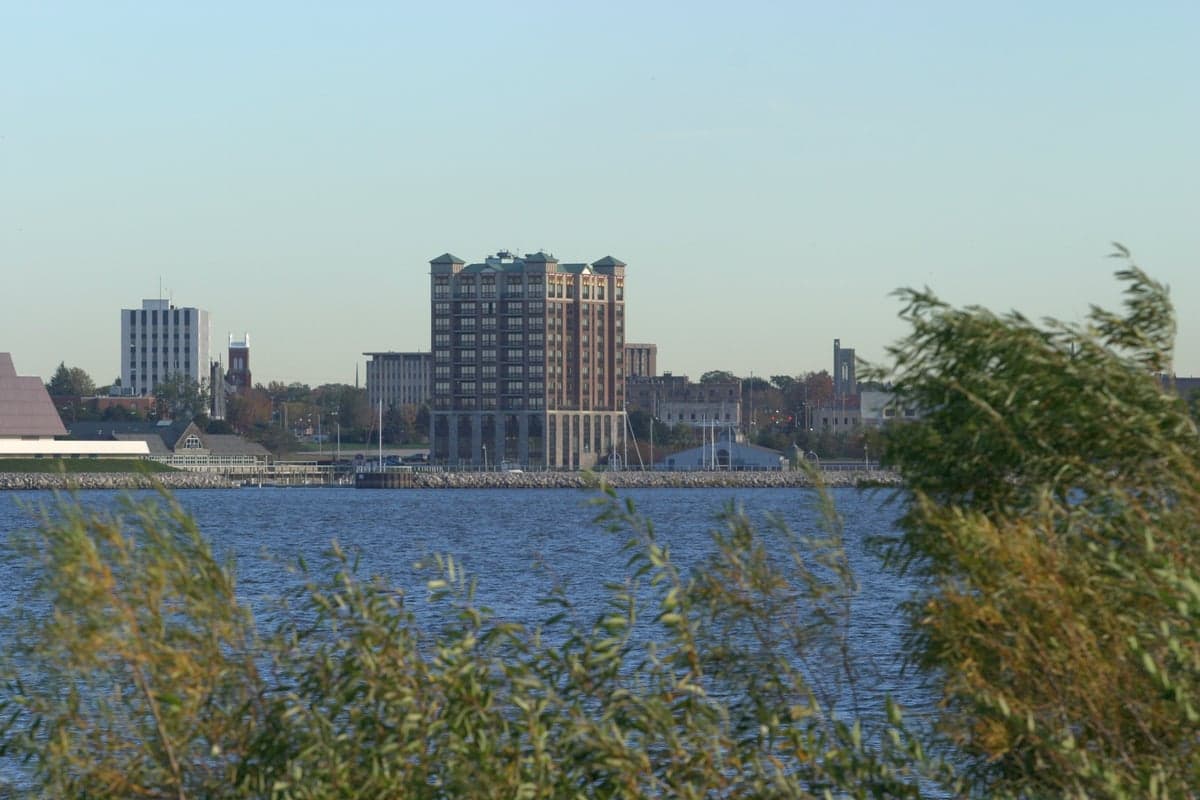
Photo: Wikipedia
Strategic Assessment of Muskegon, MI
Meaningful friction. Expect exposure to either population pressure, blast zones, or natural disaster risk. Consider buying a retreat property.
What does the Strategic Assessment tell us?
Our Strategic Assessment grades tactical survivability of an area. Major population centers, military targets, fallout zones, natural disasters, and border exposure all drive risk — lower exposure means a more defensible position in a crisis.
This is heavily inspired by Joel Skousen's Strategic Relocation book. Highly recommended you checkout the book ($)What does this tell us?
Our Strategic Assessment grades tactical survivability of an area. Major population centers, military targets, fallout zones, natural disasters, and border exposure all drive risk — lower exposure means a more defensible position in a crisis.
This is heavily inspired by Joel Skousen's Strategic Relocation book. Highly recommended you checkout the book ($)Strategic Pillars

Key Distances
Regional Safe Places
Below is our recommended "safe zones" in Michigan and the surrounding area based on our strategic heuristics. For most people, it's unrealistic to live in a “safe zone” full-time due to work, family or other personal reasons. They tend to be more rural. However, many of these areas are perfect for second homes and retreat properties that double as a vacation home or even a short-term rental.


Important Note: For informational purposes only. This does not mean nothing bad ever happens in the green zones. Please use common sense. This is based on public data and modeled with AI. We tried to take a conservative approach but mistakes happen. We update this regularly as new information becomes available.
Solar Generator Recommendations
Backup power matters more here than in safer locations. We've picked three solar generators across budgets and capacity tiers — start with the budget unit if you only need a few essentials, or step up if you want to run a fridge and HVAC for days at a time.

Jackery Portable Power Station Explorer 300
Budget OptionPower on the Go: Weighing only 11 lbs, it's convenient to set up and store with book-sized foldable solar panels

BLUETTI Portable Power Station AC180
Designed for both indoor and outdoor scenarios, AC180 is highly capable as it has a robost capacity and continuous output power.

EF ECOFLOW DELTA Pro Ultra Power Station
Upgraded PickEcoFlow DELTA Pro Ultra is a whole-home energy system designed to grow with your family. Integrated with the Smart Home Panel 2, it scales to meet your evolving energy needs — keeping your home powered, intelligent, and secure through every stage of life.
We earn a commission, at no additional cost to you.
Strategic Assessment Analysis
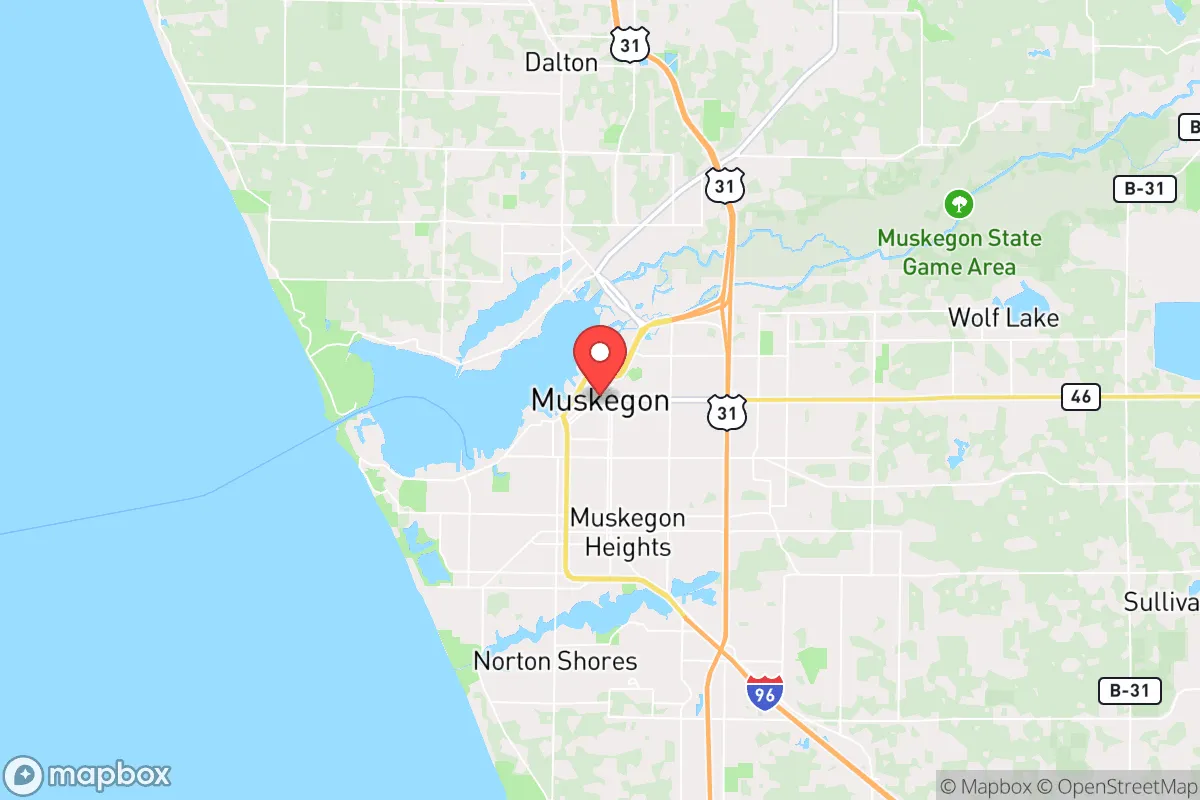
Muskegon, Michigan, sits on the eastern shore of Lake Michigan, roughly 40 miles northwest of Grand Rapids, and its strategic value for a prepper or survivalist lies in a mix of genuine resilience and serious trade-offs. The area has weathered the collapse of its manufacturing base in the late 20th century, emerging smaller but more self-reliant, with a population around 38,000 in the city and roughly 175,000 in Muskegon County. Its location offers a rare combination: access to the largest freshwater system in the world, a relatively low population density compared to the I-96 corridor, and a climate that, while harsh in winter, provides natural barriers to mass migration. For someone thinking about civic unrest, supply chain disruptions, or even larger-scale societal breakdown, Muskegon presents a plausible base of operations—but only if you understand its vulnerabilities and plan accordingly.
Geographic position and natural advantages for long-term survival
Muskegon’s primary asset is its position on Lake Michigan, which provides an essentially unlimited supply of fresh water—a critical resource that will only grow in value. The Muskegon River and several inland lakes (Mona Lake, White Lake) add redundancy. The area sits within the Lake Michigan fruit belt, meaning the soil and microclimate support orchards, vineyards, and truck farming; the growing season is about 150 days, enough for most staple crops if you have the land. The surrounding landscape is a mix of hardwood forests, dunes, and wetlands, offering cover, firewood, and game (deer, turkey, small game). The prevailing westerly winds off the lake moderate temperatures but also bring lake-effect snow, which can be a double-edged sword: it complicates travel and energy use but also creates a natural barrier to movement in winter months. For a relocator, the key takeaway is that Muskegon is not a strategic chokepoint like a major highway interchange or a port city with deep-water shipping—it’s a secondary node, which means it’s less likely to be a target for disruption but also less connected to supply lines if things go sideways.
Risks, exposures, and proximity to fallout-relevant landmarks
The biggest risk for Muskegon is its proximity to Grand Rapids, a metro area of over 1 million people that sits just 40 miles southeast. In a mass evacuation scenario—whether from a natural disaster, economic collapse, or civil unrest—Grand Rapids’ population would likely flow west toward the lake, and Muskegon sits right in that path. The same highways (US-31, I-96) that bring tourists in summer would become choke points for desperate people. Additionally, Muskegon itself has a few hard-to-ignore vulnerabilities: the Muskegon Wastewater Treatment Plant and the B.C. Cobb plant (a decommissioned coal-fired power plant) are both on the lakeshore, and while the Cobb plant is shut down, its coal ash ponds remain a contamination risk. The area also has a significant industrial history—foundries, chemical plants, and a former paper mill—meaning soil and groundwater in certain pockets (especially near the Muskegon Lake shoreline) carry legacy pollution. For the prepper, this means you need to be selective about where you buy land: avoid the industrial waterfront and the immediate floodplain of the Muskegon River. The nearest military installation is Camp Grayling, about 90 miles northeast, which is a National Guard training center—not a major strategic target, but worth noting if you’re mapping fallout zones. The Palisades Nuclear Plant, 50 miles south near South Haven, is a more serious concern; while it’s decommissioned, the spent fuel storage remains a potential target or accident site. In a worst-case scenario, Muskegon is outside the immediate lethal radius but could be in a downwind plume path depending on weather.
Practical resilience for a relocator: food, water, energy, and defensibility
Water is Muskegon’s strongest card. Lake Michigan is a massive, renewable source, and the water table is high enough that shallow wells are viable in most of the county. The city’s municipal water comes from the lake and is treated at the Muskegon Water Filtration Plant, but a prepper should plan for a private well or a lake-pump setup with filtration (sand, charcoal, UV). Food security is decent if you’re willing to work: the surrounding farmland grows corn, soybeans, and hay, but the real advantage is the fruit belt—apples, cherries, peaches, and blueberries are common, and there are several u-pick orchards and small farms that could be barter partners. The Lake Michigan fishery is also a reliable protein source (salmon, trout, perch), though you’ll need a boat or a good shore-casting setup. Energy is a weak point. Muskegon’s grid is served by Consumers Energy, and the area has seen outages from ice storms and high winds. Solar is viable but winter production is low (about 2.5 peak sun hours in December), so you’ll need a backup generator or a wind turbine—the lake-effect winds are strong enough to make small-scale wind feasible. Natural gas is available in the city and some suburbs, but rural properties may rely on propane. Defensibility is mixed. The terrain is mostly flat to gently rolling, with limited natural chokepoints. The best defensive setups are inland, away from the lakeshore, where you have tree cover and distance from the main roads. The Muskegon State Park and the Manistee National Forest to the north offer public land for hunting and foraging, but they’re also accessible to anyone. A rural property on a dead-end road with a good well and a woodlot is the ideal—think areas around Holton, Twin Lake, or north toward Whitehall. The local population is a mixed bag: Muskegon has a higher-than-average poverty rate (around 20%) and a history of crime, especially in the city core. That means you’ll want to keep a low profile and avoid flashy displays of supplies. The rural areas are more conservative and self-reliant, with a strong hunting culture and a general distrust of government overreach—good neighbors for a prepper, provided you integrate and don’t act like an outsider.
Overall, Muskegon is a B-tier relocation target for the survivalist. It offers excellent water access, decent agricultural potential, and a location that’s far enough from major cities to avoid the worst of a collapse but close enough to be affected by refugee flows. The climate is a real hardship—cold, cloudy winters will test your energy and morale—and the industrial legacy means you have to be careful about land and water contamination. But for someone who wants a base on the Great Lakes with room to grow food, hunt, and fish, and who is willing to put in the work on self-sufficiency, Muskegon is worth a serious look. Just don’t buy within five miles of the lakeshore industrial zone, and make sure your bug-out plan accounts for the Grand Rapids evacuation corridor. If you can handle the snow and the rust-belt grit, this place can work.

* Values derived from national, state, county, city and local statistics and may differ in a specific area. Last updated: 2026-04-19T20:55:08.000Z
Narrative content on this page is AI-generated and may contain mistakes. Verify any details that matter before acting on them.
ReloMaps may earn a commission from affiliate links at no extra cost to you.

