
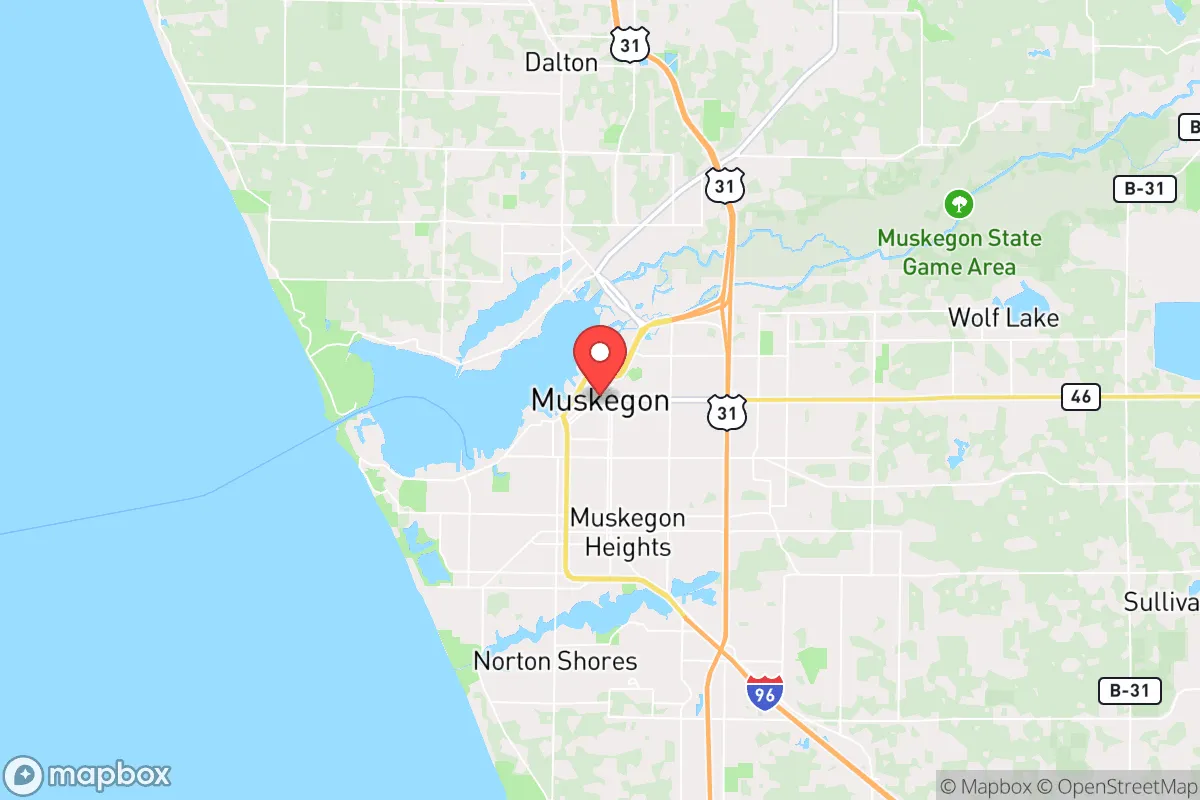
Photo: Wikipedia
Personal Sovereignty in Muskegon, MI
Strong independent fundamentals that actively favor personal liberty and low regulation.
What does Personal Sovereignty tell us?
Personal Sovereignty measures your capacity for self-reliance and independence with minimal government friction. Higher scores mean fewer barriers between you and the way you want to live... but it assumes you have the space you need and good neighbors.
What does this tell us?
Personal Sovereignty measures your capacity for self-reliance and independence with minimal government friction. Higher scores mean fewer barriers between you and the way you want to live... but it assumes you have the space you need and good neighbors.
State Policy
Energy independence: Importer (20% of energy produced in-state)
Personal Liberty
Homesteading

Personal Liberty Analysis
Muskegon, Michigan, offers a mixed bag for those prioritizing personal sovereignty, with the state’s overall regulatory environment creating both opportunities and constraints for self-reliant individuals. While Michigan’s constitution and legal framework provide a baseline of protections—such as a right to keep and bear arms and some parental authority in education—the state’s tax burden and regulatory posture can feel heavy for those accustomed to more libertarian-leaning jurisdictions. For a conservative-leaning audience, particularly survivalists and preppers, the key is understanding where Muskegon County’s local culture and practical realities diverge from state-level policies, especially in areas like self-defense, homesteading, and medical autonomy.
Tax burden and regulatory posture in Muskegon County
Michigan’s tax structure is a significant consideration for anyone valuing financial autonomy. The state imposes a flat income tax rate of 4.25% as of 2026, which is moderate compared to some high-tax states but still a direct cut from earnings. Property taxes in Muskegon County average around 1.5% of assessed value, slightly above the national median, though local millage rates can vary by township—rural areas like Fruitland Township or Dalton Township often have lower rates than the city of Muskegon itself. Sales tax is a flat 6%, applied to most goods but not groceries or prescription drugs, which is a small relief. On the regulatory side, Michigan’s business climate is improving but still carries layers of licensing and permitting, especially for home-based enterprises like food production or small-scale manufacturing. The state’s environmental regulations, particularly around shoreline property and wetlands in Muskegon County, can be restrictive for those wanting to develop land independently. For preppers, the biggest frustration is likely the state’s building codes and zoning laws, which can limit off-grid modifications like composting toilets or rainwater collection systems without permits. That said, Muskegon County’s local governments are generally more pragmatic than urban centers like Detroit or Ann Arbor, with many townships allowing agricultural uses and accessory structures with fewer hurdles.
Self-defense and gun law specifics in Michigan
Michigan is a shall-issue state for concealed pistol licenses (CPL), meaning residents who pass a background check and complete a certified training course can obtain a permit without subjective discretion from local authorities. As of 2026, open carry is legal without a permit for anyone 18 or older who can legally possess a firearm, though local ordinances in Muskegon city may restrict it in certain public spaces like parks or government buildings. The state does not have a “stand your ground” law in the purest sense, but it does have a Castle Doctrine that eliminates the duty to retreat in one’s home or occupied vehicle. Outside the home, Michigan law requires a duty to retreat if safely possible before using deadly force, which is a notable limitation for those who prioritize absolute self-defense rights. Magazine capacity is not restricted, and there is no state-level assault weapons ban, though federal laws still apply. For preppers, the ability to stockpile firearms and ammunition is unencumbered, but the state’s firearm registration system—while not universal—does require background checks for all handgun purchases, including private sales, through a licensed dealer. Muskegon County’s sheriff’s office is generally supportive of Second Amendment rights, with a reputation for issuing CPLs efficiently and not imposing extra local restrictions. However, the state’s red flag law, enacted in 2024, allows law enforcement to petition for temporary firearm removal based on extreme risk protection orders, which is a point of concern for those wary of government overreach.
Self-reliance and homesteading viability in Muskegon area
For those looking to live off the land, Muskegon County offers affordable land with decent potential for self-sufficiency, but zoning and soil conditions require careful planning. Lot sizes in rural townships like Blue Lake Township or Casnovia Township often start at 1 to 5 acres, with some parcels available for under $10,000 per acre as of 2026—far cheaper than comparable land in western states. Agricultural zoning is common in these areas, allowing for livestock, gardens, and small-scale farming without excessive permitting, though the county does enforce setback requirements for structures and septic systems. Off-grid feasibility is mixed: Michigan’s building codes generally require connection to the electrical grid for new homes, but solar panels with battery storage are permitted as supplemental systems, and some townships allow full off-grid setups if you meet alternative energy standards. Rainwater collection is legal but regulated—you can capture runoff from roofs for non-potable uses like irrigation, but potable rainwater systems require filtration and testing to meet health codes. The growing season in Muskegon County is short, roughly 140 frost-free days, which limits year-round food production, but cold-hardy crops and greenhouse use can extend it. For preppers, the biggest advantage is water abundance: the county sits on the Lake Michigan shoreline and has numerous inland lakes and rivers, providing reliable water sources for those who can legally access them. Septic systems are required for any dwelling not connected to municipal sewer, and the county health department enforces strict soil percolation tests, which can be a hurdle on clay-heavy plots. Overall, homesteading is viable but requires navigating state and local regulations that prioritize grid-tied, conventional development over radical self-reliance.
Personal liberties: parental rights, medical autonomy, and property
Michigan’s legal landscape for personal liberties is a patchwork that leans moderately conservative in some areas and progressive in others. Parental rights in education are relatively strong: Michigan law allows parents to opt their children out of sex education and certain health curricula, and the state does not mandate critical race theory or gender ideology instruction in public schools. However, the state’s 2023 expansion of LGBTQ+ nondiscrimination protections in schools has raised concerns among some parents about curriculum content and bathroom policies. Homeschooling is legal with minimal regulation—parents need only file a notice of intent and provide instruction in core subjects, with no standardized testing or curriculum approval required. Medical autonomy is a contentious area: Michigan has no vaccine mandate for adults, but COVID-era executive orders showed the governor’s willingness to impose emergency restrictions, including mask mandates and business closures, which were upheld by state courts. As of 2026, there are no state-level restrictions on ivermectin or hydroxychloroquine prescriptions, but the medical board can discipline doctors for “unprofessional conduct,” creating a chilling effect for those seeking alternative treatments. Property rights are generally respected, with Michigan’s eminent domain laws requiring just compensation and public use justification, though the state’s environmental regulations can effectively limit land use through wetland protections and shoreline zoning. For preppers, the ability to build bunkers, stockpile supplies, or install security measures on private property is largely unrestricted, provided you don’t violate building codes or nuisance laws. The county’s sheriff’s department has a reputation for not enforcing federal overreach, such as ATF overregulation, which is a plus for those who value local control.
Overall, Muskegon offers a moderate level of personal sovereignty compared to other regions in the Midwest, falling somewhere between the heavy-handed regulation of states like Illinois or California and the libertarian-leaning environments of states like Idaho or New Hampshire. The tax burden is manageable but not negligible, the gun laws are solid with some caveats, and the homesteading potential is real but constrained by climate and zoning. For a conservative-leaning individual or family willing to work within the system—choosing a rural township, building a legal off-grid setup, and staying informed on state legislative changes—Muskegon County provides a viable base for self-reliance without the extreme isolation of the Mountain West. The key is to treat the state’s regulations as a framework to navigate rather than an obstacle to fight, leveraging local culture and county-level flexibility to carve out a degree of autonomy that would be impossible in more urbanized or progressive parts of the country.

* Values derived from national, state, county, city and local statistics and may differ in a specific area. Last updated: 2026-04-19T20:55:08.000Z
Narrative content on this page is AI-generated and may contain mistakes. Verify any details that matter before acting on them.
ReloMaps may earn a commission from affiliate links at no extra cost to you.

