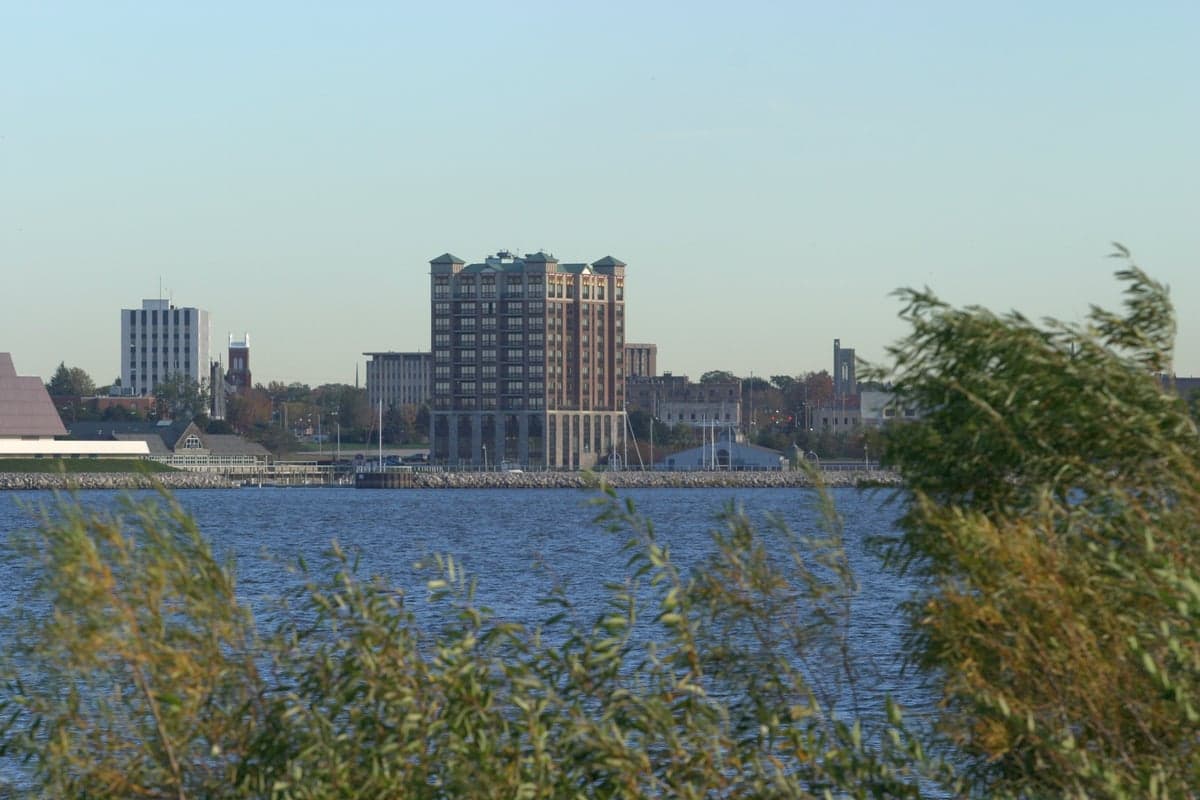
Photo: Wikipedia
Political ClimatePolitical Climate in Muskegon, MI
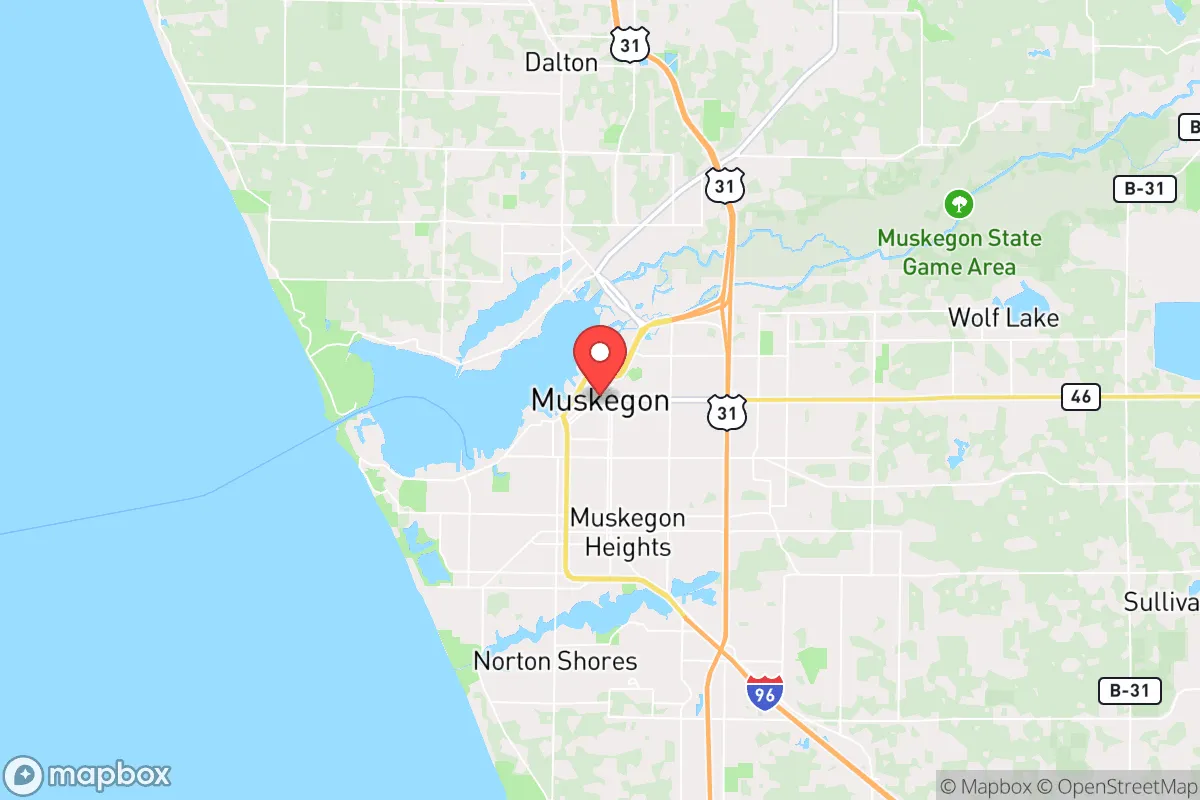
District shown is the primary district for this city’s centroid. Cities may span multiple districts.
Local Political AnalysisPolitical Analysis of Muskegon, MI
Muskegon’s political climate has shifted noticeably over the past decade, and if you’ve lived here as long as I have, you’ve felt it. The city itself leans reliably Democratic, with a Cook PVI of D+4, but that number doesn’t tell the whole story. Muskegon County as a whole is more of a purple patch, and the real tension comes from the growing divide between the city’s progressive leadership and the more traditional, liberty-minded values you still find in the surrounding townships and rural areas. It’s not the same place it was twenty years ago, and a lot of us are watching the direction things are heading with real concern.
How it compares
Drive just ten minutes out of downtown Muskegon, and you’ll hit places like Norton Shores, Fruitport, or North Muskegon, where the political vibe is noticeably different. Those communities still lean center-right, with a strong emphasis on local control, lower taxes, and keeping government out of your business. Meanwhile, Muskegon’s city council and school board have been pushing policies that feel more like Grand Rapids or even Ann Arbor—think mask mandates that lingered longer than most, zoning changes that prioritize dense development over property rights, and a general willingness to spend taxpayer money on social programs that don’t always show results. The contrast is stark: you can live in the city and feel like you’re in a blue bubble, but a fifteen-minute drive west to Whitehall or Montague reminds you that most of this region still values personal freedom and fiscal restraint.
What this means for residents
For folks who value their rights and don’t want the government poking into every corner of their lives, Muskegon’s trajectory is a red flag. The city has embraced progressive policies on everything from policing to land use, and there’s a growing sense that local officials are more interested in following state and national trends than listening to what longtime residents actually want. Property taxes have crept up, and new ordinances around short-term rentals, business licensing, and even noise complaints have made it harder to just live your life without bureaucratic hassle. If you’re thinking of moving here, pay close attention to the school board elections and city commission meetings—that’s where the real battles are happening. The county sheriff’s office still does a solid job, but the city’s own police department has faced defunding pressure and morale issues, which is never a good sign for public safety.
On the cultural side, Muskegon has always been a working-class town with a strong sense of community, but that’s eroding as new transplants from downstate bring big-city ideas with them. The local gun culture is still strong—plenty of folks hunt and shoot—but you can feel the pressure from anti-Second Amendment groups gaining traction in city hall. The annual Coast Guard Festival and summer lake activities are still great, but the political undercurrent is harder to ignore every year. If you’re looking for a place where your rights are respected and government stays in its lane, Muskegon’s city limits might not be your best bet. The surrounding townships, though, still feel like home.

State Political ClimatePolitical Climate in Michigan
State Political AnalysisPolitical Environment in the State
Michigan has shifted from a reliably purple battleground to a state where Democrats now hold all three levers of state government, a dramatic change from just a decade ago when Republicans controlled both legislative chambers and the governorship. The state’s overall partisan lean is now a narrow Democratic tilt, driven overwhelmingly by the vote-rich Detroit metro area and the college towns of Ann Arbor and Lansing, while the rest of the state—particularly the western and northern Lower Peninsula and the Upper Peninsula—has become deeply Republican. Over the last 20 years, the GOP’s dominance in rural and exurban areas has intensified, but it hasn’t been enough to offset the growing Democratic margins in the suburbs of Grand Rapids and the core urban centers.
Urban vs. rural divide
The political map of Michigan is a stark story of two Michigans. The Democratic stronghold is the southeast corner, anchored by Detroit and its inner-ring suburbs like Southfield and Dearborn, where Democratic margins often exceed 70%. Ann Arbor (Washtenaw County) is the state’s most liberal city, routinely voting 80%+ Democratic. The other major Democratic engine is Grand Rapids (Kent County), which flipped from red to blue in the 2010s as the city itself grew more progressive and its suburbs like Wyoming and Kentwood shifted left. Meanwhile, the rural and exurban areas are overwhelmingly Republican. The Upper Peninsula, once a Democratic stronghold due to union mining and timber workers, has flipped hard red over the past two cycles, with counties like Dickinson and Menominee now voting +30 to +40 points Republican. The Traverse City region (Grand Traverse County) is a classic swing area—the city itself is liberal, but the surrounding townships are deeply conservative. The key battlegrounds are the suburban “collar counties” around Detroit—Macomb, Oakland, and Wayne—where the 2024 election saw Democrats lose ground among working-class white voters, particularly in Macomb, which flipped back to Trump after supporting Biden in 2020.
Policy environment
Michigan’s policy environment has shifted sharply left since Democrats took full control in 2023. The state has a flat income tax rate of 4.25%, but that rate is now scheduled to increase to 4.35% in 2026 after Democrats repealed the automatic rollback trigger that would have lowered it. Property taxes are relatively high, with an average effective rate of 1.5%, and the state’s Headlee Amendment caps annual assessment increases at the rate of inflation or 5%, whichever is lower—a protection for long-term homeowners but a burden for new buyers. On education, Michigan has eliminated the “right-to-work” law that had been in place since 2012, meaning private-sector workers can now be forced to pay union dues as a condition of employment. The state also repealed its 1931 law requiring a permit to carry a concealed pistol, making Michigan a “shall issue” state with no permit required for concealed carry—a major win for gun rights. However, Democrats passed a package of gun control laws in 2023 including universal background checks, safe storage requirements, and a “red flag” law allowing courts to temporarily seize firearms from individuals deemed a risk. On healthcare, Michigan expanded Medicaid under the Affordable Care Act and has a state-based health insurance exchange. Election laws have been loosened: the state now has no-excuse absentee voting, same-day voter registration, and nine days of early voting, all passed via a 2022 ballot initiative (Proposal 2) that also mandated state-funded drop boxes.
Trajectory & freedom
Michigan’s trajectory over the past three years has been a clear move toward less personal freedom in several key areas. The repeal of right-to-work and the restoration of prevailing wage laws have reduced economic freedom for workers who don’t want to join a union. The new gun control package—particularly the red flag law and universal background checks—represents a significant expansion of government authority over firearm ownership. On parental rights, the state has moved in a concerning direction: the 2023 “LGBTQ+ inclusive” curriculum mandate requires public schools to teach about the contributions of LGBTQ+ individuals in social studies, and the state’s “safe schools” law prohibits discrimination based on sexual orientation and gender identity, which some parents argue undermines their ability to opt their children out of certain discussions. Medical freedom took a hit with the passage of a 2023 law requiring COVID-19 vaccination for healthcare workers in certain settings, though that mandate has since been lifted. On the positive side for liberty, the state’s 2024 repeal of the permit requirement for concealed carry was a major expansion of Second Amendment rights. Property rights remain relatively strong, with no statewide rent control and limited zoning preemption, though local governments in places like Ann Arbor and Grand Rapids have imposed strict short-term rental regulations. The overall trend is mixed, but the balance has tipped toward government overreach in education, labor, and gun policy.
Civil unrest & political movements
Michigan has been a flashpoint for political activism on both sides. The 2020 “Operation Gridlock” protests at the state capitol in Lansing, where thousands of armed protesters demonstrated against Governor Gretchen Whitmer’s COVID-19 lockdown orders, became a national symbol of conservative resistance to government overreach. The Whitmer kidnapping plot in 2020, in which a group of anti-government extremists allegedly planned to kidnap the governor, remains a deeply polarizing event—conservatives see it as a government entrapment operation, while liberals view it as proof of domestic terrorism. More recently, the 2023-2024 pro-Palestinian protests at the University of Michigan in Ann Arbor have been large and disruptive, with encampments and clashes with police, reflecting the deep divisions over foreign policy in the state’s sizable Arab-American community (centered in Dearborn). The “Uncommitted” movement in the 2024 Democratic primary, where over 100,000 voters cast protest ballots against Biden’s Israel policy, showed the political power of this bloc. On the right, the Michigan Conservative Coalition and local “Moms for Liberty” chapters have been active in school board races, particularly in Macomb County and the Grand Rapids suburbs, fighting against critical race theory and LGBTQ+ curriculum. Election integrity remains a hot-button issue: the 2020 election in Michigan was subject to numerous audits and lawsuits, with Republican-led investigations finding no widespread fraud but raising concerns about the use of private funding for election administration (the “Zuckerberg bucks” controversy). The state’s 2022 ballot initiative that expanded voting access has only intensified these debates.
Projection
Looking ahead 5-10 years, Michigan is likely to become more Democratic at the state level due to demographic trends. The Detroit suburbs are continuing to diversify and shift left, while the rural areas that vote Republican are losing population. The Grand Rapids metro area is growing faster than the rest of the state, and its suburbs are trending blue, which could flip Kent County permanently into the Democratic column. The Upper Peninsula will remain deeply red, but its population is too small to offset the gains in the southeast. The wild card is the Arab-American vote in Dearborn and Hamtramck: if this community continues to feel alienated by Democratic foreign policy, it could create a swing bloc that makes statewide races more competitive. However, the structural advantages for Democrats—control of redistricting (via an independent commission), a strong union base, and the urban/suburban coalition—suggest that the state will remain a lean-Democratic state for the foreseeable future. A new resident moving in now should expect higher taxes (the income tax rate is set to rise), more regulation on firearms and businesses, and a public education system that is increasingly aligned with progressive social values. The state’s right-to-work repeal will make it harder for non-union workers to opt out of paying dues, and the expanded voting laws will likely remain in place, making Michigan a high-turnout state with a permanent Democratic edge.
Bottom line for a new resident: If you’re a conservative considering a move to Michigan, you’ll find a strong and vocal community in the rural areas and exurbs, but you’ll be living under a state government that is actively moving in a progressive direction. The state’s natural beauty, low cost of living outside the major metros, and strong gun rights (post-permitless carry) are real draws, but you’ll need to be prepared for higher taxes, a union-friendly labor environment, and a public school system that may not align with your values. The best bets for conservatives are the Traverse City region, the Upper Peninsula, or the outer suburbs of Grand Rapids (like Rockford or Cedar Springs), where you can find like-minded neighbors and a slower pace of life while still being within driving distance of the state’s economic centers.
* Values derived from national, state, county, city and local statistics and may differ in a specific area. Last updated: 2026-04-19T20:55:08.000Z
Narrative content on this page is AI-generated and may contain mistakes. Verify any details that matter before acting on them.
ReloMaps may earn a commission from affiliate links at no extra cost to you.

