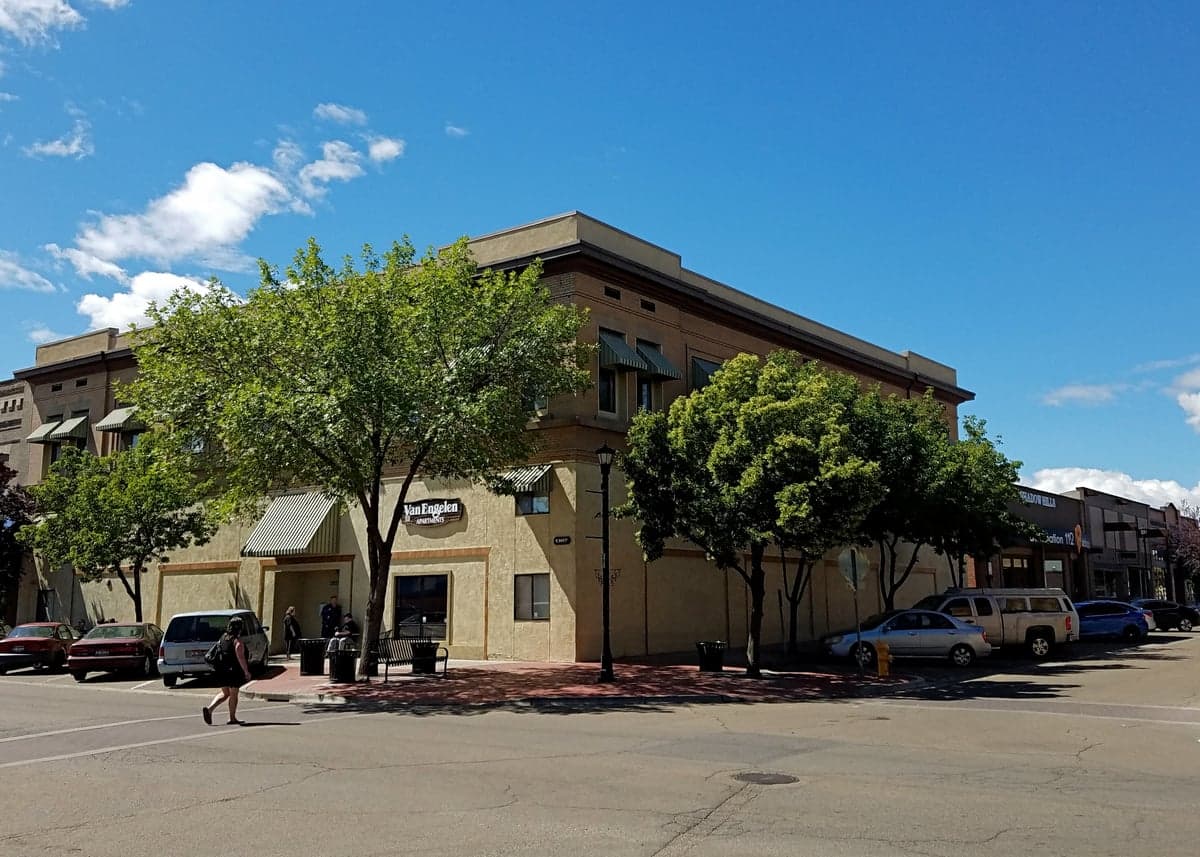
Photo: Wikipedia
Political ClimatePolitical Climate in Nampa, ID
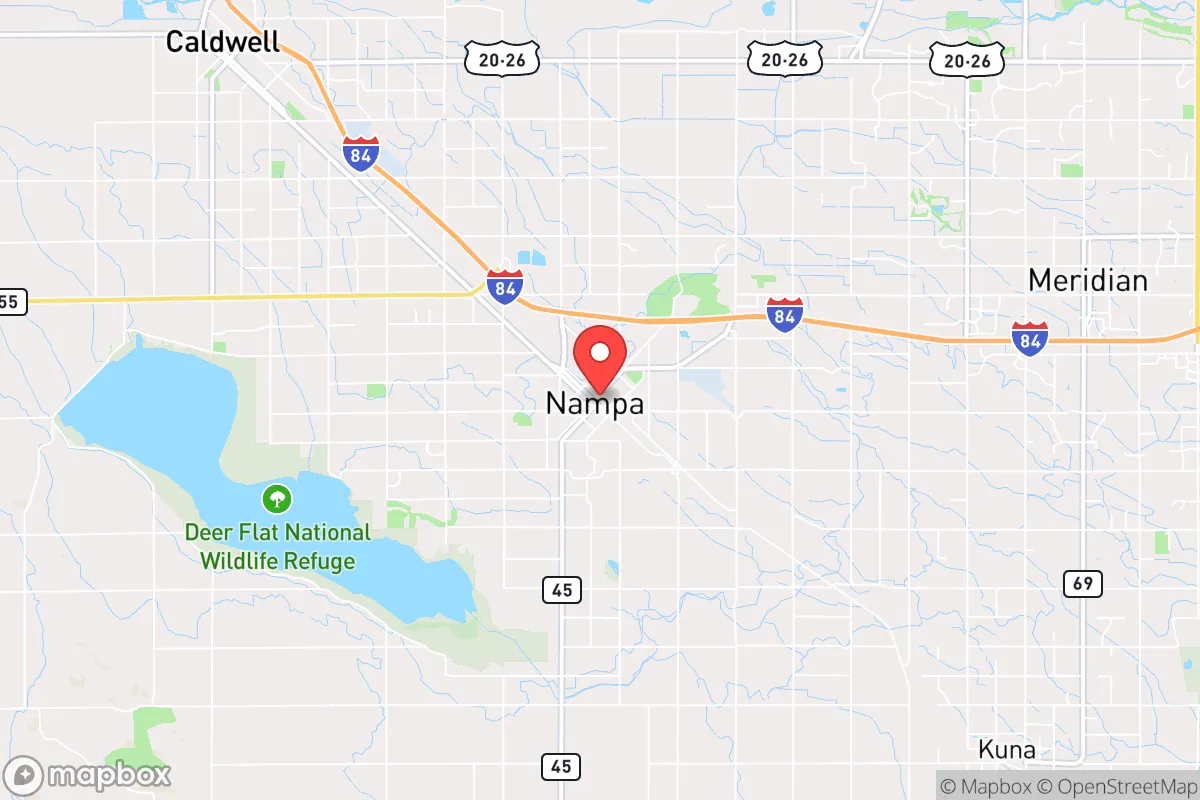
District shown is the primary district for this city’s centroid. Cities may span multiple districts.
Local Political AnalysisPolitical Analysis of Nampa, ID
Nampa, Idaho, is about as solidly conservative as they come, with a Cook PVI of R+22 that puts it deep in the red. That number isn't just a statistic—it reflects a community that has long valued limited government, personal responsibility, and a hands-off approach from the state. But if you've lived here as long as I have, you've seen the winds start to shift, and not always in a good way. The old guard of ranchers, farmers, and small business owners who built this town are still the backbone, but we're getting an influx of folks from places like California and Oregon, and some of them bring ideas that don't exactly fit the local mold. The political trajectory here is still conservative, no doubt, but there's a quiet undercurrent of progressive influence creeping into local school board meetings and city council debates, and that's something worth keeping an eye on.
How it compares
If you drive 20 miles west to Boise, you'll hit a different world politically—Ada County has been trending purple for years, with the city itself leaning blue in recent elections. Nampa, on the other hand, sits in Canyon County, which is still reliably red, but even here you see cracks. Neighboring Caldwell has a growing Hispanic population that's starting to flex its political muscle, and while many of those voters are socially conservative, they don't always line up with the traditional Republican platform on economic issues. Meanwhile, towns like Emmett and Marsing to the north and west are even more rural and conservative than Nampa, with less exposure to the urban sprawl. The contrast is stark: Nampa is the largest city in Canyon County, and as it grows, it's becoming a battleground between the old-school values of self-reliance and the new-wave push for more government involvement in everything from zoning to school curriculum.
What this means for residents
For the average Nampa resident, the political climate directly affects your wallet and your freedoms. Property taxes have been creeping up as the city expands, and there's been talk of more local ordinances—like stricter building codes or noise regulations—that feel like government overreach to folks who just want to be left alone. The school board has become a flashpoint, with debates over library books and classroom content that wouldn't have happened a decade ago. On the flip side, the conservative majority still holds the line on things like gun rights and religious freedom, so you won't see the kind of restrictions you'd get in Portland or Seattle. But the long-term trend is concerning: as more people move in, the political center of gravity shifts, and what was once a given—like low taxes and minimal regulation—starts to get chipped away at.
One thing that sets Nampa apart is its strong sense of community rooted in faith and family. You'll find more churches per capita than coffee shops, and the local culture still prizes neighborly help over government programs. But there's a growing tension between that ethos and the progressive push for more centralized control. If you're considering moving here, know that you're coming to a place where your vote still counts heavily in the conservative direction, but don't expect it to stay that way forever. The key is to get involved early—attend those city council meetings, vote in every local election, and keep an eye on who's running for school board. Because the moment you stop paying attention is the moment the government starts making decisions you never asked for.

State Political ClimatePolitical Climate in Idaho
State Political AnalysisPolitical Environment in the State
Idaho is a deeply conservative state, with Republicans holding every statewide office and supermajorities in both legislative chambers, but the political landscape is far from monolithic. Over the past 20 years, the state has shifted from a reliably red, low-population stronghold to a more dynamic battleground between traditional libertarian-leaning conservatives and a newer wave of populist, culturally-focused conservatives, driven largely by massive in-migration from California, Washington, and Oregon. The 2024 election saw Trump win Idaho by over 30 points, but the real story is the internal tension between the old-guard, limited-government wing and the newer, more assertive faction pushing for aggressive action on education, immigration, and cultural issues.
Urban vs. rural divide
The political map of Idaho is starkly divided between its fast-growing urban corridors and its vast, sparsely populated rural expanse. The Treasure Valley, anchored by Boise, Meridian, and Nampa, is the state's population center and the primary engine of its political evolution. While Ada County (Boise) has trended purple in recent cycles—voting for Trump by only 12 points in 2024, down from 18 in 2020—the surrounding suburban and exurban areas like Eagle and Star remain solidly red. In contrast, the rural north, including Coeur d'Alene and the Idaho Panhandle, is intensely conservative, with counties like Bonner and Boundary routinely voting +40 to +50 points Republican. The eastern agricultural belt, including Idaho Falls and Rexburg (home to BYU-Idaho), is a Republican stronghold driven by a mix of agricultural interests and a strong LDS cultural influence. The only real blue dots are the university towns of Moscow (University of Idaho) and Pocatello (Idaho State University), which vote Democratic by narrow margins but have little statewide impact.
Policy environment
Idaho's policy environment is defined by a low-tax, low-regulation philosophy that has been a magnet for conservative migrants. The state has a flat income tax rate of 5.8% (down from 6.5% in 2023) and no corporate income tax on pass-through entities, making it one of the most tax-friendly states in the nation. Property taxes are relatively low, though they vary by county, with Kootenai County (Coeur d'Alene) seeing significant increases due to soaring home values. The regulatory posture is aggressively pro-business, with no state-level minimum wage above the federal $7.25 and a right-to-work law that keeps unions weak. Education policy has become a flashpoint: the 2024 "School Choice" bill (HB 93) expanded education savings accounts for private and homeschool families, while the "Parents' Bill of Rights" (SB 1109) codified parental authority over curriculum and medical decisions. Healthcare is largely market-driven, with no state-run exchange and limited Medicaid expansion (though voters approved it in 2018, the legislature has resisted full implementation). Election laws are among the strictest in the nation: voter ID is required, same-day registration is not allowed, and the 2023 "Election Integrity Act" (HB 124) banned ballot drop boxes and limited mail-in voting to those with a valid excuse.
Trajectory & freedom
Idaho is on a trajectory of expanding personal liberty in several key areas, but with notable caveats. On gun rights, the state is a national leader: the 2023 "Constitutional Carry" law (SB 1002) allows permitless carry for anyone 18 or older, and the "Second Amendment Protection Act" (HB 206) prohibits state enforcement of any future federal gun bans. Parental rights have been strengthened through the "Parents' Bill of Rights" and a 2024 law (HB 93) that allows parents to opt their children out of any curriculum they find objectionable. Medical autonomy has seen a sharp turn: the "Idaho Abortion Act" (HB 242, 2023) bans nearly all abortions after six weeks, with no exceptions for rape or incest, and the "Medical Freedom Act" (SB 1137, 2024) prohibits employers from requiring COVID-19 vaccines. However, property rights have become a concern in fast-growing areas like Boise and Meridian, where local governments have imposed growth moratoriums and impact fees that some residents view as an infringement on their ability to develop their land. The state's libertarian streak is real, but it's increasingly tempered by a populist impulse to use government power to enforce cultural norms.
Civil unrest & political movements
Idaho has seen relatively little civil unrest compared to coastal states, but there have been notable flashpoints. The 2020 protests in Boise over George Floyd's death were largely peaceful, though they did draw counter-protests from armed militia groups, including the "Idaho Light Foot Militia." The state has been a hub for the "constitutional sheriff" movement, with sheriffs in Bonner and Boundary counties publicly refusing to enforce certain state and federal laws. Immigration politics are a growing issue: the 2024 "Border Security Act" (HB 123) requires local law enforcement to cooperate with ICE and penalizes "sanctuary city" policies, though no Idaho city has formally adopted such a policy. The "Idaho Freedom Foundation" and "Idaho Rising" are the two main activist groups driving the conservative agenda, with the former pushing for tax cuts and school choice, and the latter focusing on cultural issues like critical race theory and gender ideology in schools. Election integrity remains a hot topic, with the 2022 primary seeing a failed recall effort against the Kootenai County clerk over alleged irregularities. A new resident would notice a palpable sense of political engagement, with yard signs, bumper stickers, and local meetings drawing passionate crowds.
Projection
Over the next 5-10 years, Idaho is likely to become more conservative, but with a different flavor. The massive in-migration from California and Washington—over 100,000 new residents since 2020—is not diluting the state's conservatism; rather, it's reinforcing a populist, culturally-focused strain that is less concerned with small government and more focused on using state power to protect traditional values. The Treasure Valley will continue to grow, with Meridian and Nampa becoming the new political battlegrounds as their populations swell. The rural-urban divide will sharpen, with rural counties pushing for even more aggressive policies on immigration and education, while the Boise suburbs may see a slight moderation on economic issues. The biggest wildcard is the LDS Church's influence: as the church's leadership has become more cautious on cultural issues, some conservative activists worry about a softening of the state's resolve. Expect continued fights over school choice, property taxes, and the role of local government in regulating growth. A new resident moving in now should expect to find a state that is fiercely independent, increasingly assertive in its conservatism, and unapologetically resistant to national trends.
For a conservative individual or family considering relocation, Idaho offers a rare combination of low taxes, strong gun rights, and a cultural environment that respects traditional values. The trade-off is that the state is growing fast, and with that growth comes rising housing costs, traffic congestion in the Boise area, and a political scene that can feel like a constant tug-of-war between different visions of conservatism. If you value personal liberty, parental control over education, and a government that stays out of your business, Idaho is one of the best bets in the country. Just be prepared for a state that is still figuring out what it wants to be—and that is not afraid to argue about it in public.
* Values derived from national, state, county, city and local statistics and may differ in a specific area. Last updated: 2026-05-03T20:23:50.000Z
Narrative content on this page is AI-generated and may contain mistakes. Verify any details that matter before acting on them.
ReloMaps may earn a commission from affiliate links at no extra cost to you.

