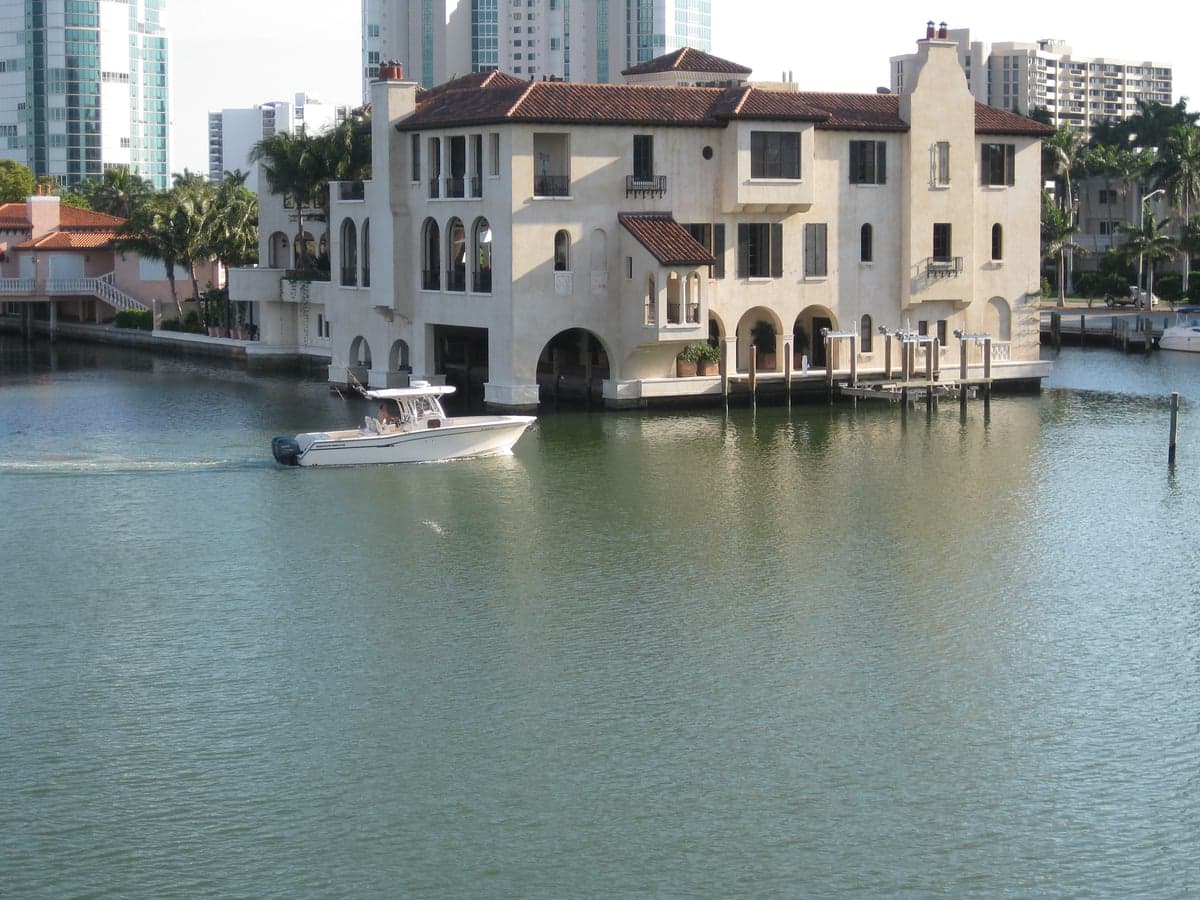
Photo: Wikipedia
Personal Sovereignty in Naples, FL
Viable for self-reliance. Generally workable, though some barriers may limit total independence.
What does Personal Sovereignty tell us?
Personal Sovereignty measures your capacity for self-reliance and independence with minimal government friction. Higher scores mean fewer barriers between you and the way you want to live... but it assumes you have the space you need and good neighbors.
What does this tell us?
Personal Sovereignty measures your capacity for self-reliance and independence with minimal government friction. Higher scores mean fewer barriers between you and the way you want to live... but it assumes you have the space you need and good neighbors.
State Policy
Energy independence: Importer (10% of energy produced in-state)
Personal Liberty
Homesteading

Personal Liberty Analysis
Naples, Florida, offers a notably high degree of personal sovereignty compared to many coastal enclaves, largely because it sits within a state that has deliberately constructed a legal framework to minimize government overreach. For the survivalist or prepper, this means fewer layers of bureaucratic friction between you and your ability to make independent decisions about your property, your family, and your security. While no place is a libertarian utopia, Naples—and Collier County as a whole—operates under a political culture that treats individual autonomy as a default, not a privilege to be negotiated with the state.
Tax burden and regulatory posture: How Florida’s fiscal policies protect your autonomy
The most immediate sovereignty advantage in Naples is the absence of a state income tax, which Florida enshrines in its constitution. This single fact means the state government cannot directly tax your labor, investments, or retirement income, leaving more of your earnings under your direct control. Property taxes in Collier County are moderate, with an effective rate around 0.8% of assessed value, and the state’s Save Our Homes amendment caps annual assessment increases at 3% for homesteaded properties—a critical protection against being taxed out of your home during inflationary periods. Regulatory posture in Naples is business-friendly and development-oriented, with the city and county generally deferring to property rights. There are no county-level rent control ordinances, no burdensome energy mandates on existing homes, and no local income taxes. The state’s preemption laws also block local governments from enacting their own minimum wage or paid leave requirements, ensuring a uniform, low-friction regulatory environment. For someone concerned about creeping government control, Florida’s constitutional limits on taxation and its strong preemption framework are tangible safeguards.
Self-defense and gun law specifics: What the Second Sanctuary means for your rights
Florida is a "shall issue" state for concealed carry permits, and as of 2023, it became a permitless (constitutional carry) state, meaning law-abiding adults 21 and older can carry a concealed firearm without a government-issued license. This is a direct assertion of personal sovereignty: the state no longer requires you to ask permission to exercise a fundamental right. Collier County is also a declared Second Amendment Sanctuary, with local law enforcement publicly stating they will not enforce any future federal or state infringements on the right to keep and bear arms. Stand Your Ground laws are fully in effect, meaning you have no duty to retreat before using deadly force if you are lawfully present and reasonably believe it is necessary to prevent death or great bodily harm. Castle Doctrine protections extend to your vehicle and workplace, not just your home. For the prepper, this legal environment means you can maintain a fully stocked armory—including standard-capacity magazines and commonly owned rifles like AR-15s—without local bans or registration schemes. The only notable restriction is a three-day waiting period on handgun purchases, but this does not apply to long guns or to concealed carry permit holders. Compared to states with universal background checks, magazine limits, or "red flag" laws with low evidentiary standards, Naples offers a robust legal shield for self-reliance in personal defense.
Self-reliance and homesteading viability: Lot sizes, zoning, and off-grid feasibility
Naples proper is a dense, affluent city with small lots and strict homeowners associations that often prohibit visible solar panels, clotheslines, or backyard chickens. However, the broader Collier County area—particularly the rural eastern and northern zones like Immokalee, Ave Maria, and Golden Gate Estates—offers genuine homesteading potential. In unincorporated Collier County, you can find lots ranging from 1 to 10 acres with agricultural zoning that permits livestock, gardens, and accessory structures like barns or workshops. Off-grid feasibility is mixed: Florida law explicitly protects the right to install solar panels, but net metering policies are set by the investor-owned utility (Florida Power & Light), which has been reducing compensation for excess generation. Rainwater collection is legal and common, and private wells are permitted on parcels of one acre or more in most rural zones. Septic systems are standard outside city limits, meaning you are not dependent on municipal sewer. The biggest constraint is the lack of a state-level "right to farm" law that fully protects agricultural activities from nuisance lawsuits, though Collier County has its own right-to-farm ordinance. For the serious prepper, the Golden Gate Estates area—with its 2.5-acre minimum lots, no HOA, and proximity to the Big Cypress National Preserve—is the most viable location for a self-sufficient homestead within commuting distance of Naples amenities.
Personal liberties: Parental rights, medical autonomy, speech, and property
Florida has become a national leader in protecting parental rights in education. The Parental Rights in Education Act (often called the "Don't Say Gay" law by opponents) prohibits classroom instruction on sexual orientation and gender identity in grades K-3, and requires that any such instruction in older grades be "age-appropriate." More broadly, Florida law gives parents the explicit right to direct the upbringing, education, and healthcare of their minor children, including the right to opt out of any school curriculum or activity. Medical autonomy is strong: Florida banned COVID-19 vaccine mandates for private employers and government entities, and the state has prohibited mask mandates in schools. The Florida Patient's Bill of Rights and the Right to Try Act give individuals significant control over their own medical decisions, including access to experimental treatments. On speech, Florida has enacted laws to protect free expression on college campuses and to limit "deplatforming" by social media companies, though some of these are tied up in litigation. Property rights are reinforced by the Bert J. Harris Jr. Private Property Rights Protection Act, which allows landowners to sue if a government regulation reduces the value of their property—a powerful check against overzealous zoning or environmental restrictions. For the conservative individual, these laws create a legal atmosphere where the state is more likely to be on your side than against you in disputes over family, health, and property.
Overall, Naples and its surrounding Collier County represent one of the strongest environments for personal sovereignty in the United States, particularly for those who value self-defense, low taxation, and parental control. The trade-off is that this autonomy exists within a high-cost, high-demand real estate market and a climate vulnerable to hurricanes and storm surge. For the prepper or survivalist, the strategic play is to live in the rural fringes of the county—where land is affordable, HOAs are absent, and the legal framework supports your independence—while enjoying the economic and medical infrastructure of Naples proper. Compared to the Pacific Northwest, the Northeast, or California, where state-level preemption is weak and local governments routinely override individual rights, Collier County offers a rare combination of legal protection and practical feasibility for the self-reliant individual. It is not a perfect fortress, but it is one of the few places in America where the law is explicitly designed to keep the government out of your life, not the other way around.

* Values derived from national, state, county, city and local statistics and may differ in a specific area. Last updated: 2026-04-27T14:46:55.000Z
Narrative content on this page is AI-generated and may contain mistakes. Verify any details that matter before acting on them.
ReloMaps may earn a commission from affiliate links at no extra cost to you.

