Photo: Wikipedia
Political ClimatePolitical Climate in Naples, FL
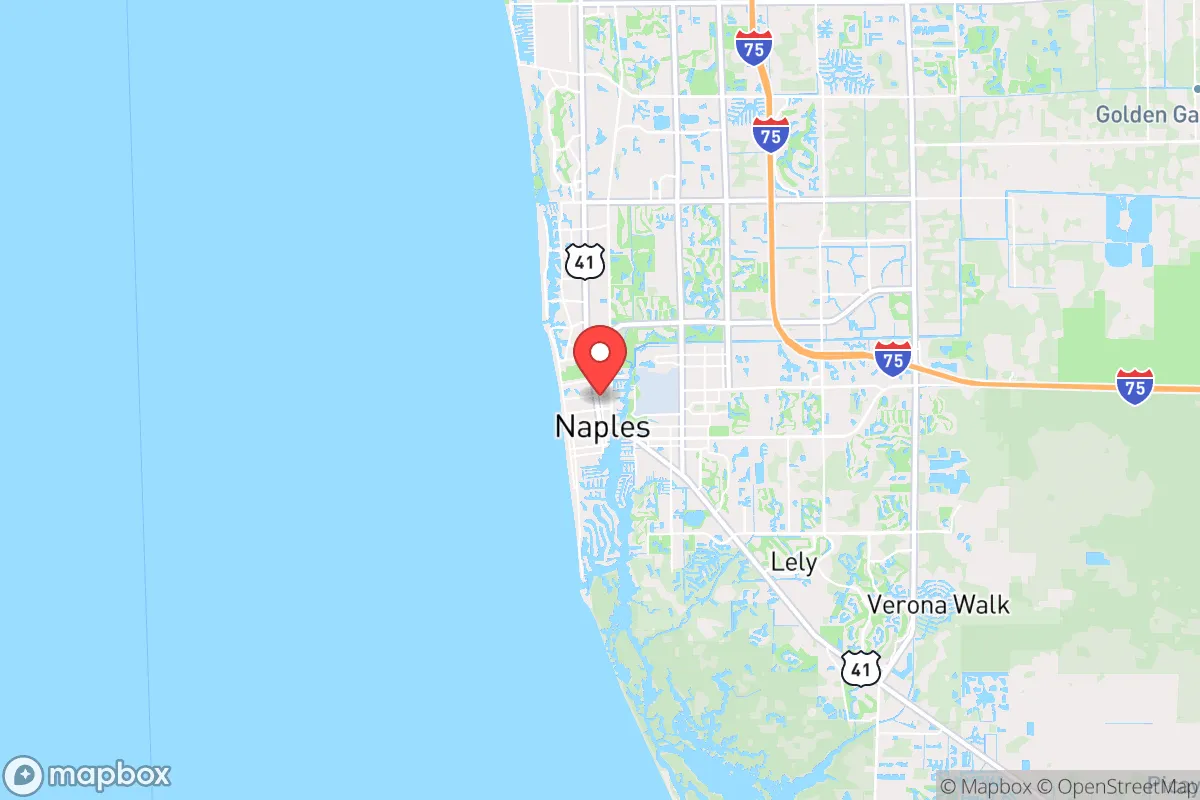
District shown is the primary district for this city’s centroid. Cities may span multiple districts.
Local Political AnalysisPolitical Analysis of Naples, FL
Naples and the surrounding Collier County have long been a stronghold for conservative values, and that hasn't changed much, even as the rest of the state sees some shifts. The Cook Political Report gives this area a PVI of R+14, which means it votes about 14 points more Republican than the national average. That’s a solid, reliable red, and it’s been that way for decades. You can feel it in the local government, the school board meetings, and just about every civic conversation. The real story, though, is that while the core is still deeply conservative, you’re starting to see a little more noise from the progressive side, especially in the newer developments and among the seasonal crowd. It’s not a takeover by any means, but it’s something to keep an eye on if you value limited government and personal freedom.
How it compares
If you drive just a few miles north into Lee County, you’ll hit Fort Myers, which is a different animal entirely. Fort Myers and especially Cape Coral have a more mixed political scene, with a noticeable uptick in progressive activism and local candidates pushing for higher taxes and more regulations. Naples, by contrast, feels like a fortress of common sense. The city council and county commission here are overwhelmingly Republican, and they’ve fought hard to keep property taxes low and zoning laws friendly to homeowners and small businesses. The contrast is stark: in Naples, you can still build a fence without a six-month permit battle, and your property rights are generally respected. In some of the neighboring towns, you’re starting to see the kind of government overreach that makes you wonder if they’ve forgotten the Constitution. That’s the big difference—Naples still remembers what freedom looks like.
What this means for residents
For the people who live here full-time, the political climate means you get to keep more of your hard-earned money and live your life without a bunch of unnecessary red tape. The local government is generally pro-business and pro-property rights, which is why you see so many successful small shops and family-run restaurants thriving. There’s no push for the kind of woke policies that are ruining other cities—no defunding the police, no sanctuary city nonsense, no heavy-handed mask mandates that last forever. The schools here still teach actual academics, not social justice indoctrination. That said, you do have to stay vigilant. The seasonal residents and some of the new transplants from blue states bring their voting habits with them, and every few years there’s a push to raise the millage rate or add some new regulation on short-term rentals. So far, the long-time residents have held the line, but it’s a constant battle to keep Naples from turning into another Fort Lauderdale.
One of the biggest cultural distinctions you’ll notice is the strong emphasis on personal responsibility and community self-reliance. Naples isn’t the kind of place where people look to the government to solve every little problem. You see it in the way the neighborhoods organize their own security patrols, the way the churches run their own food pantries, and the way the local business owners support each other without asking for a handout. There’s a real sense that freedom comes with responsibility, and that’s something you don’t find in many places anymore. The long-term outlook is cautiously optimistic, but only if the conservative majority stays engaged and doesn’t let the progressive drift take hold. If you’re looking for a place where your rights are still respected and the government stays out of your business, Naples is still one of the best bets in Florida. Just don’t take it for granted—you have to show up and vote to keep it that way.

State Political ClimatePolitical Climate in Florida
State Political AnalysisPolitical Environment in the State
Florida has transformed from a classic swing state into a solidly Republican-leaning powerhouse over the past two decades, with registered Republicans now outnumbering Democrats by over 800,000 voters as of 2024. The state voted for Donald Trump by +3.4 points in 2020 and by a wider +13 points in 2024, a dramatic rightward shift driven by massive in-migration from blue states and a growing Hispanic electorate that has moved toward the GOP. The coalition is a mix of native conservatives, transplants from the Northeast and Midwest seeking lower taxes and fewer restrictions, and a rapidly growing Cuban-American and Venezuelan-American population in South Florida that has become reliably Republican.
Urban vs. rural divide
The political map of Florida is starkly divided. The major urban centers—Miami-Dade County, Orlando (Orange County), and Tampa (Hillsborough County)—have historically leaned Democratic, but Miami-Dade has been flipping hard to the right. In 2020, Trump lost Miami-Dade by only 7 points, a massive shift from Hillary Clinton’s 29-point win there in 2016. By 2024, Trump actually won Miami-Dade outright, a seismic event for a county that was once the bedrock of Democratic power in the state. Meanwhile, the sprawling suburbs of Jacksonville (Duval County) and Fort Myers (Lee County) are deeply red, with Lee County voting +30 points for Trump in 2024. The rural Panhandle—places like Panama City and Tallahassee’s surrounding counties—is among the most conservative territory in the country, often voting +40 to +50 points Republican. The divide isn’t just urban vs. rural; it’s also coastal vs. interior, with the Atlantic coast from Palm Beach north to Daytona Beach showing more purple tendencies, while the Gulf Coast from Naples to Clearwater is solidly red.
Policy environment
Florida’s policy environment is a conservative’s dream, with a low-tax, low-regulation posture that has made it a magnet for businesses and families fleeing high-cost states. There is no state income tax, a constitutional cap on property tax increases (the Save Our Homes amendment), and a right-to-work law that keeps unions weak. The state’s education policy has been a national flashpoint: Governor Ron DeSantis pushed through the Parental Rights in Education Act (HB 1557, often called the “Don’t Say Gay” law by critics), which prohibits classroom instruction on sexual orientation and gender identity in grades K-3, and the Stop WOKE Act (HB 7), which restricts critical race theory training in schools and workplaces. School choice is aggressively expanded, with the Family Empowerment Scholarship program giving tens of thousands of students vouchers for private or homeschool options. Healthcare policy is light-touch: no state-level mask or vaccine mandates were ever imposed, and the state banned vaccine passports. Election laws were tightened after 2020 with SB 90, which limited drop boxes, required voter ID for mail ballots, and restricted third-party ballot collection—all measures that Democrats decried as suppression but that Republicans say ensure integrity. The state also passed a constitutional carry law in 2023, allowing permitless concealed carry of firearms.
Trajectory & freedom
On the freedom front, Florida is clearly moving in the direction of expanded personal liberty, especially for conservatives. The constitutional carry law (HB 543) eliminated the need for a permit to carry a concealed firearm, a major win for Second Amendment advocates. The Parental Rights in Education Act and the Stop WOKE Act have been upheld in court, reinforcing the idea that parents—not the state—control their children’s education. The state also passed SB 258, which prohibits transgender girls from participating in female sports in K-12 and college, and SB 254, which bans gender-affirming care for minors. On the economic freedom side, the state has resisted new taxes and has actually cut the corporate income tax rate from 5.5% to 4.5%. However, there are concerns: the state’s property insurance market is in crisis, with premiums skyrocketing due to litigation and hurricane risk, and the state has not addressed this with meaningful tort reform. Also, the state’s Live Local Act, while aimed at affordable housing, has been criticized for preempting local zoning laws, which some see as a government overreach into property rights. Overall, the trajectory is toward more individual freedom in cultural and economic spheres, but with some bureaucratic friction in housing and insurance.
Civil unrest & political movements
Florida has seen its share of political flashpoints, but they are less about street protests and more about organized legal and legislative battles. The most visible unrest came in 2020, when Miami and Orlando saw Black Lives Matter protests, but they were smaller and less destructive than in Portland or Seattle. The state’s response was aggressive: DeSantis created the Office of Election Crimes and Security and pushed for enhanced penalties for rioting. Immigration politics are a constant undercurrent, especially in South Florida, where the Miami-Dade County Commission passed a resolution declaring the county a “sanctuary county” in 2017, only to see it reversed in 2019 under state pressure. The state passed SB 1718 in 2023, which requires businesses with 25+ employees to use E-Verify, bans local governments from providing IDs to undocumented immigrants, and makes transporting undocumented immigrants into the state a crime. This law has been challenged in court but remains in effect. Election integrity remains a hot topic: the 2020 election in Florida was widely seen as smooth and secure, but the state has continued to purge voter rolls and tighten rules. There is no serious secession or nullification movement in Florida, but there is a strong strain of “Florida Man” libertarianism that resists federal overreach, particularly on environmental regulations and immigration enforcement.
Projection
Over the next 5-10 years, Florida is likely to become even more conservative, driven by demographic trends. The state is adding about 1,000 new residents per day, most of whom are coming from high-tax, high-regulation states like New York, California, and Illinois. These transplants are disproportionately conservative or libertarian-leaning, seeking lower taxes and more personal freedom. The Hispanic vote, which is now about 20% of the electorate, is shifting rightward, especially among Cuban-Americans in Miami-Dade and Venezuelan-Americans in Kendall and Doral. The state’s Republican supermajority in the legislature is likely to persist, meaning more conservative policies on education, guns, and taxes. However, there are risks: climate change and hurricane risk could slow in-migration, and the property insurance crisis could become a political liability. Also, the state’s growing population of young, college-educated voters in Orlando and Tampa could eventually moderate the politics, but that shift is at least a decade away. For now, Florida is on a trajectory to become the most important red state in the country, a laboratory for conservative governance that other states will emulate.
For a new resident, the bottom line is this: Florida offers a high degree of personal freedom, low taxes, and a government that is actively pushing back against progressive cultural trends. You will find a state where your Second Amendment rights are protected, your children’s education is under your control, and your paycheck isn’t eaten by state income tax. The trade-offs are a chaotic property insurance market, intense summer heat, and a political environment that can feel like a culture war battlefield. If you value liberty and are willing to deal with the practical challenges of living in a fast-growing, hurricane-prone state, Florida is as good as it gets in 2026. Just be prepared for the traffic in Miami and the humidity in Jacksonville—and know that your vote will count in a state that is shaping the future of the country.
* Values derived from national, state, county, city and local statistics and may differ in a specific area. Last updated: 2026-04-27T14:46:55.000Z
Narrative content on this page is AI-generated and may contain mistakes. Verify any details that matter before acting on them.
ReloMaps may earn a commission from affiliate links at no extra cost to you.

