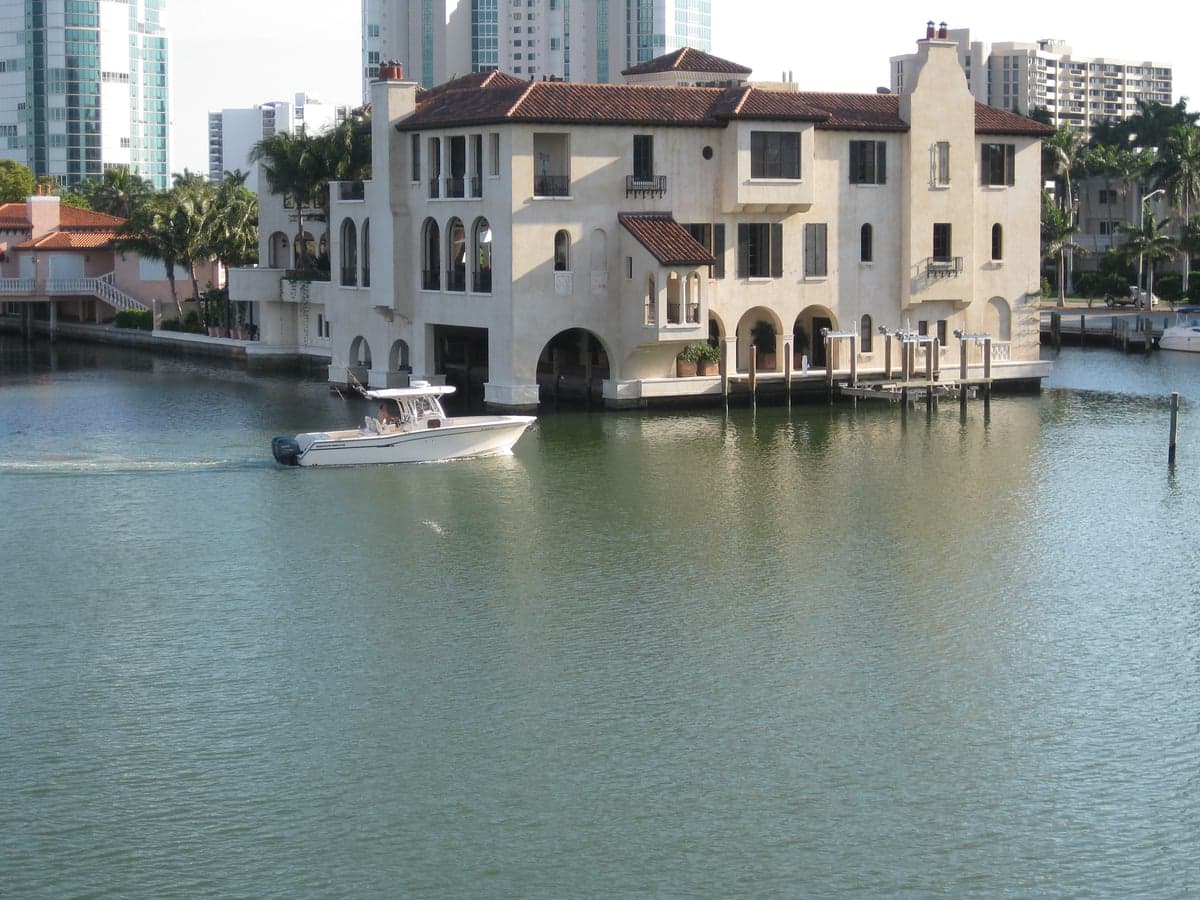
Photo: Wikipedia
Strategic Assessment of Naples, FL
Meaningful friction. Expect exposure to either population pressure, blast zones, or natural disaster risk. Consider buying a retreat property.
What does the Strategic Assessment tell us?
Our Strategic Assessment grades tactical survivability of an area. Major population centers, military targets, fallout zones, natural disasters, and border exposure all drive risk — lower exposure means a more defensible position in a crisis.
This is heavily inspired by Joel Skousen's Strategic Relocation book. Highly recommended you checkout the book ($)What does this tell us?
Our Strategic Assessment grades tactical survivability of an area. Major population centers, military targets, fallout zones, natural disasters, and border exposure all drive risk — lower exposure means a more defensible position in a crisis.
This is heavily inspired by Joel Skousen's Strategic Relocation book. Highly recommended you checkout the book ($)Strategic Pillars

Key Distances
Regional Safe Places
Below is our recommended "safe zones" in Florida and the surrounding area based on our strategic heuristics. For most people, it's unrealistic to live in a “safe zone” full-time due to work, family or other personal reasons. They tend to be more rural. However, many of these areas are perfect for second homes and retreat properties that double as a vacation home or even a short-term rental.

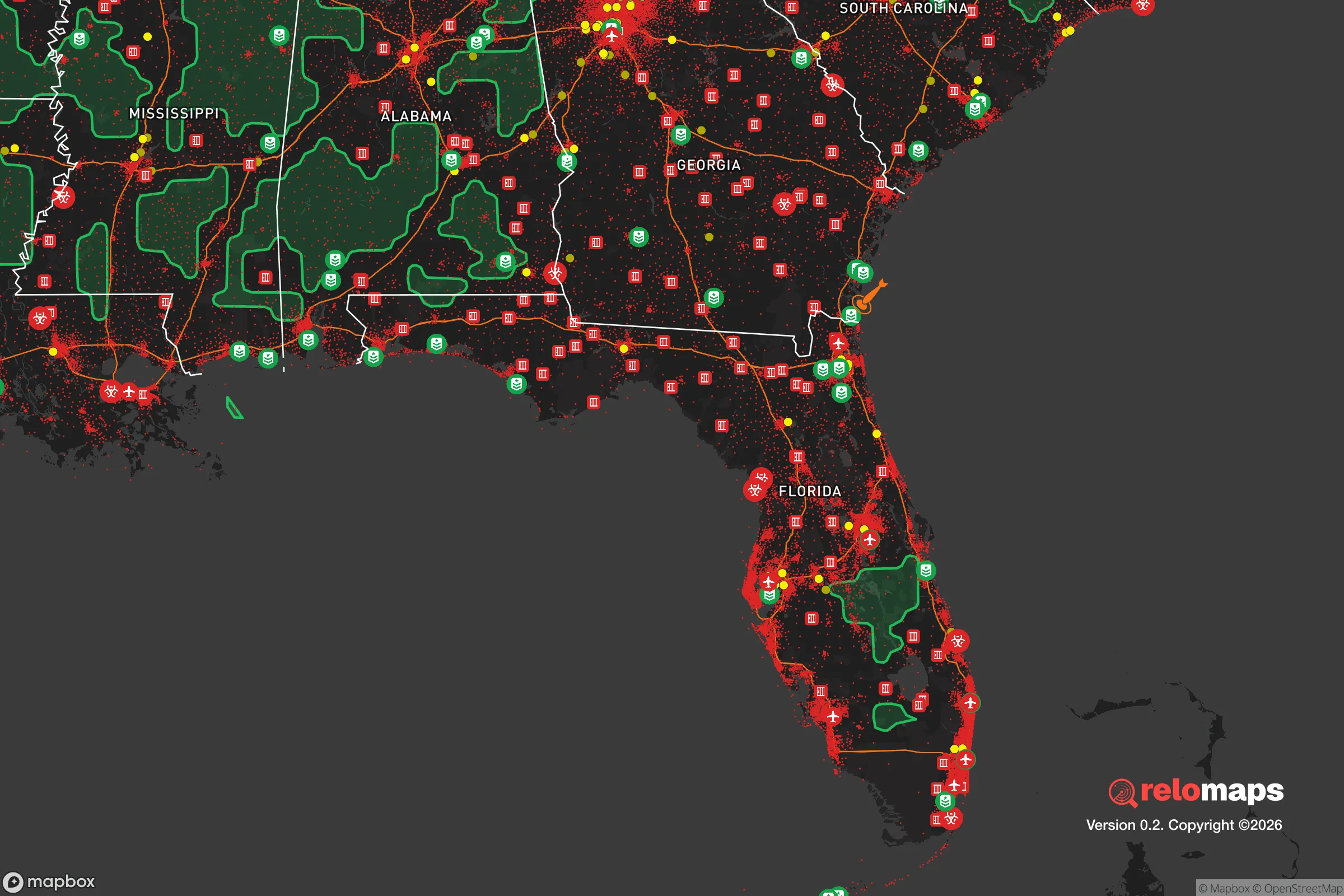


Important Note: For informational purposes only. This does not mean nothing bad ever happens in the green zones. Please use common sense. This is based on public data and modeled with AI. We tried to take a conservative approach but mistakes happen. We update this regularly as new information becomes available.
Solar Generator Recommendations
Backup power matters more here than in safer locations. We've picked three solar generators across budgets and capacity tiers — start with the budget unit if you only need a few essentials, or step up if you want to run a fridge and HVAC for days at a time.

Jackery Portable Power Station Explorer 300
Budget OptionPower on the Go: Weighing only 11 lbs, it's convenient to set up and store with book-sized foldable solar panels

BLUETTI Portable Power Station AC180
Designed for both indoor and outdoor scenarios, AC180 is highly capable as it has a robost capacity and continuous output power.

EF ECOFLOW DELTA Pro Ultra Power Station
Upgraded PickEcoFlow DELTA Pro Ultra is a whole-home energy system designed to grow with your family. Integrated with the Smart Home Panel 2, it scales to meet your evolving energy needs — keeping your home powered, intelligent, and secure through every stage of life.
We earn a commission, at no additional cost to you.
Strategic Assessment Analysis
Naples, Florida, offers a strategic relocation option for those prioritizing resilience and geographic insulation, but it comes with distinct trade-offs. Situated on the southwestern Gulf Coast, the city benefits from a position that is removed from the major metropolitan corridors of Miami, Fort Lauderdale, and Tampa, reducing exposure to the cascading effects of urban unrest, infrastructure collapse, or mass casualty events that could cripple those hubs. The area’s natural barriers—the Everglades to the east and the Gulf of Mexico to the west—create a physical buffer that limits easy access by land, while the local economy’s reliance on high-net-worth residents and tourism has fostered a robust private security and emergency services infrastructure. However, this same isolation introduces vulnerabilities, particularly regarding supply chain dependency and hurricane exposure, which must be weighed carefully by anyone serious about long-term preparedness.
Geographic position and natural advantages for long-term security
Naples sits at the southern edge of the Florida peninsula, roughly 120 miles west of Miami and 140 miles south of Tampa, placing it outside the immediate blast radius of any major population center. The city is flanked by the Everglades National Park to the east and the Ten Thousand Islands to the south, creating a natural moat that complicates any large-scale movement of people or goods into the area. This geography makes Naples one of the more defensible locations in the state, as the only primary land routes are via Interstate 75 and U.S. Highway 41, both of which can be monitored or controlled with relative ease during a crisis. The local topography is flat and low-lying, but the area’s extensive network of canals and waterways provides alternative transportation routes for those with boat access, a critical advantage if roadways become impassable. The climate is subtropical, with mild winters and hot, humid summers, which supports year-round agriculture and reduces the need for heating fuel—a practical benefit for off-grid living. The region’s natural resources include abundant freshwater from the Biscayne Aquifer, though saltwater intrusion is a growing concern, and the Gulf waters offer fishing and shellfish harvesting opportunities that can supplement food supplies.
Risks, exposures, and proximity to fallout-relevant landmarks
The most significant risk to Naples is its exposure to Atlantic hurricane activity, with the city lying in a zone that has historically seen direct hits from Category 3 and higher storms. Hurricane Ian in 2022 caused catastrophic flooding and wind damage, and the area’s low elevation—averaging just 10 feet above sea level—makes storm surge a persistent threat. Evacuation routes are limited to I-75 and U.S. 41, both of which can become gridlocked, so a prepper must have a hardened shelter or a plan to ride out storms with at least two weeks of supplies. Beyond weather, Naples is within 100 miles of the MacDill Air Force Base in Tampa, a strategic military installation that could become a target in a major conflict, though the risk of direct fallout is low given the prevailing winds. The city’s proximity to the Everglades also means that any biological or chemical incident originating from agricultural or industrial sources in the interior could affect water quality, though the area’s reliance on deep wells provides some buffer. On the human threat side, Naples has a low crime rate relative to the state average, but the wealth disparity between the coastal enclaves and inland communities like Immokalee creates potential friction points during economic collapse. The local law enforcement presence is strong, with the Collier County Sheriff’s Office maintaining a reputation for professionalism, but a mass casualty event or civil unrest in nearby Fort Myers (30 miles north) could spill over if resources are stretched thin.
Practical resilience for a relocator: food, water, energy, and defensibility
For a relocator focused on self-sufficiency, Naples offers a mixed picture. The local food supply is heavily dependent on imports via the Port of Tampa and trucking routes, but the surrounding agricultural region—Collier County is a major producer of tomatoes, citrus, and sugarcane—provides some local sourcing options. Farmers’ markets and community-supported agriculture programs are common, and the warm climate allows for year-round gardening, though soil quality is sandy and requires amendment. Water is a more pressing concern: the city’s municipal supply comes from the shallow aquifer, which is vulnerable to saltwater intrusion and contamination from storm surge. A prepper should plan for a private well with a hand pump or a rainwater catchment system, as the average annual rainfall of 54 inches provides ample collection potential. Energy infrastructure is grid-dependent, with Florida Power & Light serving the area, but solar adoption is growing, and the region’s high sun exposure makes photovoltaic systems viable. Natural gas is available in most neighborhoods, but a backup generator or propane storage is essential for extended outages. Defensibility is a strength: Naples is a peninsula within a peninsula, with limited entry points and a geography that favors small-unit tactics over large-scale incursions. The local population skews older and wealthier, which reduces the likelihood of violent crime but also means that community resilience networks may be less developed than in rural areas. Building relationships with like-minded neighbors and joining local prepper groups or shooting clubs—there are several in Collier County—can fill that gap.
The overall strategic picture for Naples is one of calculated trade-offs. It offers a high degree of physical isolation from the chaos of major urban centers, a climate that supports year-round subsistence, and a natural defensive position that few other Florida locations can match. But that isolation comes with a price: vulnerability to hurricanes, dependence on a fragile supply chain, and a local culture that may not prioritize the hard skills needed for long-term survival. For a conservative-minded relocator who values order, low crime, and a community of like-minded individuals, Naples is a strong candidate—provided they invest in hardening their property against storms, securing independent water and power, and building a network of trusted contacts. It is not a bug-out location for the unprepared, but for those willing to put in the work, it can serve as a resilient base from which to weather the storms ahead, both literal and figurative.

* Values derived from national, state, county, city and local statistics and may differ in a specific area. Last updated: 2026-04-27T14:46:55.000Z
Narrative content on this page is AI-generated and may contain mistakes. Verify any details that matter before acting on them.
ReloMaps may earn a commission from affiliate links at no extra cost to you.

