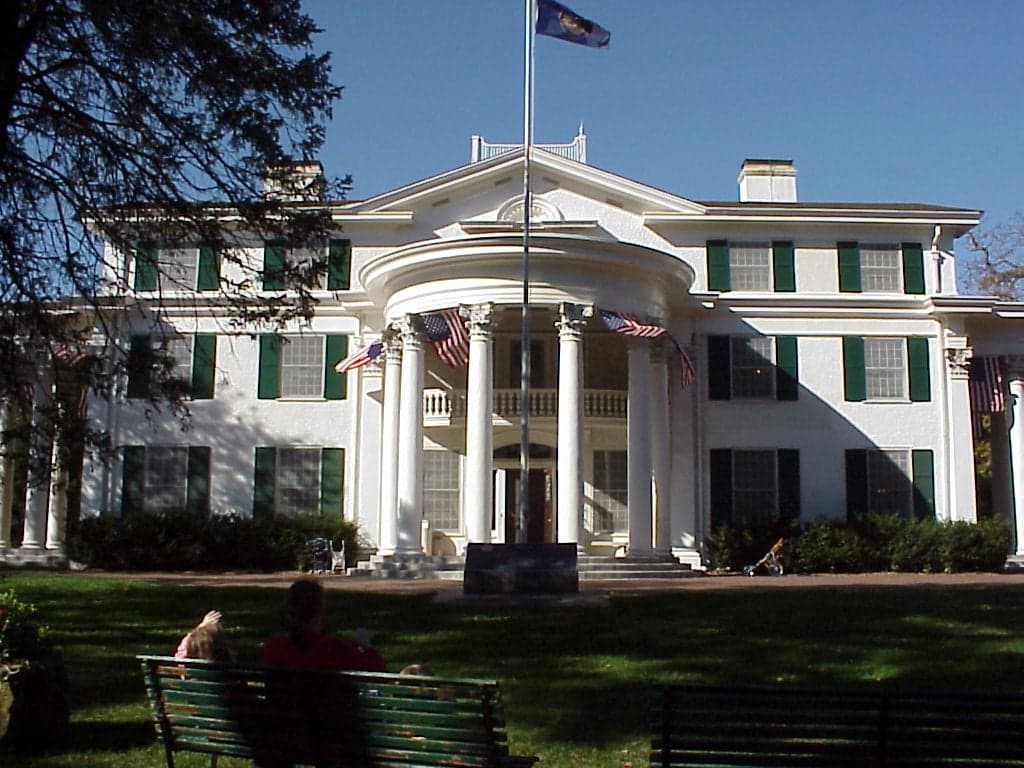
Photo: Wikipedia
Personal Sovereignty in Nebraska City, NE
Moderate friction. Expect trade-offs in some aspect of personal liberty and independence.
What does Personal Sovereignty tell us?
Personal Sovereignty measures your capacity for self-reliance and independence with minimal government friction. Higher scores mean fewer barriers between you and the way you want to live... but it assumes you have the space you need and good neighbors.
What does this tell us?
Personal Sovereignty measures your capacity for self-reliance and independence with minimal government friction. Higher scores mean fewer barriers between you and the way you want to live... but it assumes you have the space you need and good neighbors.
State Policy
Energy independence: Importer (35% of energy produced in-state)
Personal Liberty
Homesteading

Personal Liberty Analysis
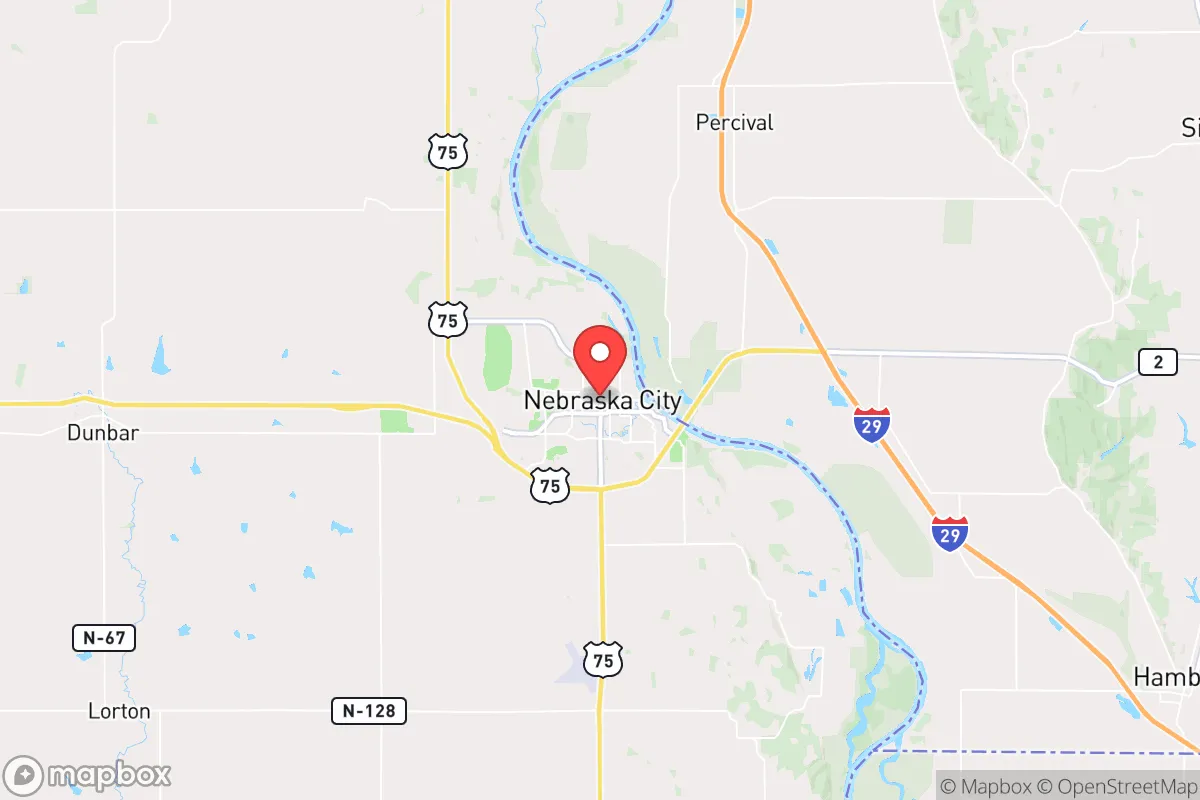
For the individual or family prioritizing maximum personal sovereignty—meaning minimal government intrusion into daily life, finances, and self-defense—Nebraska City, Nebraska, offers a notably permissive environment compared to the regulatory-heavy corridors of the East and West Coasts. This Otoe County seat, population roughly 7,500, operates under Nebraska’s generally low-tax, low-regulation state framework, but with the added buffer of a small-town culture where local officials are often accessible and less inclined toward aggressive enforcement of state-level mandates. The practical sovereignty here is high: you can own land, keep what you earn to a greater degree, and exercise self-defense rights without the bureaucratic friction found in many other regions. However, the trade-off is a slower pace of life and fewer immediate services, which aligns with a survivalist or prepper mindset that values self-reliance over convenience.
Tax burden and regulatory posture: How much of your income and property stays yours
Nebraska’s tax structure is a mixed bag for sovereignty-minded individuals. The state imposes a progressive income tax with rates from 2.46% to 6.64% (as of 2025), which is moderate compared to high-tax states like California or New York, but higher than neighboring South Dakota or Wyoming. Property taxes in Otoe County are a more significant concern: the effective rate hovers around 1.7% to 2.0% of assessed value, which is above the national average and can feel burdensome for landowners. However, Nebraska City benefits from a relatively low cost of land—acreage outside city limits can be found for $3,000–$6,000 per acre—so the absolute tax bill is manageable. The regulatory posture at the local level is light: there is no county-wide zoning in unincorporated Otoe County, and the city’s zoning code is straightforward, with no overlay districts or complex environmental regulations that plague larger municipalities. Business licensing is minimal, and there are no local income taxes. For a prepper or homesteader, the key takeaway is that while state-level taxes are not the lowest in the nation, the lack of local regulatory creep and the ability to own substantial land without onerous permitting make Nebraska City a solid choice for those who want to keep more of their resources under their own control.
Self-defense and gun law specifics: What you can own and where you can carry
Nebraska is a shall-issue state for concealed carry permits, meaning the county sheriff must issue a permit if you meet basic criteria (age 21, no felony record, completion of a firearms training course). As of 2023, Nebraska also became a constitutional carry state, allowing law-abiding adults 21 and older to carry a concealed handgun without a permit. This is a significant win for personal sovereignty: you are not required to ask the government for permission to exercise a fundamental right. There is no state-level assault weapons ban, no magazine capacity limit, and no universal background check law beyond federal requirements. Stand-your-ground laws are in effect, meaning you have no duty to retreat before using deadly force if you are lawfully present and believe it is necessary to prevent death or great bodily harm. Nebraska City itself has no local gun ordinances beyond state law, so you can openly carry a firearm in most public places, including parks and streets. The sheriff’s office in Otoe County is generally pro-Second Amendment, and permit processing times are typically under 30 days. For the survivalist, this means you can build an arsenal, carry daily, and defend your home or property without fear of running afoul of local edicts—a stark contrast to states like New York, Illinois, or California.
Self-reliance and homesteading viability: Lot sizes, zoning, and off-grid feasibility
Nebraska City’s surrounding rural areas are a blank canvas for the self-reliant individual. Within the city limits, standard residential lots range from 0.15 to 0.5 acres, but the real opportunity lies in the unincorporated county, where minimum lot sizes for agricultural or rural residential use are typically 1 to 5 acres, with no maximum. Zoning in Otoe County is minimal: there are no county-wide building codes for outbuildings, no restrictions on keeping livestock (chickens, goats, cattle) on parcels over 1 acre, and no prohibition on rainwater collection. Off-grid living is legally feasible—there are no state or local laws requiring connection to municipal water or sewer if you have a well and septic system approved by the health department. Solar panels are unregulated, and wind turbines under 100 feet are generally allowed without a permit. The city’s building code is based on the 2018 International Residential Code, but enforcement is lax for owner-occupied structures; many residents build pole barns, workshops, and even dwellings without formal permits, and the city rarely intervenes unless a complaint is filed. For the prepper, this means you can establish a self-sufficient homestead with food production, water independence, and alternative energy without battling a zoning board or facing fines—a level of freedom that is increasingly rare in suburban America.
Personal liberties: Parental rights, medical autonomy, speech, and property
Nebraska has a strong track record on several fronts of personal liberty. Parental rights are explicitly protected under state law, with a 2023 statute affirming that parents have the fundamental right to direct the upbringing, education, and healthcare of their children. This means no mandatory school curriculum on controversial topics without parental opt-out, and no state interference in medical decisions for minors without parental consent. Medical autonomy is generally respected: Nebraska has no vaccine mandate for adults, and while school vaccine requirements exist, philosophical exemptions are allowed for K-12 students. There is no state-level mask or lockdown mandate in effect, and local governments in Otoe County have not imposed any such orders since 2021. Free speech is robust—Nebraska City has no local hate speech ordinances or permit requirements for public assembly beyond standard parade permits. Property rights are strong: there is no state-level rent control, no inclusionary zoning mandates, and no forced annexation without a vote of affected landowners. The Nebraska Constitution explicitly protects the right to acquire, possess, and protect property. For the sovereignty-minded, this combination means you can homeschool your children without excessive state oversight, refuse medical treatments you disagree with, speak your mind publicly without fear of government retaliation, and use your land as you see fit—all within a legal framework that generally sides with the individual over the state.
Overall sovereignty relative to other areas
Compared to the national landscape, Nebraska City ranks in the top 20% of U.S. locations for personal sovereignty, particularly for those with a survivalist or prepper outlook. It lacks the extreme low-tax advantages of Wyoming or Alaska, but it compensates with a legal culture that is deeply skeptical of government overreach, a rural environment where enforcement is minimal, and a community that values self-reliance. The biggest sovereignty risks are property taxes (which can rise with assessed values) and the potential for future state-level mandates on issues like carbon emissions or land use, but these are distant threats. For the single individual or family seeking to live with maximum freedom—to own guns, build a homestead, control their children’s education, and keep their earnings—Nebraska City offers a realistic, affordable, and legally permissive base of operations. It is not a libertarian utopia, but it is a place where the government largely stays out of your way, and that is increasingly valuable in a world of expanding state power.

* Values derived from national, state, county, city and local statistics and may differ in a specific area. Last updated: 2026-09-21T19:02:29.000Z
Narrative content on this page is AI-generated and may contain mistakes. Verify any details that matter before acting on them.
ReloMaps may earn a commission from affiliate links at no extra cost to you.

