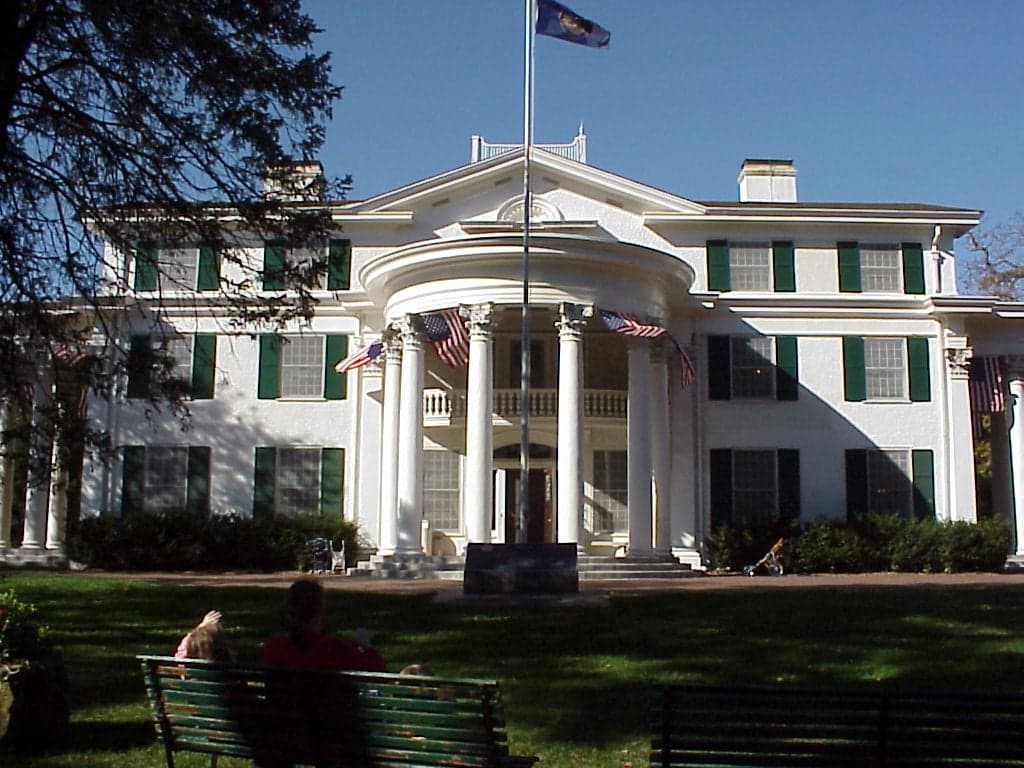
Photo: Wikipedia
Political ClimatePolitical Climate in Nebraska City, NE
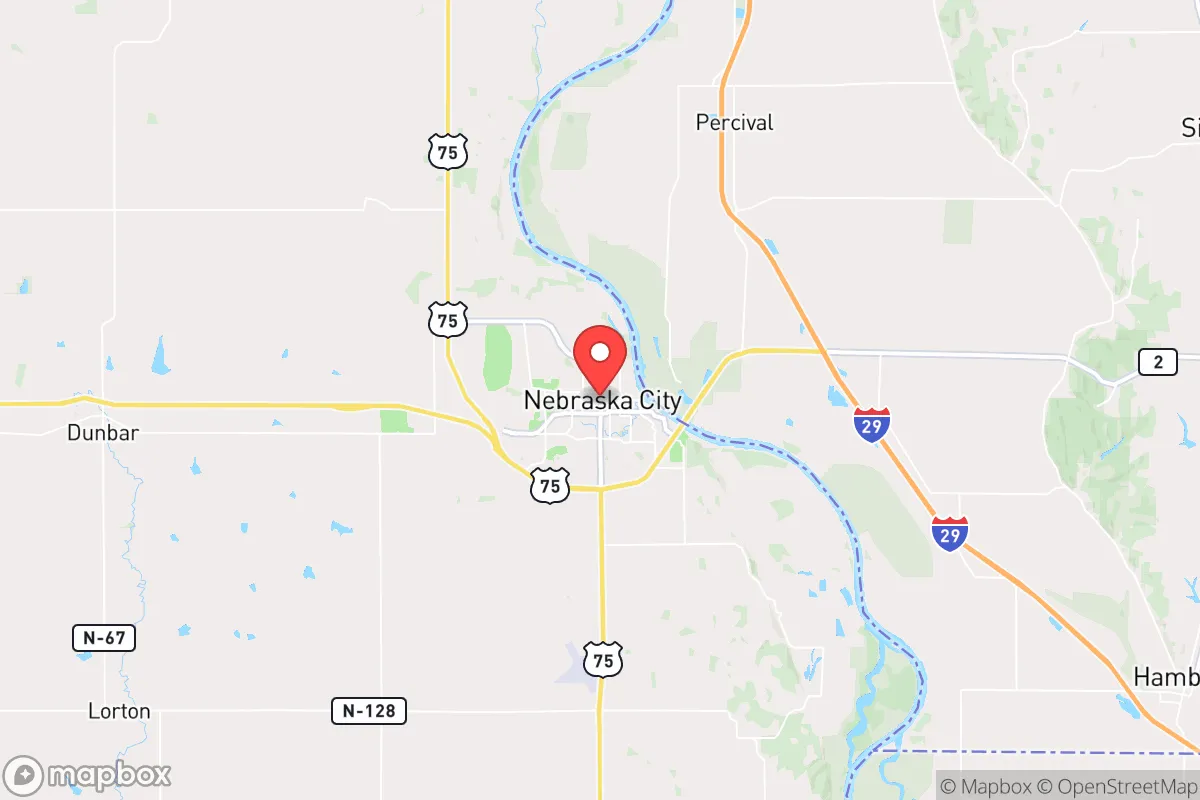
District shown is the primary district for this city’s centroid. Cities may span multiple districts.
Local Political AnalysisPolitical Analysis of Nebraska City, NE
Nebraska City leans heavily conservative, and that’s not just a feeling—it’s baked into the numbers. The area carries a Cook PVI of R+27, meaning it votes about 27 points more Republican than the national average, and that’s been a steady reality for as long as most folks around here can remember. You don’t see wild swings from election to election; the county goes red by a comfortable margin every cycle, and the local culture reflects that. If you’re looking for a place where traditional values and limited government are still the default, not something you have to defend at the dinner table, this is it.
How it compares
Drive thirty minutes north to Lincoln, and you’ll feel like you’ve entered a different world—the capital’s blue tilt is a stark contrast to Nebraska City’s deep red. Omaha, an hour northeast, is even more progressive, with its city council pushing policies on housing and public health that would never fly here. Even smaller towns like Plattsmouth or Falls City lean conservative, but Nebraska City is notably more consistent; you don’t get the occasional moderate or independent breaking ranks the way you might in some of the bigger county seats. The surrounding Otoe County is solidly Republican, and the local school board and city council elections tend to reflect that same preference for fiscal restraint and local control. If you’re worried about progressive ideology creeping into your backyard, this area is a bit of a holdout—for now.
What this means for residents
For daily life, the political climate means fewer surprises from the government. You’re not going to see the city council suddenly mandate mask mandates or push zoning changes that let developers run roughshod over neighborhoods. Property taxes are a perennial topic, but the local leadership generally leans toward keeping them in check rather than expanding services. The trade-off is that you won’t find the kind of public transit or social programs you’d get in a blue city, but most residents here prefer that trade. The real concern is whether the state-level shifts—like the governor’s occasional nods to federal funding for progressive pet projects—will trickle down. So far, Nebraska City’s local officials have been good at pushing back, but you have to stay vigilant. If you value the Second Amendment, you’ll be glad to know that local enforcement isn’t looking for ways to restrict it, and the county sheriff’s office takes a pretty hands-off approach to personal choices that don’t hurt anyone.
Culturally, Nebraska City is the kind of place where the Fourth of July parade still feels like a big deal, and the local churches are the social hubs. You won’t see pride flags on city buildings or hear much talk about diversity initiatives in the schools—that’s just not the priority. The biggest policy distinction is probably the local approach to land use: the city has kept its agricultural roots intact, so you won’t see the kind of overregulation that chokes out small farms or hobby operations. Long-term, the worry is that as Omaha and Lincoln grow, their political influence might spill over into state policy that affects rural areas. But for now, Nebraska City remains a place where you can live your life without the government breathing down your neck, and that’s exactly how most folks want it.

State Political ClimatePolitical Climate in Nebraska
State Political AnalysisPolitical Environment in the State
Nebraska has long been a reliably conservative state, but its political landscape is more nuanced than a simple red-state label suggests. The state’s unique unicameral, nonpartisan legislature often produces pragmatic, center-right policy, though a growing urban-rural divide and a recent shift toward more aggressive conservative governance are reshaping the terrain. Over the last 10-20 years, Nebraska has moved from a quiet, “good government” conservatism to a more assertive posture on cultural and economic issues, driven largely by a resurgent rural base and a suburban realignment.
Urban vs. rural divide
The political map of Nebraska is a study in contrasts. The state’s two major population centers, Omaha (Douglas County) and Lincoln (Lancaster County), are the primary engines of Democratic votes. Omaha, home to the state’s only competitive congressional district (NE-02), has trended blue in presidential elections, voting for Joe Biden in 2020 and Barack Obama in 2008. Lincoln, anchored by the University of Nebraska, is a more moderate Democratic stronghold, but its growth has been steady, not explosive. Meanwhile, the rest of the state is deeply red. The rural counties of the Sandhills, the Panhandle, and the Platte River Valley routinely deliver 70-80% of their votes for Republican candidates. A key flashpoint is Sarpy County, a suburban ring south of Omaha. Once a reliable Republican bastion, it has shown signs of softening, with some precincts shifting toward Democrats in recent cycles, though it still leans right overall. The city of Grand Island (Hall County) is a bellwether: a mix of agricultural, manufacturing, and a growing Hispanic population, it has remained reliably Republican but with a more moderate, business-friendly flavor. Scottsbluff in the Panhandle is a conservative stronghold, while Norfolk in the northeast is a classic example of rural, family-values conservatism. The divide isn’t just about population density; it’s about culture. Rural Nebraskans feel increasingly alienated from the coastal and urban values they see dominating national media, and this has fueled a more combative, populist strain of conservatism in the state legislature.
Policy environment
Nebraska’s policy environment is generally favorable for conservatives, but with some notable wrinkles. The state has a flat income tax that was recently cut from 6.84% to 5.84%, with a path to 3.99% by 2027, a major win for fiscal conservatives. Property taxes, however, remain a perennial pain point, especially for farmers and ranchers, and the legislature has struggled to deliver meaningful relief. The state’s regulatory posture is light, with a right-to-work law and minimal business licensing hurdles. On education, Nebraska has seen a fierce battle over school choice. In 2023, the legislature passed a bill creating a tax-credit scholarship program for private school students, a major victory for parental rights, though it faced a veto override fight. The state also passed a law requiring schools to adopt policies on the use of restrooms and locker rooms based on biological sex, a clear win for those concerned about government overreach in gender ideology. Healthcare policy is a mixed bag. Nebraska expanded Medicaid under the Affordable Care Act via a ballot initiative in 2018, a move that rankled many conservatives but was seen as pragmatic. The state has also enacted some of the strongest pro-life laws in the nation, including a 12-week abortion ban passed in 2023, with exceptions for rape, incest, and the life of the mother. Election integrity is a strong point: Nebraska requires voter ID, has clean voter rolls, and conducts elections with paper ballots, giving residents confidence in the system.
Trajectory & freedom
The trajectory in Nebraska is decidedly toward more freedom in several key areas, but with some concerning counter-currents. The most significant recent expansion of liberty is in the realm of gun rights. In 2023, Nebraska passed a constitutional carry law (LB 77), allowing law-abiding citizens to carry a concealed handgun without a permit. This was a massive win for Second Amendment advocates and a clear signal that the state values personal responsibility over government licensing. On parental rights, the aforementioned school choice and bathroom bills represent a clear pushback against federal and bureaucratic overreach. The state also passed a law banning gender-affirming care for minors (LB 574), a controversial but principled stand for those who believe children should not be subjected to irreversible medical procedures. However, there are warning signs. The state’s property rights have been under threat from the Keystone XL pipeline saga, where eminent domain was used to benefit a private corporation, a move that angered many landowners and libertarian-leaning conservatives. Additionally, the state’s tax burden, while improving, remains higher than some of its neighbors like South Dakota and Wyoming, which have no income tax. The biggest threat to freedom, however, is the creeping influence of federal mandates and the potential for a future Democratic governor or attorney general to enforce them aggressively. For now, the state legislature is firmly in conservative hands, and the trend is toward more personal autonomy, not less.
Civil unrest & political movements
Nebraska is not a hotbed of civil unrest, but it has seen its share of political flashpoints. The most visible in recent years was the 2020 George Floyd protests in Omaha and Lincoln, which saw some property damage and clashes with police, but were far less intense than in larger cities. The Black Lives Matter movement has a presence in Omaha, but it is not a dominant force. On the right, the Nebraska Republican Party has seen a fierce internal battle between the establishment wing and a more populist, Trump-aligned faction. This has led to primary challenges and a shift in rhetoric, but not to widespread street-level activism. The immigration issue is a live wire, particularly in Grand Island and South Sioux City, where meatpacking plants have attracted a large Hispanic workforce. There have been local debates over sanctuary policies, but Nebraska has no sanctuary cities, and state law prohibits them. The most significant political movement in recent years has been the fight over abortion. After the Dobbs decision, pro-life activists successfully pushed for the 12-week ban, but a ballot initiative to enshrine abortion rights in the state constitution is expected in 2024, which could be a major flashpoint. Election integrity has been a topic of discussion, but not of major controversy, as the state’s systems are widely trusted. A new resident would find a generally peaceful, law-abiding state, but with a palpable tension between the growing urban centers and the rural, conservative heartland.
Projection
Over the next 5-10 years, Nebraska is likely to become more conservative, not less, but with a sharper edge. The key demographic driver is the continued out-migration of young, educated liberals from Omaha and Lincoln to coastal cities, and the in-migration of conservatives from high-tax states like California and Illinois, who are drawn to Nebraska’s lower cost of living and cultural values. The rural areas will continue to lose population, but their political influence will be magnified by the state’s nonpartisan, one-house legislature, which gives rural districts outsized power. The biggest wildcard is the suburban shift. If Sarpy County and similar areas continue to drift left, it could make the state more competitive at the statewide level, but the legislature will likely remain firmly conservative. The tax reform trajectory is positive, with the income tax cuts likely to be fully phased in, making Nebraska more competitive. The school choice movement will continue to gain ground, potentially leading to a universal education savings account program. The abortion debate will be a recurring battle, but the pro-life position is likely to hold in the legislature, even if a ballot initiative temporarily changes the landscape. The biggest risk to freedom is the potential for a future Democratic governor to veto conservative legislation, but that scenario seems unlikely given the current political winds. A new resident moving in now should expect a state that is increasingly assertive in defending traditional values, with a growing economy and a tax burden that is finally becoming more manageable.
Bottom line for a new resident: If you’re looking for a state that respects your right to live your life without excessive government interference, Nebraska is a solid bet. You’ll find a strong economy, a culture that values hard work and self-reliance, and a political system that is increasingly aligned with conservative principles. The urban-rural divide is real, but if you choose your community wisely—whether it’s the quiet conservatism of Norfolk, the agricultural heartland of Grand Island, or the suburban comfort of Papillion—you’ll find a place where your values are respected and your freedoms are protected. Just keep an eye on property taxes and the ongoing fight over school choice; those are the battles that will define the next decade.
* Values derived from national, state, county, city and local statistics and may differ in a specific area. Last updated: 2026-09-21T19:02:29.000Z
Narrative content on this page is AI-generated and may contain mistakes. Verify any details that matter before acting on them.
ReloMaps may earn a commission from affiliate links at no extra cost to you.

