Photo: Wikipedia
Political ClimatePolitical Climate in New Haven, CT
District shown is the primary district for this city’s centroid. Cities may span multiple districts.
Local Political AnalysisPolitical Analysis of New Haven, CT
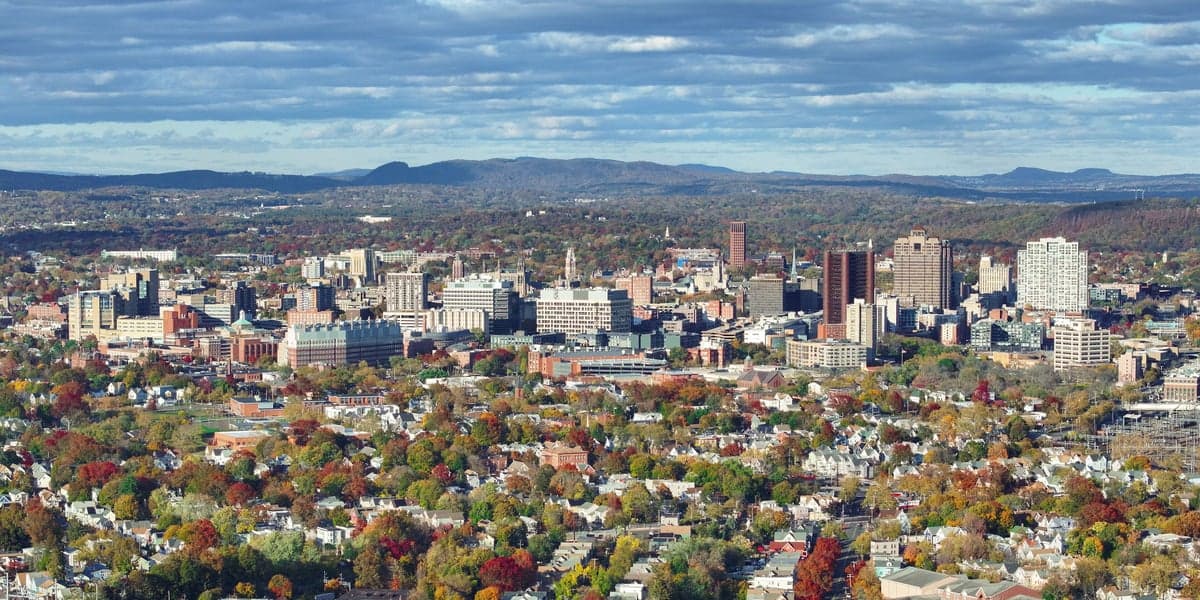
New Haven’s political climate has been solidly blue for decades, and the Cook PVI of D+8 confirms what anyone who’s lived here knows: this is a one-party town. The city hasn’t voted Republican in a presidential race since the 1980s, and the local machine—dominated by progressive Democrats—has only tightened its grip. I’ve watched the shift from a moderate, working-class Democratic base to a much more activist, left-leaning government over the last 15 years. It’s not just about party labels anymore; it’s about a governing philosophy that increasingly prioritizes ideological conformity over practical governance.
How it compares
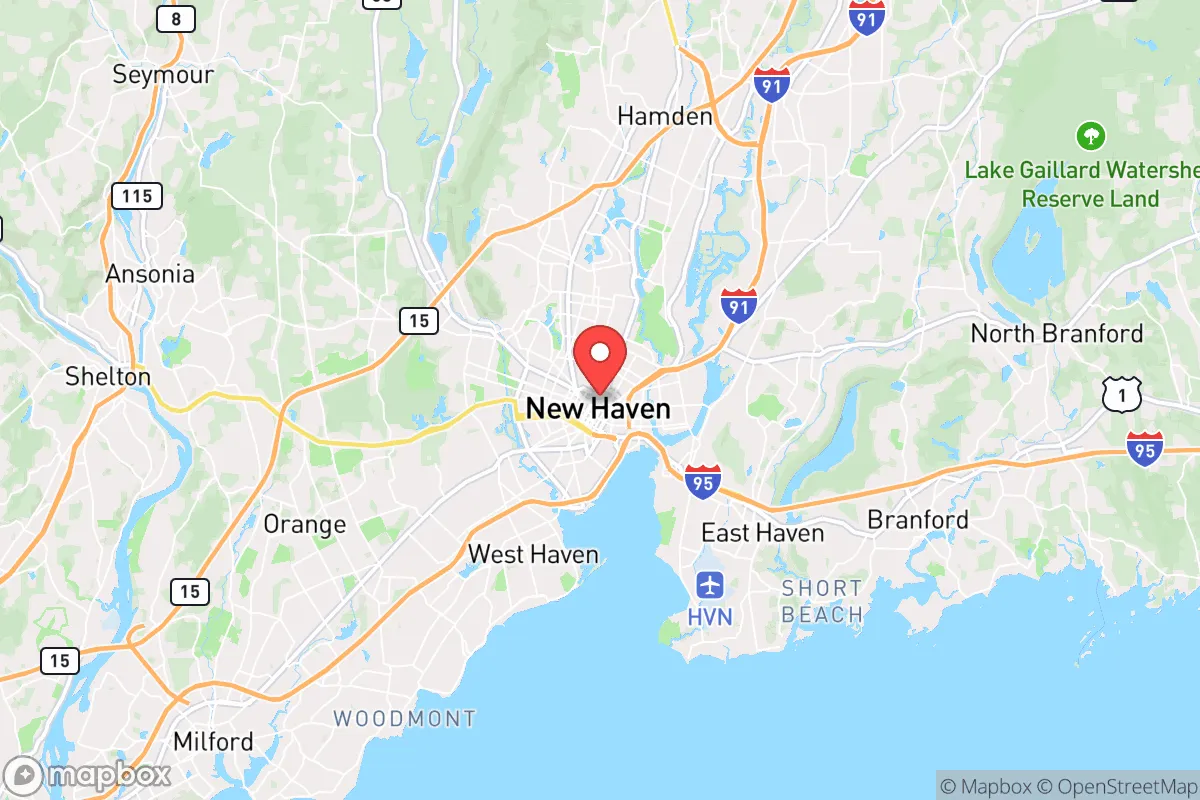
Drive 15 minutes in almost any direction and you’re in a different world. Hamden and West Haven lean left but still have a noticeable moderate streak, with more balanced local councils and less aggressive policy pushes. Head north to Wallingford or east to North Haven, and you’ll find towns that vote reliably Republican in local races, with lower taxes and a much more hands-off approach to business and property rights. Even Milford, just south, has a strong independent and conservative presence. New Haven itself, though, is an island of progressive governance. The contrast is stark: while surrounding towns are debating school budgets and zoning, New Haven’s city hall is focused on sanctuary city expansions, police reform that has tied officers’ hands, and a push for rent control that has made landlords flee the market.
What this means for residents
For the average person living here, the political climate translates directly into daily hassles and rising costs. Property taxes are among the highest in the state, and the city’s budget keeps growing faster than the economy. The school board has become a battleground for ideological fights—critical race theory and gender identity policies have taken priority over reading and math scores, which remain stubbornly low. If you own a small business, you’ve likely dealt with new paid sick leave mandates, a minimum wage hike that outpaces the region, and a permitting process that feels designed to discourage entrepreneurship. The police department, under constant scrutiny from the Board of Alders, has seen a wave of retirements and resignations, and response times for non-emergency calls have stretched to hours. Personal freedoms like the right to keep and bear arms are heavily restricted; New Haven has some of the strictest local ordinances in the state, including a ban on carrying firearms in city parks and public buildings that goes beyond state law.
What this means for residents
Looking ahead, I don’t see the trajectory changing. The city’s demographics are shifting younger and more transient, with Yale University’s student population and young professionals driving demand for more progressive policies. The long-term risk is that New Haven becomes a cautionary tale: a place where government overreach—from housing mandates to business regulations—drives out the middle class and small businesses that once gave the city its character. If you value low taxes, local control, and a government that stays out of your personal life, you’d be wise to look at the surrounding towns. But if you’re already here, you learn to pick your battles and keep your head down.

State Political ClimatePolitical Climate in Connecticut
State Political AnalysisPolitical Environment in the State
Connecticut has shifted from a classic swing state to a reliably blue stronghold over the past two decades, with Democrats now holding every statewide office, both U.S. Senate seats, and a supermajority in the state House. The state voted for Hillary Clinton by 14 points in 2016 and Joe Biden by 20 points in 2020, a dramatic leftward lurch from 2000 when George W. Bush lost it by just 5 points. The dominant coalition is a mix of wealthy suburbanites in Fairfield County, unionized labor in Hartford and New Haven, and a growing population of out-of-state transplants from New York and Massachusetts who bring progressive voting habits with them.
Urban vs. rural divide
The political map is a tale of three Connecticuts. The southwestern corner—Fairfield County, anchored by Stamford, Greenwich, and Bridgeport—is the engine of Democratic dominance. These towns are home to hedge fund managers and commuters to New York City who reliably vote blue by 20-30 points. The Hartford metro area, including New Haven, adds another deep-blue bloc driven by state government workers, university faculty at Yale and UConn, and urban minority populations. Rural eastern Connecticut, particularly Windham County and the Quiet Corner around Killingly, votes Republican but is too sparsely populated to offset the suburbs. The Litchfield Hills in the northwest, including Torrington and Winsted, are the only reliably red region, but even there, Democratic gains in the 2020s have narrowed margins. The New London area, with its submarine base and defense contractors, is a rare purple zone that has trended left as military families are outnumbered by coastal transplants.
Policy environment
Connecticut’s policy posture is aggressively progressive, with a tax burden that ranks among the highest in the nation. The state has a progressive income tax topping at 6.99%, a 7.35% corporate tax, and some of the highest property taxes in the country—Hartford and Bridgeport have effective rates above 3%. The regulatory climate is dense: the state has a paid family leave program funded by a payroll tax, a $15 minimum wage indexed to inflation, and strict environmental mandates that drive up housing costs. Education policy is dominated by the teachers’ unions, which successfully blocked significant school choice expansion; charter schools are capped, and the state’s open enrollment system is weak. Healthcare is heavily regulated, with a state-run exchange and mandates that exceed the Affordable Care Act. Election laws are among the most permissive in the Northeast: no-excuse absentee voting, same-day registration, and early voting were all expanded in 2023 under Public Act 23-5, which also mandated drop boxes in every town. Gun control is extreme—the state passed a 2023 law banning open carry, raising the purchasing age to 21, and requiring a permit for ammunition purchases, making it one of the toughest regimes in the country.
Trajectory & freedom
Personal freedom in Connecticut has been contracting steadily, especially since 2020. The 2023 gun law, HB 6667, is the most restrictive in state history, effectively eliminating the right to carry in public for most residents. Parental rights took a hit with the 2021 passage of a law allowing minors 16 and older to consent to mental health treatment without parental notification, and a 2023 law that prohibits school districts from requiring parental consent for a student’s preferred name or pronoun. Medical freedom eroded with a 2022 mandate that all schoolchildren be vaccinated against COVID-19 for in-person attendance, though that was later repealed under public pressure. Property rights are constrained by strict zoning laws that make it nearly impossible to build new housing in suburbs like Westport and Darien, driving up costs and limiting choice. On the positive side, the state did repeal its personal property tax on business equipment in 2023, a rare pro-business move. But the overall trajectory is clear: the legislature has added 50 new state mandates since 2020, from energy efficiency standards to paid sick leave expansions, all of which reduce individual and family autonomy.
Civil unrest & political movements
Connecticut has seen less overt civil unrest than neighboring New York or Massachusetts, but flashpoints exist. The 2020 Black Lives Matter protests in New Haven and Hartford were large but largely peaceful, though they led to calls to defund police that were rejected by moderate Democrats. The sanctuary state law, passed in 2013 and strengthened in 2021, prohibits local law enforcement from cooperating with ICE detainers, creating tension in towns like Danbury and Norwalk where immigration enforcement is a live issue. Election integrity controversies flared in 2020 when absentee ballot applications were mailed to all registered voters without a request, a move Republicans challenged in court but lost. The most visible political movement on the right is the Connecticut Citizens Defense League, which has organized large rallies at the state capitol against gun control, drawing thousands. On the left, the Working Families Party has become a powerful force, endorsing primary challengers to moderate Democrats and pushing the party further left. Secession rhetoric is minimal, but there is a growing "Move to Florida" sentiment among conservatives, especially in the eastern part of the state.
Projection
Over the next 5-10 years, Connecticut will likely become even more Democratic and more progressive. The demographic trends are unfavorable for conservatives: the state is losing native-born residents to Florida and the Carolinas while gaining out-of-state transplants from New York and Massachusetts who vote blue. The 2020 census showed the state’s population growing only 0.9%, the slowest in New England, and the growth is concentrated in Fairfield County’s blue suburbs. The state’s fiscal situation is precarious—pension liabilities exceed $40 billion, and the income tax base is shrinking as wealthy residents flee. This could force either a tax hike on the remaining residents or a service cut, but the political dynamic favors the former. The legislature’s supermajority means there is no check on progressive legislation; expect further gun control, a potential wealth tax, and expansion of government healthcare. For a conservative moving in now, the realistic expectation is that the state will be a one-party progressive enclave within a decade, with fewer personal freedoms and higher costs.
For a new resident, the bottom line is that Connecticut offers a high quality of life in terms of schools and infrastructure, but at the cost of significant government overreach and a political climate that is hostile to conservative values. If you value low taxes, gun rights, parental control over education, and limited government, this is not a state that will accommodate those priorities. The best you can do is settle in a red pocket like Litchfield County or Killingly, but even there, state-level policies will constrain your freedom. Most conservatives who move here end up leaving within five years—a pattern that shows no sign of reversing.
* Values derived from national, state, county, city and local statistics and may differ in a specific area. Last updated: 2026-04-30T05:54:41.000Z
Narrative content on this page is AI-generated and may contain mistakes. Verify any details that matter before acting on them.
ReloMaps may earn a commission from affiliate links at no extra cost to you.

