Photo: Wikipedia
Political ClimatePolitical Climate in Atlantic County
Showing district-level results — no local-only data available.
Local Political AnalysisPolitical Analysis of Atlantic County
Atlantic County is a political battleground that leans right of the rest of New Jersey, carrying a Cook PVI of R+5 compared to the state’s D+5. That’s a 10-point gap, and it’s not just a number on a map—it’s something you feel when you’re out here. The county has been slowly shifting redder over the last decade, especially in the rural and suburban towns, though the coastal and urban pockets still hold the line for the other side. If you’re looking for a place where your vote actually counts and where conservative values still have a fighting chance, this is it.
How it compares
New Jersey as a whole is deep blue, driven by the dense, progressive suburbs of North Jersey and the urban strongholds like Newark and Jersey City. Atlantic County is a different animal. The reddest spots are the inland towns like Hammonton, Buena, and Mullica Township, where you’ll see Trump signs on every other lawn and folks are serious about Second Amendment rights and low taxes. On the flip side, Atlantic City itself is a blue island—heavily unionized, casino-driven, and reliably Democratic. Ventnor and Margate lean blue too, but they’re more of a purple tint than deep blue. The real swing precincts are in places like Egg Harbor Township and Galloway Township, where the mix of suburban families and commuters to the casinos creates a toss-up every election cycle. In 2024, the county went for Trump by about 4 points, while the state went for Harris by 6. That gap is widening, and it’s not hard to see why: folks here are tired of the state’s overreach on everything from property taxes to pandemic mandates.
What this means for residents
For someone who values personal freedom and limited government, Atlantic County is a breath of fresh air compared to the rest of New Jersey. The county government has pushed back on some of the more aggressive progressive policies coming out of Trenton—like the strict gun laws and the push for sanctuary city status. You won’t find the same level of woke indoctrination in the local schools that you’d see in Bergen or Essex counties. That said, it’s not a conservative paradise. The county is still subject to state-level overreach, like the high property taxes (among the highest in the nation) and the recent energy mandates that are driving up costs. Locally, the biggest concern is the slow creep of progressive ideology into the school boards and municipal councils, especially in the coastal towns. If you’re thinking of moving here, keep an eye on the local elections—they matter more than the national ones for your day-to-day life.
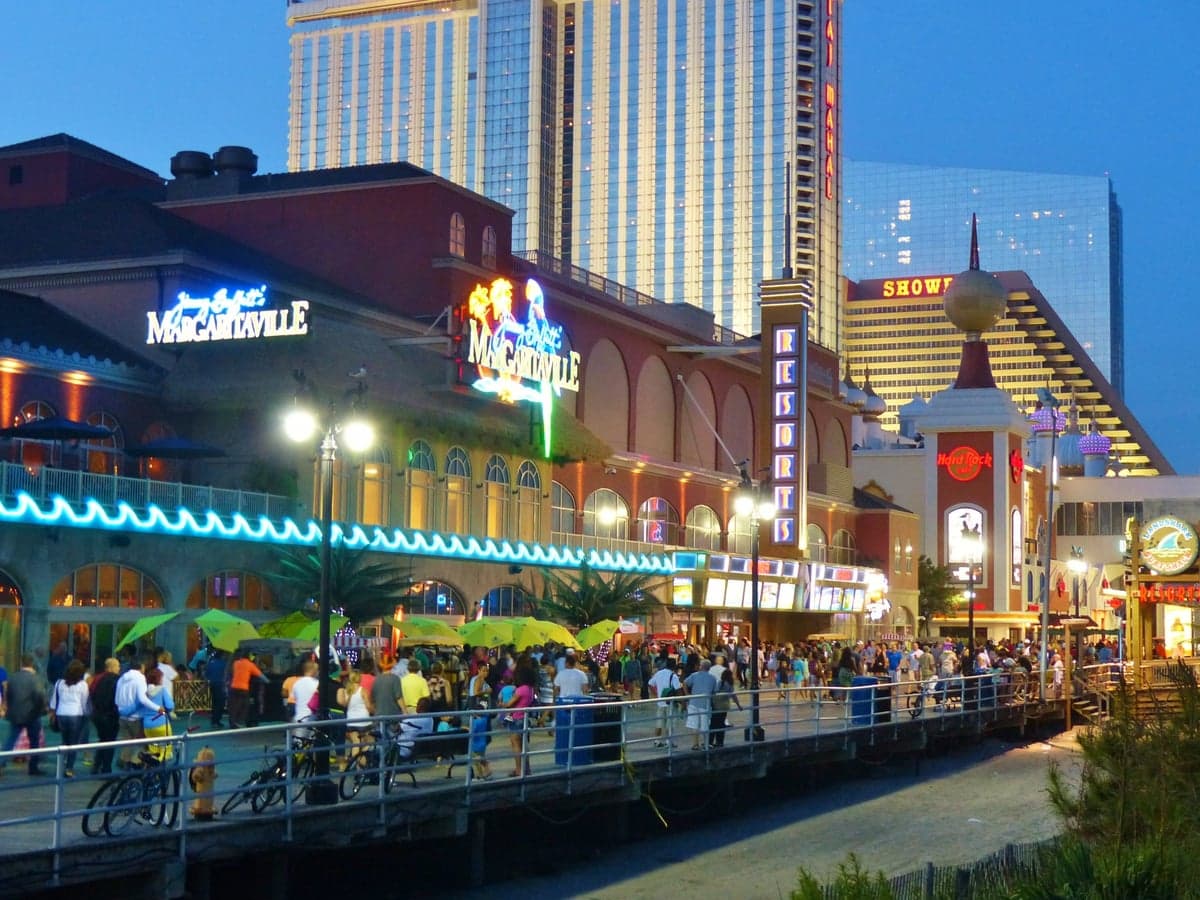
Culturally, Atlantic County is a mix of old-school Jersey grit and a growing conservative backbone. You’ve got the casinos and the boardwalk in Atlantic City, which bring a certain libertarian vibe—live and let live—but also a lot of government dependency. Inland, it’s more about farming, hunting, and family. The policy distinction that stands out is the county’s resistance to the state’s push for high-density housing and transit-oriented development. Out here, people still value their single-family homes and their pickup trucks. The biggest red flag for the future is if the state continues to impose its one-size-fits-all progressive agenda on a county that clearly doesn’t want it. For now, though, Atlantic County remains one of the few places in New Jersey where a conservative can feel like they’re not shouting into the wind.

State Political ClimatePolitical Climate in New Jersey
State Political AnalysisPolitical Environment in the State
New Jersey has long been a blue state, but its Democratic lean is more complicated than the raw numbers suggest. With a Cook PVI of D+5, the state hasn't voted for a Republican for president since 1988, but that top-line statistic masks a deeply divided electorate. Over the last 10-20 years, the state has shifted leftward on cultural and economic issues, driven largely by the massive, vote-rich suburbs of New York City and Philadelphia, while rural and exurban areas have grown more Republican. For a conservative considering relocation, the state offers a mixed bag: high taxes and progressive policies in the population centers, but also some of the strongest property rights and local control in the Northeast if you know where to look.
Urban vs. rural divide
The political map of New Jersey is a tale of two states. The northern and central counties—especially Essex (Newark), Hudson (Jersey City), and Bergen (Paramus)—are the engine of the Democratic majority. These areas are dense, diverse, and heavily influenced by union labor, public-sector workers, and a large immigrant population. In contrast, the southern and western parts of the state, including Ocean, Monmouth, and Hunterdon counties, lean reliably Republican. Sussex County is the most conservative in the state, voting +30 points for Trump in 2020. The divide isn't just geographic; it's cultural. In places like Montclair or Maplewood, you'll find progressive activism and high property taxes funding excellent schools. Drive 45 minutes west to Phillipsburg or Flemington, and you'll find gun shops, Trump flags, and a fierce independent streak. The suburbs that flipped from red to blue over the past decade—like Morris County—are where the real political tension lives, as former Rockefeller Republicans have been replaced by college-educated, socially liberal voters.
Policy environment
New Jersey's policy environment is a cautionary tale for fiscal conservatives. The state has the highest property taxes in the nation, averaging over $9,500 per year, and a progressive income tax that tops out at 10.75% for earners over $1 million. The regulatory posture is heavy: the state has its own version of the EPA (DEP), strict gun laws requiring permits to purchase and a "justifiable need" standard for carry, and a statewide paid sick leave mandate. On education, New Jersey spends more per pupil than almost any other state, but the results are uneven—wealthy suburbs get world-class schools, while urban districts like Newark and Camden struggle with chronic underperformance. Healthcare is dominated by the state's Medicaid expansion and a robust individual mandate. Election laws are moderately restrictive: no-excuse mail-in voting was made permanent in 2020, but voter ID is not required. For a conservative, the biggest red flag is the lack of school choice—charter schools are capped, and there is no universal voucher program, meaning your property taxes fund a system you may not agree with.
Trajectory & freedom
Over the past five years, New Jersey has moved decisively toward more government control, not less. The 2020 "Clean Energy Act" effectively banned new gas-powered vehicles by 2035 and mandated electric heat pumps in new construction, a direct hit on personal choice. On gun rights, the state passed the Gun Safety Act of 2022, which bans carrying in "sensitive places" like parks and private businesses unless the owner explicitly allows it—a de facto restriction on the Second Amendment. Parental rights took a hit with the 2022 "Don't Say Gay" law (actually called the "Inclusive Curriculum Law"), which requires schools to teach LGBTQ+ history, but also mandates that parents be notified of any changes to a child's gender identity—a compromise that pleases no one. Medical autonomy is limited: the state has strict vaccine mandates for schoolchildren and a COVID-era emergency powers law that gave the governor unilateral authority to shut down businesses and schools. Property rights are under pressure from the Mount Laurel Doctrine, which forces towns to build affordable housing, often overriding local zoning. The overall trajectory is toward a more managed, less free society, especially for those who value economic independence and traditional values.
Civil unrest & political movements
New Jersey has seen its share of political flashpoints. The 2020 Black Lives Matter protests were large and sometimes violent in Newark and Trenton, leading to property damage and a lasting police reform debate. On the right, the 2021 "Reopen NJ" protests at the Statehouse drew thousands opposing COVID mandates, and the 2023 "Parents' Bill of Rights" rallies in Bridgewater and Freehold highlighted growing frustration with school curriculum. Immigration is a live wire: New Jersey is a sanctuary state (since 2018), meaning local law enforcement cannot cooperate with ICE detainers, and the state has a "Driver's License for All" law for undocumented immigrants. Election integrity is a recurring concern—the 2020 election saw widespread use of mail-in ballots without signature verification, and a 2023 law made it easier to register on Election Day. The most visible flashpoint for a new resident might be the affordable housing battles in suburbs like Middletown or Holmdel, where residents fight state-mandated development that they say will change the character of their towns. These fights are a microcosm of the larger tension between local control and state power.
Projection
Looking ahead 5-10 years, New Jersey is likely to become more Democratic and more progressive, but at a slower pace than its neighbors. The in-migration of New Yorkers fleeing high costs is actually accelerating the leftward shift, as these newcomers bring their politics with them. However, the state's high cost of living is also driving out younger families and middle-class conservatives to Pennsylvania, Florida, and the Carolinas. The 2024 election results showed that while Trump improved his margins in rural areas, he still lost the state by 16 points—a sign that the Democratic base is solidifying. The biggest wild card is the affordable housing crisis: if the state continues to override local zoning, it could spark a backlash in the suburbs, but that backlash is unlikely to flip the state. For a conservative moving in now, expect to see more gun control, more green mandates, and more state control over local schools. The 2025 gubernatorial election will be a key test—if a moderate Republican like Jack Ciattarelli wins, the trajectory might slow, but a progressive Democrat will accelerate it.
For a conservative considering New Jersey, the bottom line is this: you can find like-minded communities in the western and southern counties, but you will be swimming against the tide at the state level. Your property taxes will be high, your gun rights will be limited, and your children's education will be shaped by a progressive curriculum. If you value local control and can afford the cost, places like Hunterdon County or Sussex County offer a decent quality of life. But if you're looking for a state that respects your freedom to live, work, and raise your family without constant government interference, New Jersey is not that place—and it's getting less so every year.
* Values derived from national, state, county, city and local statistics and may differ in a specific area. Last updated: 2026-05-21T09:11:36.000Z
Narrative content on this page is AI-generated and may contain mistakes. Verify any details that matter before acting on them.
ReloMaps may earn a commission from affiliate links at no extra cost to you.

