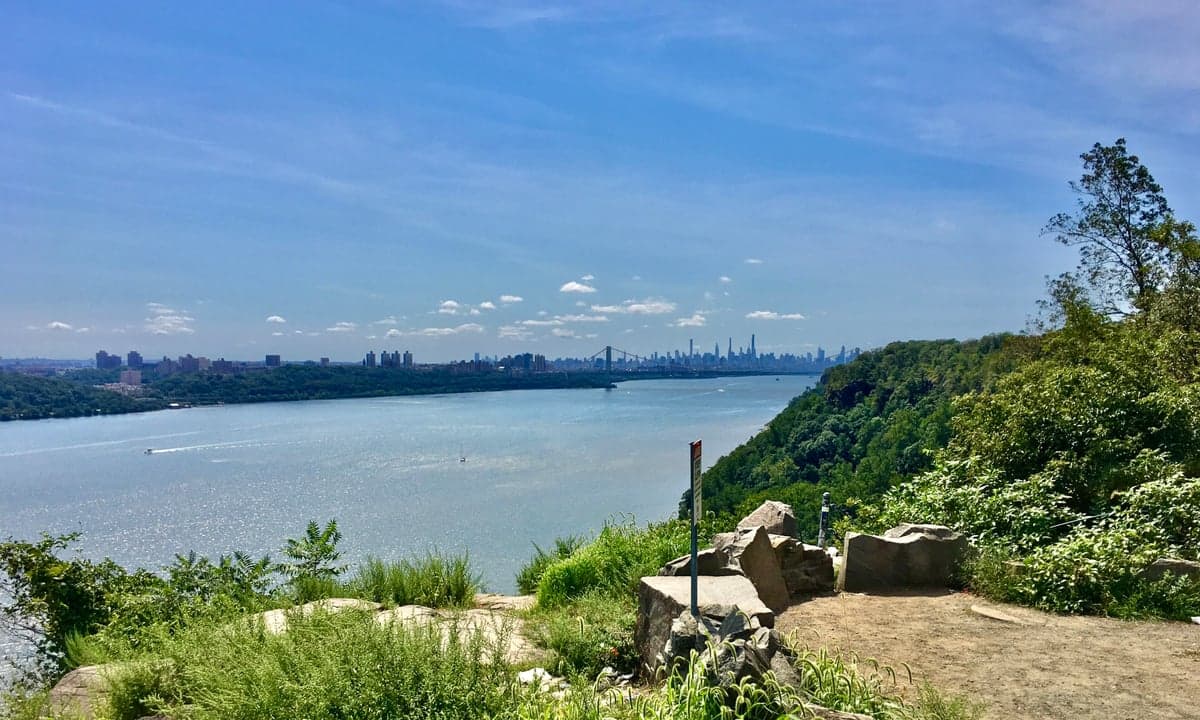
Photo: Wikipedia
Quality of Life in Bergen County
A livable area that tracks near national norms for affordability, walkability, and neighborhood health.
What does Quality of Life tell us?
Quality of Life measures an area by evaluating factors like cost of living, nearby amenities, country club access, airport proximity, socioeconomic signals and neighborhood character. For large states, this is a general average — quality of life can vary dramatically between metro areas, suburbs, and rural communities within the same state.
What does this tell us?
Quality of Life measures an area by evaluating factors like cost of living, nearby amenities, country club access, airport proximity, socioeconomic signals and neighborhood character. For large states, this is a general average — quality of life can vary dramatically between metro areas, suburbs, and rural communities within the same state.
Cost of Living
80% above national average
73%
The Real Cost of Living in Bergen County for 2026
| Tier | Individual | Family (4) |
|---|---|---|
| Survival | $30k | $56k |
| Comfortable | $115k | $169k |
| Luxury | $223k+ | $346k+ |
| Elite (Top 5%) | $276k+ | $428k+ |
Quality-of-Life Analysis
Bergen County offers a remarkably broad quality-of-life spectrum, from dense, transit-rich urban centers to quiet, wooded exurban pockets, drawing everyone from Manhattan-bound professionals to families seeking top-ranked schools and retirees looking for walkable downtowns. The county's character shifts noticeably as you move from the eastern, Hudson River-adjacent communities toward the more rural northwestern corner, with each area presenting a distinct trade-off between convenience, space, and cost. With a cost of living index of 180 (nearly double the U.S. average), a median home value of $593,200, and a median rent of $1,863, the county commands a premium, but the range of options within that premium is wide.
Largest town(s) & population centers
The county's largest population centers cluster along the Hudson River and major transit lines. Hackensack, the county seat, is the most urbanized hub, with a population exceeding 45,000, a bustling downtown anchored by the Hackensack University Medical Center, and direct NJ Transit rail service to Hoboken and New York Penn Station. Daily life here is fast-paced and walkable, with a mix of high-rise apartments, older Victorians, and a growing number of luxury rentals. Teaneck, just west of Hackensack, is a large, diverse suburb (pop. ~41,000) known for its excellent public schools, Fairleigh Dickinson University campus, and a strong sense of community with a notable Orthodox Jewish population. Fort Lee, perched on the Palisades overlooking the George Washington Bridge, offers skyline views, a dense Korean-American commercial corridor, and a 15-minute bus commute to Midtown Manhattan, making it a magnet for young professionals and empty-nesters. Paramus is the retail and commercial heart of the county, home to the Garden State Plaza and Westfield Garden State Plaza malls, but its residential neighborhoods are quieter, with large single-family homes and a median home value well above the county average. These towns share a common thread: high property taxes (among the highest in the nation) offset by exceptional public services, including top-tier school systems like those in Tenafly and Ridgewood, which are also major population centers in their own right.
Smaller towns & rural pockets
Venture northwest of the Route 17 corridor, and Bergen County transforms. Mahwah, the county's largest town by land area, straddles the Ramapo Mountains and contains the sprawling Ramapo Valley County Reservation, offering hiking, fishing, and a distinctly rural feel despite its proximity to the New York State Thruway. Its residential areas range from lakefront homes on Lake Tappan to newer subdivisions near the Sharp Electronics and Jaguar Land Rover corporate campuses. Oakland, just south of Mahwah, is a small borough (pop. ~13,000) with a historic downtown, the Ramapo River running through it, and a strong equestrian presence in its western reaches. Franklin Lakes and Wyckoff are affluent, semi-rural communities with large wooded lots, horse farms, and some of the county's lowest population densities. Alpine, on the Hudson River's Palisades, is famously home to some of the most expensive real estate in the state, with sprawling estates on winding, tree-lined roads — a rural feel at an ultra-luxury price point. Ringwood and West Milford, technically in Passaic County but adjacent to northwestern Bergen, share the same rural character: state parks, reservoirs, and a slower pace of life that feels a world away from Hackensack's bustle. These areas lack the direct rail transit of eastern towns, making the average commute of 31.3 minutes a reality only for those driving to nearby corporate parks or taking express buses to the Port Authority.
Cost & lifestyle range
The cost spread across Bergen County is dramatic. At the high end, Alpine and Saddle River routinely post median home values above $1.5 million, with property taxes often exceeding $30,000 annually. These towns offer maximum privacy, large acreage, and top-ranked schools like the Saddle River Day School. At the more accessible end, Hackensack and Lodi offer median home values closer to $450,000–$500,000, with a mix of condos, co-ops, and smaller single-family homes. Garfield and Wallington, along the Passaic River, provide some of the county's lowest housing costs, with median rents below $1,500 in some pockets, though they also have higher crime rates and lower-rated schools compared to the county average. Lifestyle varies accordingly: in eastern towns like Hoboken-adjacent Weehawken or Union City (both Hudson County, but often grouped with Bergen for commuting patterns), residents prioritize walkability and nightlife; in central towns like Ridgewood or Glen Rock, the focus is on family-oriented amenities, excellent public schools, and a vibrant downtown with independent shops; in the northwest, the appeal is space, nature, and a quieter, more private existence. The county's average commute of 31.3 minutes masks a wide range: a Fort Lee resident might commute 20 minutes to Midtown via bus, while a Mahwah resident driving to a Parsippany office might face 45 minutes each way.
Bergen County is best suited for those who can absorb its high cost of living in exchange for exceptional schools, low crime rates, and proximity to New York City. Families with school-age children thrive in the central and eastern suburbs, where school districts like Tenafly, Ridgewood, and Northern Highlands consistently rank among the state's best. Young professionals and empty-nesters gravitate toward the transit-oriented towns along the Hudson and the Pascack Valley Line. Those seeking a more rural, land-based lifestyle will find it in the northwestern corner, but should be prepared for longer commutes and fewer walkable amenities. The county's diversity — ethnic, economic, and geographic — means that within its 233 square miles, there is a Bergen County for nearly every taste, provided the budget aligns.

Crime in Bergen County
WARNING: The crime statistics are unreliable for this jurisdiction. Local authorities have either not reported or under reported their data to the FBI. This could be due to bad intentions, incompetence or technical issues. Regardless, we suggest skepticism.
Crime rates similar to the national median for U.S. locations.
Violent CrimeViolent Crime Analysis
Property CrimeProperty Crime Analysis
Crime Analysis
Bergen County is one of the safest large counties in New Jersey, with violent and property crime rates that consistently fall well below both state and national averages. The county recorded a violent crime rate of 156.7 incidents per 100,000 residents and a property crime rate of 1,048.2 per 100,000 in the most recent reporting period, figures that place it among the most secure suburban jurisdictions in the New York metropolitan area. However, safety varies significantly by municipality, and the county's proximity to Newark and New York City introduces cross-border crime dynamics that residents should understand.
Crime in context
Bergen County's violent crime rate is roughly 60% lower than the national average and about 40% lower than the New Jersey state average, while its property crime rate sits approximately 45% below the national figure. These numbers reflect a county with strong community policing, high property values, and relatively low poverty rates. The county's largest cities—Hackensack and Paterson (which straddles Passaic County but directly borders Bergen)—pull the regional crime averages upward. Hackensack, the county seat, reports a violent crime rate near 300 per 100,000, roughly double the county average, driven largely by its dense urban core and transit-oriented population. Paterson, immediately west of Bergen, has a violent crime rate exceeding 1,000 per 100,000 and contributes to spillover property crime in bordering Bergen towns such as Elmwood Park and Fair Lawn.
What residents experience
For the vast majority of Bergen County residents, daily life involves minimal exposure to violent crime. The most common offenses are larceny-theft and motor vehicle theft, which together account for nearly 70% of all property crimes. Package theft from porches and vehicle break-ins in commuter parking lots are the most frequently reported incidents, particularly in towns with robust train access like Ridgewood, Glen Rock, and Paramus. Paramus, home to one of the largest retail concentrations in the nation, experiences elevated shoplifting and vehicle burglary rates tied to its shopping districts, though violent crime there remains negligible. Residents in affluent communities such as Tenafly, Wyckoff, and Franklin Lakes report crime rates that are among the lowest in the state, with violent crime often below 50 per 100,000.
Prosecutorial philosophy in Bergen County has shifted in recent years. The Bergen County Prosecutor's Office, under current leadership, has implemented diversion programs and alternative sentencing for nonviolent offenders, reflecting a broader progressive trend seen across New Jersey's more populous counties. While these programs aim to reduce recidivism, critics note that lenient plea deals and reduced bail requirements have contributed to a rise in repeat property crime offenders, particularly in towns near the Passaic County border. Residents in communities like Lodi and Garfield have reported an increase in car thefts and burglaries by individuals released on summons rather than held on bail, a pattern that aligns with statewide bail reform enacted in 2017. For families considering a move to Bergen County, the safest strategy is to target towns in the northern and eastern portions of the county—such as Allendale, Ramsey, and Demarest—where both violent and property crime rates are a fraction of the county average, and where local police departments maintain proactive community engagement programs.
* Values derived from national, state, county, city and local statistics and may differ in a specific area. Last updated: 2026-05-12T00:26:51.000Z
Narrative content on this page is AI-generated and may contain mistakes. Verify any details that matter before acting on them.
ReloMaps may earn a commission from affiliate links at no extra cost to you.

