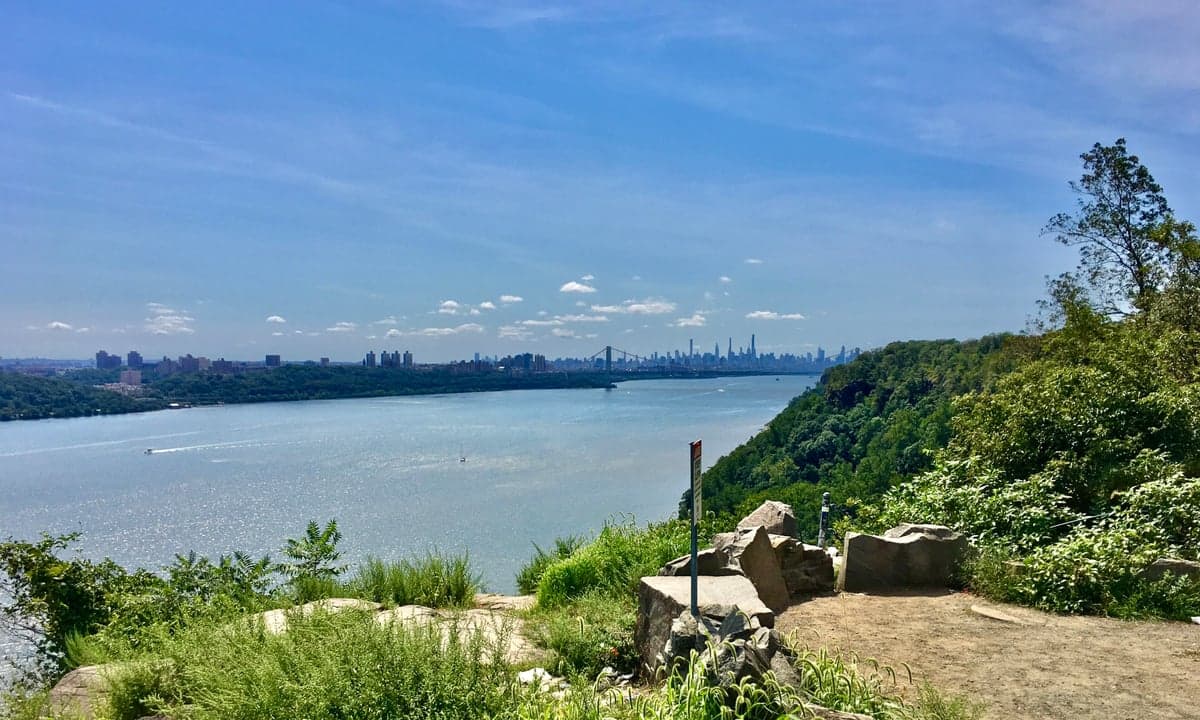
Photo: Wikipedia
Political ClimatePolitical Climate in Bergen County
Showing district-level results — no local-only data available.
Local Political AnalysisPolitical Analysis of Bergen County
Bergen County has shifted from a reliable Republican stronghold to a solidly Democratic county over the past three decades, but it’s still a place where the old-school, live-and-let-live attitude clashes hard with the new progressive wave. The Cook PVI of D+2 might sound moderate, but that number hides a lot of tension—especially when you compare it to New Jersey’s statewide D+5. In plain terms, Bergen is about three points more conservative than the state as a whole, but that gap is shrinking fast as the party machine tightens its grip. If you’ve been here since the ’90s, you remember when this county was a bellwether for the GOP; now, it’s a place where your personal freedoms feel like they’re under a microscope.
How it compares
Statewide, New Jersey leans D+5, meaning the progressive agenda has a comfortable runway in Trenton. Bergen County’s D+2 tells a different story—it’s still a battleground where local elections can flip on a dime. Take Wyckoff and Franklin Lakes: these towns vote reliably red, with GOP margins often hitting 10-15 points in local races. Meanwhile, Teaneck and Englewood are deep blue, pushing policies like rent control and sanctuary city status that make you wonder where your tax dollars are really going. The swing precincts are in places like Paramus and Hackensack, where moderate voters—many of them small business owners or cops—are getting squeezed between rising property taxes and a county government that seems more interested in social engineering than fiscal sanity. Compared to the rest of NJ, Bergen’s GOP base is stronger but aging out, while the influx of New York City transplants is tilting the balance toward the kind of one-party rule that historically leads to overreach.
What this means for residents
For anyone who values personal autonomy, the trend is concerning. The county government has pushed mask mandates in schools well past the point of common sense, and there’s a growing appetite for gun control measures that go beyond what state law requires—like local ordinances that make it harder to carry for self-defense. Property taxes here are already among the highest in the nation, and the progressive majority keeps adding new layers of regulation on landlords and small businesses. If you’re a parent, you’ve probably noticed the school boards in blue towns like Tenafly and Montclair (yes, Montclair is Essex, but it’s the same vibe) adopting curriculum changes that prioritize activism over academics. The old Bergen County—where you could mind your own business, keep a gun in your nightstand, and send your kid to a decent school without worrying about political indoctrination—is fading fast.
The cultural divide is real and getting sharper. In red towns like Mahwah and Ramsey, you still see Trump signs in yards and flags on pickup trucks, but those communities are fighting an uphill battle against countywide policies that favor dense housing development and transit-oriented zoning—basically, forcing suburban neighborhoods to become mini-cities. The county executive’s office has been solidly Democratic for years, and they’ve used that power to push environmental mandates that drive up energy costs and restrict property rights. If you’re thinking of moving here, know this: your vote matters more in a local school board or town council race than in a presidential election, because that’s where the real fights over your freedoms are happening. The days of Bergen County as a moderate, live-your-life kind of place are numbered, and the next five years will decide whether it becomes another progressive enclave or holds onto its independent streak.

State Political ClimatePolitical Climate in New Jersey
State Political AnalysisPolitical Environment in the State
New Jersey has a Cook PVI of D+5, making it reliably Democratic at the statewide level, but that number hides a fierce internal tug-of-war. The state hasn't voted for a Republican president since George H.W. Bush in 1988, and Democrats control both legislative chambers and the governor's mansion. But if you look closer, the last 15 years have seen a slow, grinding shift: the old moderate Republican strongholds in the suburbs are shrinking, while the northern urban cores and their sprawling bedroom communities have become overwhelmingly progressive. For a conservative-leaning individual or family, the state feels like two different countries depending on which exit you take off the Turnpike.
Urban vs. rural divide
The political map of New Jersey is a story of three distinct regions. The northeast corridor—Newark, Jersey City, Hoboken, and the dense suburbs of Bergen and Essex counties—is the engine of the state's Democratic dominance. These areas are heavily unionized, diverse, and increasingly progressive on social issues. Jersey City, for example, has become a magnet for young professionals who commute to Manhattan and vote for candidates who champion rent control, sanctuary policies, and green energy mandates. Meanwhile, South Jersey—places like Camden, Trenton, and Atlantic City—is a Democratic stronghold driven by urban poverty, public-sector unions, and a reliance on state aid. The rural and exurban west and south—Hunterdon, Sussex, Warren, Salem, and Cape May counties—are where Republicans still hold sway. In 2024, Sussex County voted +18 for Trump, while Hunterdon and Warren each went +12. But these areas are losing population and political clout as younger residents move to the coasts or out of state entirely. The suburban battleground—Morris, Monmouth, Ocean, and Burlington counties—is where the real fight happens. Ocean County is the last reliably red suburban holdout, voting +22 for Trump in 2024, while Morris and Monmouth have drifted from lean-Republican to toss-up. The 2021 gubernatorial race saw Republican Jack Ciattarelli come within 3 points of Governor Phil Murphy, largely by running up margins in Ocean and Sussex while holding Morris and Monmouth close. But the 2023 legislative elections saw Democrats flip several suburban Assembly seats in Morris and Burlington, signaling that the suburban drift left is real and accelerating.
Policy environment
New Jersey's policy environment is a case study in progressive governance with a heavy price tag. Taxes are the single biggest issue for conservatives. The state has the highest property taxes in the nation—averaging over $9,500 per year—and a progressive income tax that tops out at 10.75% for income over $1 million. The corporate tax rate is 11.5%, the second-highest in the country. Education policy is dominated by the teachers' union, the New Jersey Education Association (NJEA), which is one of the most powerful political forces in the state. School choice is limited: there are a handful of charter schools in Newark and Camden, but the state has no voucher program and caps charter expansion. Healthcare is heavily regulated, with a state-based insurance exchange and Medicaid expansion under the Affordable Care Act. Election laws have been loosened significantly: no-excuse mail-in voting was made permanent in 2020, and same-day voter registration was enacted in 2023. The state also has a "motor voter" law that automatically registers people when they get a driver's license. For a conservative, the policy environment feels like a one-way ratchet toward higher taxes, more regulation, and less local control.
Trajectory & freedom
Over the past decade, New Jersey has become less free by almost any measure a conservative would care about. Gun rights have been systematically curtailed. In 2022, Governor Murphy signed a law banning concealed carry in "sensitive places" like parks, libraries, and private businesses unless the owner explicitly allows it—a direct response to the Supreme Court's Bruen decision. The state also has a magazine capacity limit of 10 rounds and a "justifiable need" requirement for carry permits that was struck down but is being re-litigated. Parental rights took a hit in 2023 when the state passed a law requiring schools to adopt policies that affirm a student's "gender identity or expression" without parental notification if the student requests it. This has sparked fierce backlash in places like Mendham and Toms River, where parents have packed school board meetings. Medical autonomy was a flashpoint during COVID: New Jersey had some of the longest and strictest lockdowns in the country, including a statewide mask mandate for schools that lasted into 2022. Property rights are weak: the state's Mount Laurel Doctrine forces towns to zone for affordable housing, and the state has a powerful eminent domain authority. Taxation is the biggest freedom issue: the state's tax burden is so high that it's a major driver of out-migration. Between 2020 and 2024, New Jersey lost a net 150,000 residents to other states, with Florida, Texas, and North Carolina being the top destinations. The state's own data shows that the people leaving are disproportionately high-income earners—exactly the tax base the state relies on.
Civil unrest & political movements
New Jersey has seen its share of political flashpoints. Sanctuary policies are a major issue. In 2018, Governor Murphy signed a law limiting local police cooperation with federal immigration enforcement, and in 2023, the state expanded it to bar local jails from holding detainees for ICE. This has created tension in towns like Freehold and Perth Amboy, where immigrant populations are large and local law enforcement has been caught in the middle. Election integrity is a live controversy. The 2020 and 2022 elections saw widespread use of drop boxes and mail-in ballots, and while there have been no major fraud convictions, the lack of voter ID laws—New Jersey has no photo ID requirement to vote—has fueled distrust among conservatives. Protest movements have been visible. In 2020, Black Lives Matter protests in Newark and Trenton turned violent, with looting and arson in downtown Newark. More recently, pro-Palestinian protests have erupted at Rutgers University and Princeton, with students demanding divestment from Israel. On the right, the "Parents' Bill of Rights" movement has held rallies in Marlboro and Jackson, and the state's chapter of Moms for Liberty has been active in school board races. The secession rhetoric is mostly a joke, but there is a real "South Jersey secession" movement that periodically surfaces, driven by the feeling that the northern suburbs and urban cores dominate state politics while the rural south gets ignored.
Projection
Over the next 5-10 years, New Jersey is likely to become more Democratic and more progressive. The demographic trends are clear: the state's population is aging, and the young people who stay are overwhelmingly liberal. The suburban drift left will continue as older Republicans die off and are replaced by younger, more diverse voters. The 2025 gubernatorial election will be a key test: if a progressive Democrat like Steve Fulop or Mikie Sherrill wins, expect more of the same—higher taxes, more regulation, and a continued erosion of local control. If a moderate Republican like Jack Ciattarelli or Jon Bramnick wins, there might be a pause, but not a reversal. The state's fiscal situation is unsustainable: the pension system is underfunded by over $100 billion, and the state's debt is among the highest in the nation. At some point, the tax base will shrink enough that the state will have to cut services or raise taxes further—neither of which is good for a conservative looking for a place to live. The most likely scenario is a slow, grinding decline in quality of life for anyone who isn't wealthy enough to afford the high taxes or connected enough to navigate the regulatory maze.
Bottom line for a new resident: If you're a conservative moving to New Jersey, you need to pick your town carefully. The rural and exurban counties—Sussex, Warren, Hunterdon, Salem, Cape May—offer a more conservative lifestyle, but they're also farther from jobs and have fewer amenities. The suburban battlegrounds like Morris and Monmouth are still competitive, but they're trending left. You'll pay high taxes no matter where you live, and you'll have to deal with a state government that is actively hostile to gun rights, parental rights, and local control. The state's natural beauty, strong schools in certain districts, and proximity to New York and Philadelphia are real draws, but they come at a steep price—both financially and in terms of personal freedom. If you're serious about moving here, visit during a school board meeting or a town council session. That's where you'll see the real political climate, not in the election returns.
* Values derived from national, state, county, city and local statistics and may differ in a specific area. Last updated: 2026-05-12T00:26:51.000Z
Narrative content on this page is AI-generated and may contain mistakes. Verify any details that matter before acting on them.
ReloMaps may earn a commission from affiliate links at no extra cost to you.

