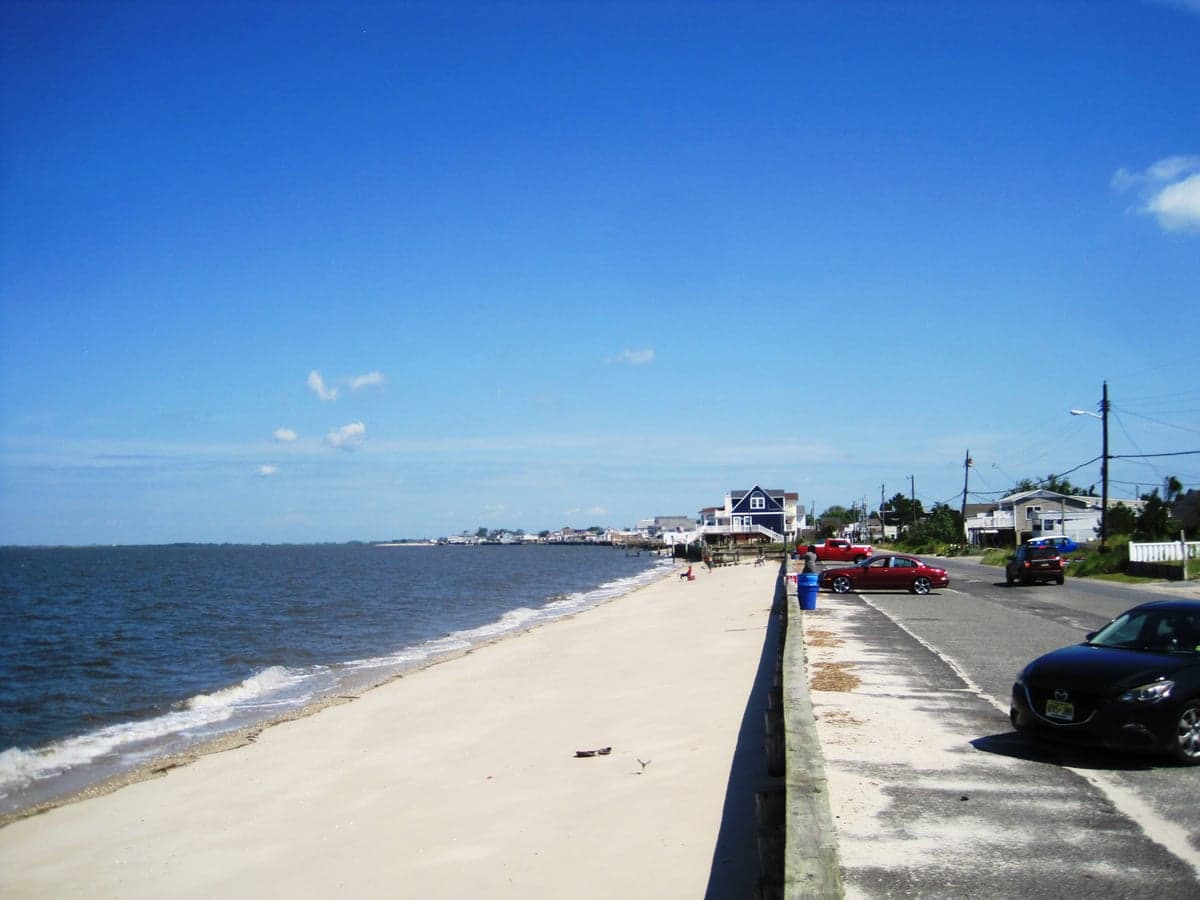
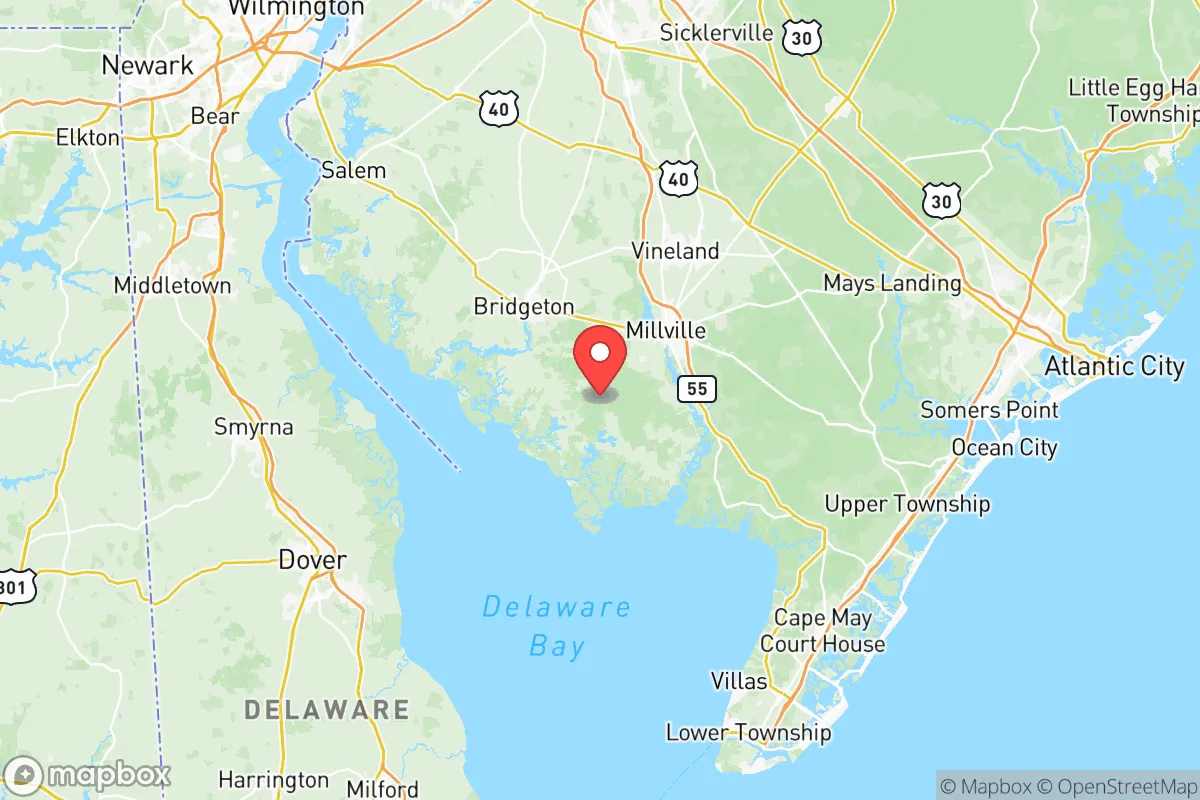
Photo: Wikipedia
Demographics of Cumberland County
Affluence Level in Cumberland County
A below-average socioeconomic profile. Incomes, home values, and educational attainment trail the U.S., with higher poverty and unemployment.
People of Cumberland County
Cumberland County, New Jersey, is a region of quiet, working-class resilience, shaped by centuries of agricultural labor and industrial shifts. Its population of 152,915 is notably diverse, with a 41.9% white, 35.0% Hispanic, and 17.1% Black demographic makeup, yet it remains one of the state's least college-educated counties at 17.9%. The county's identity is rooted in its rural character, its historic role as a hub for food processing and glassmaking, and a growing Hispanic population that is redefining its cultural and economic landscape. This is a place where the legacy of early European settlers and the steady influx of new Americans from Latin America and the Caribbean are woven into the fabric of small towns like Bridgeton, Vineland, and Millville.
Settlement & growth (pre-1960)
The human history of Cumberland County begins with the Lenni-Lenape people, who inhabited the region for thousands of years before European contact. The Lenape lived in seasonal villages along the Cohansey River and the Delaware Bay, relying on fishing, hunting, and agriculture. Their presence is still felt in place names like the Cohansey River and the town of Greenwich, though by the early 18th century, European colonization had largely displaced them through land purchases and disease.
European settlement began in earnest in the late 1600s, with English Quakers and other colonists from the neighboring Salem and Gloucester counties establishing farms along the Cohansey and Maurice rivers. The town of Greenwich, founded in 1685, became an early commercial center and a key port for shipping grain and timber. A notable event was the 1774 Greenwich Tea Party, where local patriots burned a shipment of British tea, reflecting the region's early revolutionary spirit. By the early 1800s, the population was overwhelmingly of English and Scots-Irish descent, with a small number of free Black families living in rural areas.
The 19th century brought two transformative waves. First, German immigrants arrived in the 1840s and 1850s, drawn by the region's fertile soil and the promise of land in the newly drained swamps of the Maurice River valley. They established farming communities around Vineland, which was founded in 1861 as a planned agricultural colony by Charles K. Landis. The town attracted German, Italian, and Eastern European immigrants who worked the land, growing fruits and vegetables for the expanding Philadelphia market. Second, Italian immigrants began arriving in large numbers after 1880, settling primarily in Millville and Bridgeton to work in the booming glass industry. Millville became known as the "Glass City," with factories like the Millville Glass Works employing thousands of Italian and Polish laborers. By 1900, Cumberland County was a patchwork of English, German, Italian, and Polish communities, each centered around specific industries and neighborhoods.
The Great Migration of African Americans from the South reached Cumberland County in the 1910s and 1920s, as Black families sought work in the region's canneries, glass factories, and farms. They settled primarily in Bridgeton and Millville, forming tight-knit communities around churches and social clubs. The county's Black population grew steadily through the mid-20th century, reaching about 15% by 1960. Meanwhile, the Puerto Rican migration began in the 1950s, with workers recruited for the agricultural and food-processing industries. They established a small but growing presence in Vineland and Bridgeton, laying the groundwork for the much larger Hispanic influx to come.
Modern era (post-1965)
The 1965 Hart-Cellar Act fundamentally reshaped Cumberland County's demographics, as it did across the nation. The most significant change has been the explosive growth of the Hispanic population, which rose from a small minority in 1970 to 35.0% today. This wave was driven primarily by Puerto Ricans, who are U.S. citizens and thus not subject to immigration quotas, and later by immigrants from the Dominican Republic, Mexico, and Central America. They were drawn by the same industries that had attracted earlier waves: agriculture, food processing, and manufacturing. Vineland and Bridgeton became the primary hubs, with Hispanic neighborhoods now forming the majority in many parts of both cities. The Hispanic community is predominantly of Puerto Rican and Dominican descent, with a growing Mexican presence, and has established vibrant cultural institutions, including Spanish-language churches, bodegas, and festivals.
The Black population has remained relatively stable at 17.1%, with most African Americans still concentrated in Bridgeton and Millville. However, there has been a modest influx of Black immigrants from the Caribbean, particularly from Haiti and Jamaica, who have settled in Vineland and the surrounding rural areas. The white population, once the overwhelming majority, has declined to 41.9%, driven by out-migration of younger, college-educated residents to suburban and urban areas in North Jersey and Pennsylvania. This "brain drain" is reflected in the county's low college attainment rate of 17.9%, which is among the lowest in New Jersey.
Domestic migration has been minimal compared to other parts of the state. Cumberland County has not experienced the suburban boom seen in counties closer to New York or Philadelphia. Instead, it has remained a relatively isolated, rural region with a struggling economy. The decline of the glass industry in the 1970s and 1980s led to job losses and population stagnation, particularly in Millville. The county's foreign-born population is only 8.2%, lower than the state average, reflecting the fact that most Hispanic growth has come from U.S.-born Puerto Ricans and second-generation families rather than new immigrants. The East/Southeast Asian population is negligible at 0.4%, and the Indian subcontinent population is just 1.0%, with small communities in Vineland and Millville working in healthcare and retail.
The future
The demographic trajectory of Cumberland County points toward continued Hispanic growth and white decline, with the county likely becoming majority-Hispanic within the next 10-15 years. The Hispanic population is younger and has higher birth rates, while the white population is aging and shrinking. This shift is already visible in the public schools of Bridgeton and Vineland, where Hispanic students make up over 60% of enrollment. The county is not tribalizing into distinct enclaves but rather homogenizing into a Hispanic-majority working-class region, with Black and white communities becoming smaller minorities. The immigrant community is growing slowly, as most Hispanic growth is now domestic rather than foreign-born, and the small Asian and Indian populations are likely to remain niche groups concentrated in specific professions.
In-migration from outside the county is limited, as Cumberland lacks the job growth and amenities to attract significant numbers of newcomers from other states or regions. The county's cultural identity is shifting from a historically white, rural, agricultural character to a more urbanized, Hispanic-influenced one, particularly in Bridgeton and Vineland. This change is being absorbed gradually, with little overt conflict, but it is reshaping local politics, religion, and social life. The next 10-20 years will likely see the county become more politically aligned with the Democratic Party, as Hispanic voters become the dominant voting bloc, and a continued struggle with economic stagnation and low educational attainment.
For someone moving into Cumberland County now, this is a place of affordable housing and strong community ties, but also of limited economic opportunity and demographic change. The county offers a slower pace of life and a growing Hispanic cultural scene, particularly in Vineland and Bridgeton, but those seeking a highly educated, diverse, or fast-growing environment may find it lacking. The future is one of gradual transformation, where the old agricultural and industrial roots give way to a new, predominantly Hispanic identity, rooted in family, faith, and hard work.

* Values derived from national, state, county, city and local statistics and may differ in a specific area. Last updated: 2026-06-01T06:56:54.000Z
Narrative content on this page is AI-generated and may contain mistakes. Verify any details that matter before acting on them.
ReloMaps may earn a commission from affiliate links at no extra cost to you.

