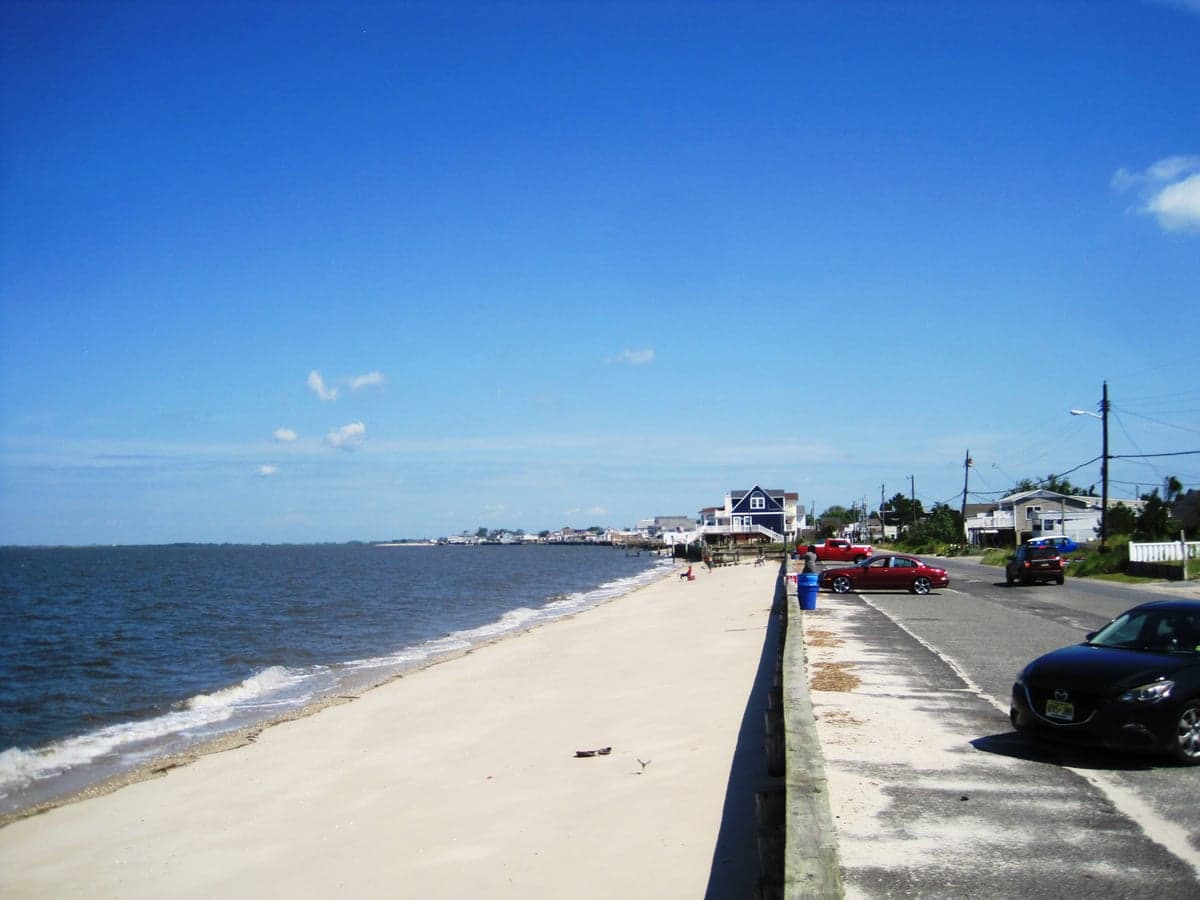
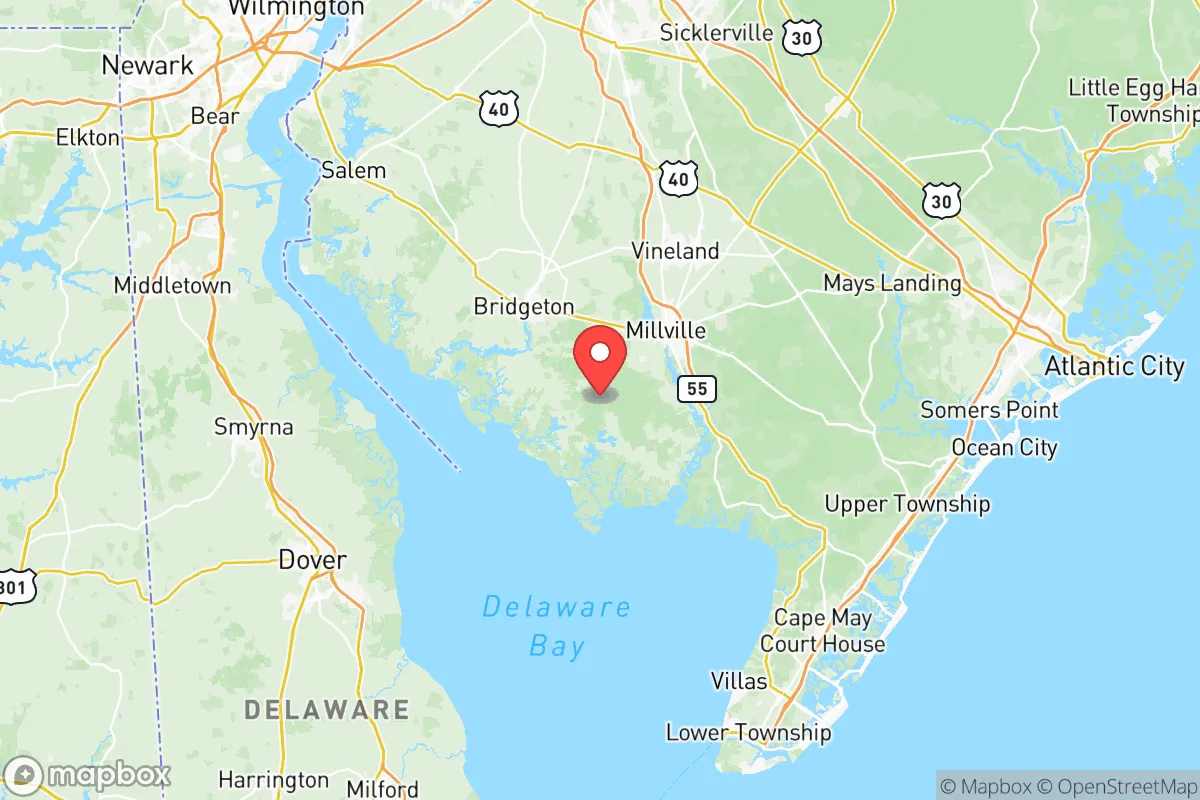
Photo: Wikipedia
Personal Sovereignty in Cumberland County
Viable for self-reliance. Generally workable, though some barriers may limit total independence.
What does Personal Sovereignty tell us?
Personal Sovereignty measures your capacity for self-reliance and independence with minimal government friction. Higher scores mean fewer barriers between you and the way you want to live... but it assumes you have the space you need and good neighbors.
What does this tell us?
Personal Sovereignty measures your capacity for self-reliance and independence with minimal government friction. Higher scores mean fewer barriers between you and the way you want to live... but it assumes you have the space you need and good neighbors.
State Policy
Energy independence: Importer (8% of energy produced in-state)
Personal Liberty
Homesteading

Personal Liberty Analysis
Cumberland County, New Jersey offers a more complex personal sovereignty landscape than its rural reputation suggests, where state-level overreach in taxation and regulation clashes with local pockets of self-reliance and gun-friendly culture. For conservative-leaning individuals and parents prioritizing autonomy, the county presents a mixed bag: lower property taxes than much of North Jersey, but a state government that aggressively expands its reach into healthcare, education, and land use. The key to maximizing personal freedom here lies in choosing the right municipality—places like Upper Deerfield Township or Hopewell Township offer more breathing room than the county seat of Bridgeton, where urban density and progressive governance create tighter constraints.
Tax burden and regulatory posture: How Cumberland County compares to the rest of New Jersey
New Jersey’s overall tax burden is among the highest in the nation, but Cumberland County sits near the bottom of the state’s property tax rankings. The average effective property tax rate in the county hovers around 2.8%, compared to over 3.5% in Bergen or Essex counties. This lower rate is a direct result of the county’s rural character and lower property valuations—a double-edged sword. While you pay less in taxes, you also get less in services, which can be a net positive for those who prefer to keep their money and handle their own needs. However, the state’s regulatory posture remains heavy-handed: New Jersey’s COAH (Council on Affordable Housing) mandates force municipalities to zone for high-density development, which can conflict with desires for large-lot homesteading. Towns like Greenwich Township and Stow Creek Township have fought these mandates, preserving more rural zoning than Vineland or Millville, which have embraced suburban-style growth. The state’s Environmental Protection Department (NJDEP) also imposes stringent wetland and stream buffer rules that can limit where you build or farm, especially near the Delaware Bay shoreline. For a prepper mindset, this regulatory creep is a red flag—every permit and variance is a point of vulnerability to government overreach.
Self-defense and gun law specifics: What you can and cannot do in Cumberland County
New Jersey’s gun laws are among the most restrictive in the nation, and Cumberland County is not exempt. The state requires a Firearms Purchaser Identification Card (FPID) for handguns and long guns, a permit-to-purchase for each handgun, and a carry permit that is notoriously difficult to obtain—though the Bruen decision has loosened the "justifiable need" requirement, the application process remains costly and time-consuming. Magazine capacity is capped at 10 rounds, and "assault weapons" bans cover many popular rifles. However, within the county, enforcement culture varies. The Cumberland County Sheriff’s Office is generally more pro-Second Amendment than urban departments, and carry permits are issued more readily here than in Camden or Newark. For homesteaders, the practical reality is that you can keep firearms for home defense on your property without much hassle, but carrying them off-property requires jumping through hoops. Bridgeton and Vineland have higher crime rates and more aggressive policing, so gun owners there face greater scrutiny. In contrast, rural towns like Lawrence Township and Downe Township see far less interaction with law enforcement over firearms. If self-defense is a priority, the best strategy is to live in a low-density area and keep your firearms on your own land—the state’s reach is weakest there.
Self-reliance and homesteading viability: Lot sizes, zoning, and off-grid feasibility in Cumberland County
Cumberland County is one of the few places in New Jersey where genuine homesteading is still possible. Minimum lot sizes in agricultural zones often start at 5 acres, and in towns like Upper Deerfield Township and Hopewell Township, you can find parcels of 10 to 20 acres for under $200,000—a fraction of the cost in Hunterdon or Morris counties. Zoning codes generally allow for chickens, goats, and even small livestock, though pigs and cattle may require additional permits. Off-grid feasibility is limited by state building codes: you must connect to the electrical grid unless you can prove a "net-zero" energy system, and rainwater collection is restricted for potable use. However, many homesteaders in Greenwich Township and Stow Creek Township use solar panels with grid-tie systems and private wells, achieving a high degree of energy and water independence. The NJDEP’s Freshwater Wetlands Protection Act can block development on wetter parcels, so dry upland lots in Lawrence Township are preferable. For a prepper, the key is to buy land with existing agricultural exemptions—these reduce property taxes and signal that the local government is accustomed to self-sufficient lifestyles. Avoid areas near the Delaware Bay shore, where floodplain regulations and sea-level rise concerns create additional bureaucratic hurdles.
Personal liberties: Parental rights, medical autonomy, speech, and property rights in Cumberland County
Parental rights in New Jersey are under constant pressure from state mandates. The New Jersey Department of Education requires comprehensive sex education that includes LGBTQ+ topics, and school districts like Bridgeton Public Schools and Vineland Public Schools have adopted curricula that some parents find intrusive. However, the county’s rural districts—Upper Deerfield Township School District and Hopewell Township School District—tend to be more conservative and responsive to parental concerns. Homeschooling is legal but requires annual notification and standardized testing, which some families see as government overreach. Medical autonomy is limited: New Jersey has strict vaccine mandates for school attendance, and the state’s Medical Aid in Dying for the Terminally Ill Act reflects a progressive approach to end-of-life choices that may conflict with conservative values. Speech and assembly rights are generally respected, though local governments in Bridgeton and Vineland have occasionally restricted public comment at meetings. Property rights are the strongest area of personal liberty in Cumberland County. The state’s Eminent Domain powers are rarely exercised here, and the county’s low population density means fewer zoning disputes. Towns like Lawrence Township and Downe Township have minimal land-use regulations, allowing you to build a workshop, store supplies, or keep a large garden without permits—a stark contrast to the suburbs of North Jersey.
Overall, Cumberland County offers a higher degree of personal sovereignty than most of New Jersey, but it is still constrained by a state government that views individual autonomy as secondary to collective goals. For a conservative-leaning prepper or survivalist, the best strategy is to locate in the county’s rural townships—Upper Deerfield, Hopewell, Greenwich, Stow Creek, and Lawrence—where local culture and zoning align with self-reliance. Avoid the urban centers of Bridgeton, Vineland, and Millville, where progressive governance and higher crime rates erode personal freedoms. Compared to states like Texas or New Hampshire, Cumberland County is a compromise: you get affordable land and a gun-friendly sheriff, but you must navigate a state-level bureaucracy that distrusts individual sovereignty. For those willing to work within those constraints, it remains one of the last refuges of personal liberty in the Northeast.

* Values derived from national, state, county, city and local statistics and may differ in a specific area. Last updated: 2026-06-01T06:56:54.000Z
Narrative content on this page is AI-generated and may contain mistakes. Verify any details that matter before acting on them.
ReloMaps may earn a commission from affiliate links at no extra cost to you.

