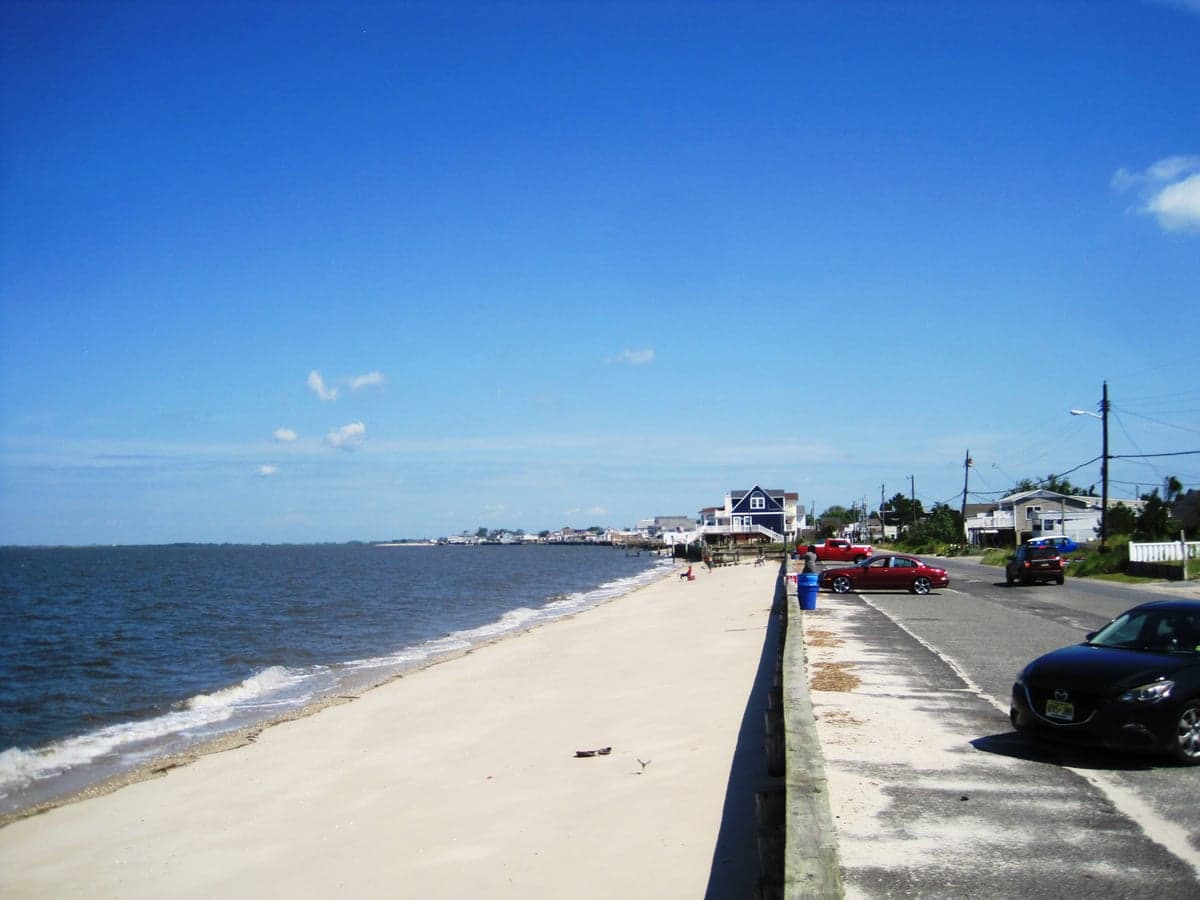
Photo: Wikipedia
Political ClimatePolitical Climate in Cumberland County
Showing district-level results — no local-only data available.
Local Political AnalysisPolitical Analysis of Cumberland County
Cumberland County, New Jersey, has long been a reliably conservative stronghold in an otherwise deep-blue state, with a Cook Partisan Voting Index of R+5 that puts it a full ten points to the right of New Jersey's D+5 rating. This isn't a recent development—the county has voted Republican in every presidential election since 2000, and the margins have held steady even as the rest of the state has drifted left. The real story here is how that conservative foundation is holding up against the progressive tide washing in from the north and east, and what that means for folks who value limited government and personal freedoms.
How it compares
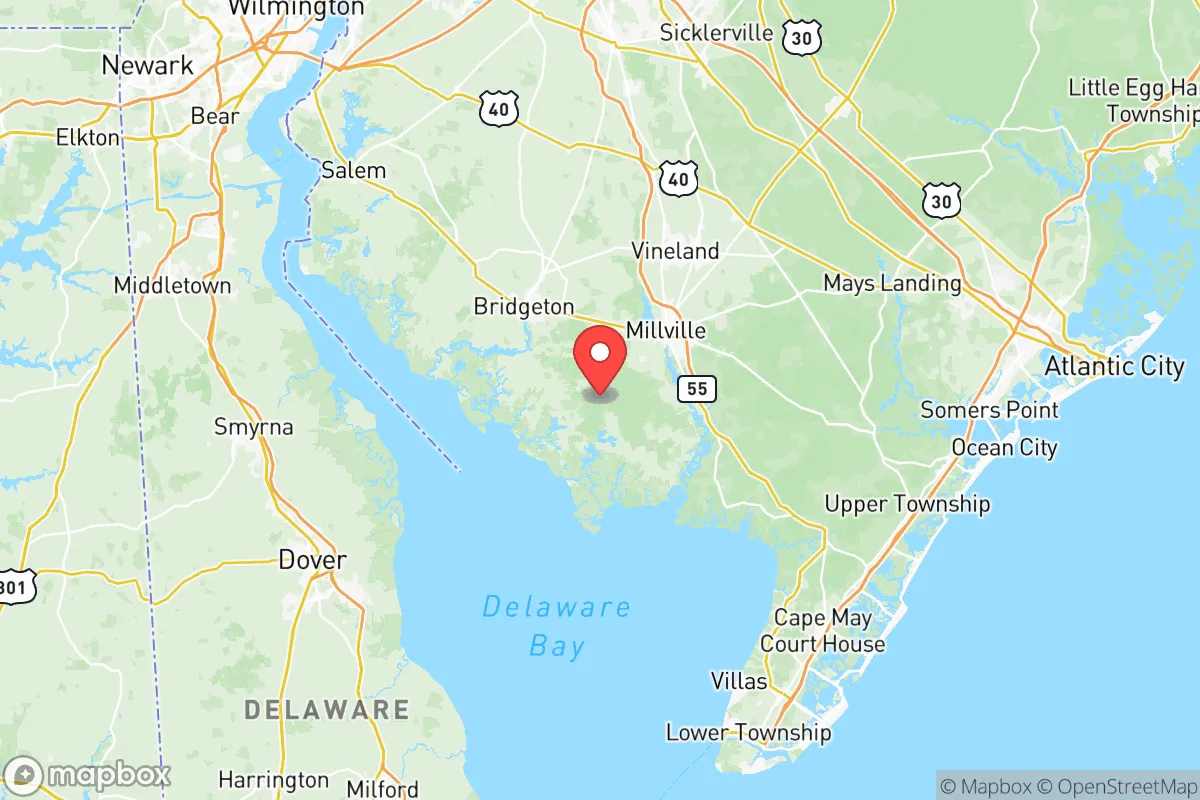
The contrast between Cumberland County and the rest of New Jersey couldn't be starker. While the state as a whole votes Democratic by a comfortable 5-point margin, Cumberland consistently delivers Republican wins by similar or larger spreads. The county's political geography tells the tale: Vineland and Millville are the swing zones, with Vineland's southern precincts leaning blue due to union influence and a growing Hispanic population, while Millville's northern and western edges remain solidly red. Bridgeton is the county's Democratic outlier, driven by a younger, more diverse electorate and a heavy reliance on state services. But the real conservative backbone runs through the smaller towns: Upper Deerfield, Hopewell, and Lawrence Township routinely vote 60-40 or better for Republicans, and Commercial and Downe Townships along the Delaware Bay are as red as any precinct in the state. The rural character of these areas—farming, hunting, and a general distrust of Trenton—keeps the county anchored right-of-center, even as the state legislature in Newark and Jersey City pushes progressive policies on taxes, energy mandates, and school curriculum.
What this means for residents
For a conservative living here, the practical effect is a daily reminder that you're in a bubble. Property taxes are still high—among the highest in the nation—but they're lower than in Bergen or Essex counties, and the county government has resisted the kind of woke spending and DEI initiatives that have ballooned budgets elsewhere. The school boards in Vineland and Millville have seen heated battles over critical race theory and gender ideology, but the rural districts have largely kept those fights at bay. The Second Amendment is still respected here; you won't get sideways glances for having a gun rack in your truck, and the county sheriff's office hasn't turned into an enforcement arm for state gun laws. That said, the pressure is mounting. The state's push for electric vehicle mandates and renewable energy projects—like the offshore wind farms proposed off the coast—threaten the fishing and farming economies that have sustained these communities for generations. There's a growing sense that Trenton doesn't care about what happens south of the Raritan River, and that's breeding a quiet resentment that could tip the county even further right in the next few cycles.
Culturally, Cumberland County still feels like old New Jersey—the part that remembers when the state was a purple battleground, not a blue fortress. You'll find more pickup trucks than Teslas, more diners than vegan cafes, and more conversations about the deer season than the latest Netflix series. The policy distinctions are real: the county has opted out of the state's sanctuary county designation, and local law enforcement cooperates with ICE, which is a sticking point in Bridgeton but a selling point everywhere else. If you're looking for a place where the government stays out of your business and your neighbors share your values, this is still one of the last corners of New Jersey where you can find it. But keep an eye on the demographics—the Hispanic population is growing fast, and if the progressive machine in Trenton gets its way with mail-in voting and ballot harvesting, the R+5 rating might not hold forever. For now, though, it's a good place to be if you believe the best government is the one closest to home.

State Political ClimatePolitical Climate in New Jersey
State Political AnalysisPolitical Environment in the State
New Jersey has a solid Democratic lean, with a Cook PVI of D+5, but don't let that number fool you into thinking it's a monolith. The state's political climate is a tale of two worlds: the densely packed, transit-oriented counties near New York City and Philadelphia that drive the blue wave, and the more rural, suburban, and exurban areas that consistently vote red. Over the last 10-20 years, the state has shifted leftward, driven by in-migration from New York City and the growing influence of progressive activism, but the conservative foothold in places like Ocean County and Sussex County remains stubbornly strong. If you're considering a move here, you need to understand that your experience will vary wildly depending on whether you land in a deep-blue enclave like Montclair or a red-leaning suburb like Toms River.
Urban vs. rural divide
The political map of New Jersey is a checkerboard of extremes. The urban cores—Newark, Jersey City, Paterson, and Camden—are deep blue, powered by dense populations, union strongholds, and a heavy reliance on public sector jobs. These cities reliably deliver massive Democratic margins, often 70-80% of the vote. The suburbs immediately surrounding them, like Montclair, Maplewood, and Princeton, have become increasingly progressive, driven by educated professionals who moved in from New York City and brought their politics with them. Meanwhile, the rural and exurban areas tell a different story. Ocean County (Toms River, Lakewood) is a Republican stronghold, voting +15 to +20 points red in recent cycles. Sussex County and parts of Hunterdon County are similarly conservative, with a strong libertarian streak. The divide isn't just about geography—it's about lifestyle. In the blue areas, you'll find heavy regulation, high taxes, and a focus on public transit and density. In the red areas, you'll find lower property taxes, more gun-friendly attitudes, and a sense of personal autonomy that feels increasingly rare in the state.
Policy environment
New Jersey's policy environment is a textbook case of progressive governance with a heavy hand. The state has the highest property taxes in the nation, averaging over $9,500 annually, and a progressive income tax that tops out at 10.75% for incomes over $1 million. The regulatory posture is aggressive: the state has some of the strictest environmental regulations, a robust public sector union presence, and a healthcare system that expanded Medicaid aggressively under the Affordable Care Act. Education policy is dominated by the teachers' union, with per-pupil spending among the highest in the country, but results are mixed—wealthy suburbs like Millburn and Ridgewood have top-tier schools, while urban districts struggle. Election laws are relatively accessible, with no-excuse mail-in voting and automatic voter registration, which has boosted Democratic turnout. For a conservative, the policy environment feels like a constant squeeze—high taxes fund programs you may not agree with, and the regulatory climate can make starting a business or owning a firearm a bureaucratic headache.
Trajectory & freedom
Over the last five years, New Jersey has become less free by almost any measure. Governor Phil Murphy signed a series of laws that expanded government control: the 2018 "red flag" law allows courts to temporarily seize firearms from individuals deemed a threat, and the 2022 comprehensive gun law banned carrying in sensitive places and required liability insurance for gun owners. Parental rights took a hit with the 2020 "New Jersey Student Learning Standards" that introduced LGBTQ+ topics in K-12 curriculum without an opt-out, and the 2022 "Fairness in Women's Sports Act" (A4341) allowed transgender athletes to compete based on gender identity, overriding parental concerns. On medical autonomy, the state expanded abortion access with the 2022 "Freedom of Reproductive Choice Act", codifying it into law. Property rights are under constant pressure from rent control ordinances in cities like Jersey City and Hoboken, and the state's Mount Laurel Doctrine forces municipalities to zone for affordable housing, often overriding local control. The trajectory is clear: more regulation, less personal autonomy, and a government that increasingly sees itself as the arbiter of your choices.
Civil unrest & political movements
New Jersey has seen its share of political flashpoints. The 2020 Black Lives Matter protests were large and often disruptive in Newark and Jersey City, with some turning violent. The state's sanctuary policies are among the strongest in the nation—the 2018 "Immigrant Trust Directive" limits local law enforcement cooperation with ICE, and the 2019 "Driver's License for All" law allows undocumented immigrants to obtain licenses. This has created tension in more conservative towns like Lacey Township and Jackson Township, where residents have pushed back against migrant housing proposals. On the right, the "New Jersey 2nd Amendment Society" and local gun rights groups have been active, organizing protests against the 2022 gun law and filing lawsuits. Election integrity has been a hot topic since the 2020 pandemic-era expansion of mail-in voting, with Republican groups alleging irregularities, though no major fraud has been proven. A new resident would notice the political activism is more organized and visible in the blue areas—think lawn signs, protest marches, and town hall meetings packed with progressive activists—while the red areas tend to be quieter but more determined in their resistance.
Projection
Looking ahead 5-10 years, New Jersey is likely to continue its leftward drift, but not without resistance. The demographic shift is key: the state is losing native-born residents to Florida, Texas, and the Carolinas, while gaining immigrants and out-of-state transplants from New York and Pennsylvania. This in-migration tends to be younger, more diverse, and more progressive, which will further solidify Democratic control. The 2025 gubernatorial election will be a bellwether—if a progressive Democrat wins, expect more of the same: higher taxes, stricter gun laws, and expanded social programs. However, the conservative strongholds in Ocean, Sussex, and Hunterdon counties are growing in population and political organization, and they may push back harder on issues like school curriculum and property taxes. The wild card is the state's fiscal health: with a massive unfunded pension liability and high debt, a future fiscal crisis could force a reckoning that shifts the political conversation. For someone moving in now, expect to find a state where your personal freedoms are increasingly constrained by state law, but where you can still find pockets of autonomy if you choose your town wisely.
For a conservative considering New Jersey, the bottom line is this: you can live here and maintain your values, but you'll be swimming against the current. Choose your town carefully—Toms River, Randolph, or Sparta offer a more conservative environment, while Montclair, Maplewood, or Jersey City will feel like a different country. You'll pay high taxes, deal with heavy regulation, and constantly feel the government's hand in your life. But if you value proximity to major cities, strong schools in certain areas, and a diverse landscape, New Jersey can still work—as long as you're prepared to fight for your freedoms at the local level.
* Values derived from national, state, county, city and local statistics and may differ in a specific area. Last updated: 2026-06-01T06:56:54.000Z
Narrative content on this page is AI-generated and may contain mistakes. Verify any details that matter before acting on them.
ReloMaps may earn a commission from affiliate links at no extra cost to you.

