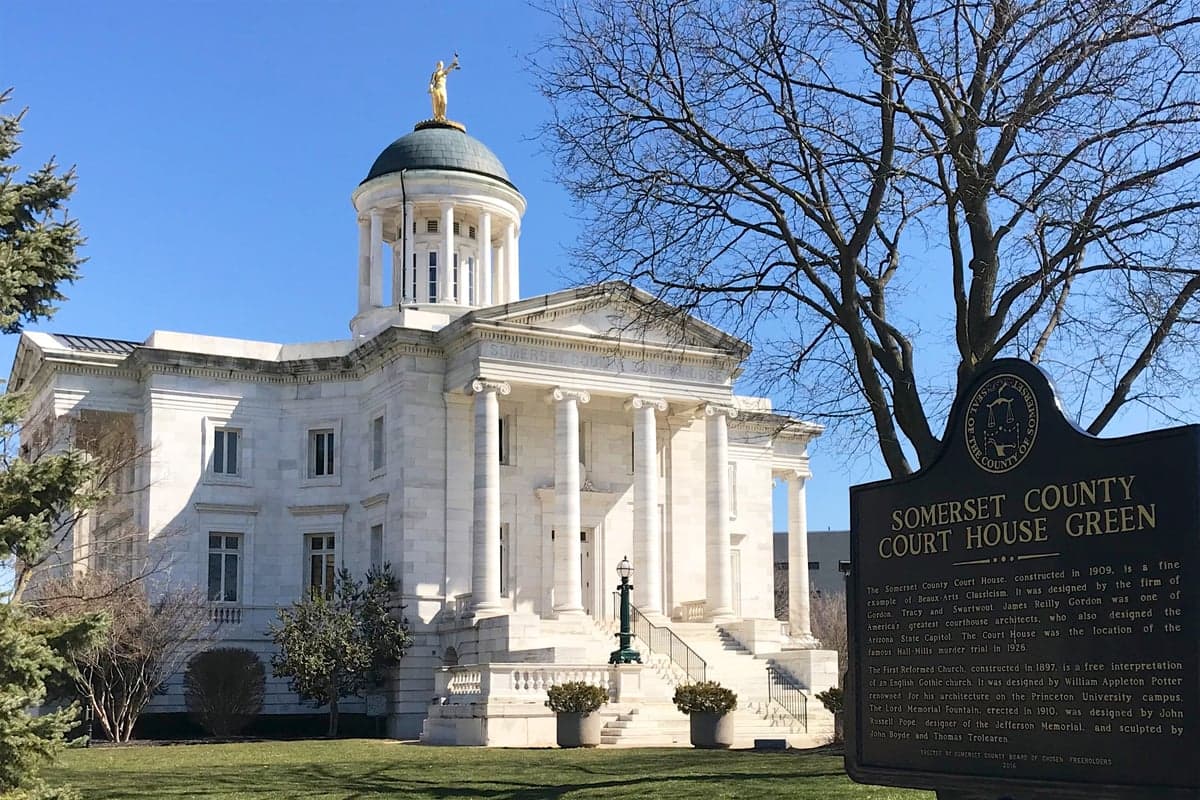
Photo: Wikipedia
Personal Sovereignty in Somerset County
Viable for self-reliance. Generally workable, though some barriers may limit total independence.
What does Personal Sovereignty tell us?
Personal Sovereignty measures your capacity for self-reliance and independence with minimal government friction. Higher scores mean fewer barriers between you and the way you want to live... but it assumes you have the space you need and good neighbors.
What does this tell us?
Personal Sovereignty measures your capacity for self-reliance and independence with minimal government friction. Higher scores mean fewer barriers between you and the way you want to live... but it assumes you have the space you need and good neighbors.
State Policy
Energy independence: Importer (8% of energy produced in-state)
Personal Liberty
Homesteading

Personal Liberty Analysis
Somerset County, New Jersey, presents a nuanced landscape for personal sovereignty, where a high-income, suburban character coexists with some of the most restrictive state-level regulations in the nation. For the individual or family prioritizing autonomy, the county offers excellent property rights and a strong local economy, but these advantages are sharply constrained by New Jersey’s heavy tax burden, strict gun laws, and limited opportunities for off-grid living. The overall environment is one of managed freedom: personal liberties are robust in private life and property use, but the state’s regulatory posture significantly limits self-defense options and self-reliant homesteading, making it a better fit for those who value economic opportunity and legal predictability over maximal independence.
Tax burden and regulatory posture in Somerset County
New Jersey’s tax burden is the highest in the nation, and Somerset County residents feel this acutely. The state’s effective property tax rate averages around 2.23% of assessed home value, and in affluent Somerset towns like Bernardsville and Far Hills, annual property taxes on a median-priced home can easily exceed $15,000. Combined with a progressive state income tax topping at 10.75% for high earners, the total tax load is among the heaviest in the U.S. On the regulatory side, New Jersey imposes extensive state-level oversight on land use, construction, and business operations. Towns like Bridgewater and Hillsborough have detailed zoning codes that dictate everything from fence heights to home-based business permits. While this creates a predictable, low-corruption environment—permits are generally issued on clear timelines—it also means that any deviation from standard suburban development requires formal approvals. For a reader accustomed to Texas or Florida’s lighter touch, the regulatory posture here will feel dense and slow. However, the trade-off is high-quality public services, including top-ranked schools in Montgomery and Warren, and well-maintained infrastructure.
Self-defense and gun law specifics in Somerset County
New Jersey’s gun laws are among the strictest in the country, and Somerset County offers no local relief. The state requires a permit to purchase a handgun (a multi-step process involving fingerprinting, background checks, and a 30- to 90-day wait), a Firearms Purchaser Identification Card for long guns, and a separate permit to carry a concealed handgun. The carry permit process, post-Bruen, has been reformed but remains burdensome: applicants must complete a training course, provide references, and pay fees exceeding $200. In practice, concealed carry is rare in Somerset County, and open carry is effectively prohibited. Towns like Somerville and Raritan have no local gun stores or ranges—residents typically travel to Phillipsburg in Warren County or into Pennsylvania for purchases. Self-defense law is also restrictive: New Jersey has a “duty to retreat” in public spaces, and the “Castle Doctrine” applies only inside one’s home, with no stand-your-ground provision. For a reader who prioritizes the right to armed self-defense, Somerset County will feel heavily constrained. The legal environment is not hostile to responsible gun ownership per se, but it is designed to make carrying and purchasing firearms as difficult as possible.
Self-reliance and homesteading viability in Somerset County
Homesteading and off-grid living are largely impractical in Somerset County due to high land costs, dense zoning, and state building codes. Minimum lot sizes in most residential zones range from 0.5 to 2 acres, with some rural pockets in Bedminster and Peapack-Gladstone offering 5-acre parcels. However, even these larger lots are subject to strict septic, well, and building setback requirements. Off-grid systems like solar panels with battery storage are permitted but must comply with state net-metering rules and local historic preservation guidelines in areas like Franklin Township. Rainwater collection is legal but limited to non-potable uses, and composting toilets require a variance. Raising livestock is allowed in agricultural zones but is heavily regulated: in Hillsborough, for example, keeping chickens requires a permit and a minimum 1-acre lot, with no roosters allowed. For a family seeking true self-reliance—growing most of their own food, generating their own power, and living without municipal utilities—Somerset County is a poor fit. The regulatory environment favors suburban conformity over rural independence. The best option for a homesteading-minded reader would be to look at the far western edge of the county, near Branchburg or Readington, where larger agricultural parcels exist, but even there, state-level restrictions on water rights and building codes remain binding.
Personal liberties: parental rights, medical autonomy, speech, and property
In the realm of personal liberties, Somerset County offers a mixed picture. Parental rights are strong in practice: school districts in Montgomery and Warren are known for robust parental involvement and transparent curricula, though New Jersey state law mandates LGBTQ-inclusive sex education and anti-bullying policies that some conservative families may find intrusive. Medical autonomy is limited: New Jersey has strict vaccine mandates for school attendance, and during the COVID-19 pandemic, the state imposed one of the longest-lasting mask mandates in the country. However, the state does protect medical marijuana use and has a “Right to Try” law for terminally ill patients. Free speech is fully protected under the First Amendment, and Somerset County’s public forums—town council meetings, library events, and public parks—are generally open and civil. Property rights are the strongest pillar of personal sovereignty here: New Jersey’s “home rule” tradition gives local governments significant control, but it also means that property owners have clear, enforceable rights. Eminent domain is rarely abused, and zoning changes require public hearings. In towns like Bernards Township, property owners can build accessory dwelling units (ADUs) by right, and home-based businesses are permitted with minimal paperwork. For a reader who values the ability to control their own property and raise their family with minimal government interference in daily life, Somerset County is generally favorable—provided they accept the state’s heavy hand on taxes and health mandates.
Overall, Somerset County offers a moderate level of personal sovereignty that is heavily shaped by New Jersey’s state-level policies. The tax burden and gun laws are significant drawbacks for a freedom-oriented reader, while property rights and parental involvement in schools are genuine strengths. Compared to a place like rural Pennsylvania or upstate New York, Somerset County feels more suburban and regulated; compared to northern Virginia or Connecticut, it is similar in density but higher in taxes. For the individual or family who prioritizes economic opportunity, excellent schools, and legal predictability over maximal autonomy, Somerset County can work well—but it is not a haven for those seeking low taxes, easy concealed carry, or off-grid self-sufficiency. The best fit is a conservative-leaning professional who values property rights and local control but is willing to pay a premium for a well-managed, low-crime environment.

* Values derived from national, state, county, city and local statistics and may differ in a specific area. Last updated: 2026-09-30T11:10:15.000Z
Narrative content on this page is AI-generated and may contain mistakes. Verify any details that matter before acting on them.
ReloMaps may earn a commission from affiliate links at no extra cost to you.

