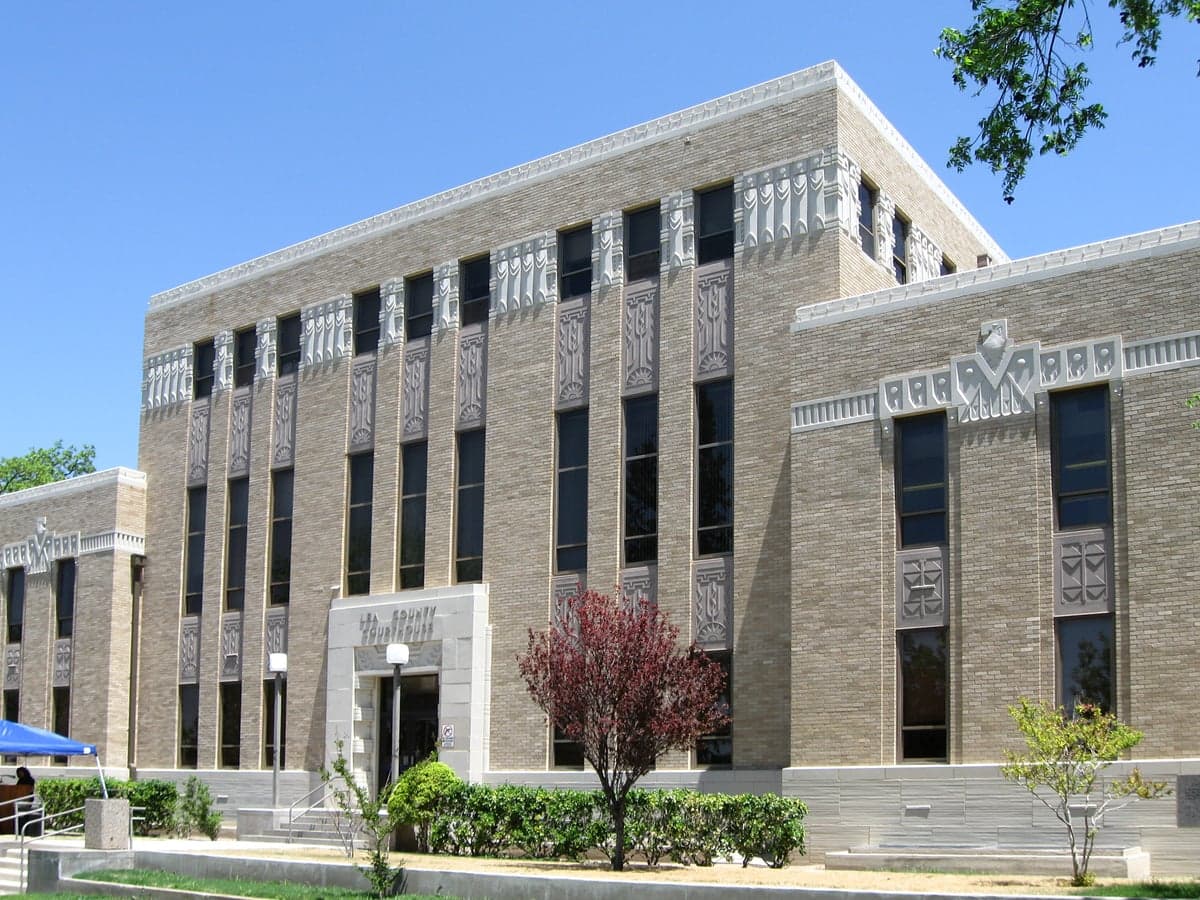
Photo: Wikipedia
Political ClimatePolitical Climate in Lea County
Showing district-level results — no local-only data available.
Local Political AnalysisPolitical Analysis of Lea County
Lea County, New Mexico, is a deep-red stronghold in a blue state, and that tension defines its political climate. While New Mexico as a whole carries a Cook PVI of D+3, Lea County votes Republican by margins that often exceed 30 points in statewide races. The county's politics are shaped by its oil-and-gas economy, rural character, and cultural conservatism, creating a dynamic where local officials and federal representatives are almost uniformly Republican, even as the state government in Santa Fe leans left. This split means Lea County residents often feel at odds with state policy, particularly on energy regulation and taxation.
How it compares
Lea County's political lean is a stark outlier within New Mexico. The state's D+3 PVI reflects a competitive but Democratic-leaning electorate, driven by urban centers like Albuquerque, Santa Fe, and Las Cruces. In contrast, Lea County's Republican dominance is comparable to counties in West Texas, not the rest of New Mexico. For example, in the 2024 presidential election, Lea County gave Donald Trump over 75% of the vote, while the state overall went for Joe Biden by about 11 points. This gap is the largest of any county in New Mexico. Within Lea County itself, there is variation: the city of Hobbs is the most reliably Republican, with precincts near the oil fields voting red by 80% or more. The smaller town of Lovington leans even more conservative, while the county seat, Carlsbad (technically in Eddy County but closely tied), shows slightly more moderate tendencies due to a mix of government and tourism workers. The only precincts that ever show Democratic strength are in the southern part of the county near Jal, where a small number of unionized oil workers and Hispanic families sometimes vote for Democrats, but these are still minority pockets.
What this means for residents
For conservative residents, Lea County offers a political environment where their views are the norm. Local government, school boards, and law enforcement are overwhelmingly Republican, and conservative values are reflected in public policy, such as low property taxes and minimal gun control. However, these residents often feel frustrated by state-level policies, such as the 2023 oil and gas tax increases and renewable energy mandates, which they see as hostile to the county's economic base. For liberal residents, life in Lea County can be isolating. They are a distinct minority, and progressive candidates rarely win any local office. However, the county's political homogeneity means that liberal residents often find community through personal networks rather than political activism. The practical impact is that Lea County residents, regardless of party, must navigate a state government that often pursues policies they oppose, leading to a sense of being a "red island in a blue sea." This dynamic has fueled occasional talk of secession or joining Texas, though such proposals remain fringe.
Culturally, Lea County's politics are inseparable from its identity as an energy hub. The oil and gas industry employs roughly one in three workers, and the boom-and-bust cycles of drilling directly shape political attitudes. During booms, residents are more focused on economic growth and less on partisan grievances; during busts, frustration with state regulations intensifies. The county also has a strong independent streak, with many residents identifying as "Reagan Democrats" or libertarian-leaning conservatives who distrust both major parties. This makes Lea County a place where local politics are pragmatic—focused on roads, schools, and water—even as national politics are fiercely partisan. The result is a community that votes red but expects its representatives to deliver tangible results, not just ideological purity.

State Political ClimatePolitical Climate in New Mexico
State Political AnalysisPolitical Environment in the State
New Mexico is a classic swing state in transition, carrying a Cook PVI of D+3 that masks a deeply competitive and often contradictory political reality. For the past two decades, Democrats have held a consistent but narrow advantage in statewide elections, powered by strong turnout in Albuquerque and Santa Fe, while the rest of the state—particularly the eastern plains and southern oil patch—has shifted hard to the right. The result is a state that votes blue for president and Senate but often elects conservative Democrats and even Republicans to local offices, creating a political environment that feels more purple than its national label suggests.
Urban vs. rural divide
The political map of New Mexico is a study in stark contrasts. The Democratic stronghold is the Albuquerque metro area (Bernalillo County), which casts roughly a third of the state's votes and reliably delivers 55-60% for Democratic candidates. Santa Fe County is even more lopsided, routinely hitting 70-75% Democratic, driven by a concentration of government workers, artists, and retirees. Las Cruces (Doña Ana County) leans Democratic but is more moderate, often splitting tickets. On the other side, the eastern counties—Roosevelt, Curry, Lea, and Chaves—are now reliably Republican, with Lea County (home to the Permian Basin oil boom) voting 75%+ Republican in recent cycles. The rural north, including counties like Rio Arriba and Mora, remains Democratic but is culturally conservative, often voting for anti-abortion, pro-gun Democrats at the local level. The real battleground is the state's sprawling exurban and small-town middle—places like Sandoval County (suburban Rio Rancho) and Valencia County, which have trended Republican as new arrivals from California and Texas bring conservative voting habits.
Policy environment
New Mexico's policy landscape is a mixed bag that defies easy categorization. The state has no income tax on Social Security benefits and a relatively low top marginal income tax rate of 5.9%, which is competitive with neighboring states. Property taxes are among the lowest in the nation, averaging about 0.55% of assessed value, thanks to a constitutional cap. However, the gross receipts tax (GRT)—essentially a sales tax on nearly all services and goods—can exceed 8% in some municipalities, making everyday purchases expensive. The regulatory environment is generally business-friendly for oil and gas, which is the state's economic engine, but more restrictive for renewable energy projects and manufacturing. Education policy is a perennial flashpoint: the state has a $3.5 billion public education budget but ranks near the bottom nationally in test scores and graduation rates. School choice is limited, with no voucher program and only a handful of charter schools. Healthcare is dominated by the state's Medicaid expansion, which covers about 40% of residents, and the University of New Mexico Hospital system. Election laws are relatively accessible: same-day voter registration, no-excuse absentee voting, and automatic voter registration at the DMV are all in place.
Recent policy direction
The last five years have seen a clear leftward shift in state policy, driven by unified Democratic control of the governorship and legislature. In 2021, the state repealed its pre-1973 abortion ban and passed the Reproductive and Gender Affirming Health Care Act, which protects providers from out-of-state lawsuits. In 2023, the legislature passed a red flag law (HB 129) allowing courts to temporarily seize firearms from individuals deemed a threat, and in 2024 it banned firearms from polling places and government buildings. The state also legalized recreational cannabis in 2021, with retail sales beginning in 2022. On the tax front, the state has cut personal income tax rates twice since 2020 and eliminated the tax on military pensions. However, property rights remain a concern for some: the state has a strong "public trust" doctrine that limits private water rights, and the 2023 Energy Transition Act mandates a 100% carbon-free electricity grid by 2045, which has drawn lawsuits from rural electric cooperatives. Parental rights in education have become a hot-button issue, with the state rejecting a 2023 bill that would have required schools to notify parents of curriculum changes related to gender identity. Voting access has expanded, with the 2023 Voter Rights Act adding automatic registration and pre-registration for 16-year-olds.
Civil unrest & political movements
New Mexico has a history of political activism that ranges from the left-wing environmental movement to the right-wing "New Mexico Stands Up" coalition. The 2020 protests over the killing of George Floyd in Albuquerque were large and occasionally violent, leading to property damage downtown. The state's sanctuary policies are among the strongest in the nation: the 2019 "New Mexico Values Act" prohibits state and local law enforcement from cooperating with federal immigration enforcement, and the city of Santa Fe has declared itself a "sanctuary city." This has created friction with the oil and gas industry, which relies on immigrant labor, and with rural counties that have passed resolutions opposing the policy. On the right, the "New Mexico Freedom Alliance" has organized around election integrity, pushing for hand-count audits and opposing the state's universal mail-in ballot system. The 2022 election saw a minor controversy when a Republican candidate for secretary of state refused to concede, but no major fraud was found. The state's secessionist movement is small but vocal, centered in the eastern counties where "New Mexico 51st State" bumper stickers occasionally appear, advocating for a separate state called "East New Mexico" or "Aurora."
Projection
Over the next 5-10 years, New Mexico is likely to remain a D+3 to D+5 state, but the margin will narrow. The key demographic shift is the continued growth of the Albuquerque exurbs (Rio Rancho, Los Lunas) and the oil-and-gas towns of the southeast (Hobbs, Carlsbad), which are attracting conservative-leaning migrants from Texas and Oklahoma. At the same time, Santa Fe and Albuquerque are losing young families to lower-cost states like Texas and Arizona, shrinking the Democratic base. The state's Hispanic population, which makes up nearly 50% of residents, is not monolithic: younger, urban Hispanics lean Democratic, while rural and older Hispanics are more conservative on social issues. The wild card is the state's water crisis: as the Rio Grande and Colorado River basins face chronic shortages, the state will be forced to make painful decisions about water allocation, which could fracture the Democratic coalition between environmentalists and agricultural interests. A new resident moving in now should expect a state that will continue to vote Democratic for president and Senate but will elect more moderate and even conservative Democrats at the local level, with occasional Republican breakthroughs in gubernatorial and House races.
For a conservative-leaning family or individual considering a move to New Mexico, the practical takeaway is this: you will find a state with low property taxes, no tax on Social Security or military pensions, and a booming oil-and-gas economy in the southeast. But you will also encounter a state government that is increasingly progressive on social issues, with strong sanctuary policies, a red flag law, and a push for carbon-free energy. The best bet is to target the exurban counties—Sandoval, Valencia, or Otero—where you can find lower costs, conservative neighbors, and proximity to Albuquerque's jobs and amenities, while accepting that state-level politics will lean left for the foreseeable future. It's a trade-off, but one that many conservative transplants have already made, and the state's low cost of living and outdoor lifestyle make it a compelling option for those willing to navigate the political divide.
* Values derived from national, state, county, city and local statistics and may differ in a specific area. Last updated: 2026-06-12T19:35:15.000Z
Narrative content on this page is AI-generated and may contain mistakes. Verify any details that matter before acting on them.
ReloMaps may earn a commission from affiliate links at no extra cost to you.

