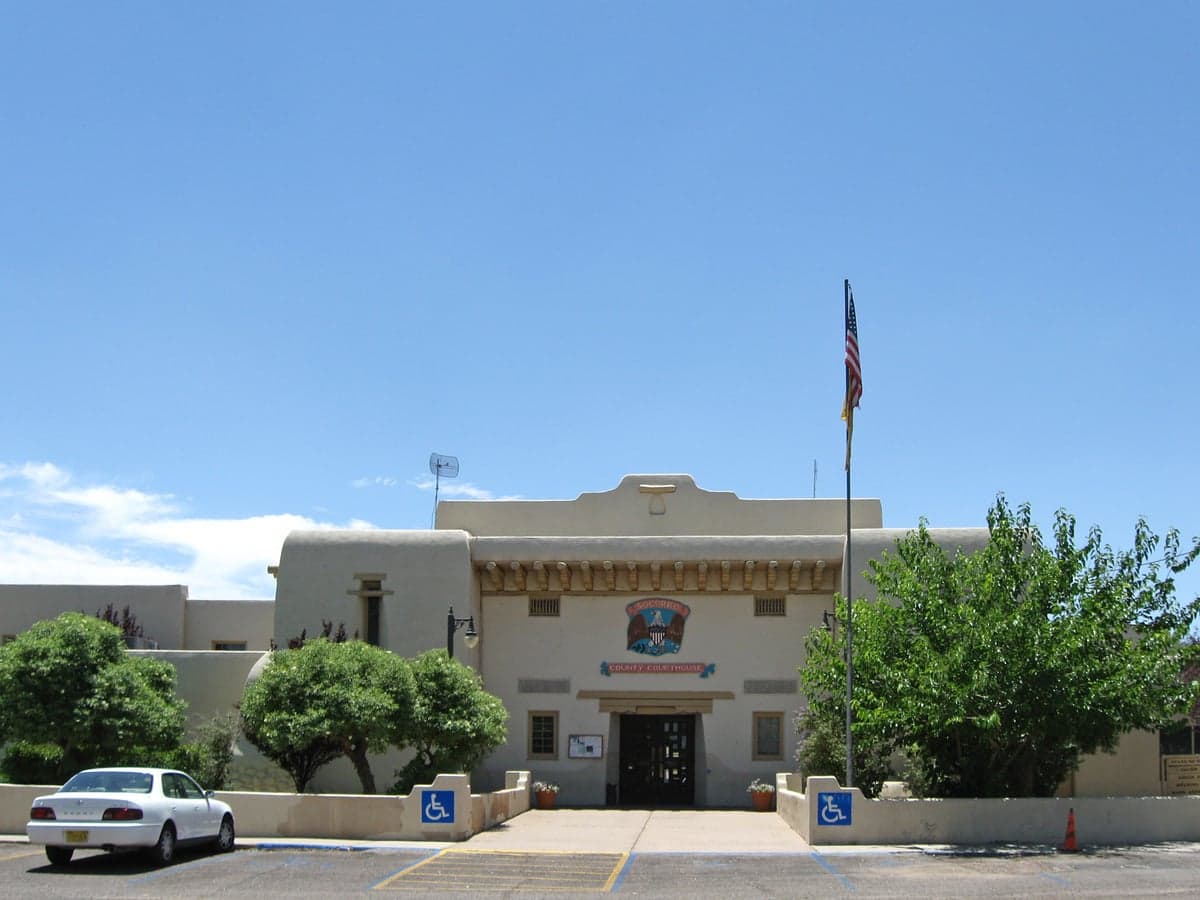
Photo: Wikipedia
Quality of Life in Socorro County
A livable area that tracks near national norms for affordability, walkability, and neighborhood health.
What does Quality of Life tell us?
Quality of Life measures an area by evaluating factors like cost of living, nearby amenities, country club access, airport proximity, socioeconomic signals and neighborhood character. For large states, this is a general average — quality of life can vary dramatically between metro areas, suburbs, and rural communities within the same state.
What does this tell us?
Quality of Life measures an area by evaluating factors like cost of living, nearby amenities, country club access, airport proximity, socioeconomic signals and neighborhood character. For large states, this is a general average — quality of life can vary dramatically between metro areas, suburbs, and rural communities within the same state.
Cost of Living
46% below national average
116%
The Real Cost of Living in Socorro County for 2026
| Tier | Individual | Family (4) |
|---|---|---|
| Survival | $10k | $20k |
| Comfortable | $28k | $41k |
| Luxury | $86k+ | $133k+ |
| Elite (Top 5%) | $117k+ | $181k+ |
Quality-of-Life Analysis
Socorro County offers a starkly varied quality of life, ranging from the college-town bustle of its only incorporated city to the deep quiet of remote, unincorporated desert communities. The county’s character is defined by this split: one part anchored by New Mexico Tech and the historic railroad corridor, the other by vast stretches of the Chihuahuan Desert and the Rio Grande Valley. People drawn here typically fall into two camps — those seeking the affordable, intellectually-stimulating environment of a small university town, and those seeking true rural isolation with minimal neighbors and maximum open space.
Largest town(s) & population centers
The county’s sole incorporated city is Socorro, home to roughly 8,700 residents and the overwhelming majority of the county’s population. Daily life here revolves around the campus of New Mexico Tech, a highly-ranked science and engineering university that brings a steady flow of students, faculty, and research activity. The city has a walkable historic plaza, a modest selection of local restaurants and shops, and essential services like a hospital (Socorro General Hospital) and a Walmart Supercenter. The Bosque del Apache National Wildlife Refuge, just south of town, draws birdwatchers and outdoor enthusiasts year-round. Commute times are minimal — the county average is just under 15 minutes — and most errands can be done within a 10-minute drive. The nearby community of San Antonio, a small village of about 1,000 people, serves as a quieter satellite, known for its proximity to the refuge and the historic Owl Bar and Cafe.
Smaller towns & rural pockets
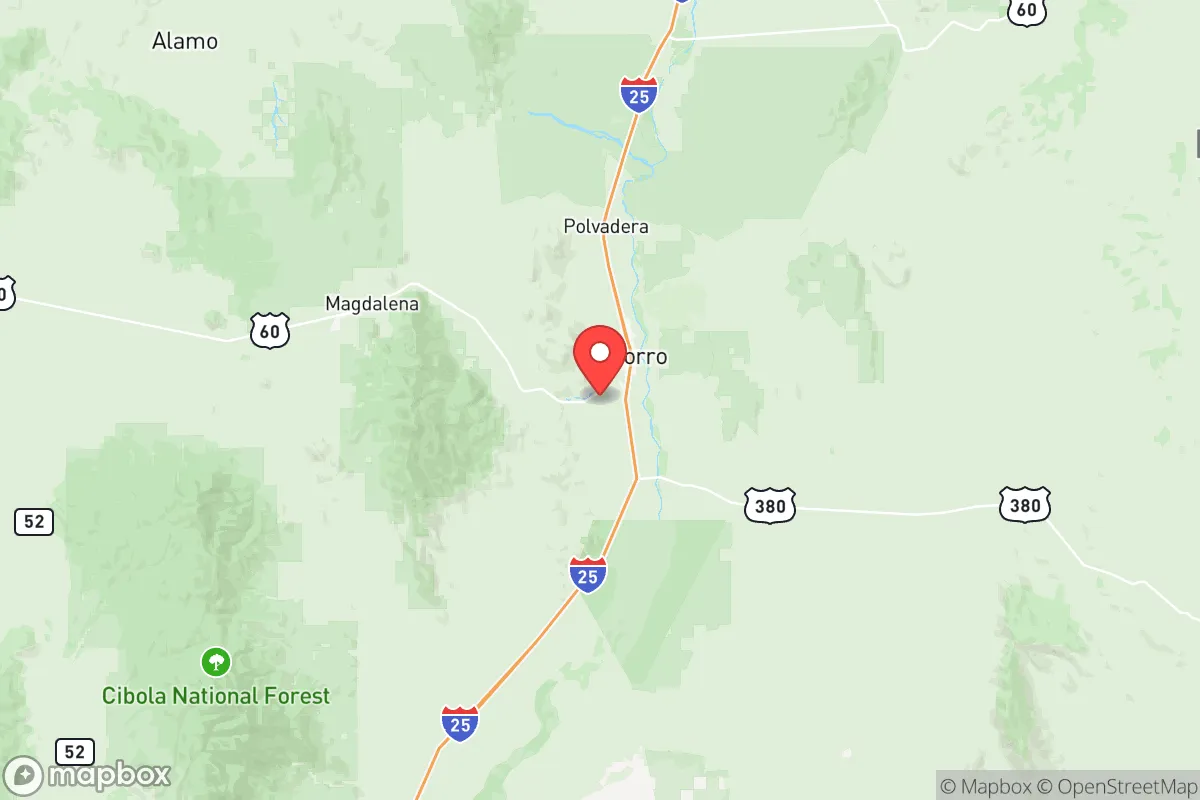
Beyond Socorro and San Antonio, the county is dotted with small, unincorporated communities that offer a very different pace of life. Veguita, roughly 30 miles north of Socorro along the Rio Grande, is a tiny farming and ranching hamlet with a handful of homes and little commercial activity. Polvadera, just north of Socorro, is a string of homes along the river with a strong agricultural feel. To the west, Magdalena (population about 900) sits at the edge of the Cibola National Forest and is a gateway for hiking, hunting, and off-grid living. Further west, the ghost town of Kelly is now largely abandoned but attracts history buffs. In the county’s far eastern reaches, the Sevilleta National Wildlife Refuge and the La Joya State Wildlife Area encompass vast tracts of public land with virtually no permanent residents. These areas are characterized by unpaved roads, limited cell service, and a strong reliance on well water and septic systems.
Cost & lifestyle range
The cost of living in Socorro County is among the lowest in New Mexico, with a composite index of 54 (100 = U.S. average). The median home value is $143,200, and median rent is just $653. However, the lifestyle and cost vary significantly by location. At the lower-cost end, Veguita and Polvadera offer homes often priced under $100,000, but with few local jobs and a 20- to 30-minute drive to Socorro for groceries and medical care. At the higher end, Socorro itself has a wider range of housing, including newer subdivisions near the university and historic homes near the plaza, with prices occasionally exceeding $250,000. Magdalena sits in the middle — slightly cheaper than Socorro but with even fewer amenities, though it offers direct access to national forest land. The county’s overall low cost is a major draw for retirees, remote workers, and those willing to trade convenience for space and quiet.
The people who thrive in Socorro County are those who value affordability, open space, and a slower rhythm over urban amenities and career diversity. It suits academics and students at New Mexico Tech, outdoor enthusiasts who want immediate access to the Bosque del Apache or the Magdalena Mountains, and self-sufficient individuals comfortable with long drives for specialized services. Families and professionals who need a full-service hospital, a major airport, or a diverse job market will find the county limiting. For those seeking a low-cost, low-stress base in a striking landscape, however, Socorro County delivers a quality of life that is hard to match elsewhere in the state.

Crime in Socorro County
Higher crime rates than 67% of comparable U.S. locations.
Violent CrimeViolent Crime Analysis
Property CrimeProperty Crime Analysis
Crime Analysis
Socorro County, New Mexico, presents a significant public safety challenge, with both violent and property crime rates substantially exceeding national averages. The county's overall violent crime rate stands at 603.2 incidents per 100,000 residents, while property crime occurs at a rate of 2,191.9 per 100,000. These figures place the county in a higher-risk category compared to most of the United States, with the burden of crime concentrated in its primary population centers and along the Interstate 25 corridor.
Crime in context
To understand the severity of Socorro County's crime problem, it is essential to compare its rates to state and national benchmarks. The county's violent crime rate of 603.2 per 100,000 is roughly 1.6 times higher than the New Mexico state average and more than 1.5 times the national average. Property crime, at 2,191.9 per 100,000, is similarly elevated—approximately 1.3 times the state rate and 1.5 times the national figure. These statistics are driven largely by incidents in the county seat of Socorro, where the majority of the population resides and where law enforcement resources are most concentrated. Smaller communities like Magdalena and Veguita report lower raw numbers, but their small populations mean that even a few incidents can produce volatile year-over-year rate fluctuations. The county's rural geography and limited law enforcement presence outside the main town contribute to these elevated figures.
What residents experience
For those living in Socorro County, the statistical reality translates into tangible daily concerns. Property crime, particularly theft and burglary, is the most common threat. Residents in Socorro and along the I-25 corridor frequently report vehicle break-ins and theft from outbuildings. Violent crime, while less frequent, is more alarming: aggravated assault accounts for the largest share, often linked to domestic disputes and alcohol-related incidents. The county's judicial environment, operating under the Seventh Judicial District Attorney's office, has been influenced by broader progressive criminal justice reforms in New Mexico. These reforms, which emphasize diversion programs and reduced sentencing for certain offenses, have been criticized by public safety advocates for contributing to a revolving-door effect for repeat offenders. Residents in San Antonio and Lemitar have expressed frustration that these policies, while well-intentioned, can leave victims feeling underserved and embolden property criminals who face minimal consequences. The presence of New Mexico Tech in Socorro adds a transient student population that can be a target for theft, though the campus itself maintains a relatively secure environment.
Neighborhood-level variation
Safety is not uniform across Socorro County. The most significant variation exists between the urban core of Socorro and its outlying rural areas. The historic downtown and areas near the railroad tracks in Socorro experience the highest concentration of both property and violent crime, driven by poverty, substance abuse, and transient populations. In contrast, the residential neighborhoods on the west side of Socorro, closer to the foothills, and the small community of Escondida report fewer incidents. The most remote areas, such as the ranching communities near Datil and the Plains of San Agustin, have extremely low crime rates but also lack rapid law enforcement response times. For prospective residents, the safest choices within the county are typically the smaller, more isolated villages, while those living in or near the city of Socorro should take proactive security measures, including secure fencing, outdoor lighting, and neighborhood watch participation.
* Values derived from national, state, county, city and local statistics and may differ in a specific area. Last updated: 2026-05-28T03:36:19.000Z
Narrative content on this page is AI-generated and may contain mistakes. Verify any details that matter before acting on them.
ReloMaps may earn a commission from affiliate links at no extra cost to you.

