Photo: Wikipedia
Political ClimatePolitical Climate in Socorro County
Showing district-level results — no local-only data available.
Local Political AnalysisPolitical Analysis of Socorro County
Socorro County is one of those rare places in New Mexico that still feels politically up for grabs, with a Cook PVI of EVEN that tells you it’s a true battleground. But don’t let that neutral rating fool you—there’s a real tension simmering here, especially if you’ve lived through the last decade and watched the state’s progressive machine try to tighten its grip. The county has historically leaned more conservative than the rest of New Mexico, but recent trends show a slow, concerning drift toward the left, driven largely by the county seat of Socorro city and the influx of state and federal workers tied to New Mexico Tech and nearby government labs.
How it compares
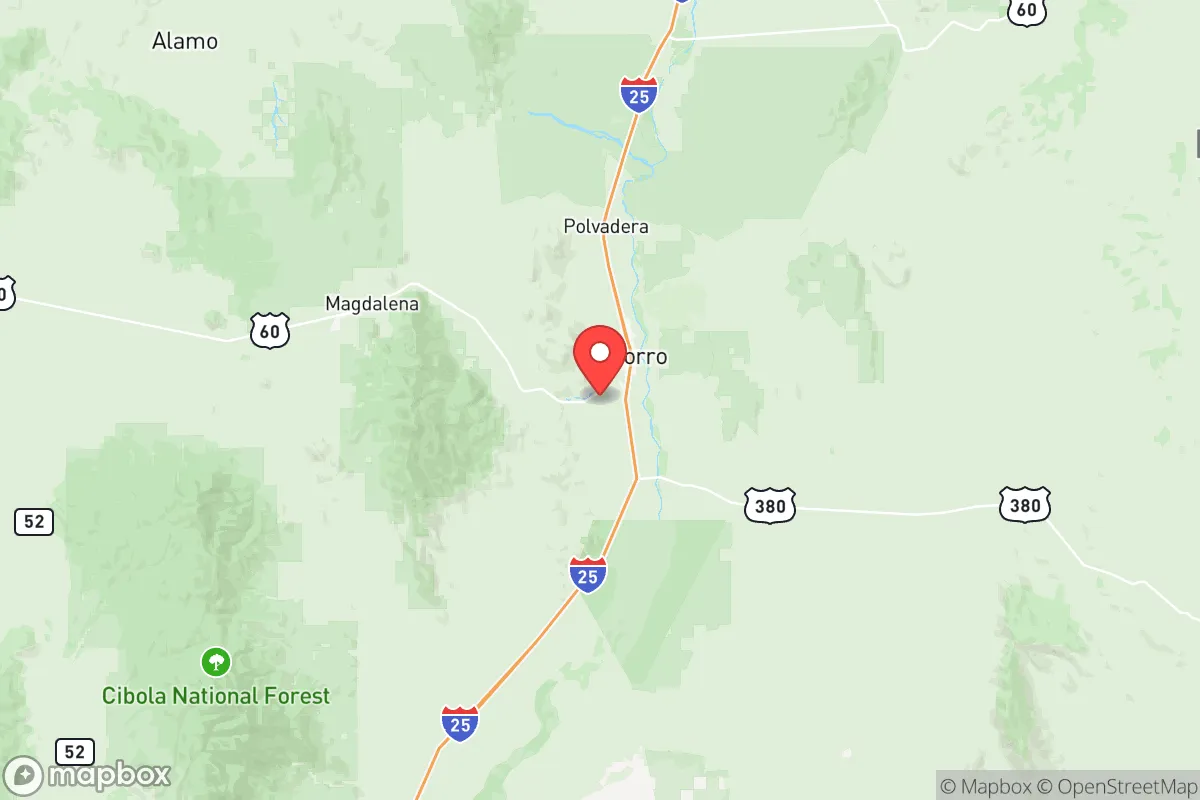
New Mexico as a whole carries a Cook PVI of D+3, meaning it’s reliably blue at the state level, but Socorro County bucks that trend with its EVEN rating. The real story is the divide within the county itself. The town of Socorro, home to New Mexico Tech and a growing population of younger, more transient residents, has been shifting blue in recent cycles—precincts around the university and downtown now regularly vote Democratic by 5-10 points. Meanwhile, the rural outposts like Magdalena and Alamo remain deeply red, often voting Republican by 20 points or more. The swing precincts are the ones just outside Socorro city limits, like the area around Lemitar and Polvadera, where ranchers and longtime families still hold sway but are being outnumbered by new arrivals. Compared to the state’s solidly blue strongholds like Santa Fe or Albuquerque, Socorro County feels like a last stand for common-sense, limited-government values—but that ground is eroding.
What this means for residents
For folks who value personal freedoms and want to keep government out of their lives, the shift is unsettling. The state legislature in Santa Fe has been pushing through progressive policies on everything from gun rights to energy regulations, and Socorro County residents are feeling the squeeze. Property taxes are creeping up as the county tries to fund mandates from the state, and local businesses are struggling with new labor laws and environmental rules that make no sense for a rural area. The county commission has managed to hold the line on some issues—like opposing sanctuary city policies and pushing back on overreaching public health orders—but the pressure is mounting. If you’re a conservative here, you’re increasingly voting with your feet or your wallet, not your voice.
Cultural and policy distinctions
One thing that still sets Socorro County apart is its deep-rooted culture of self-reliance. You don’t see the same kind of government-dependent mindset here that you do in, say, Albuquerque or Las Cruces. Ranchers and farmers still run their own operations without much interference, and the county’s annual events—like the Magdalena Old Timers’ Reunion or the Socorro County Fair—celebrate that independent spirit. But the long-term trajectory is worrying. The state’s push for green energy mandates is already hitting the local economy, with coal and oil jobs drying up, and the only growth is in government-adjacent sectors like education and research at New Mexico Tech. If you’re looking for a place where you can still live free from the nanny state, Socorro County is a decent bet for now—but keep an eye on the next few election cycles, because the writing’s on the wall.

State Political ClimatePolitical Climate in New Mexico
State Political AnalysisPolitical Environment in the State
New Mexico has been a reliably blue state for decades, with a Cook PVI of D+3, but the real story is how that Democratic dominance has shifted leftward over the past 10-20 years. The state was once a moderate, pro-business Democratic stronghold—think former Governor Bill Richardson’s centrist era—but since 2018, the legislature and governor’s office have moved aggressively into progressive territory. Today, the coalition is driven by a mix of urban liberals in Albuquerque and Santa Fe, a growing Hispanic electorate that leans left on social services, and a powerful public-sector union presence. The rural, oil-rich southeast and conservative ranching counties like Lea and Eddy are increasingly outvoted, and the state’s overall trajectory is one of accelerating one-party rule.
Urban vs. rural divide
The political map of New Mexico is a tale of two worlds. The urban core—Albuquerque (Bernalillo County), Santa Fe (Santa Fe County), and Las Cruces (Doña Ana County)—generates the vast majority of Democratic votes. Santa Fe is the progressive engine, with a city council that passed a sanctuary city ordinance and a county that voted 80% for Biden in 2020. Albuquerque, home to Sandia National Labs and the University of New Mexico, is a union-heavy, government-dependent metro that reliably delivers 60%+ Democratic margins. Las Cruces, near the border, is a growing college town with a similar lean. In contrast, the rural southeast—Hobbs, Carlsbad, and Roswell in Lea and Eddy counties—is deep red, driven by oil and gas workers, ranchers, and a strong gun culture. Lea County voted 75% for Trump in 2020. The divide is stark: the I-25 corridor from Santa Fe to Las Cruces is blue, while the eastern plains and southwestern bootheel are red. The state’s 3rd Congressional District, which covers the northern half including Santa Fe and rural areas, is a Democratic stronghold, while the 2nd District (southern NM) flipped back to Republican in 2022 after a brief Democratic hold, reflecting the rural-urban tension.
Policy environment
New Mexico’s policy environment has shifted sharply left since 2019, when Democrats gained a trifecta. The state has a progressive income tax with top rates of 5.9% and a gross receipts tax (a form of sales tax) that can exceed 8% in some cities like Santa Fe. Property taxes are relatively low, but the state’s regulatory posture is heavy: the 2021 Energy Transition Act mandates a 100% carbon-free grid by 2045, which has hit the oil and gas industry hard. Education policy is a flashpoint: the state passed a universal free school meals program and expanded pre-K, but parental rights are weak—there’s no school choice voucher program, and the state’s public schools rank near the bottom nationally. Healthcare is dominated by the state’s Medicaid expansion, covering over 40% of residents, and a 2023 law codified abortion access as a “fundamental right,” including taxpayer funding for out-of-state travelers. Election laws are permissive: same-day voter registration, automatic voter registration, and no voter ID requirement. The state also has a “sanctuary state” law (HB 140, 2019) that limits local law enforcement cooperation with federal immigration authorities.
Trajectory & freedom
New Mexico is becoming less free across multiple dimensions, especially for conservatives. On gun rights, the state passed a 2021 “red flag” law (HB 129) allowing temporary firearm seizure without a criminal conviction, and a 2023 law raised the minimum age to purchase semi-automatic rifles to 21. Parental rights took a hit with the 2023 “safe haven” law for gender-affirming care, which shields providers from out-of-state lawsuits and effectively blocks parental notification if a child travels for treatment. Medical autonomy is constrained: the state imposed a 2022 abortion “buffer zone” law restricting protests near clinics. Property rights are under pressure from the state’s aggressive renewable energy mandates, which have led to land-use conflicts in rural areas. Taxation is trending upward: the 2023 budget included a 1% personal income tax cut, but it was paired with a new 4% tax on high-earning pass-through businesses. The state’s fiscal freedom is also eroding due to a massive state government workforce (over 30,000 employees) and a $3.5 billion “rainy day fund” that politicians are eyeing for new programs. The 2024 legislative session saw a failed attempt to repeal the state’s right-to-work law, but the trend is toward more government control.
Civil unrest & political movements
New Mexico has seen its share of political flashpoints. In 2020, Albuquerque and Santa Fe experienced large Black Lives Matter protests, with some turning violent—the Albuquerque Police Department reported 30+ arrests and property damage. The state’s sanctuary policies have created tension with federal immigration authorities; in 2022, the Otero County Commission (home to Alamogordo) passed a symbolic resolution declaring the county a “Second Amendment sanctuary,” directly challenging state gun laws. The 2022 election saw a controversy in Otero County when commissioners refused to certify primary results over voting machine concerns, leading to a state Supreme Court intervention. Immigration politics are raw: the southern border counties like Doña Ana and Luna have seen increased Border Patrol activity, and the 2023 migrant surge in El Paso (just across the Texas line) spilled into Las Cruces, with local officials pleading for federal help. The state’s “land grant” movement, rooted in Spanish and Mexican land claims, occasionally flares up in rural areas like Tierra Amarilla, but it’s a niche issue. Overall, the political climate is less about street protests and more about legislative battles—the real action is in the Roundhouse in Santa Fe, where progressive bills pass with little public opposition.
Projection
Over the next 5-10 years, New Mexico is likely to become more progressive and less competitive. Demographic trends favor the Democrats: the Hispanic population, which is 50% of the state, continues to vote Democratic by wide margins (60-40 in 2020), and in-migration from blue states like California and Colorado is accelerating in Santa Fe and Albuquerque. The oil and gas industry, which funds the rural Republican base, faces long-term decline due to the state’s green energy mandates and federal policies. The 2024 election will test whether the GOP can hold the 2nd Congressional District, but the state’s overall PVI is unlikely to shift right. A new resident moving in now should expect: higher taxes, more regulation, and a government that prioritizes progressive social policies over economic growth. The state’s budget is heavily dependent on oil and gas revenue (about 40% of general fund), so any downturn could trigger a fiscal crisis, but the political response will likely be more taxes, not cuts. The one wildcard is the growing conservative exodus to Texas—cities like Hobbs and Carlsbad are losing population to Midland and Odessa—which could deepen the urban-rural divide.
For a conservative considering relocation, New Mexico offers low property taxes and beautiful landscapes, but the political climate is a serious headwind. The state’s one-party rule means your vote is unlikely to change outcomes, and the policy environment is hostile to gun rights, parental authority, and economic freedom. If you’re looking for a place where your values align with the local government, you’ll find more traction in the rural southeast—Hobbs or Carlsbad—but even there, state-level laws will constrain your freedom. The bottom line: New Mexico is a beautiful state with a broken political system, and the trajectory is toward more of the same. If you’re willing to fight for your rights at the ballot box and in the legislature, you might find a home here. If not, you’ll be swimming against a strong progressive current.
* Values derived from national, state, county, city and local statistics and may differ in a specific area. Last updated: 2026-05-28T03:36:19.000Z
Narrative content on this page is AI-generated and may contain mistakes. Verify any details that matter before acting on them.
ReloMaps may earn a commission from affiliate links at no extra cost to you.

