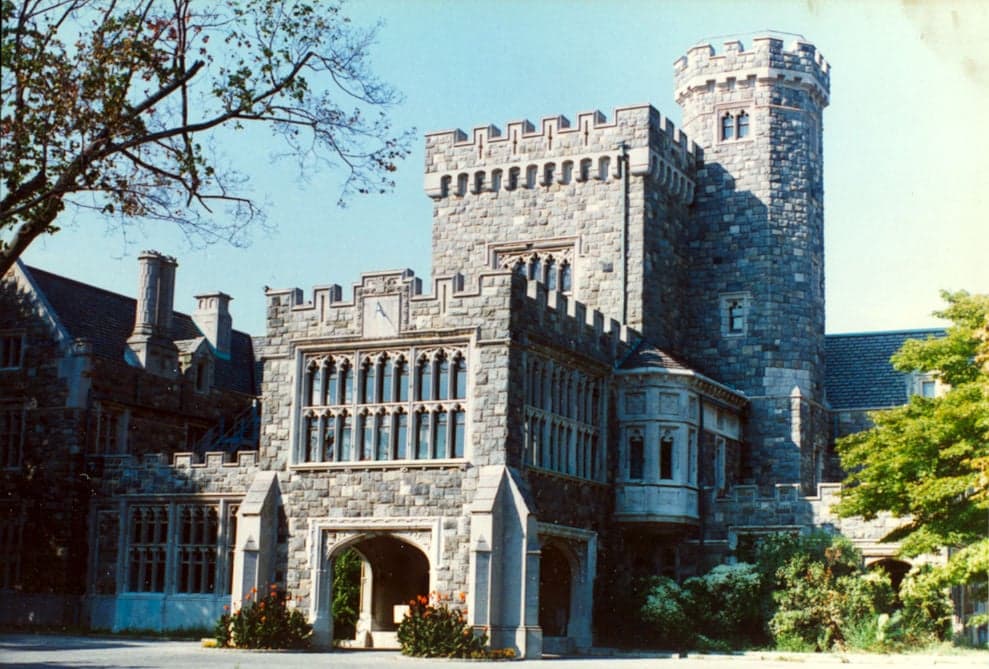
Photo: Wikipedia
Political ClimatePolitical Climate in Nassau County
Showing district-level results — no local-only data available.
Local Political AnalysisPolitical Analysis of Nassau County
Nassau County has long been a bellwether for suburban political trends, but the ground has shifted under our feet. For decades, this was a bastion of moderate Republicanism—think Alfonse D'Amato country—where fiscal conservatism and a live-and-let-live attitude held sway. Today, the county's Cook PVI of D+2 tells the story of a place that's been dragged leftward, but it's a far cry from the D+10 of New York City just across the line. The real story is the internal tug-of-war: the old-school, common-sense majority is still here, but they're fighting an increasingly aggressive progressive wave that's washing in from the city.
How it compares
The difference between Nassau and New York City isn't just a matter of degrees—it's a completely different political ecosystem. In the city, a D+10 PVI means progressive orthodoxy is basically the only game in town. Here in Nassau, you can still breathe. Look at the town-by-town breakdown: Oyster Bay and Hempstead still lean reliably red, with precincts in places like Massapequa and Levittown routinely voting 55-60% for Republican candidates. Meanwhile, the North Shore towns of Great Neck and Port Washington have gone deep blue, mirroring the city's intensity. The swing precincts are the real battlegrounds—places like East Meadow and Hicksville, where working-class families who used to vote their wallets are now being bombarded with cultural messaging they never asked for. The city's influence is undeniable: every new transit-oriented development along the LIRR seems to bring in transplants who want to turn Nassau into a fifth borough. But we're not there yet, and the resistance is real.
What this means for residents
For those of us who've been here a while, the biggest concern is government overreach creeping into daily life. The county executive's office has been pushing mask mandates and vaccine passport schemes that would have been unthinkable a decade ago. Property taxes are already the highest in the nation, and now you're seeing school boards get hijacked by activists pushing critical race theory and gender ideology curricula—stuff that has nothing to do with reading, writing, and arithmetic. The county police department, once a model of community safety, is under constant pressure to "reform" from county legislators who answer to Albany, not to the people who actually live here. It's a slow erosion of the freedom to raise your kids, run your business, and live your life without some bureaucrat telling you how to think.
The cultural distinction between Nassau and the city is stark. In New York, the attitude is "if you don't like it, leave." Here, the attitude is still "live and let live"—but that's under assault. You see it in the fight over local zoning, where the state is trying to force high-density housing into single-family neighborhoods. You see it in the push to defund school resource officers. The old Nassau—the one that built the postwar suburbs on the promise of space, safety, and self-determination—is still here, but it's on the defensive. The next few election cycles will decide whether we remain a place where common sense can still win, or whether we become just another appendage of the city's progressive machine. I'm betting on the former, but it's going to take work.

State Political ClimatePolitical Climate in New York
State Political AnalysisPolitical Environment in the State
New York State has a Cook PVI of D+10, making it one of the most reliably Democratic states in the nation, but that number hides a brutal internal war. The state’s political identity is a tale of two worlds: the five boroughs of New York City, which alone supply roughly 40% of the state’s total vote and lean heavily progressive, versus the vast, rural upstate region that votes Republican by wide margins. Over the last 20 years, the state has lurched further left as downstate population growth and concentrated political power in Albany have overwhelmed upstate’s shrinking influence. If you’re a conservative looking at New York, you’re not looking at a purple state—you’re looking at a state where one party has held a supermajority in the Assembly for decades and where the governor’s mansion has been Democratic since 2006.
Urban vs. rural divide
The political map of New York is a textbook case of geographic polarization. New York City—Manhattan, Brooklyn, Queens, the Bronx, and Staten Island—is the engine of the state’s Democratic dominance. Manhattan alone votes about 85% Democratic in presidential elections, while Staten Island is the only borough that occasionally flirts with Republican candidates. The immediate suburbs—Nassau and Suffolk on Long Island, Westchester and Rockland north of the city—are swing territory that has trended blue in recent cycles, though they still elect some moderate Republicans at the local level. Drive two hours north of the city, and the landscape flips. The Hudson Valley counties like Dutchess, Ulster, and Columbia are purple to light blue, but once you hit the Capital Region around Albany, the rural counties—Greene, Schoharie, Delaware, Otsego—vote Republican by 20 to 30 points. The real red strongholds are in the Southern Tier (Steuben, Chemung, Allegany) and the North Country (St. Lawrence, Jefferson, Lewis), where Trump won with 60% or more in 2020. The divide is so stark that a resident of Buffalo, a blue city in a red region, lives in a completely different political universe than someone in nearby rural Wyoming County. The practical effect is that upstate conservatives feel politically orphaned—their votes are drowned out by the city’s sheer numbers, and state policy reflects it.
Policy environment
New York’s policy environment is aggressively progressive and heavily centralized. The state has the highest combined state and local tax burden in the country, with income tax rates topping out at 10.9% for high earners and property taxes that are among the nation’s highest—especially in upstate counties like Monroe (Rochester) and Onondaga (Syracuse). The regulatory posture is dense: the state’s rent control laws in New York City and its suburbs, the Climate Leadership and Community Protection Act (which mandates net-zero emissions by 2050), and the Scaffold Law (which holds property owners strictly liable for worker injuries) all drive up costs for businesses and homeowners. Education policy is dominated by the teachers’ unions, with the state spending over $28,000 per pupil annually—the highest in the nation—yet graduation rates in cities like Buffalo and Rochester hover around 70%. Healthcare is heavily regulated under the state’s Medicaid program, which covers about 30% of residents, and the state has enacted a public option for health insurance. Election laws are among the most liberal: no-excuse absentee voting, early voting, automatic voter registration, and same-day registration are all in place. For a conservative, the policy environment feels like a one-party state where the legislature routinely overrides local control—for example, the state banned plastic bags statewide, preempted local fracking bans, and imposed a statewide ban on natural gas hookups in new buildings starting in 2026.
Trajectory & freedom
Over the past decade, New York has become measurably less free across multiple dimensions. On gun rights, the state passed the SAFE Act in 2013, which banned assault weapons and high-capacity magazines, and then the Concealed Carry Improvement Act in 2022, which made it a crime to carry a firearm in “sensitive locations” like Times Square, subways, and even private businesses unless the owner posts a sign allowing it. The law was so restrictive that the Supreme Court is currently reviewing it. On parental rights, the state passed the Reproductive Health Act in 2019, which codified abortion up to birth and removed parental notification requirements for minors, and the state’s Education Department has pushed gender identity policies that allow students to change their names and pronouns without parental consent. On speech, the state has considered legislation that would criminalize “misinformation” online, though it hasn’t passed yet. On medical autonomy, the state legalized recreational marijuana in 2021 but then imposed a licensing system so slow and bureaucratic that the black market still dominates. Property rights have been eroded by rent control expansions and the state’s “Good Cause Eviction” law, which makes it nearly impossible to evict a tenant for any reason other than nonpayment. The trajectory is clear: every session, the legislature adds new layers of regulation, and the governor signs them. For a conservative, the state feels like it’s in a permanent expansion of government control over daily life.
Civil unrest & political movements
New York has been a flashpoint for political activism on both sides. The 2020 Black Lives Matter protests in New York City were among the largest in the country, with widespread property damage and a subsequent push to defund the NYPD that resulted in a $1 billion budget cut (later partially restored). The state’s sanctuary policies—New York was one of the first to limit cooperation with ICE—have made it a magnet for immigration-related activism, with cities like Albany and Rochester declaring themselves “sanctuary cities.” On the right, the upstate region has seen a surge in grassroots conservative activism, particularly around school board elections and parental rights. In places like Westchester and Long Island, parents have organized against critical race theory and gender ideology in schools, leading to heated school board meetings and some recall efforts. The state’s election integrity has been a persistent issue: New York was one of the last states to implement no-excuse absentee voting, and the 2020 election saw massive delays in counting absentee ballots, leading to distrust. There’s also a low-level secession movement in upstate counties—the “New York State of Mind” proposal to split the state into two—but it’s mostly symbolic. A new resident would notice that political conversations are tense, especially in mixed company, and that the state’s media environment is dominated by New York City outlets that rarely cover upstate concerns.
Projection
Over the next 5 to 10 years, New York is likely to become even more progressive, but with a growing backlash. The demographic trends are clear: New York City is losing population to the Sun Belt, but the people leaving are disproportionately middle-class families and conservatives, while the city’s population is being replenished by international immigrants who tend to vote Democratic. Upstate is also losing population, but more slowly, and its political influence will continue to shrink as the state’s legislative districts are redrawn to favor downstate. The state’s fiscal situation is precarious—the budget deficit is projected to hit $10 billion by 2027—which could force tax increases or service cuts, further driving out businesses and residents. The wild card is the Supreme Court: if the Court strikes down the Concealed Carry Improvement Act, it could trigger a political realignment in the suburbs, where gun rights are a major issue. But realistically, a conservative moving to New York now should expect that the state will continue to pass progressive legislation on housing, energy, and education, and that their vote will be a drop in a blue bucket. The best-case scenario is that the state’s fiscal crisis forces moderation, but that’s a long shot.
For a conservative considering a move to New York, the bottom line is this: you’ll find like-minded communities in the rural upstate counties, in the Southern Tier, and in parts of the North Country, but you’ll be fighting an uphill battle against a state government that is hostile to your values. The taxes are high, the regulations are thick, and your political voice will be muted. If you’re looking for a place where your vote matters and your freedoms are respected, New York is not that place. But if you have family ties, a job you can’t leave, or a love for the Adirondacks that outweighs the politics, you can carve out a life here—just know what you’re signing up for.
* Values derived from national, state, county, city and local statistics and may differ in a specific area. Last updated: 2026-05-12T07:33:07.000Z
Narrative content on this page is AI-generated and may contain mistakes. Verify any details that matter before acting on them.
ReloMaps may earn a commission from affiliate links at no extra cost to you.

