Photo: Wikipedia
Demographics of New York County
Affluence Level in New York County
An upper-middle-class area. Household wealth, education levels, and homeownership run ahead of national benchmarks.
People of New York County
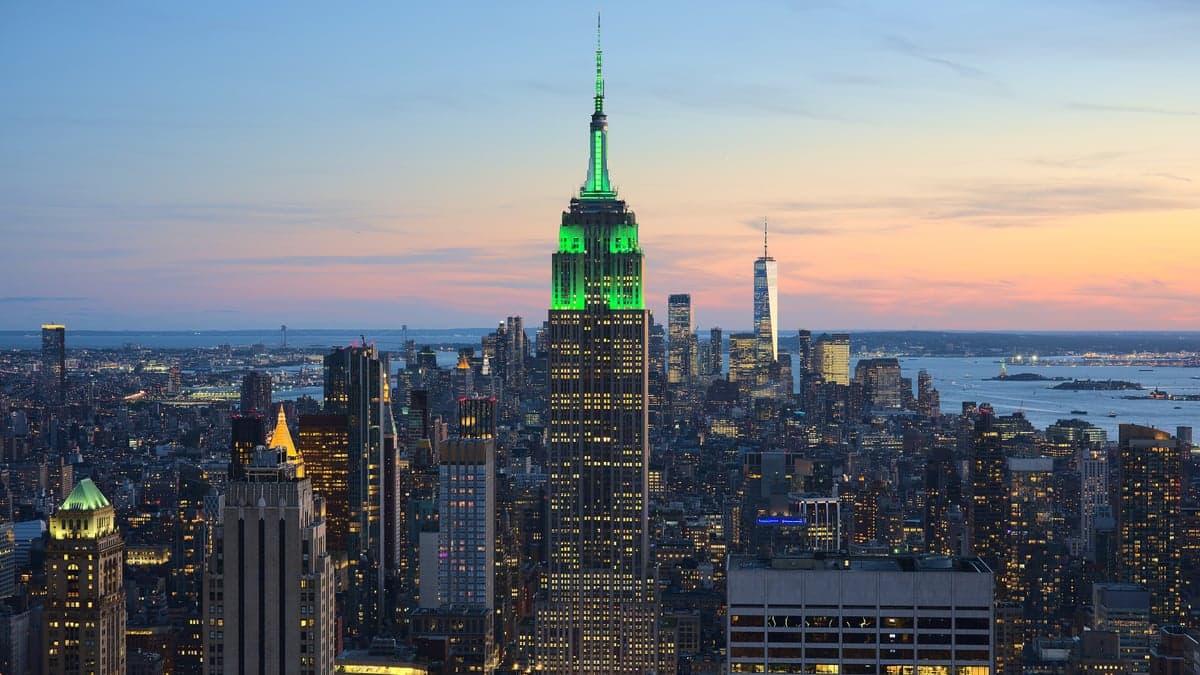
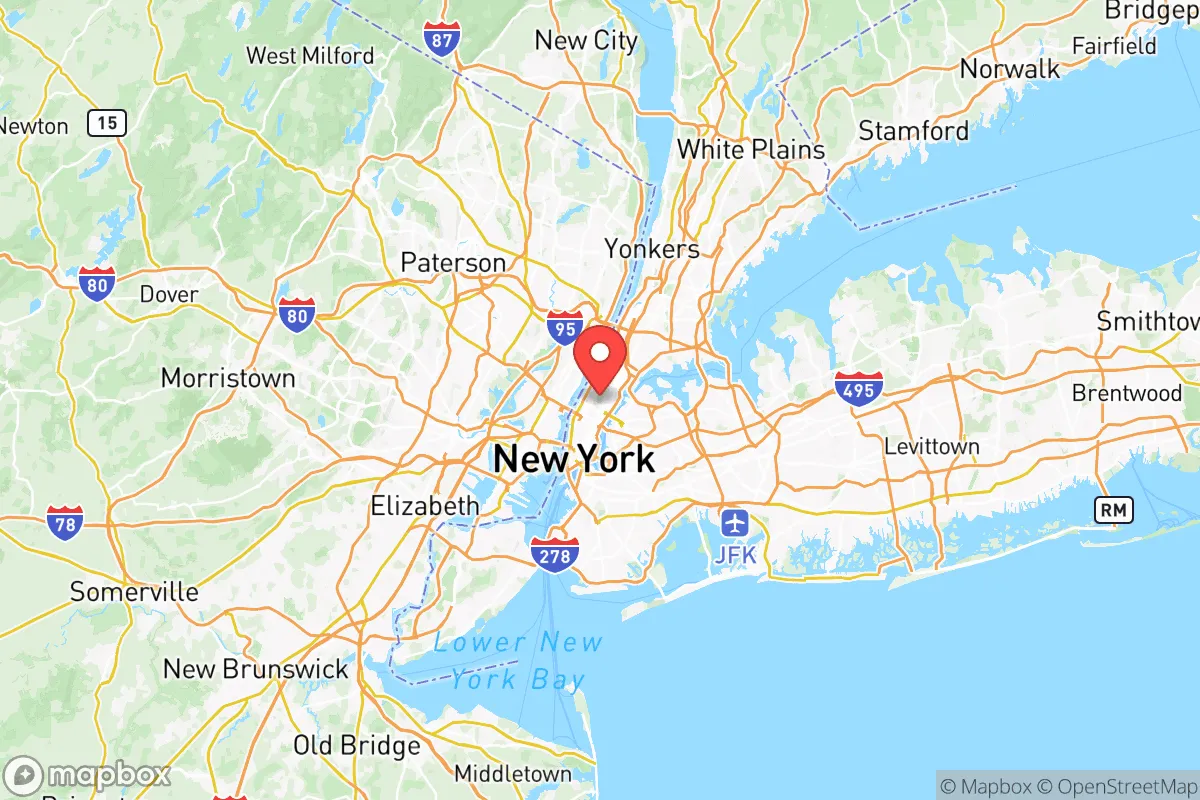
New York County, coterminous with the borough of Manhattan, is one of the most densely populated and culturally layered counties in the United States, home to 1,627,788 residents within just 23 square miles. The county's population today is 46.3% White, 24.3% Hispanic, 12.5% Black, 9.7% East and Southeast Asian, and 2.6% Indian subcontinent, with 12.9% foreign-born and an exceptionally high 64.0% of adults holding a college degree. Manhattan's identity is defined by its role as a global financial, media, and cultural capital, where historic immigrant enclaves coexist with some of the nation's wealthiest neighborhoods. The people of New York County represent a layered mosaic of centuries of migration, from colonial Dutch settlers to post-1965 arrivals from Asia, Latin America, and beyond.
Settlement & growth (pre-1960)
The original inhabitants of what is now New York County were the Lenape people, who lived in seasonal settlements along the island's waterways and forests before European contact. Dutch colonists established New Amsterdam in 1624 at the southern tip of the island, naming it after the fur-trading post on the Hudson River; the settlement's strategic harbor and river access made it a natural hub for commerce. The British seized the colony in 1664, renaming it New York, and by the time of the American Revolution, the county's population had grown to roughly 25,000, concentrated in what is now the Financial District and Lower Manhattan.
The 19th century brought explosive growth through successive immigrant waves. Irish immigrants fleeing the Great Famine arrived in the 1840s and 1850s, settling in the Five Points district and later spreading north into Hell's Kitchen and the Upper West Side. German immigrants followed in large numbers, establishing communities in the East Village and Yorkville on the Upper East Side. By the 1880s, Eastern European Jews began arriving in massive numbers, transforming the Lower East Side into one of the most densely populated neighborhoods on earth, with tenement housing and a vibrant Yiddish-language culture. Italian immigrants concentrated in Little Italy and East Harlem, while Chinese laborers and merchants formed the early core of what would become Chinatown around Mott Street.
The early 20th century saw the Great Migration of Black Americans from the rural South to northern industrial cities. Harlem became the epicenter of Black cultural and political life in America, with the Harlem Renaissance of the 1920s producing enduring contributions to literature, music, and art. Puerto Rican migration accelerated after World War II, with East Harlem — known as Spanish Harlem or El Barrio — becoming the primary destination. The county's population peaked at 2.3 million in 1910 before beginning a long decline as suburbanization and white flight drew residents to the outer boroughs and suburbs.
Modern era (post-1965)
The 1965 Hart-Cellar Immigration and Nationality Act fundamentally reshaped New York County's demographics by opening immigration from Asia, Africa, and Latin America. The county's population bottomed out at around 1.4 million in the 1970s and 1980s, a period of fiscal crisis,

* Values derived from national, state, county, city and local statistics and may differ in a specific area. Last updated: 2026-10-12T10:37:03.000Z
Narrative content on this page is AI-generated and may contain mistakes. Verify any details that matter before acting on them.
ReloMaps may earn a commission from affiliate links at no extra cost to you.

