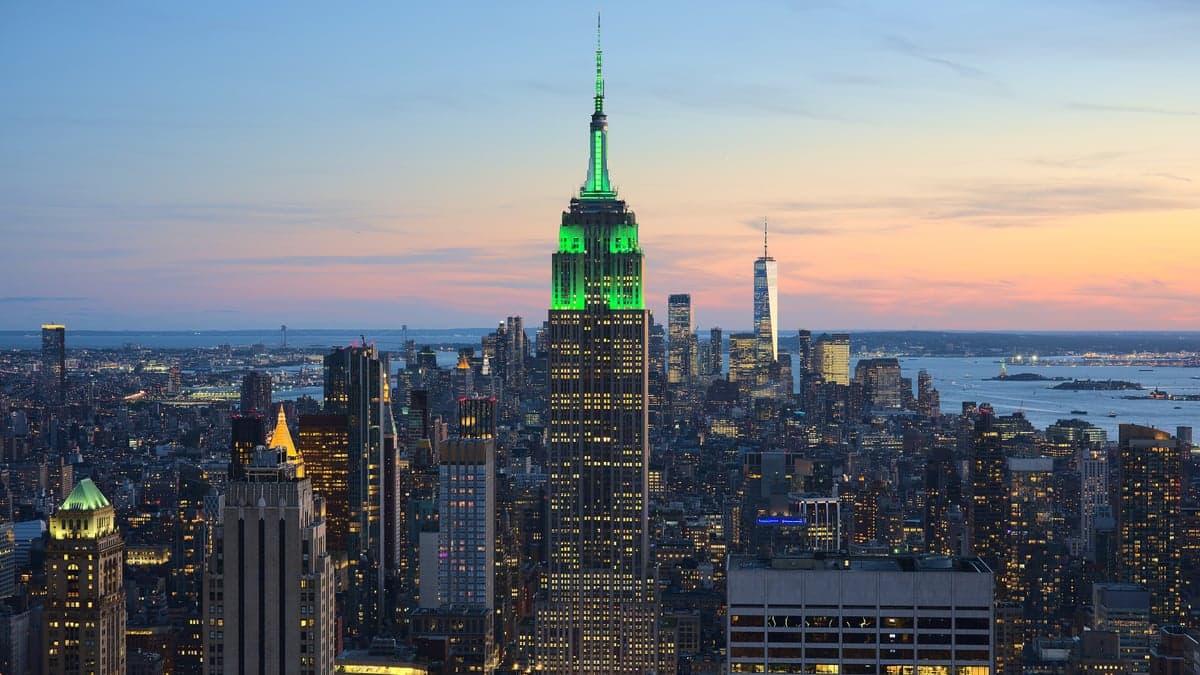
Photo: Wikipedia
Political ClimatePolitical Climate in New York County
Showing district-level results — no local-only data available.
Local Political AnalysisPolitical Analysis of New York County
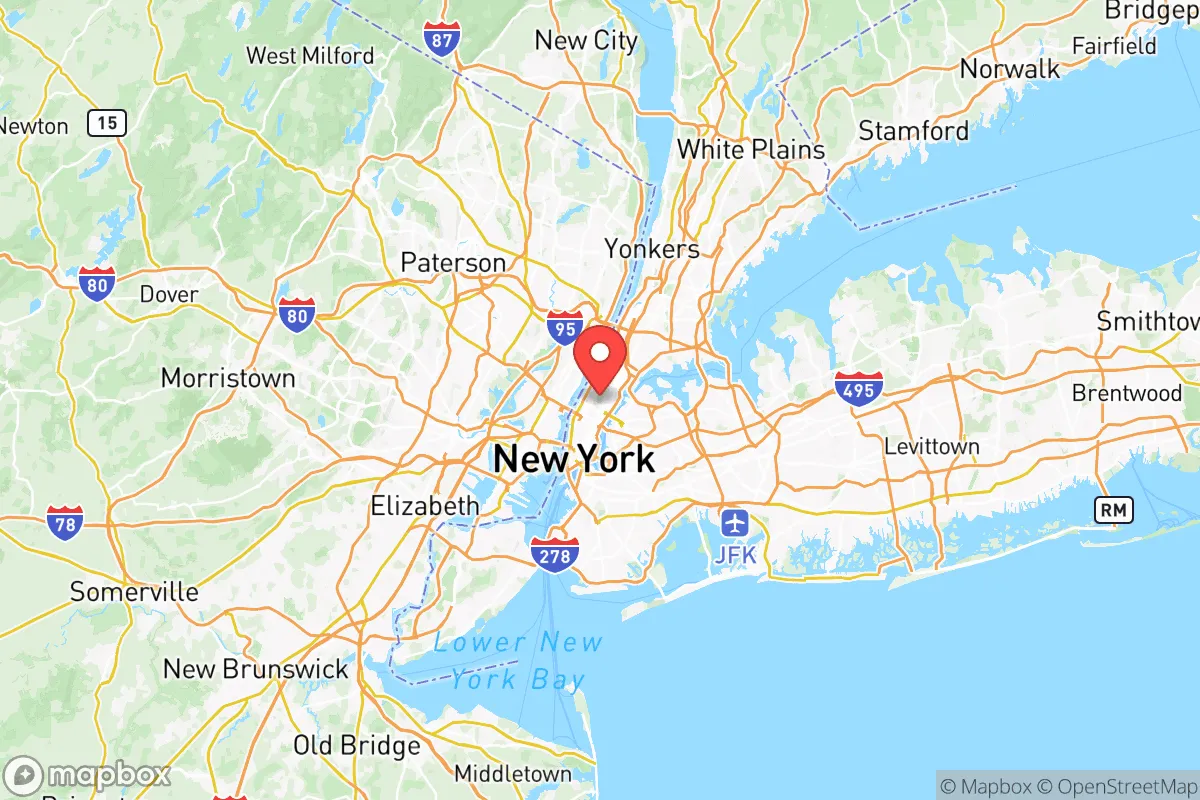
New York County—Manhattan—is the most Democratic county in the United States by partisan lean, with a Cook Partisan Voting Index of D+33. That means the county votes about 33 points more Democratic than the national average in presidential elections. In 2024, Manhattan gave Kamala Harris roughly 84% of the vote, while Donald Trump barely cracked 14%. The trajectory here has been steadily leftward for decades: even moderate Republicans who once held seats in the Upper East Side or Midtown have all but vanished. The real political action now happens in Democratic primaries, where progressive challengers often unseat incumbents—as seen in 2024 when a democratic socialist beat a longtime moderate in a Lower East Side Assembly race. Neighborhoods like Greenwich Village, Harlem, and the Upper West Side are reliably deep-blue, while the Financial District and parts of Murray Hill show slightly more competitive margins—still Democratic, but with a higher share of independent and Republican-leaning voters.
How it compares to New York City as a whole
New York City overall is also heavily Democratic, but Manhattan is the most liberal borough by a clear margin. The city’s overall PVI is roughly D+20 to D+25—still deep blue, but less extreme than Manhattan’s D+33. The difference comes from the other boroughs: Brooklyn and the Bronx are also very Democratic (though Brooklyn has a growing conservative Orthodox Jewish bloc in parts like Borough Park), while Queens is more mixed, and Staten Island is the only borough that occasionally flips Republican in local races. In 2024, Staten Island voted for Trump by about 8 points, while Manhattan voted for Harris by nearly 70 points. So when you compare New York County to the broader city, you’re comparing the most progressive urban core to a more diverse political landscape. The state of New York as a whole is D+10, meaning Manhattan pulls the state average left, while upstate counties like Wyoming or Orleans pull it right.
What this means for residents
For liberal residents, Manhattan’s political climate means their views are the default—on housing, transit, climate policy, and social issues. City Council and State Assembly primaries are where the real choices happen, and turnout in those races is often low, so engaged progressives can have outsized influence. For conservative residents, life in Manhattan can feel isolating politically, but they are not invisible. There are active Republican clubs on the Upper East Side and in the Financial District, and conservative voters tend to cluster in a few precincts—like those around Stuyvesant Town or the luxury towers near Battery Park City. In practice, both sides experience the same city services and policies: Manhattan’s rent stabilization laws, congestion pricing (implemented in 2025), and strict gun regulations affect everyone equally. The main distinction is social: a conservative Manhattanite learns to keep political opinions low-key in many

State Political ClimatePolitical Climate in New York
State Political AnalysisPolitical Environment in the State
New York is a solidly Democratic state at the presidential level, voting for the party by double digits in every election since 2012, but that top-line number hides a deeply fractured political landscape. The dominant coalition is built on the massive population of New York City and its inner-ring suburbs, while upstate and rural counties have been trending red for decades. Over the last 20 years, the state has become more Democratic overall as the NYC metro area grew and upstate lost population, but the 2024 election showed suburban shifts toward Republicans on crime and taxes, narrowing the margin in places like Nassau County and Suffolk County on Long Island.
Urban vs. rural divide
The political map of New York is a tale of two states. New York City — the five boroughs of Manhattan, Brooklyn, Queens, the Bronx, and Staten Island — casts roughly 40% of the statewide vote and is overwhelmingly Democratic, with Staten Island being the only borough that occasionally votes Republican. The immediate suburbs — Westchester County, Nassau County, and Suffolk County — are competitive but lean Democratic, though Republicans have made inroads in recent cycles, especially in Suffolk. Upstate, the major cities of Buffalo, Rochester, Syracuse, and Albany are Democratic islands surrounded by deep-red rural territory. For example, Erie County (Buffalo) votes blue, but neighboring Niagara, Genesee, and Wyoming counties are solidly Republican. Similarly, Monroe County (Rochester) is Democratic, while Ontario, Livingston, and Wayne counties are reliably red. The Hudson Valley is a mix: Ulster County leans left, Dutchess County is a true swing area, and Orange County has shifted right in recent years. This geographic split means that a conservative family moving to rural upstate New York will find a very different political environment than one settling in Westchester.
Policy environment
New York’s policy environment is shaped by decades of one-party Democratic control in Albany. The state has the highest combined state and local tax burden in the nation, with a progressive income tax that tops out at 10.9% for high earners, plus high property taxes and a sales tax that varies by county. Rent regulation is strict in New York City and some suburbs, and the state’s environmental regulations are among the most aggressive in the country. On education, per-pupil spending is the highest in the US, but school choice is limited — charter schools exist but are capped, and there is no voucher program. Healthcare is heavily regulated, with a state-run insurance exchange and broad Medicaid expansion. Election laws are liberal: no-excuse absentee voting, early voting, and automatic voter registration are all in place. Gun laws are among the strictest nationally, including the SAFE Act of 2013, which requires universal background checks, a ban on assault weapons, and a licensing system for handguns. Property rights are constrained by rent stabilization in NYC and strong tenant protections statewide. For a conservative relocator, the tax and regulatory climate is a major consideration, especially compared to Sun Belt states.
Recent policy direction
Over the last five years, New York has passed a wave of progressive legislation that directly affects the liberties a relocator might weigh. On gun rights, the 2022 Concealed Carry Improvement Act, passed in response to the Supreme Court’s Bruen decision, made New York a “sensitive places” state, banning firearms in most public spaces and requiring “good moral character” for licenses — a law that is still being litigated. On parental and education rights, the state has moved in the opposite direction of Florida: it mandates LGBTQ+ inclusive curriculum and has not passed any “parental rights” bills. On speech, there is no specific hate speech law, but anti-discrimination statutes are broad. Privacy and surveillance: New York has a biometric privacy law and strict data breach notification rules, but also extensive public surveillance in NYC (subway cameras, license plate readers). Medical and bodily autonomy: abortion is protected up to viability under the 2019 Reproductive Health Act, and the state has a
* Values derived from national, state, county, city and local statistics and may differ in a specific area. Last updated: 2026-10-12T10:37:03.000Z
Narrative content on this page is AI-generated and may contain mistakes. Verify any details that matter before acting on them.
ReloMaps may earn a commission from affiliate links at no extra cost to you.

