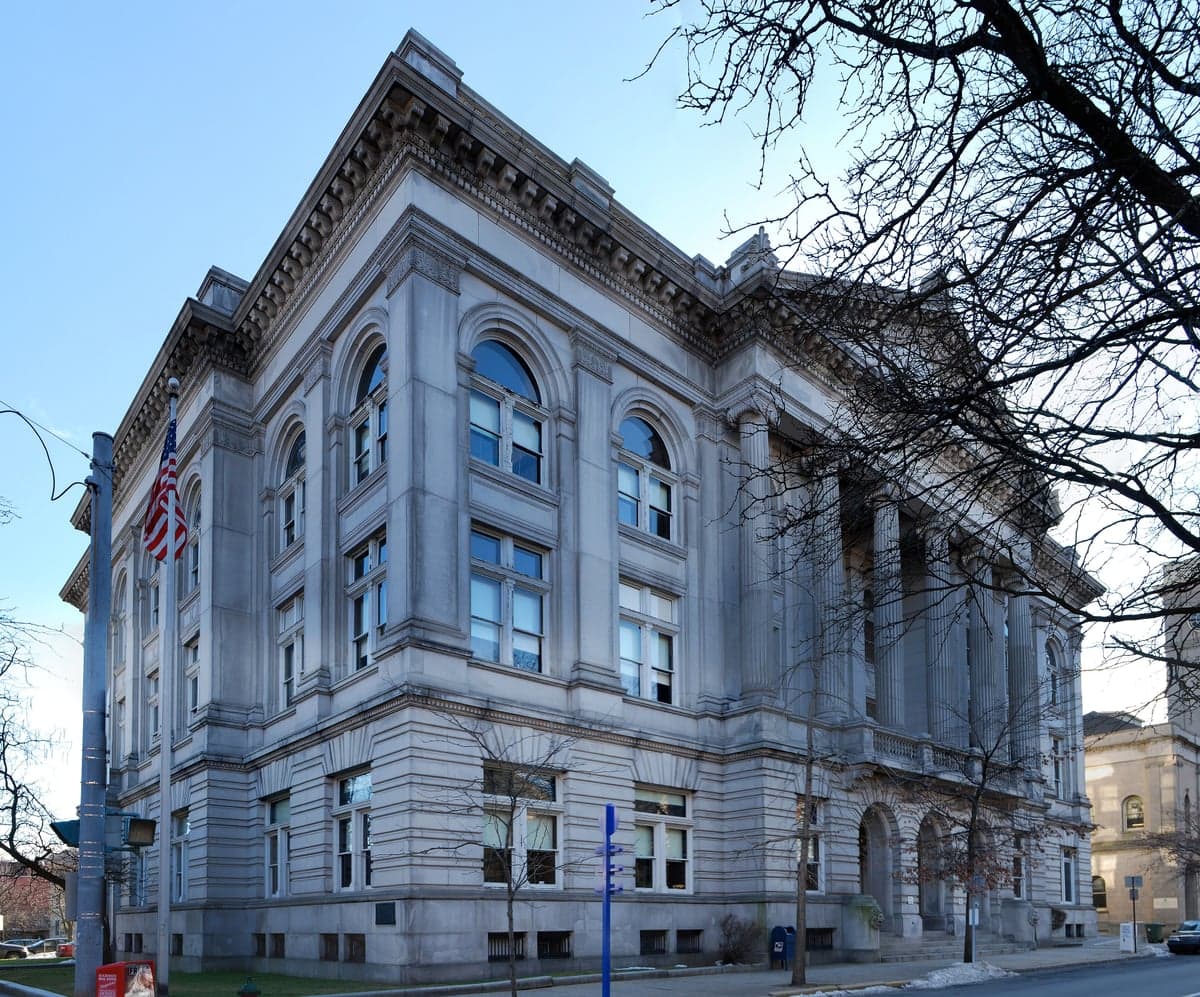
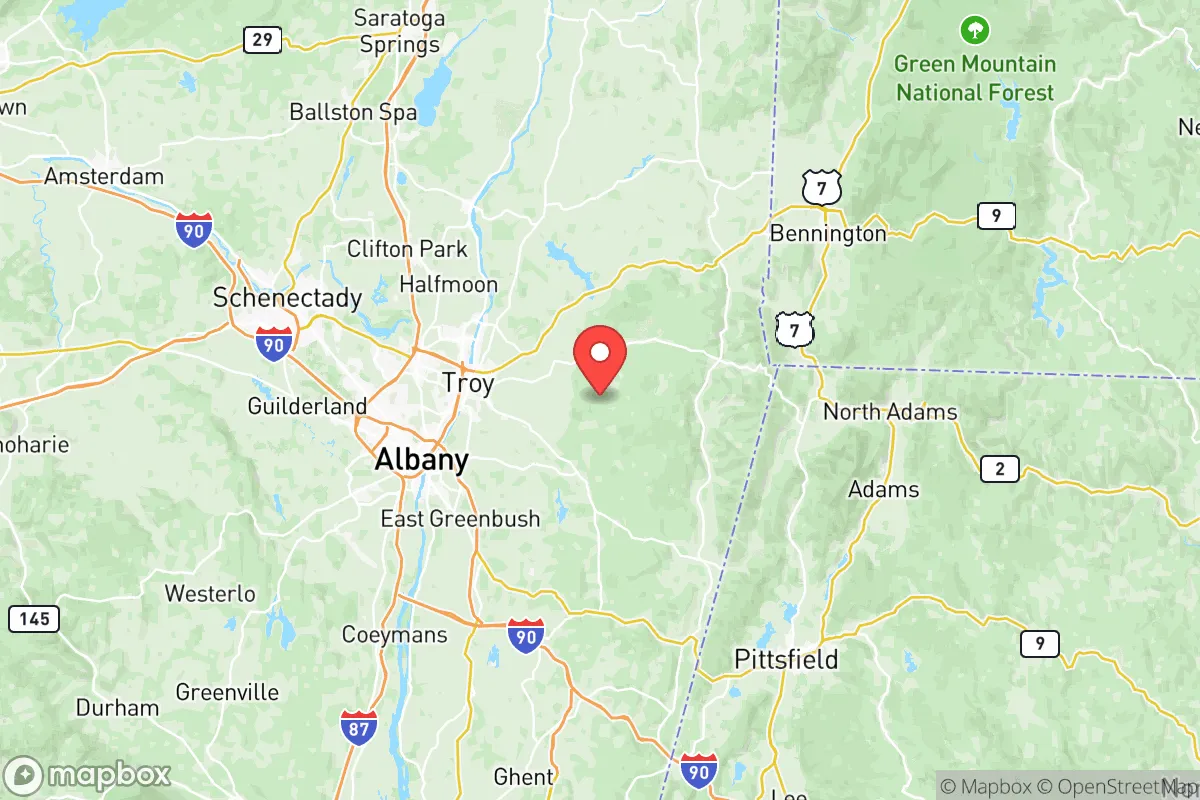
Photo: Wikipedia
Personal Sovereignty in Rensselaer County
Moderate friction. Expect trade-offs in some aspect of personal liberty and independence.
What does Personal Sovereignty tell us?
Personal Sovereignty measures your capacity for self-reliance and independence with minimal government friction. Higher scores mean fewer barriers between you and the way you want to live... but it assumes you have the space you need and good neighbors.
What does this tell us?
Personal Sovereignty measures your capacity for self-reliance and independence with minimal government friction. Higher scores mean fewer barriers between you and the way you want to live... but it assumes you have the space you need and good neighbors.
State Policy
Energy independence: Importer (12% of energy produced in-state)
Personal Liberty
Homesteading

Personal Liberty Analysis
Rensselaer County offers a mixed personal sovereignty environment where state-level constraints from Albany clash with a more independent, rural-minded local culture, creating a landscape that requires strategic navigation for freedom-oriented residents. The county’s autonomy profile varies dramatically from the Hudson River corridor to its eastern farmlands and hill towns, meaning a resident’s actual experience of personal liberty depends heavily on which municipality they choose as home. For those prioritizing self-reliance, the key is understanding where local enforcement patterns and zoning flexibility can mitigate New York’s broader regulatory reach.
Tax burden and regulatory posture across Rensselaer County towns
New York State imposes one of the highest combined tax burdens in the nation, and Rensselaer County residents feel this directly through property taxes that average roughly 2.5% of assessed home value, among the highest in the country. The county’s overall property tax rate hovers around $25 per $1,000 of assessed value, though this varies significantly between jurisdictions — Troy and Rensselaer city carry higher municipal levies, while towns like Schodack, Nassau, and Berlin offer somewhat lower rates due to fewer municipal services. The regulatory posture is heavily shaped by state mandates: New York’s Scaffold Law, strict environmental review under SEQRA, and prevailing wage requirements drive up construction and business costs countywide. However, local enforcement varies — Stephentown and Hoosick are known for a lighter touch on code enforcement and zoning variances compared to the more bureaucratic atmosphere in Troy or East Greenbush. For a freedom-oriented resident, the practical workaround is choosing a town where the local board is known for common-sense flexibility rather than rigid adherence to every state guideline.
Self-defense rights and New York gun law specifics in Rensselaer County
New York’s firearm regulations are among the most restrictive nationally, and Rensselaer County operates entirely within that state framework — meaning a permit is required to possess a handgun, the SAFE Act’s assault weapon ban remains in effect, and the 2023 CCIA requires a concealed carry license with a 16-hour training course and a “good moral character” determination. The county’s pistol permit office in Troy processes applications with a reputation for being professional but slow, with wait times often exceeding six months for initial permits. Local sheriff’s office attitudes matter here: Rensselaer County Sheriff Patrick Russo has publicly opposed the CCIA and stated his office will not proactively enforce its most controversial provisions, such as the sensitive location restrictions, unless a specific complaint is made. This creates a de facto enforcement gap that matters on the ground — in rural towns like Berlin, Stephentown, and Petersburgh, open carry of long guns is commonly seen and socially accepted, while in Troy or Rensselaer city, visible firearms draw police attention. Magazine capacity restrictions (10 rounds) and the state’s background check system for ammunition purchases apply uniformly, but the practical experience of exercising self-defense rights is far more relaxed east of the Hudson River than in downstate or even in neighboring Albany County.
Self-reliance and homesteading viability across the county
Rensselaer County’s eastern half offers genuine homesteading potential, with Stephentown, Berlin, and Petersburgh featuring large rural lots, working farms, and a culture of self-sufficiency that predates modern zoning codes. Minimum lot sizes in these towns typically range from 2 to 5 acres in rural-residential zones, and many properties sit on 10 to 50 acres with no HOA restrictions. Off-grid feasibility is moderate: New York State requires a building permit for any habitable structure, and the state’s energy code mandates certain insulation and window standards even for owner-built homes, but enforcement in remote areas is inconsistent. Rainwater collection is legal in New York for non-potable uses, and composting toilets are permitted with county health department approval, making it possible to reduce utility dependence. Solar panel installation is straightforward, though net metering rules require utility interconnection for grid-tied systems. The biggest regulatory hurdle for homesteaders is the state’s agricultural assessment program — while it offers tax breaks for active farming, it requires a minimum of 7 acres and $10,000 in annual agricultural sales, which can be a barrier for small-scale operators. Nassau and Schodack offer a middle ground: larger lots than the suburban corridor but closer to services, making them viable for serious gardening and small livestock without full rural isolation.
Personal liberties in daily life: parental rights, medical autonomy, and property
New York State law grants parents broad authority over their children’s education, including unrestricted homeschooling rights with a simple annual notice requirement and no mandated curriculum approval — a significant freedom advantage over states like Massachusetts or Pennsylvania. Rensselaer County has an active homeschooling community, particularly in the rural eastern towns, with local support groups and co-ops operating openly. Medical autonomy is more constrained: New York’s vaccine mandates for school attendance and healthcare workers remain in effect, and the state’s COVID-era emergency powers have been codified into permanent law, giving the health commissioner broad authority during declared emergencies. Property rights are generally respected, though the state’s environmental conservation law allows for wetland designation that can restrict development without compensation — a concern for rural landowners in Stephentown and Berlin where DEC-regulated wetlands are common. Free speech protections are standard First Amendment, but New York’s hate crimes statute and anti-discrimination laws create legal exposure for certain types of expression that would be protected in other states. The practical reality is that local culture in Rensselaer County’s rural towns is highly libertarian — neighbors generally mind their own business, and county-level officials are notably resistant to state overreach, as seen in the sheriff’s stance on gun laws and the county legislature’s frequent resolutions opposing Albany mandates.
Compared to other regions in the Northeast, Rensselaer County offers a meaningful but incomplete personal sovereignty — the state-level tax and regulatory burden is real and unavoidable, but the county’s rural character, local official resistance, and geographic diversity create pockets where a freedom-oriented lifestyle is genuinely viable. For someone willing to choose their town carefully — Stephentown or Berlin for maximum homesteading autonomy, Schodack or Nassau for a balanced rural-suburban compromise, and avoiding Troy or Rensselaer city for tighter regulation — the area provides more personal liberty than most of downstate New York or the immediate Boston-Washington corridor, while still falling short of the freedom found in states like New Hampshire or Texas. The tradeoff is access to the economic and cultural resources of the Capital District, which for many families offsets the regulatory frustrations of living under Albany’s authority.

* Values derived from national, state, county, city and local statistics and may differ in a specific area. Last updated: 2026-08-24T16:31:13.000Z
Narrative content on this page is AI-generated and may contain mistakes. Verify any details that matter before acting on them.
ReloMaps may earn a commission from affiliate links at no extra cost to you.

