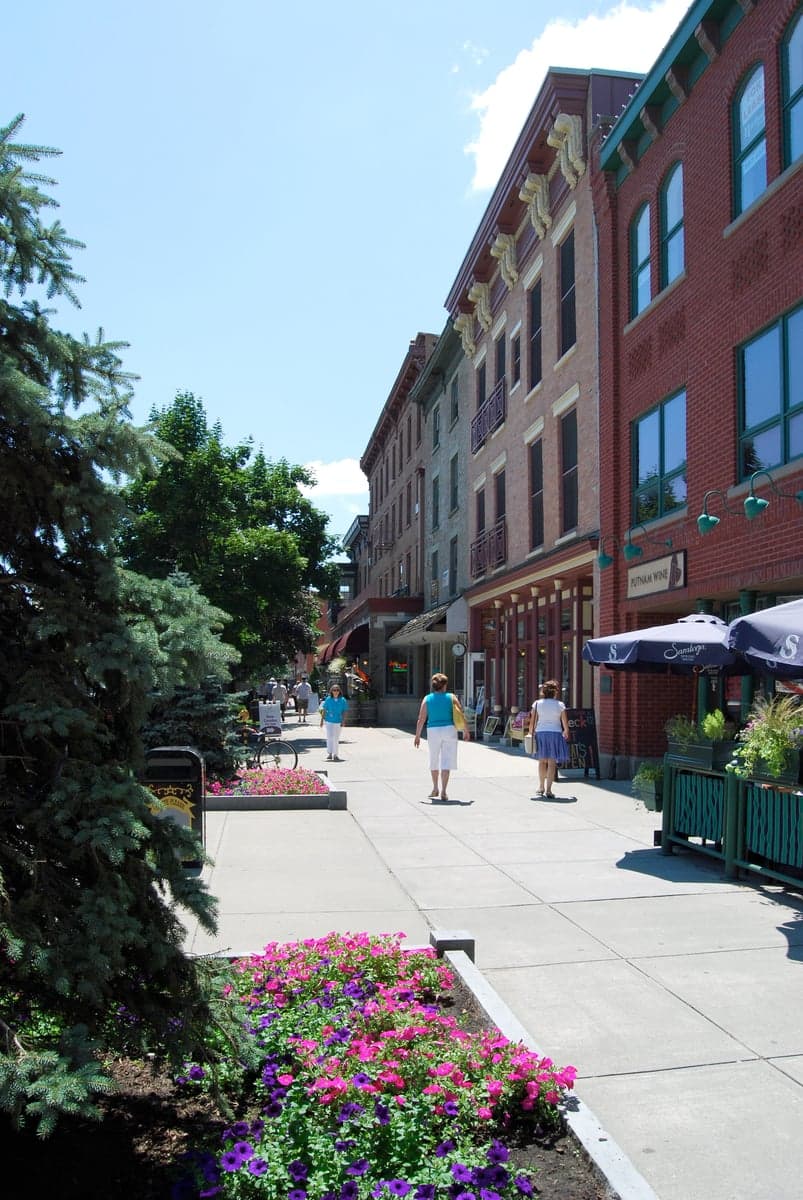
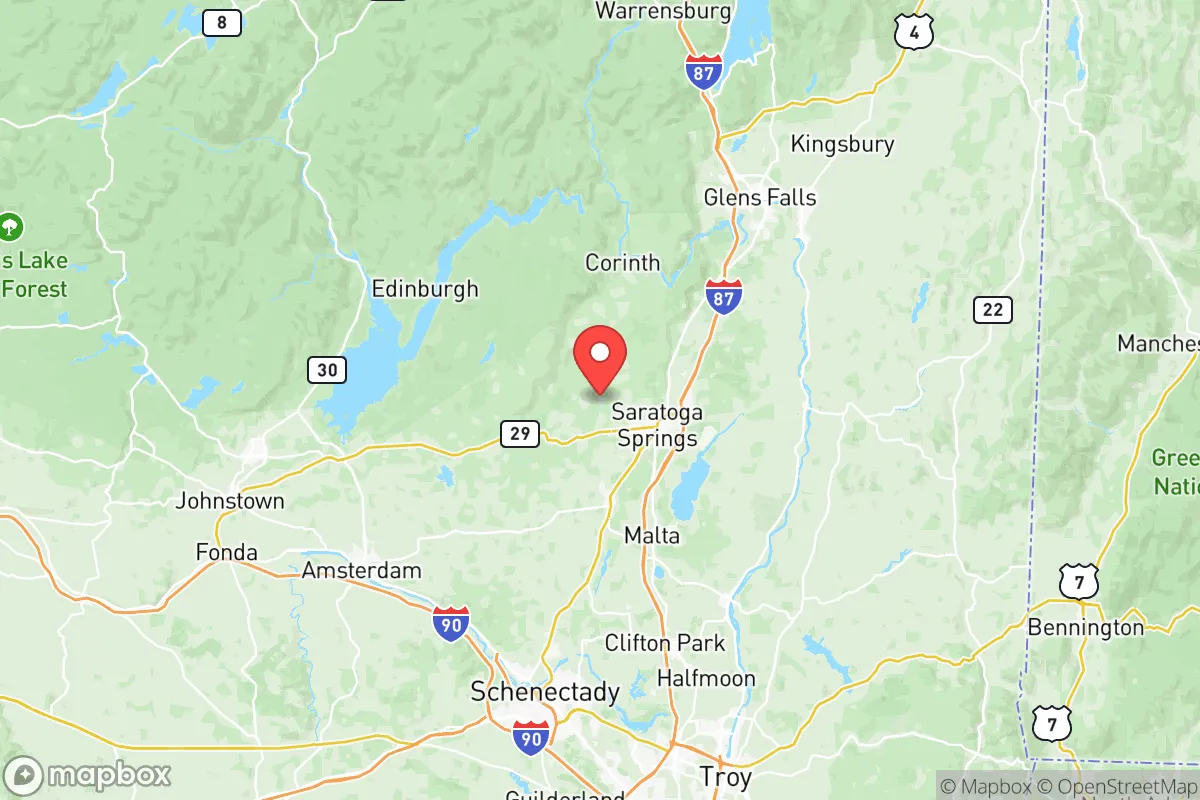
Photo: Wikipedia
Personal Sovereignty in Saratoga County
Moderate friction. Expect trade-offs in some aspect of personal liberty and independence.
What does Personal Sovereignty tell us?
Personal Sovereignty measures your capacity for self-reliance and independence with minimal government friction. Higher scores mean fewer barriers between you and the way you want to live... but it assumes you have the space you need and good neighbors.
What does this tell us?
Personal Sovereignty measures your capacity for self-reliance and independence with minimal government friction. Higher scores mean fewer barriers between you and the way you want to live... but it assumes you have the space you need and good neighbors.
State Policy
Energy independence: Importer (12% of energy produced in-state)
Personal Liberty
Homesteading

Personal Liberty Analysis
Saratoga County, New York, offers a complex landscape for personal sovereignty that demands careful navigation by those prioritizing autonomy. While the broader state of New York imposes some of the nation's most restrictive gun laws, highest tax burdens, and most aggressive regulatory frameworks, Saratoga County itself presents a more nuanced reality—a buffer zone where conservative values and self-reliance still find breathing room, particularly outside the immediate orbit of Albany. For single individuals and parents evaluating relocation from a survivalist or prepper mindset, the county's viability hinges on understanding where local enforcement culture diverges from state mandates, and which specific towns still permit a degree of self-determined living that is increasingly rare in the Northeast.
Tax burden and regulatory posture in Saratoga County vs. the state
New York State's tax burden is the highest in the nation, and Saratoga County is not exempt from this reality. Property taxes here average around 2.5% of assessed home value, which can translate to $6,000-$10,000 annually on a median-priced home—a significant fixed cost that erodes self-sufficiency. The county's regulatory posture, however, is markedly less hostile than in downstate or urban areas. Towns like Greenfield and Moreau maintain a more hands-off approach to land use compared to the denser suburbs of Clifton Park or Saratoga Springs. The county's planning departments generally enforce state building codes but rarely add local overlay restrictions that would impede a homesteader's ability to erect a workshop, install solar panels, or keep livestock. That said, any new construction or significant renovation will trigger state-mandated energy codes and permitting fees that can run $500-$2,000. The real regulatory friction comes from state-level agencies—the DEC's wetland protections can shut down a project on a quarter-acre of seasonal marsh, and the DOH's well and septic requirements add $15,000-$30,000 to any off-grid build. For those willing to buy existing rural properties with grandfathered systems, the regulatory burden drops considerably.
Self-defense realities: gun laws and local enforcement culture
This is the sharpest edge of the sovereignty question in Saratoga County. New York's SAFE Act and 2022 CCIA make it a felony to possess a standard-capacity magazine (over 10 rounds) or a semi-automatic rifle that the state deems an "assault weapon." The permitting process for a pistol license takes 6-12 months in Saratoga County, requires four character references, a 16-hour safety course, and a background check that includes social media review. However, the county's Sheriff's Office is notably more pro-Second Amendment than counterparts in Albany or Westchester. Sheriff Michael Zurlo has publicly stated his office prioritizes violent crime enforcement over "technical violations" of the CCIA. In practice, this means that in towns like Hadley and Day, residents who keep standard-capacity magazines for home defense are unlikely to face prosecution unless they commit another crime. The county's concealed carry permitting, while still "may-issue" in theory, is effectively "shall-issue" for applicants with clean records. For parents, this creates a bifurcated reality: you can legally own firearms for home defense, but transporting them across county lines to a shooting range requires strict compliance with locked-case and ammunition-separation rules. The nearest gun-friendly ranges are in Wilton and Mechanicville, both of which host regular training events for defensive shooting.
Self-reliance and homesteading viability across the county
The viability of a self-reliant lifestyle in Saratoga County varies dramatically by town. In the northern and western townships—Edinburg, Corinth, Hadley, and Day—you can find parcels of 5-20 acres for under $100,000, with minimal zoning restrictions. These areas allow chickens, goats, and even small-scale livestock without special permits. Lot sizes in these rural zones start at 2 acres minimum, but many properties sit on 10+ acres with existing wells and septic. Off-grid feasibility is moderate: solar arrays are legal and common, but net metering requires a contract with National Grid, and battery storage systems must meet state fire codes. Rainwater collection is unrestricted for non-potable use, but potable systems require a permit. The biggest hurdle is the Adirondack Park Agency jurisdiction that covers parts of Edinburg and Day—if your property falls within the Park boundary, you face additional restrictions on tree clearing, building placement, and even exterior paint colors. In contrast, Clifton Park and Halfmoon have 1-acre minimums, homeowners' associations that ban livestock, and strict noise ordinances that make generator use or woodworking problematic. For the serious prepper, the northern tier of the county offers the best balance of affordability, lax enforcement, and land availability.
Personal liberties: parental rights, medical autonomy, and property
Saratoga County's school districts—particularly Burnt Hills-Ballston Lake, Schuylerville, and South Glens Falls—have become battlegrounds for parental rights. School board meetings in 2023-2025 saw heated debates over curriculum transparency, library materials, and medical consent policies. The result has been a patchwork: some districts now require parental opt-in for any health surveys or mental health screenings, while others maintain more permissive policies. Homeschooling is legal and relatively straightforward—parents file a simple notice of intent and submit quarterly reports—but the state requires annual standardized testing or a portfolio review. Medical autonomy is constrained by New York's vaccine mandates for school attendance, which include MMR, DTaP, and polio, with no philosophical exemption. Religious exemptions are technically available but increasingly challenged in court. For property rights, the county's assessment practices are a concern: the town of Moreau reassesses annually, meaning your tax bill can spike 10-15% in a single year if your property value rises. There is no statewide property tax cap for school levies, so local districts can raise taxes without voter approval. Free speech is protected in public spaces, but the county's noise ordinances and public assembly permits can be used to restrict protests or gatherings—a fact that has frustrated both conservative and liberal groups.
In the broader context of the Northeast, Saratoga County represents a middle ground for personal sovereignty—far more viable than the urban cores of New York City or Albany, but significantly more constrained than the free counties of New Hampshire or northern Pennsylvania. For the single individual or family willing to navigate high property taxes and state-level gun restrictions, the county offers a community where conservative values still hold sway at the local level, where homesteading is possible on a budget, and where the sheriff's office provides a buffer against the worst of state overreach. The key is choosing the right town: Hadley and Day for maximum autonomy, Greenfield for a balance of access and space, and avoiding Saratoga Springs and Clifton Park unless you're willing to trade sovereignty for convenience. This is not a sanctuary county, but for those who understand the rules and are willing to work within them, it offers a livable compromise in a state that increasingly values control over freedom.

* Values derived from national, state, county, city and local statistics and may differ in a specific area. Last updated: 2026-05-12T04:53:08.000Z
Narrative content on this page is AI-generated and may contain mistakes. Verify any details that matter before acting on them.
ReloMaps may earn a commission from affiliate links at no extra cost to you.

