Photo: Wikipedia
Quality of Life in Saratoga County
A livable area that tracks near national norms for affordability, walkability, and neighborhood health.
What does Quality of Life tell us?
Quality of Life measures an area by evaluating factors like cost of living, nearby amenities, country club access, airport proximity, socioeconomic signals and neighborhood character. For large states, this is a general average — quality of life can vary dramatically between metro areas, suburbs, and rural communities within the same state.
What does this tell us?
Quality of Life measures an area by evaluating factors like cost of living, nearby amenities, country club access, airport proximity, socioeconomic signals and neighborhood character. For large states, this is a general average — quality of life can vary dramatically between metro areas, suburbs, and rural communities within the same state.
Cost of Living
16% above national average
107%
The Real Cost of Living in Saratoga County for 2026
| Tier | Individual | Family (4) |
|---|---|---|
| Survival | $21k | $40k |
| Comfortable | $63k | $93k |
| Luxury | $168k+ | $260k+ |
| Elite (Top 5%) | $198k+ | $306k+ |
Quality-of-Life Analysis
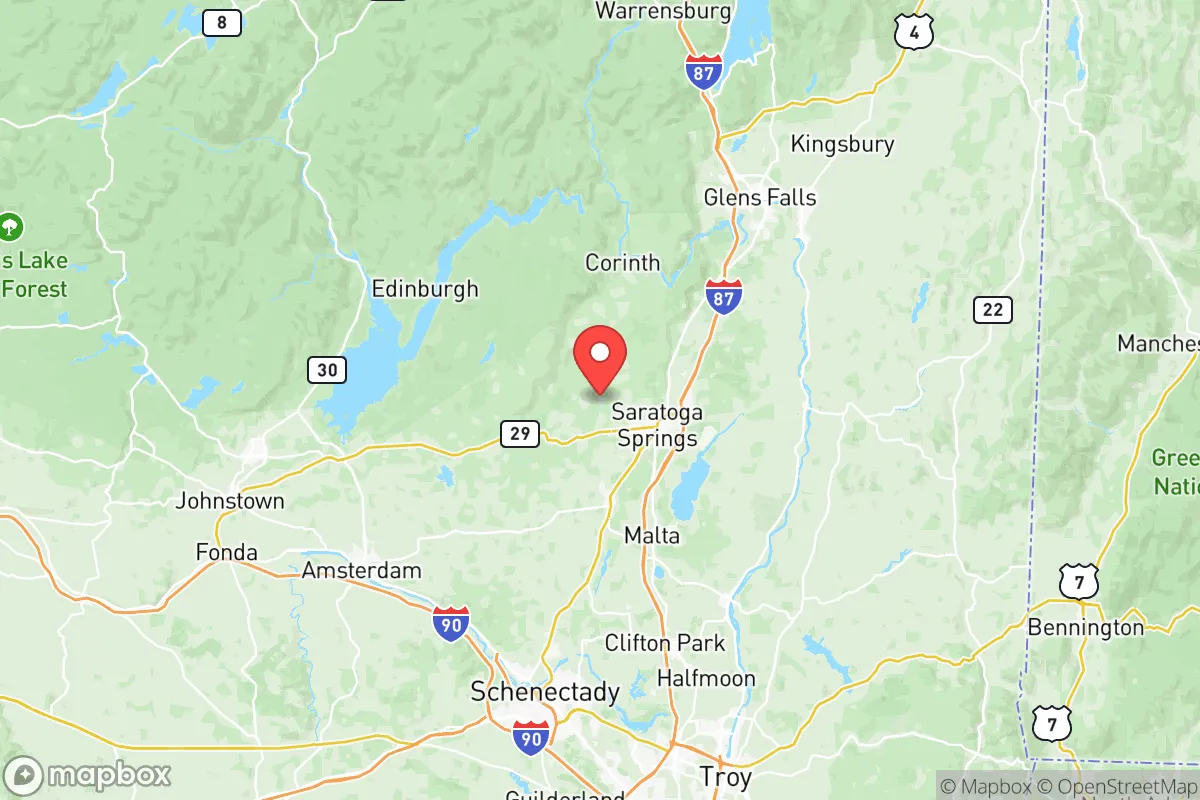
Saratoga County offers a broad spectrum of quality-of-life options, from the bustling, amenity-rich city of Saratoga Springs to quiet, agricultural hamlets like Rock City Falls and the suburban bedroom communities of Clifton Park. The county’s character shifts dramatically within a 20-minute drive, attracting young professionals and second-home buyers to its urban core, families seeking good schools and commuter access in its southern towns, and those craving privacy and land in its northern and western rural pockets. With a cost of living index of 116 (100 being the U.S. average), the county is more expensive than the national norm, but the value proposition varies widely depending on location.
Largest town(s) & population centers
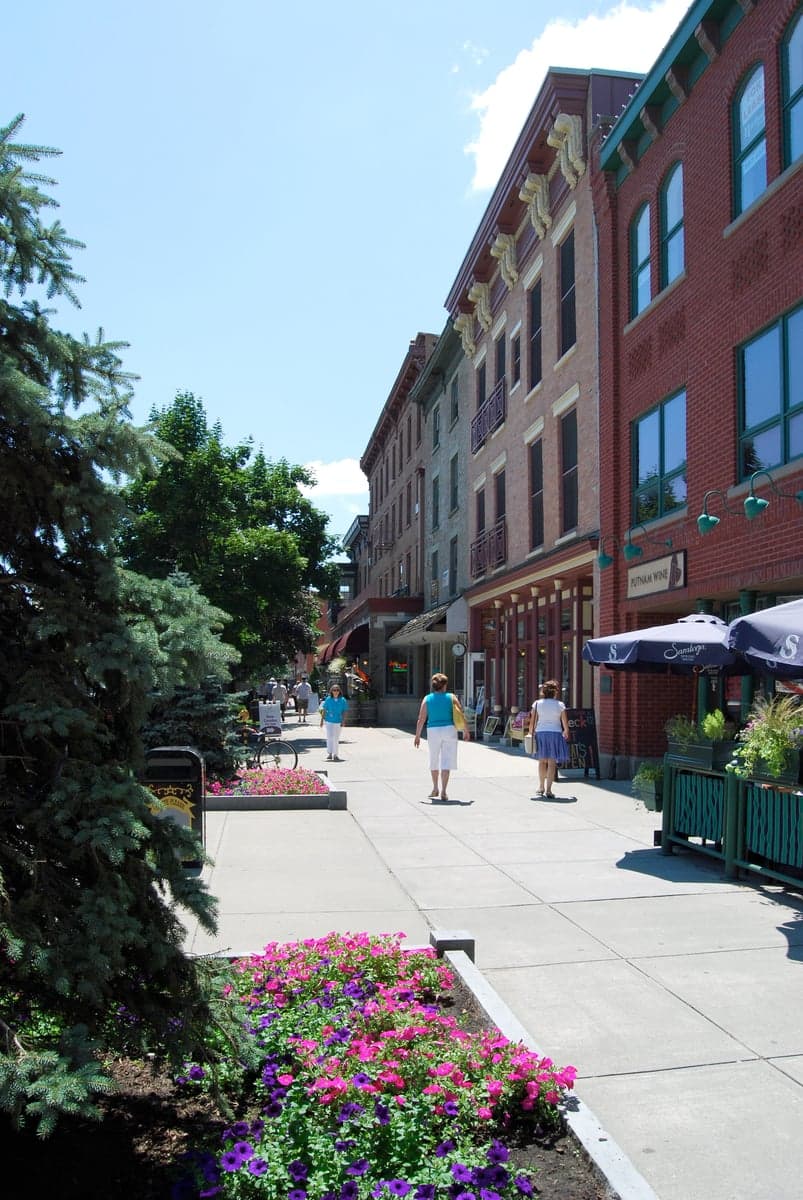
The county’s primary population anchor is Saratoga Springs, a city of roughly 28,000 that blends historic downtown charm with a vibrant tourism and hospitality economy driven by the Saratoga Race Course and Skidmore College. Daily life here is walkable, with a dense core of restaurants, boutiques, and cultural venues like the Saratoga Performing Arts Center. Housing is competitive and expensive: the median home value in the city often exceeds the county median of $324,800, and median rent of $1,347 is common for one-bedroom units. To the south, Clifton Park (population ~38,000) is the county’s largest town by population, functioning as a classic suburban hub with big-box retail, office parks, and highly rated Shenendehowa Central Schools. Life here is car-dependent, with a 25.6-minute average commute that reflects easy access to I-87 for Albany-bound workers. Ballston Spa, the county seat, offers a smaller, more affordable village feel with a walkable main street and a strong sense of local history.
Smaller towns & rural pockets
Outside the population centers, the county’s character becomes markedly quieter and more land-based. Greenfield and Wilton are towns that mix suburban-style subdivisions with working farms and horse properties, offering a buffer between city and country. Further north, Moreau and Northumberland contain hamlets like Gansevoort and Bacon Hill, where homes sit on acreage and the nearest grocery store may be a 15-minute drive. The western edge of the county includes Day and Edinburg, true rural towns with populations under 2,000, where the landscape is dominated by the Great Sacandaga Lake and the Adirondack foothills. These areas attract those seeking seasonal recreation, lakefront living, or a homesteading lifestyle, but they lack public water and sewer infrastructure, and internet access can be inconsistent. Rock City Falls, an unincorporated hamlet in the town of Milton, exemplifies the county’s small-scale rural character, with a historic paper mill district and a tight-knit community of fewer than 500 residents.
Cost & lifestyle range
The cost of living and available amenities form a clear gradient across the county. At the high end, Saratoga Springs and the lakefront communities of Saratoga Lake command premium prices, with home values often 20-30% above the county median and a lifestyle centered on dining, events, and walkability. Clifton Park and Halfmoon represent the mid-to-upper range, where a $324,800 median home buys a 3-bedroom colonial in a subdivision with good schools and a 20-minute commute to Albany. At the lower end, Mechanicville and Schuylerville offer more affordable housing stock—often older homes in village settings—with median values closer to $250,000. The most budget-friendly options are in the rural towns of Day and Edinburg, where land is cheap but commuting distances to Albany (45-60 minutes) and limited local services offset the savings. Property taxes in Saratoga County are among the highest in New York, averaging around 2.5% of assessed value, which significantly impacts monthly housing costs regardless of purchase price.
This county works best for people who understand that its diversity of settings comes with trade-offs. Young professionals and empty-nesters thrive in Saratoga Springs’ dense, event-driven environment. Families with school-age children gravitate to Clifton Park and Ballston Spa for their strong districts and suburban amenities. Those who value privacy, acreage, and outdoor recreation—and who can tolerate longer commutes and fewer services—find their niche in the rural towns of Moreau, Greenfield, and Day. Saratoga County’s appeal lies in offering all these lifestyles within a single county, connected by a shared regional identity and a relatively short drive to the Capital Region’s employment base.

Crime in Saratoga County
WARNING: The crime statistics are unreliable for this jurisdiction. Local authorities have either not reported or under reported their data to the FBI. This could be due to bad intentions, incompetence or technical issues. Regardless, we suggest skepticism.
Higher crime rates than 62% of comparable U.S. locations.
Violent CrimeViolent Crime Analysis
Property CrimeProperty Crime Analysis
Crime Analysis
Saratoga County is consistently ranked among the safest large counties in New York State, with crime rates that fall well below national averages for both violent and property offenses. The county reported a violent crime rate of 331.5 per 100,000 residents and a property crime rate of 1,323.4 per 100,000 in the most recent data, figures that reflect a generally secure environment for its roughly 235,000 residents. However, safety is not uniform across the county, and the influence of progressive criminal justice policies in nearby Albany County and within the broader Capital District warrants careful attention from prospective residents.
Crime in context
Saratoga County’s violent crime rate of 331.5 per 100,000 is significantly lower than the national average of approximately 380 per 100,000 and well below New York State’s overall rate, which is elevated by crime in New York City and other urban centers. Property crime in the county, at 1,323.4 per 100,000, also sits comfortably below the national benchmark of roughly 1,950 per 100,000. These numbers place Saratoga County among the safest jurisdictions in the Capital District, alongside counties like Washington and Warren. The county’s relatively low crime rates are partly attributable to its suburban and rural character, but also to the conservative-leaning policies of its District Attorney, Karen Heggen, who has maintained a focus on prosecutorial accountability and victim advocacy. This stands in contrast to the more progressive approach seen in neighboring Albany County, where District Attorney David Soares has faced criticism for bail reform implementation and reduced incarceration rates, a dynamic that can spill over into Saratoga County through regional crime patterns.
What residents experience
Residents of Saratoga County generally report feeling safe in their daily lives, with the most common concerns being property crimes like theft from vehicles and package theft rather than violent confrontations. The city of Saratoga Springs, the county’s largest municipality, experiences the highest concentration of reported incidents, particularly during the summer racing season when tourism swells the population. Incidents in the city are often non-violent, such as larceny and disorderly conduct, but the presence of a transient population and nightlife can create pockets of risk. In contrast, suburban towns like Clifton Park and Halfmoon report very low violent crime rates, with property crime being the primary issue, often tied to unlocked cars and residential burglaries. More rural communities such as Greenfield and Wilton see even lower rates, though residents there face longer emergency response times. The county’s judicial system, overseen by the Saratoga County Court, has resisted the most lenient aspects of New York’s bail reform law, with judges frequently setting bail for repeat offenders and those charged with violent felonies—a practice that helps keep recidivism rates lower than in more progressive jurisdictions.
Neighborhood-level variation is pronounced, with the safest areas concentrated in the outer suburbs and rural towns, while the city of Saratoga Springs and the village of Ballston Spa see higher rates of reported crime. The county’s proximity to Albany, where progressive policies have been linked to rising shoplifting and auto theft, means that some property crime originates from outside the county. For families and retirees seeking a low-crime environment, towns like Malta and Stillwater offer excellent safety records, while those considering Saratoga Springs should focus on neighborhoods away from the downtown entertainment district. Overall, Saratoga County’s combination of conservative judicial leadership and suburban-rural geography makes it a strong choice for safety-conscious relocators, provided they remain aware of the localized risks in its more urbanized areas.
* Values derived from national, state, county, city and local statistics and may differ in a specific area. Last updated: 2026-05-12T04:53:08.000Z
Narrative content on this page is AI-generated and may contain mistakes. Verify any details that matter before acting on them.
ReloMaps may earn a commission from affiliate links at no extra cost to you.

