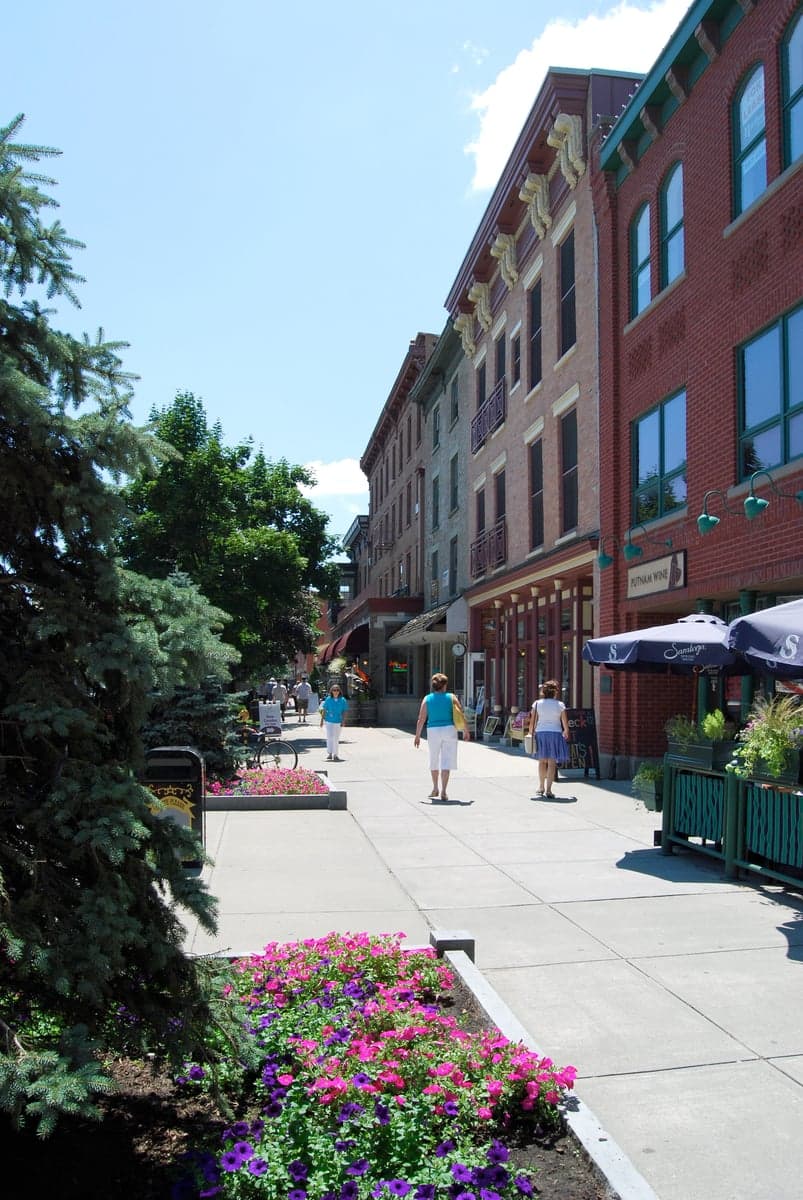
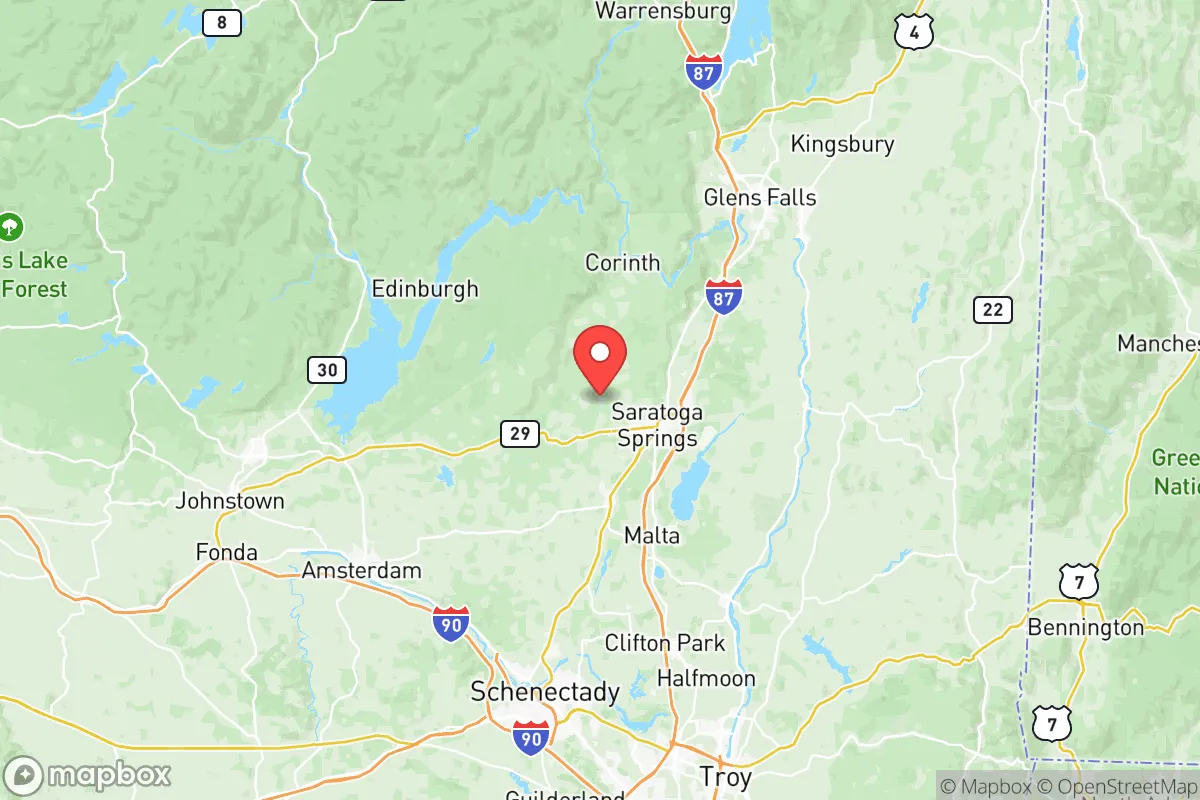
Photo: Wikipedia
Political ClimatePolitical Climate in Saratoga County
Showing district-level results — no local-only data available.
Local Political AnalysisPolitical Analysis of Saratoga County
Saratoga County has long been a reliable conservative stronghold in New York State, with a Cook PVI of R+10 that reflects a solid Republican lean. But if you've lived here as long as I have, you've watched the political ground shift beneath your feet—not dramatically, but enough to make you pay attention. The county still votes red, but the margins are tightening in certain pockets, and the cultural battle lines are being drawn in places you wouldn't expect.
How it compares
To understand Saratoga County, you have to look south to New York City, which sits at a D+10 on the Cook PVI—a full 20-point swing from our own R+10. That's not just a difference in party preference; it's a chasm in worldview. In Saratoga Springs, the county's most liberal enclave, you'll find a growing progressive push on issues like zoning density and local energy mandates, mirroring the city's agenda. But drive 15 minutes north to Moreau or east to Stillwater, and you're in deep-red territory where Second Amendment rights and local control over schools are non-negotiable. The real battlegrounds are the swing precincts in Clifton Park and Halfmoon, where suburban families are being courted by both sides—and where I've seen neighbors split over mask mandates and property tax hikes that feel like government overreach. Compared to New York City, where progressive policies are the baseline, Saratoga County still pushes back, but the pressure is mounting.
What this means for residents
For those of us who value personal freedoms and limited government, the trend is concerning. The county's Republican majority has held the line on issues like school choice and resisting state-imposed housing quotas, but the influence of downstate money and transplants is real. You see it in the push for "complete streets" projects that prioritize bike lanes over car traffic, and in school boards where critical race theory debates have become annual rituals. The good news? Ballston Spa and Mechanicville still elect officials who prioritize fiscal restraint and local autonomy. But if you're a conservative, you can't afford to be complacent—every local election matters more than ever, because the progressive playbook from New York City is being tested here, one zoning board meeting at a time.
The cultural distinction between Saratoga County and New York City boils down to trust: we trust our neighbors and local institutions to make decisions, not bureaucrats in Albany or Manhattan. That's why you'll see more "Keep Saratoga County Free" signs than "Defund the Police" ones. The long-term trajectory depends on whether we can hold the line on property rights, school choice, and Second Amendment protections—or whether the creeping influence of downstate ideology turns this into another blue suburb. For now, it's still a place where a conservative can breathe, but the air is getting thinner.

State Political ClimatePolitical Climate in New York
State Political AnalysisPolitical Environment in the State
New York State has a Cook PVI of D+10, making it one of the most reliably Democratic states in the nation, a position it has held for decades. The dominant coalition is a fusion of New York City’s massive, diverse population, downstate suburbanites, and upstate college towns, which together have produced a consistent 15-25 point Democratic margin in presidential elections since 2000. However, this blue veneer masks a deep and growing internal schism: the state’s political trajectory over the last 10-20 years has been one of accelerating progressive legislation in Albany, while vast swaths of upstate and rural areas have swung hard right, creating a state that feels like two different countries under one capitol.
Urban vs. rural divide
The political map of New York is a stark tale of two states. New York City, with its 8.5 million residents, is the engine of Democratic dominance, delivering margins of 80-85% in recent elections. The five boroughs, particularly Manhattan and Brooklyn, are home to the state’s most progressive activists and elected officials, from Alexandria Ocasio-Cortez to the city council’s far-left majority. The immediate suburbs—Nassau, Westchester, and Suffolk counties on Long Island—have been trending blue for a decade, driven by professional-class voters and growing minority populations; Nassau County, once a Republican stronghold, voted for Biden by 10 points in 2020. In contrast, the vast upstate region—from the Hudson Valley north to the Canadian border and west to Lake Erie—is a patchwork of red and purple. The "Rust Belt" cities like Buffalo, Rochester, and Syracuse are blue islands in a sea of red, but their Democratic margins are shrinking as manufacturing jobs vanish and populations decline. The true Republican heartland is the Southern Tier (counties like Steuben, Chemung, and Allegany), the North Country (St. Lawrence, Jefferson counties), and the Finger Lakes region outside of Ithaca. These areas vote 60-70% Republican, fueled by gun rights, opposition to state mandates, and a sense of abandonment by Albany. A telling example: in 2022, Republican Lee Zeldin won 56 of New York’s 62 counties, yet lost the statewide race by 6 points because he was crushed in the five downstate boroughs. The divide is not just political—it’s cultural, economic, and increasingly hostile.
Policy environment
Albany’s policy environment is aggressively progressive, and it’s a major driver of out-migration. The state has the highest combined state and local tax burden in the nation, with income taxes topping 10.9% for top earners and property taxes among the highest in the country, especially in upstate counties like Erie and Monroe. The regulatory posture is dense: New York enacted the nation’s first "Green New Deal" in 2019, banning new gas hookups in most new construction by 2026 and phasing out gas-powered vehicles by 2035. Education policy is dominated by the teachers’ unions and progressive curriculum mandates; the state’s "Dignity for All Students Act" and "Culturally Responsive-Sustaining Education" framework push DEI principles into every classroom. Healthcare is heavily regulated, with the state expanding Medicaid eligibility and implementing a public option for health insurance in 2021. Election laws are among the most permissive in the country: no-excuse absentee voting, early voting, same-day registration, and automatic voter registration were all enacted in the last five years. For a conservative, the policy environment feels like a one-party state where dissent is legislated away.
Trajectory & freedom
New York is becoming less free by almost any measure, and recent legislation confirms the trend. On gun rights, the state passed the "Concealed Carry Improvement Act" in 2022 after the Bruen decision, which effectively turned New York into a "sensitive places" state, banning firearms in nearly all public spaces—parks, libraries, Times Square, and even private businesses unless the owner explicitly posts a sign allowing them. This law is being challenged in court, but it’s already chilling lawful carry. On parental rights, the state has moved in the opposite direction of red states: in 2023, it passed a law requiring schools to keep a student’s gender identity and pronoun changes secret from parents if the student requests it, overriding parental notification. Medical autonomy took a hit with the state’s strict COVID-19 vaccine mandates for healthcare workers, which remained in place long after the emergency ended, and the state’s "Reproductive Health Act" of 2019 codified abortion up to birth, removing any restrictions. Property rights are under siege from the state’s rent control laws, which were expanded in 2019 to cover more units and eliminate vacancy decontrol, effectively trapping landlords in a regulated market. The trajectory is clear: Albany sees personal liberty as a threat to its agenda.
Civil unrest & political movements
New York has been a flashpoint for political movements on both sides. The 2020 Black Lives Matter protests in New York City were among the largest and most destructive in the nation, with over 1,000 businesses damaged and the city paying out millions in settlements for police misconduct. The state’s sanctuary policies are a major source of tension: New York is a "sanctuary state" under the 2017 "New York State Liberty Act," which prohibits state and local law enforcement from cooperating with federal immigration authorities. This has led to visible conflicts, such as the 2023 busing of migrants from Texas to New York City, which overwhelmed shelters and sparked protests in blue-collar neighborhoods like Staten Island and Queens. On the right, the "New York State Rifle & Pistol Association" remains a powerful legal force, and the "Upstate New York" secession movement, while fringe, has gained traction in counties like Steuben and Chenango, with local resolutions calling for a breakaway state. Election integrity is a live issue: the 2020 election saw New York City’s Board of Elections plagued by errors, including thousands of disqualified absentee ballots, and the state’s 2022 redistricting was struck down by courts as an illegal Democratic gerrymander. A new resident will notice the political tension is not abstract—it’s in the news every day.
Projection
Over the next 5-10 years, New York’s political trajectory is likely to accelerate leftward, driven by demographic shifts and in-migration patterns. New York City continues to attract young, progressive transplants from around the world, while upstate counties lose population to Florida, Texas, and the Carolinas. The 2020 census cost the state a congressional seat, and the trend is expected to continue: the state’s population declined by over 300,000 between 2020 and 2023, with the biggest losses in rural and suburban counties. This means the political power of the downstate progressive coalition will only grow, as upstate’s red districts shrink in influence. Expect more state-level mandates on energy, housing, and education, and a continued erosion of local control. For a conservative moving in now, the state will likely feel more restrictive in a decade, not less. The only wildcard is a potential federal court ruling that strikes down the state’s gun laws or immigration policies, but even that would be a temporary check on a legislature that will keep pushing.
For a new resident—especially a conservative single or parent—the bottom line is this: New York offers world-class economic opportunity in New York City and its suburbs, but at the cost of living under a government that is actively hostile to your values on guns, taxes, education, and parental rights. If you’re moving to upstate areas like the Southern Tier or North Country, you’ll find like-minded neighbors but will still be subject to Albany’s one-size-fits-all policies. The state is not going to flip red anytime soon, and the cultural and legal environment will continue to drift left. If you value personal freedom, low taxes, and local control, New York is a tough place to call home—and it’s getting tougher.
* Values derived from national, state, county, city and local statistics and may differ in a specific area. Last updated: 2026-05-12T04:53:08.000Z
Narrative content on this page is AI-generated and may contain mistakes. Verify any details that matter before acting on them.
ReloMaps may earn a commission from affiliate links at no extra cost to you.

