
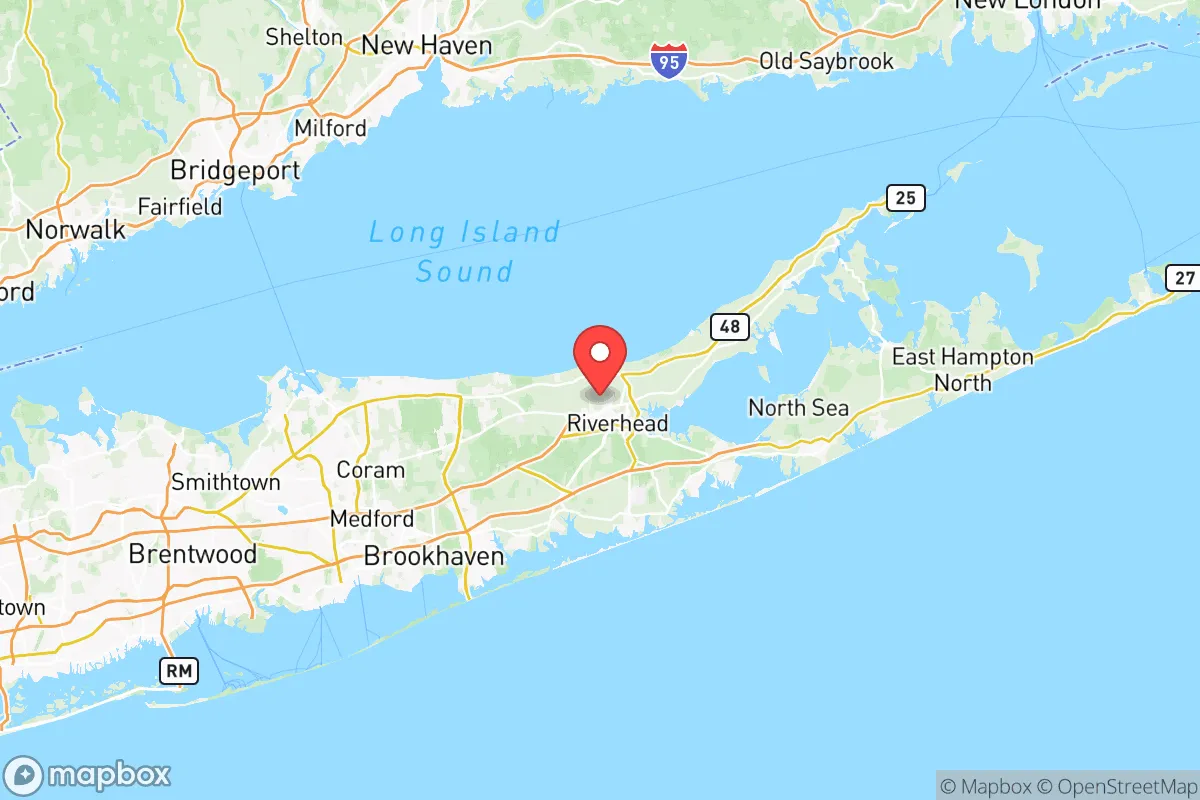
Photo: Wikipedia
Personal Sovereignty in Suffolk County
Moderate friction. Expect trade-offs in some aspect of personal liberty and independence.
What does Personal Sovereignty tell us?
Personal Sovereignty measures your capacity for self-reliance and independence with minimal government friction. Higher scores mean fewer barriers between you and the way you want to live... but it assumes you have the space you need and good neighbors.
What does this tell us?
Personal Sovereignty measures your capacity for self-reliance and independence with minimal government friction. Higher scores mean fewer barriers between you and the way you want to live... but it assumes you have the space you need and good neighbors.
State Policy
Energy independence: Importer (12% of energy produced in-state)
Personal Liberty
Homesteading

Personal Liberty Analysis
Suffolk County presents a deeply conflicted environment for personal sovereignty. While it offers more physical space and a slightly lower population density than New York City or its immediate western suburbs, residents remain firmly under the thumb of one of the most restrictive state governments in the nation. The autonomy you can carve out here depends almost entirely on which town you choose, as local enforcement and cultural attitudes vary dramatically between the North Shore, South Shore, and the rural East End. For a conservative or prepper-minded individual, the county is a study in trade-offs: you gain land and community distance, but you lose nearly every legal battle against state overreach before it begins.
Tax burden and regulatory posture in Suffolk County towns
The financial cost of living in Suffolk County is punishing, and it directly erodes personal sovereignty. New York State’s income tax is progressive and high, but the real dagger for property owners is the local property tax. In towns like Brookhaven and Smithtown, effective property tax rates can exceed 2% of a home’s assessed value annually, often landing between $8,000 and $15,000 for a modest single-family home. This is not a fee for services you control; it is a mandatory extraction that funds school districts, county government, and a sprawling public workforce. The regulatory posture is equally hostile to independence. New York’s building codes, environmental review processes (SEQRA), and wetland protections mean that even minor improvements to your property—installing a shed, clearing brush, or adding a driveway—can require permits, variances, and months of waiting. In Southold and East Hampton, the zoning boards are notoriously strict, treating any modification as a potential threat to the "rural character" while simultaneously taxing that character out of existence. For someone seeking to minimize government entanglement, the tax and regulatory climate here is a constant, grinding burden.
Self-defense realities and gun law specifics in Suffolk County
On the issue of self-defense, Suffolk County is a legal minefield for anyone who values the Second Amendment. New York’s Concealed Carry Improvement Act (CCIA), passed in 2022, effectively ended the ability of ordinary citizens to carry a firearm for personal protection without jumping through extraordinary hoops. To even apply for a pistol permit in Suffolk County, you must undergo a 16-hour safety course, provide character references, and submit to a background check that includes a review of your social media history. The Suffolk County Police Department, which administers permits, has a reputation for slow processing times—often exceeding 12 months. Even after receiving a permit, you are barred from carrying in a vast list of "sensitive locations," including virtually any private business that hasn’t explicitly posted a sign welcoming firearms. In practice, this means that in towns like Huntington or Babylon, you cannot legally carry into a supermarket, a restaurant, or a park without risking a felony charge. The state also bans standard-capacity magazines (over 10 rounds) and restricts the sale of many common semi-automatic rifles. For the prepper mindset, this is a catastrophic erosion of the right to defend oneself and one’s family. The only relative bright spot is that rural areas like Riverhead and Manorville have a stronger hunting culture and more tolerant local attitudes toward firearms ownership, but the legal framework remains uniformly oppressive across the county.
Self-reliance and homesteading viability: lot sizes, zoning, and off-grid feasibility
If your goal is self-reliance—growing food, raising animals, and reducing dependence on fragile supply chains—Suffolk County offers a mixed bag. The eastern towns of Southold, Riverhead, and East Hampton still have agricultural zoning districts where you can keep chickens, goats, and even a few pigs on lots of one acre or more. In Calverton and Manorville, you can find five-acre parcels that allow for substantial gardening and small-scale livestock operations. However, the regulatory barriers to true off-grid living are severe. New York State building codes require connection to the electrical grid for any habitable structure, and while solar panels are permitted, you cannot legally disconnect from the utility without a complex and often-denied variance. Rainwater collection is restricted in many towns due to groundwater recharge regulations, and composting toilets are generally not approved for full-time residences. In Smithtown and Brookhaven, suburban zoning codes often prohibit front-yard gardens, clotheslines, and any structure that looks "temporary." The dream of a fully self-sufficient homestead is legally unattainable for most; you can supplement your lifestyle, but you cannot sever your dependence on the county water authority, the power grid, or the waste management system. For the serious prepper, this means you are always one regulatory enforcement action away from losing your garden or your livestock.
Personal liberties: parental rights, medical autonomy, speech, and property
Personal liberties in Suffolk County are heavily circumscribed by state-level mandates. Parental rights have been a flashpoint: New York law does not require parental consent for a minor to receive certain medical treatments, including reproductive health services and mental health counseling, which has led to significant friction in conservative households. School districts in Commack and Sachem have seen heated school board meetings over curriculum transparency and library book content, but state law ultimately overrides local control. Medical autonomy is similarly constrained. New York maintained strict vaccine mandates for healthcare workers and school attendance long after other states relaxed them, and the state’s emergency powers during the pandemic allowed the governor to impose lockdowns and business closures with minimal legislative oversight. On property rights, the state’s rent stabilization laws and tenant protections tilt heavily toward renters, making it difficult for landlords to evict problem tenants or reclaim their own property. Free speech is protected by the First Amendment, but local governments in Islip and Hempstead have occasionally used noise ordinances and permit requirements to limit public protests and political gatherings. For the individualist, the message is clear: your rights are conditional, subject to the whims of Albany, and enforced by a county government that prioritizes compliance over liberty.
Overall, Suffolk County offers a low-to-moderate level of personal sovereignty compared to other regions of the United States. It is far more restrictive than any county in Texas, Florida, or the Mountain West, where property taxes are lower, gun laws are permissive, and off-grid living is feasible. Compared to other parts of New York, it is marginally better than New York City or Westchester County due to the availability of land and a slightly more conservative local culture in the eastern towns. But for the strategic relocator with a survivalist or prepper mindset, Suffolk County is a place to manage risk, not eliminate it. You can build a resilient life here, but you will do so under constant legal and financial pressure from a state government that views personal independence as a threat to be managed, not a right to be protected.

* Values derived from national, state, county, city and local statistics and may differ in a specific area. Last updated: 2026-05-12T09:32:40.000Z
Narrative content on this page is AI-generated and may contain mistakes. Verify any details that matter before acting on them.
ReloMaps may earn a commission from affiliate links at no extra cost to you.

